Episode 118
Compiled comment

Select a podcast below to browse all of its compiled videos (ordered newest episode to oldest) along with each episode's compiled comment.
This Past Weekend #693 - Lindsay Owens brings the pricing research, and Theo somehow gets from grocery experiments to sour cream and onion batteries.

1. Announcing Gouged apparently changed Lindsay's invitations. She says lobbyists she had not spoken to in years started offering celebratory drinks. When she looked up where they worked, she found companies discussed in her book. The congratulatory messages suddenly looked different.

2. Her grocery investigation has a concrete setup: 400 volunteer shoppers, the same 23 items, and comparisons at the same store and time. Lindsay says 75% of the items showed different prices across shoppers, with differences reaching 23%. She also describes Instacart backing away from the testing afterward. Those are the study results and follow-up as she reports them here.

3. Skimpflation gives Theo a very personal objection. Lindsay explains the idea of keeping the price while cutting product quality, and Theo remembers stretching things with water at home. His complaint is that companies have taken over the customers' old trick: at least let us do the diluting ourselves.

4. The Savannah Bananas become the counterexample to selling every scarce ticket to the highest bidder. Lindsay describes fixed prices and a lottery when too many people want seats. Her point is about who gets a chance to attend, rather than pretending everyone can get a ticket.

5. Theo's imaginary end-cap aisle deserves its own store: barbecue-flavored napkins, sour cream and onion batteries, and pomegranate slippers. A discussion about retail design turns into a whole line of products that absolutely should not exist.

6. The Walmart exchange has an important distinction: patents and deployed systems are different things. Theo reads the company's denial that it uses or will use personal information to set individualized prices. Lindsay challenges what the patents could enable and calls for more transparency. The episode presents a dispute, not proof that every patented idea is operating in stores.

7. A reported 515-page McDonald's data file becomes an unexpectedly affectionate moment. While they read about a reporter's shopping records, Theo jokes that receiving that much attention almost feels like a Valentine: somebody cares. That is quite a response to a data dossier.

8. Lindsay's closing proposal is a 12-part Shoppers Bill of Rights. The examples are deliberately everyday things: straightforward refunds, the full price before checkout, and protections against using personal data to raise someone's price. These are changes she wants, rather than a list of laws already in force. Theo also asks to put Gouged on the studio shelf.

Conversation timestamps
00:40 - The conversation begins
16:03 - The book announcement and lobbyist invitations
23:44 - The grocery experiment
35:19 - Shrinkflation, skimpflation and the watering-down joke
42:38 - The Savannah Bananas ticket model
53:01 - Theo's imaginary end-cap products
1:01:48 - Reading Walmart's response letter
1:20:51 - The reported McDonald's data file
1:41:30 - The proposed Shoppers Bill of Rights
1:52:08 - Gouged for the studio shelf

Which moment stuck with you: the grocery experiment, the imaginary products, or the 515-page Valentine?
Kill Tony #792 - a Halloween song, a worm farm and a changing of the guard:

1. Jimmy Carr's history with the show stretches back to #122. Our archive also lists him on #778, so this visit comes 14 episode numbers later.
2. Nicole Tran brings more than a minute - she follows her set with a Halloween song before the bucket pulls begin.
3. Dedrick reaches a year of weekly appearances. Tony then announces his move to special shows, arena dates and Killers of Kill Tony.
4. Myles Johnson's worm-farm interview takes an unexpected turn when Tony offers him a regular spot. One regular changes schedules while another gets the offer in the same episode.
5. Reggie turns his interview into an a cappella roast of the panel, then gets a Golden Ticket and a Skankfest invitation.
6. Phrase watch - 21 "I love it" mentions and seven "unbelievable" mentions across all voices in the automatic captions.

Sets & timestamps
10:26 - Nicole Tran
17:33 - Mohamad
27:27 - Jesse Lane
33:41 - Carmen
44:52 - Dedrick Flynn
56:01 - Cameron Riddle
1:06:01 - JP Madison
1:15:36 - Charles Lester
1:23:58 - Gregory Simpleton
1:37:24 - Dr. Tim T
1:45:55 - Myles Johnson
1:55:03 - Reggie
2:04:16 - Pat O'Neill

Bonus performances
14:31 - Nicole Tran's Halloween song introduction
1:59:29 - Reggie's a cappella performance

What was your favorite moment?
Story Warz #117

• After an opening correction, the three challengers' announced records totalled 4 wins and 10 losses.
• The highest final score: 20 points, after a 16-point tie sent the game to overtime.
• The rules speech gets compared to being strapped into a go-kart.
• A proposed joke retake comes with directions: reset, take your positions, and everybody laugh.
• A score update prompts an offer to give points away: "Who wants a point?"
• The memory debate gets an Inception comparison - complete with an imaginary spinning top.
• Bluffing gets a duck metaphor: calm on top, frantic legs under the table.
• The lonely-sports riff adds football tackles against nobody and baseball swings at a nonexistent ball.

This Past Weekend #692 - Sophie Cunningham gives Theo a basketball reality check, then somehow ends up helping name an imaginary WNBA team.

1. The family sports connection reaches the actual college court. Sophie says she and her sister Lindsay played together at Mizzou for two years. Growing up, she had considered basketball, volleyball and soccer, but basketball was the one she naturally loved most.

2. Theo asks what her team was missing, and Sophie answers, shots. It is a wonderfully direct answer to a question looking for a much more complicated explanation. She still separates her individual performance from whether the team got the job done.

3. The WNBA expansion brainstorming gets very Theo, very quickly. He says he and Druski had talked about being part of a team, and Nashville Licks enters the discussion as a guitar reference. This is a naming session and a possibility they discuss, rather than an announcement that they own a franchise.

4. Sophie has a reason for starting No Hesitation with Drew Hanlen: more basketball. She wants film breakdowns and attention to elite play alongside the personalities and stories. She also makes room for reporters who do a good job, rather than saying every journalist is the problem.

5. The famous pointing pose gets its own breakdown. Sophie says she initially gestured while talking to the referee, then held it after the other player objected. Having just gotten her nails done becomes a bonus punchline. Theo immediately starts imagining pointing as a logo and a whole technique.

6. The pay discussion works best when the numbers keep their context. Sophie recalls taking home about $28,000 in her rookie year after taxes, and says she needed more work. That is her approximate take-home recollection, rather than a gross salary figure or what players earn now.

7. Going overseas was not her only offseason option. Sophie says marketing agreements and NBA broadcasting eventually brought her more money than playing abroad. That let her change her own routine, even while other players had different reasons to keep traveling.

8. The ring-girl appearance started as a joke and became real very quickly. Sophie says she made the suggestion to Dana, then found out she was up in about five minutes. Suddenly walking and turning left felt much more intimidating. Trying it herself changed how much credit she gave the people who normally do it.

9. Her Project B description is a future plan with a particular rhythm: ten days playing, then the rest of the month off. She lists China, Singapore, Spain and Germany, and explicitly rules out Poland when Theo asks. Those are the plans she shares in this conversation, rather than confirmed dates or completed trips.

10. One of the nicest bits is celebrating a good answer. After Sophie likes how she has put a thought together, Theo compares finishing a few solid sentences to sticking a gymnastics landing. Sometimes getting to the end of your own point deserves a little podium moment.

Conversation timestamps
00:13 - Sophie Cunningham introduction
02:29 - What was the team missing?
09:42 - Theos old basketball photo
16:03 - Childhood sports and two college years with Lindsay
23:29 - How the platform around the league changed
34:54 - Correcting the early attendance guess
38:29 - Druski, Nashville and imaginary team names
41:42 - Communication and league leadership
51:31 - Why No Hesitation focuses on basketball
53:41 - Sticking the landing on a good answer
1:01:25 - Breaking down the pointing pose
1:04:25 - Rookie take-home pay
1:08:46 - Marketing, broadcasting and the offseason
1:12:51 - A joke becomes the ring-girl appearance
1:21:38 - Faith, public attention and staying grounded
1:35:21 - Project B plans and the four countries
1:35:51 - Closing thanks

Which moment gets your vote: the blunt shots answer, the pointing explanation, or the five-minute ring-girl call-up?
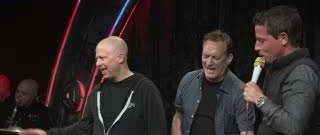
Kill Tony #791 - a bonus minute, an imaginary roommate and a band-wide rap debate:

1. This is Jim Norton's eighth documented appearance, spanning #180 to #791, including #756 earlier in the year.
2. AJ earns an encore - Tony asks for another minute on the spot, then awards him a Golden Ticket. That's 14 stand-up sets from 13 performers.
3. Tony clocks Dedrick's set at 3:11 of new material. Dedrick also says his one-year mark on the show is coming the following week.
4. Michael Moses picks Kendrick over Drake, the band joins in, and Tony jokes about replacing both the band and the audience.
5. A rent-payment app called Flex becomes an imaginary roommate, then somehow a college wide receiver.
6. Matt Markman recalls appearing during the lockdown video-submission shows - a connection to a very different version of Kill Tony.
7. Phrase watch - 29 "I love it" mentions and seven "unbelievable" mentions across all voices in the automatic captions.

Sets & timestamps
08:05 - Brent Reed
12:55 - Jerry Smith
26:46 - Matthew Delgado
36:45 - Riley Gilmore
44:22 - Galina Rivina
50:47 - Michael Moses
59:55 - Dedrick Flynn
1:08:21 - Grant Adcock
1:15:29 - Matt Markman
1:26:35 - Steven C. Duncan
1:36:26 - Jake Coulter
1:48:30 - AJ
1:52:28 - AJ's bonus-minute introduction
1:54:56 - Pat O'Neill

Which interview had you laughing the most?
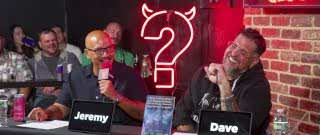
Story Warz #116

• A 16-point tie sends the game into overtime, with only the two tied leaders playing the extra round.
• An introduction with too many plugs gets compared to introducing Apollo Creed: "We got to narrow it down."
• The call for episode themes goes sideways when the emailed suggestions start sounding like insults.
• The prize book gets roasted for its staples: more book report than book, until someone points out the barcode.
• An eyebrow-slit roast turns into a barber-shop catchphrase: "You want the line?" "You know I want the line."
• Getting corrected over a counting language becomes a face-saving comeback: "I was testing you" and "loser check."
• The karate chat proposes ordering a personalized "High Kick" trophy, then filling a shelf with unearned awards.
• A boast about giving away every point gets quickly walked back: "I won't really give away all my points."
• An argument about smart-guy glasses escalates into a proposed replacement show: "IQ tests with a Z."
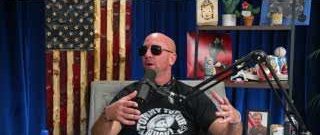
This Past Weekend #691 - Johnny Hamcheck reveals the face, but the stories behind the character might be the bigger surprise.

1. The name started with a manager who did not exist. Johnny says he was answering phones at a Salvation Army donation center when an unhappy caller asked for his manager. His solution was to put Johnny Hamcheck on the phone. That is the origin of the name as he remembers it, rather than the start of a military career.

2. Before the prank channel, there was a band. Johnny says his first car-sales paycheck went toward drums, a keyboard and the instruments his friends needed. His college year had already turned him toward recording music, and selling cars helped him fund it.

3. The rookie-salesman videos turn a normal training session into a completely fictional job from hell. Johnny was a salesman pretending to be the trainer. Ryan draws a firm line when the supposed requirements reach price-gouging elderly customers, which makes the dedication speech even more ridiculous.

4. The breakthrough was not immediate. Johnny says he made three versions of those rookie-salesman pranks, watched them sit on YouTube, and then did not make a video for eight years. A friend eventually suggested TikTok. Those are his recollections here, rather than a complete audit of every upload.

5. The construction prop has its own origin story: six-and-a-half-inch cables became six-and-a-half-foot chains. Johnny spells out the change in units. The running bit got considerably bigger.

6. Theo has his own example of why a camera does not tell the whole story. He remembers someone posting a clip of him walking past and saying he looked like he was having a terrible day. His recollection is the opposite: he was having a great day. A passing expression became a whole invented mood.

7. Johnny describes his live show as music, unseen videos and questions from the crowd, and explicitly says he is not a stand-up comedian. A seven-thirty-to-nine club slot did not leave the hanging-out time he wanted. His ideal was a three-hour venue, rather than rushing everyone out afterward.

8. The McDonalds eggs video went further than he expected. He says he had eggs left from an Airbnb and thought simply asking the employee to cook them would be enough for the video. He did not expect her to actually do it. The clip turns a strange request into an unexpectedly accommodating exchange.

9. The face reveal also finishes a very specific joke. Theo brings up the supposed two ponytails, and Johnny replies that he does not even have one. He also enjoys the fan nickname Bald Bony. He had already mentioned appearing in early TikToks, so the reveal here is about finally dropping the hiding routine, rather than claiming no image of him ever existed.

10. The conversation becomes more reflective when Johnny separates showing up from being present. He says that even during his long stretch away from drugs and alcohol, gambling kept his mind on the next trip or tournament. Being able to sit with his mom and watch Law & Order becomes his example of what feels different now. That is his personal recovery account, not a treatment recommendation.

Conversation timestamps
00:28 - Johnny Hamcheck introduction
03:18 - Earlier TikTok appearances and the reveal
26:01 - Reconsidering his fathers creativity
42:14 - College, football expectations and recording music
46:44 - Car sales and buying instruments for the band
1:02:15 - How the Johnny Hamcheck name began
1:04:59 - Watching the rookie-salesman prank
1:08:22 - Three versions, the eight-year break and TikTok
1:11:32 - The juice-for-milk favorite
1:36:18 - From cables to chains
1:57:26 - Theo on being misread in a passing video
1:59:50 - What the live shows actually contained
2:01:57 - The McDonalds eggs story
2:03:36 - Watching the eggs clip
2:16:52 - Gambling and being present
2:19:56 - Future plans and taking a break
2:22:22 - The two-ponytail payoff
2:24:06 - Closing thanks

Which surprised you more: the origin of the name, the eight-year video break, or the band before the pranks?
Kill Tony #790 - Yung Gravy's first night on the panel goes from rough bucket pulls to a fake proposal, a marathon debut and a live-band rap.

1. Tony introduces this as Yung Gravy's first time on the panel. Alongside him, our archive lists 19 Erik Griffin panel visits through this episode, stretching back to #25.

2. Mason Bird's suspenders joke has a recent origin: he says last week's suspender-wearing comic inspired it. Then his story about a stolen 2015 Chevrolet Impala becomes a callback - Tony asks later bucket pulls whether they drove it to the show. Avery plays along before clarifying that he drives a Corolla.

3. Danger Russ's Vegas story gets stranger as Tony asks for details. Russ says he climbed onto an empty stage at Jimmy Kimmel's Comedy Club without an introduction, performed for roughly 45 seconds, and was confronted by security. The surprising part: he says he was allowed to stay for the show if he remained quiet.

4. Erik recognizes Uncle Lazer from the beginning: he remembers being the guest when Lazer first appeared. There is a matching connection in our archive - episode 568 lists Erik on the panel and Uncle Lazer in the lineup.

5. Trevor Lewis arrives with an apology for accidentally missing Jim Breuer's handshake while trying to get offstage quickly. Our archive places Trevor with Breuer and Sam Tallent on #753. Tony barely remembers the incident and turns the apology into another callback to the earlier comic's confusing story about falling onstage.

6. Timmy No Brakes builds an entire anniversary-song-and-proposal scene, then pulls the rug out: he says he is single. Yung Gravy is still trying to work out whether the girlfriend is real after the reveal. The imaginary relationship is the joke.

7. Sophia Renee says this is her first time performing her written material onstage. When she blanks, Tony recalls freezing at his own first Comedy Store open mic despite preparing a three-minute set for months. By the end, Tony clocks her appearance at 24 minutes and 27 seconds - a much bigger visit than the opening minute suggested.

8. Avery gets permission to add one more stand-up joke, then later mentions that he used to produce music and rap. That turns into a performance with the live band and a Secret Show invitation. He even has to correct his surname after the panel has already run with a different version.

9. Kandyce August explains two separate challenge rewards: dropping 25 pounds earns another appearance without signing up, while getting below 200 earns the New Year's Eve Moody Center spot. She brings her own scale after questioning the show's equipment. Its 198.4 reading is followed by Tony confirming the arena appearance.

Sets & timestamps
08:27 - Mason Bird
13:57 - Gerald Mathis
20:57 - Danger Russ
30:55 - Michael
35:56 - Uncle Lazer
43:27 - Greta
53:34 - Trevor Lewis
1:03:23 - Timmy No Brakes
1:18:32 - Justin
1:29:52 - Sophia Renee
1:55:01 - Avery
1:57:13 - Avery (extra stand-up joke)
2:05:12 - Kandyce August
2:11:56 - Pat O'Neil

Bonus performances & outro
1:07:53 - Timmy No Brakes' anniversary-song bit
2:02:43 - Avery's live-band rap
2:15:55 - Yung Gravy outro setup

Which moment surprised you most: Timmy's reveal, Sophia's long first appearance, or Avery's rap?
Story Warz #115

• The highest final score was 20 points, just one point above the two runners-up.
• The two returning challengers were introduced with opposite records: one win and no losses, and no wins and one loss.
• An audience member trying the show for the first time gets roasted for being open-minded: "Not on my watch."
• One guest's glowing hello leaves the next guest joking that his friendly opening has already been taken: "I was going to say what he said."
• A rush to vote earns a reminder to ask questions and riff: "You could just pretend that it's a show."
• A request for the last note of "Don't Stop Believing" gets a screamed attempt.
• An appeal for points just for being wrongly guessed gets denied, then turns into a plea: "It's my boy's birthday."
• The game gets called comedy first and friendship second, before the panel imagines answering to a gaming commission.
This Past Weekend #690 - Josh Brolin brings the acting stories, and Theo makes sure none of them turn into a normal press interview.

1. Cito Rats is about carrying a community forward. Josh describes the people he grew up with and uses survived and updated for the version he wants to celebrate now. He explicitly says it was not a gang. The idea is to keep the character while changing the destructive parts.

2. Penultimate becomes a whole event. Josh uses it for the show before the last show, Theo asks him to just say that, and suddenly they are talking about a year-end vocabulary session. Josh eventually gets the satisfaction of seeing the definition confirm he used it perfectly.

3. Josh says nerves came out as uncontrollable laughter on his first Goonies shooting day. His recollection is that Spielberg came over, told him to take a breath, and tried to get them through the scene. A huge break did not mean he arrived knowing how to handle it.

4. There was another career between acting jobs. Josh says he traded stocks full time for almost five years. Theo pictures him on the floor with the tickets; Josh describes working at home with screens instead. It is his account of a different skill he developed, rather than an investment recommendation or audited earnings report.

5. Theo remembers a Jeff Bridges visit that included another participant: Gary, the AI companion. He says Jeff had him talking to the computer and had it make a song about them hanging out. A drawing Jeff later mailed him, plus an invitation for soup, completes a very particular friendship story.

6. Josh says he initially failed to recognize Neil deGrasse Tyson. The clue was the shirt: planets and shooting stars finally made it click. This follows Theo imagining Tyson as Father Times son, which is quite a route into discussing an interest in physics.

7. Thrashin gets a kinder reassessment. Josh says he used to dismiss his own performance, until a fan described finding skateboarding through the film. His point is that his opinion of the job does not cancel what the movie meant to someone else.

8. Being recognized changes where the surprise comes from. Theo remembers enjoying the moment when somebody who did not know he was a comedian discovered he was funny. Josh sees the loss of that surprise as a reason to redesign the work and keep creating.

9. Theo says the first hundred podcast episodes were just him talking. Yet a recent solo recording could still feel intimidating. His way back into it was to remember why he started and try to have some fun, rather than keep building the imaginary cage around himself. The hundred-episode history is his recollection here, not a newly audited catalogue total.

10. The photo commentary deserves an honorable mention. Josh distinguishes looking as though he is in the 1920s from looking as though he is in his twenties; Theo lands on an aggressive relative of a successful spice trader. Naturally, the market ends up coriandered.

Conversation timestamps
00:56 - Josh Brolin introduction
04:03 - The Cito Rats hat and survived and updated
16:03 - The old photo and the coriander joke
26:33 - Joe Walsh, John Walsh and the old house
28:18 - Penultimate gets a vocabulary lesson
39:03 - Theos Shirley Temple audition
42:58 - The Goonies and nervous laughter
46:09 - Full-time trading, away from the trading floor
47:41 - The audition tape with his son
50:26 - Jeff Bridges and Gary
57:37 - Recognizing the planets on Neil deGrasse Tysons shirt
1:11:13 - Changing how he talks about Thrashin
1:19:06 - Fame and losing the element of surprise
1:22:31 - Keeping room to become something else
1:33:00 - Solo episodes and remembering to have fun
1:34:57 - The meaning he gives his tattoos
1:37:02 - Closing thanks

Which story would you have kept going: Goonies, Gary, or the completely unexpected trading career?
Kill Tony #789 - Tim Butterly and Kirk Fox watch a rough bucket night turn into a Golden Ticket, with a rat under a chef's hat helping change everything.

1. Kirk Fox changes his flight to stay for the show and jokes about getting the $300 back. Tony guesses somewhere around his 15th to 18th visit, while our archive actually lists 21 panel appearances through this episode, going back to #21. Tim Butterly has seven listed panel visits, starting with #716. Two different stretches of show history meet at the same desk.

2. Uncle G says retirement has become being repurposed because comedy keeps sending him places. Even the question of what the G stands for takes a detour: he eventually says Greg, then Tony treats unclegcomedy.com as the answer. His repeated 27 motif also becomes a panel callback before the first bucket pull arrives.

3. The accent handoff is unusually neat. Bobby explains that his fake accent was meant as a callback to his previous appearance, and the next guest set is Colum Tyrrell with an actual Irish accent. Later, Colum has to spell his first name: C O L U M, one L. The episode supplies its own contrast.

4. Pedro Franco describes his first visit as the start of a bigger opportunity: Brazilian comics contacted him, he opened for one of them, and he says that helped lead to a visa. Our archive lists him on #663. Here, he says this is his second visit, recovers from the Harry Potter premise with the Brazil scam-call joke, and ends up explaining his 6-foot-7 dating-profile photo under a 6-foot-6 clearance sign.

5. Tony Pepperoni's return keeps revealing new layers. He breaks character, tries Joey Macaroni, and finally removes the chef's hat to reveal a rat underneath. He says he did not have it on his first visit, which our archive lists as #730, and Tony realizes they nearly finished this interview without discovering it. Emergency mustaches, a Secret Show invitation and an actual Golden Ticket follow. The award starts at 1:00:14 below.

6. Dedrick Flynn's charger material turns into a real back-and-forth with Tony. Tony explains his routine of topping his phone back up before going out, and Dedrick answers that Tony has mainly described having an easier life. His seat 37F perspective gives the charging discussion a very different angle.

7. Ali Musa says reviewing Bad Black brought him more requests from Ugandan filmmakers, and Tim immediately pitches the recurring-segment pun Uganda, check this out. Then Tony makes a much stranger successful guess: Ali confirms he uses a beach towel after showering. The interview also connects Ali and Tim through the Gathering of the Juggalos.

8. Pat O'Neil supplies the Halloween closer, which Tony compares to a pumpkin spice latte. Tim then imagines buying a $200 Pat lawn ornament at the hardware store to unsettle the neighborhood. By the end of the interview, Pat confirms Halloween is his favorite time of year. The decoration is a joke; the seasonal commitment is clear.

Sets & timestamps
07:43 - Uncle G
15:28 - GPOW
25:09 - Billy Sherman
31:55 - Bobby Ludlum
37:45 - Colum Tyrrell
43:26 - Pedro Franco
50:21 - Tony Pepperoni
1:01:58 - Jack Argast
1:07:22 - Dedrick Flynn
1:14:06 - Ali Musa
1:20:11 - Patrick Schwall
1:28:22 - Joey T
1:31:11 - Ahsan Ahmad
1:36:01 - Jose Manuel Cisneros
1:50:21 - Cade Shelton
1:57:37 - Pat O'Neil

Bonus moments
54:12 - Joey Macaroni's extra character bit
55:46 - The hat reveal
1:00:14 - Tony Pepperoni's Golden Ticket
1:32:26 - Ahsan asks to add another stand-up section

Was the rat reveal your favorite moment, or did one of the panel callbacks get you more?
Story Warz #114

• The highest final score was 22 points, two points above second place.
• The two returning challengers' announced records added up to no wins and three losses.
• Asked about preparing for his return, a guest says he got the call an hour and a half earlier. The hosts joke that he has been booked for months.
• A fly interrupts the opening and turns the huge-venue gag into a dark joke about a hidden dead body and a family of crows.
• A question about where the prize-book library even is gets an immediate answer: "Right behind you."
• An owl impression becomes a vampire debate, settled with: "They're nocturnal" and "They have the same hours."
• The imaginary house-band roll call adds a new member: "Tuba Gooding Jr."
• A hat flip sparks an imaginary dance-movie mission to save the rec center, complete with a $50,000 fundraising thermometer.
This Past Weekend #689 - Nick Saban can turn a winning streak into a warning, but Theo also gets him talking about science camp, water slides and letting somebody else drive.

1. Nick says he met Terry at seventh-grade science camp, even though they went to different schools. They did not start dating until he was a senior and she was a junior. His honeymoon recollection is wonderfully specific: a Wheeling Holiday Inn and strawberry pie at Big Boy.

2. The coach once needed help being the person at the front of the room. Nick says speaking to groups was difficult for him in college, and credits Terry with helping build his confidence for public appearances. Her outside perspective keeps coming back throughout the conversation.

3. Nineteen straight wins still leave him thinking about number twenty. Nick recalls two Alabama runs of nineteen wins that ended with a loss in the twentieth game. Theo gently observes that most people would describe that as keeping it going. The streak history is Nicks recollection here, rather than our new audit of every result.

4. Apparently the competitive streak made it to the water park. Nick says he and Joe Manchin kept getting kicked off the Myrtle Beach slides for doubles, triples and running into people. Theo had asked whether he could enjoy anything outside football. He got quite an answer.

5. Rest did not simply happen by itself. Nick describes setting a ten-at-night stopping time and making himself take summer vacations, including time at a lake house with the kids. His point is that being committed did not automatically teach him how to leave work behind.

6. One person Nick could not persuade was Mario Cristobal in an Iowa blizzard. Nick recalls offering to drive because he had experience with snow, but says Mario would not give up the wheel. He also makes clear how much he respects Marios work and recruiting ability. The snowy trip is his story, rather than a verified accident report.

7. The retirement decision came with two speeches. Nick says one announced he was staying and the other announced he was leaving. Ten minutes before the four-oclock team meeting, he was still undecided. He describes calling Terry, who helped him think about quality of life and doing other things while they could. He explicitly says NIL was not the reason he left.

8. Terry also protected an hour for everybody elses families. Nick says she introduced a Sunday dinner from five to six, with assistants bringing their children and the wider staff families getting together. On a day split between finishing one game and preparing for another, the hour had to be deliberately created.

9. GameDay gave Nick a new kind of first-day nerves. He recalls being anxious in Ireland, then feeling that Pat McAfees energy made it hard for him to do anything that could mess things up. It is a very different version of the serious coach trying to control every detail.

10. One of the best learning stories is about asking the people who beat you. Nick says Alabama struggled with Utahs empty formations, then brought Utahs staff in to explain what gave their own offense problems. He describes looking for a better way as everyones responsibility, rather than something success entitled them to stop doing.

Conversation timestamps
00:30 - Nick Saban introduction
01:59 - Meeting Terry at science camp
03:21 - The Wheeling honeymoon
06:41 - Terry and public-speaking confidence
13:43 - Two nineteen-game runs and the next challenge
17:26 - Changing tactics while keeping the culture
18:26 - Water slides in Myrtle Beach
19:46 - Stopping work and making time for rest
22:15 - Retirement and waiting in traffic
28:21 - Learning from other coaches
32:39 - And versus but in a draft report
42:15 - Why assistants should be themselves
43:41 - Iowa snow and Mario at the wheel
47:25 - Retirement, NIL and the two speeches
54:43 - Sunday dinner for staff families
1:10:33 - The documentary as a future scrapbook
1:14:57 - GameDay nerves and Pat McAfee
1:20:59 - Closing thanks

Which Saban story surprised you most: the water slides, the two speeches, or the Sunday family hour?
This Past Weekend #688 - Candace Owens and Theo move from family privacy to breakup basil, a restaurant misunderstanding and fish passing in the night. These are the lighter personal stories and wordplay from the conversation.

1. Candace describes expecting her fifth child at the time of recording. She jokes that her previous sequence of visiting Theo and then Tim Dillon was good luck, so she plans to repeat the podcast ritual. It returns near the end as a callback, rather than a claim that podcasts cause childbirth.

2. Keeping the children off the feed is a deliberate choice. Candace says an online presence is a big decision to make for somebody else, and she wants to protect that choice. The clip they watch about strangers recognizing a child is explicitly a comedy sketch, not footage of an actual incident involving her family.

3. The barter economy has a very Theo contribution: breakup basil. Candace offers the idea of trading lettuce or tomatoes; Theo remembers basil a woman left him. The discussion eventually reaches oregano-no. The woman he later mentions meeting at a farmers market is described as a friend, not the same person from the breakup story.

4. Candace recalls her sisters wedding over Zoom. The detail turns the broad conversation into a personal memory of a family occasion taking an unusual form. This is her recollection of the ceremony, rather than a new audit of the surrounding rules or dates.

5. Red Sparrow sends them to two different places. Candace means the film; Theo thinks of a restaurant. Candace clarifies that nothing bad happened at the restaurant; Theo apologizes for the mix-up. The joke is the mistaken association, not an accusation about a real business.

6. Fish passing in the night sounds almost right. Theo substitutes fish for ships, gets the correction, and Candace points out that fish can also pass one another. It soon becomes the fishing observation about casting toward the middle from the bank and toward the bank from a boat.

7. An old police-officer photo gets its class-project context. Candace says it came from a satirical video for a college journalism class about campus Adderall. She describes playing a role in that production; it is not a claim that she served as a police officer or evidence that the fictional events happened.

8. Theo invents calves for Christ in the moment. Candace wants to know which pocket of the internet he inhabits and says she wants his algorithm. The phrase belongs to their improvisation here, rather than a newly discovered organization.

9. Theo has a French exception: Annecy. After joking about the French, he calls it his favorite place and recalls a trip with a woman, comparing the town to the movie Chocolat. They explicitly establish that this is not the woman from the basil story.

10. Near the close, Theo raises a question about interviewing somebody he finds concerning: is talking to them the way to ask the difficult questions? Candace favors asking directly. The exchange is about a possible interview and an approach to questioning, not an announced booking or proof of the allegations surrounding that discussion.

Conversation timestamps
02:27 - The two-podcast good-luck ritual
05:19 - Keeping children off the public feed
06:52 - The staged privacy sketch
21:46 - Trading vegetables and breakup basil
37:37 - A family wedding over Zoom
52:40 - Red Sparrow: film or restaurant?
58:40 - Fish passing in the night
1:04:09 - The college journalism video
1:19:15 - Theos invented phrase and algorithm
1:24:54 - The Annecy exception
2:12:24 - Whether to ask difficult questions in an interview
2:14:42 - The leggings joke
2:15:33 - The podcast-ritual callback
2:19:57 - Closing thanks

Which detour stayed with you: the basil, the fish, or the Red Sparrow mix-up?
Story Warz #113

• The highest final score was 20 points, two points above second place.
• The two returning challengers' announced records added up to no wins and six losses.
• An opening joke reframes constant losing as a long game: look like an underdog until everyone lets their guard down.
• The prize-cookbook pitch suggests eating dried lentils straight out of the sack, then gets a mock warning: "Spoiler alert. Let them read the book."
• A halfway "perfect game" claim gets walked back to scoring points every round.
• A last-word argument ties itself in knots: "You will not be getting the last words." "No, I won't." "YOU WILL."
• A holiday-chat joke treats "Illuminati" and "Jehovah's Witness" as a simple mispronunciation.
This Past Weekend #687 - Zohran Mamdani and Theo talk about the city, but the detours include a fish that sounds like a mobster, an ice-cream aquarium and a rescue service for unfinished sentences.

1. Zohran starts his introduction with moving to New York at seven. He recalls growing up on the Upper West Side, going to Bronx Science, leaving for college and coming back. The age and school story are his recollection here, rather than a newly verified biography.

2. Snow stopped being purely enjoyable when it became a job to manage. Zohran says he used to like it before becoming mayor, then describes discovering that snow-removal budgeting used the costs of recent winters. The interesting shift is from watching the weather to thinking about how the city pays to clear it; the budget account is his description, not our independent audit.

3. Helping one homeowner at a time led him toward a different kind of work. Zohran describes nonprofit foreclosure-prevention counseling, negotiating with banks so people could remain in their homes. He found it fulfilling, but says another client was always waiting. That is how he explains wanting to work on the systems behind the problems.

4. Theo lands on a phrase that keeps returning: a chance to take a breath. In discussing a parents night out and child care, Zohran emphasizes time and money. Theo connects the idea to a dinner together and a little room in the schedule. They are explaining the purpose of the initiative, rather than establishing its current availability or independently measuring its results.

5. Branzino sounds suspiciously like a mobster to Theo. Zohran recommends fish, Theo hears a character, and the conversation eventually needs the clarification that this is the fish, not a man working at the restaurant. The fishy business is their wordplay, not an allegation about a real person.

6. The Cold Stone tenure gets corrected on the spot: Theo first says almost eleven months, then says seven. He jokes that seniority arrived quickly and remembers sending a coworker to do the birthday singing. The description that really stops things is ice-cream aquarium. He means the container holding the ice cream, not an actual aquarium. These are his workplace recollections, not verified personnel records.

7. A Desmond Tutu reference prompts a memory from Semester at Sea. Theo says he worked in a bookstore, received a scholarship for the trip, and heard Tutu speak aboard the ship. He starts to dismiss the story as bragging; Zohran calls it something worth sharing. It remains Theos personal account of the visit.

8. The dating-app discussion gives them very different answers. Zohran says he met his wife on Hinge. Theo says he is not on the apps, then jokingly objects to people being able to reject him from the comfort of their own homes. If they are going to say no, he wants them to show up in person.

9. A long question produces a completely new job: word lifeguard. Theo imagines somebody putting a little buoy on you and helping you reach the end of a sentence. Zohran plays along with how the rescue would work. It is an improvised joke, not a real city program or staffing announcement.

10. When Zohran asks how many people voted in the last presidential election, the team starts answering for the people in the room. He has to clarify that he meant the United States. The local headcount and the later national lookup are different things; the funny studio misunderstanding is not a survey of the electorate.

Conversation timestamps
00:00 - Guest introduction
00:53 - Moving to New York at seven
06:45 - Snow and the city budget
11:18 - Foreclosure-prevention counseling
16:17 - A chance to take a breath
17:10 - Branzino and fishy business
26:34 - The Cold Stone story
34:19 - Nurses and the picket line
38:38 - Desmond Tutu and Semester at Sea
39:56 - The proposed cancellation portal
41:03 - Hinge and rejection in person
42:13 - Zohrans definition of socialism
54:40 - Word lifeguards
56:37 - The mock newspaper headline
58:45 - The pigeonhole detour
1:02:03 - A voting question for the room
1:05:07 - Foreign policy and the ICC discussion
1:13:56 - Curiosity and asking questions
1:14:55 - Omar El Akkad book discussion
1:16:04 - Closing thanks

Which phrase deserves to stick around: ice-cream aquarium or word lifeguards?
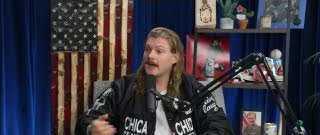
This Past Weekend #686 - Caleb Pressley returns with stories about making interviews, making a DJ set and trying to keep Theo from mailing him more things. Word escrow might have prevented a few of these detours.

1. The solution to saying the wrong thing is apparently an escrow account for words. Theo and Caleb imagine telling a middleman first, then getting a decision about whether to say it. The idea grows into a box that understands the good intention and converts it into better wording. This is their invented product, not an app they actually launch.

2. A meal with Glenny can come with a camera assignment. Caleb says his friend makes food-review videos when they eat out, and Caleb ends up holding the phone. He wants to add little jokes from behind the camera; Glenny wants the filming without the extra commentary. It is the difference between helping with the Glenn show and turning it into a double act.

3. Caleb has a favorite opening for street interviews: I got to ask. He says people have become less eager to appear on camera, but leaving the question hanging makes them curious. The advice comes from his experience; his claim that it works every time is not a measured success rate from our own testing.

4. The retirement-building story gives Theo a pun he cannot stop sharing. Caleb recalls living among much older neighbors, and Theo describes introducing people to the story of his younger friend being grandfathered in. Their later reflection is more thoughtful: Caleb says seeing happy residents and grumpy residents made him consider how small daily choices might shape the person he becomes. That is his personal theory, not a scientific account of aging.

5. Theo counts about four football teams as his own. When challenged about loyalty, he points out that the fan spends the time and money, while the team does not call during the summer to check the relationship. Caleb has a different version of football comfort: he says he may watch about two games on a weekend, but likes knowing all the other games are happening. Those counts describe their own habits here, not a league survey.

6. Their Stagecoach DJ set came with a crucial limitation: they did not know how to DJ. They say Rob from Lost Kings helped them prepare the set beforehand. On stage, both wanted Diplo to remain nearby in case anything went wrong, while they ran out front trying to keep the crowd excited. They explicitly credit Diplo for his help on site, and Caleb also thanks DJ Moonlight near the close. The story is their recollection, rather than independently verified attendance or a claim that they mixed the entire set live.

7. The scripted Ella Langley appearance went better than the cue-card operator expected. Theo says he performed the male part from You Look Like You Love Me, associated with Riley Green. A friend had the emergency words ready offstage, but Theo remembered them. The friend kept waving the cards as though looking at them was part of the job. Theo insists they were only there in case he needed help.

8. Keeping an address private has a downside: no Christmas fruit. Caleb tells Theo he has withheld his new address because he knows extra shirts and unwanted deliveries may arrive. Then he gives credit for the pears and apples from Christmases before. The property-and-animals assumption is denied; this is not a newly established farm, and we are not locating his home.

9. Caleb draws a distinction between scrolling and actually being with people. He says online time can leave him feeling bad, then a simple shared experience can make him remember that connection is still available. The point is his own change of perspective, rather than a clinical recommendation or a prediction that people will lose the ability to feel.

10. Near the end, Caleb says he is roughly a year and a half into working independently. Sunday Conversation remains how he describes his main work, while other business projects let him use a different part of his brain. He sounds comfortable with the direction while still having things to figure out. The timeframe is his own report at recording, not a newly audited business history.

Conversation timestamps
00:00 - Caleb Pressley introduction
00:57 - Inventing word escrow
04:40 - The speech-filter box
08:26 - Filming Glenny food reviews
10:19 - The street-interview opening
12:48 - The retirement-building story
16:49 - Small choices and becoming a grump
29:17 - The cloudy-sky photo
31:43 - Picking a football team
43:22 - Knowing the games are happening
50:36 - The invented agency-boss prank
58:36 - Remembering the Stagecoach DJ set
1:02:19 - Keeping Diplo nearby
1:05:42 - Ella Langley and the cue cards
1:26:02 - The new address and Christmas gifts
1:31:38 - Online time and human connection
1:38:07 - The late-night chili story
1:39:55 - Calebs hospital recollection
1:41:58 - The historical digestion-video discussion
1:57:14 - Working independently
1:59:31 - A business-related shoe gift
2:03:56 - Thanks to DJ Moonlight and closing

Would word escrow have saved them, or is the unfiltered version the whole point?
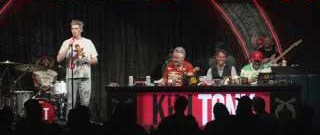
Kill Tony #787 - Harland Williams and Jeremiah Watkins turn a stuck microphone, a Lego hobby and a stack of roast jokes into a callback-heavy night.

1. Paulie Shore leaves behind a problem nobody planned: getting the microphone out of its stand. The crew explains that the tape keeps the cable from slipping out, while Tony wonders why it has become harder to remove. Heidi later gets credited as a microphone consultant, and Jeremiah brings the problem back when Ronnie handles the mic more easily.

2. Mario says one birthday Lego set sent him into a year of collecting. He lists Mario and Luigi karts and a Game Boy, then mentions his girlfriend. Tony turns that into a girlfriend-made-of-Lego joke, but Mario has an actual follow-up: they have little Lego versions of both of them. A Secret Show invitation follows before he leaves.

3. Ronnie's popcorn enthusiasm gives the panel exactly the detail it wants. Stovetop popcorn becomes Pop Secret wordplay, Orville Octopoppy and a Toy Story claw impression. Those are jokes built around the conversation, rather than a claim that popcorn changes anyone's medical condition.

4. Aaron Belisle announces that he will thank Tony instead of roasting him. He credits the show with helping his career and recalls Tony giving him advice on America's Got Talent material. The affectionate goatee tribute then becomes the trap Tony should have seen coming. Aaron follows it by doing his own Harland impression, giving the guest a chance to answer back.

5. Glenn's radio background produces a show within the show. He corrects the number from 15 years to 12, and Tony launches into a meandering morning-DJ parody. The traffic handoff is the best part: it is still the same guy doing the report. Glenn then identifies the station as WRCN on Long Island.

6. Aaron Spaller's car story has a small correction that matters to the punchline. He says 156 in a Ford Focus; when 165 gets repeated, he corrects it back to 156. The panel's answer is a Ford out of focus. The speed is his account, rather than an independently checked driving record.

7. Brian keeps finding his way back to Houston. Travel leads to Houston, watching the news leads to Houston, and a question about hobbies starts with driving to Houston. Harland finally announces that he is returning to the wardrobe jokes. The repeated answer becomes its own interview running gag.

8. Harland spends earlier parts of the show offering to buy other people's jokes, including Paulie's material. AI Harland reverses that arrangement: after a long David Lucas roast reaches page two, the real Harland asks if he can pay him to stop. The persona gets invited onto the panel, and Tony later explains he had been extending the bucket section while AI Harland got ready.

9. The phrase watch finds 15 automatic-text matches for "I love it" and four for "absolutely incredible" in this stored episode. These counts include all voices and opening material; they are not verified counts of Tony alone. Censored gaps interrupt matches, so captions can also miss spoken wording.

Sets & timestamps
10:00 - Paulie Shore
17:47 - Bob Biggerstaff
26:56 - Mario
31:19 - Ronnie Rohrbach
44:26 - Aaron Belisle
53:10 - Glenn from New York
1:02:23 - Brooke McMinnoway
1:13:40 - Nino
1:19:13 - Dedrick Flynn
1:24:40 - Aaron Spaller
1:32:42 - Jeremy Jonas
1:42:07 - Michaela J
1:49:38 - Brian
1:58:35 - AI Harland Williams
2:04:38 - Lisa Mendoza
2:09:02 - Pat

Bonus moments
06:20 - Harland's opening park-story bit
49:12 - Aaron's Harland impression
2:03:37 - AI Harland's additional panel jokes

Which callback landed hardest: the microphone, Houston, or Harland paying to stop the jokes?
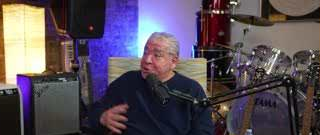
This Past Weekend #685 - Joey Diaz talks about building a quieter home without losing the stage time, friendship and local characters that keep him going. Theo brings a fishing hotline story, and Coco has discovered GTA.

1. Camping has one non-negotiable condition for Joey: a shower. He says he can enjoy the outdoor cooking and the trip, but he is not interested in giving up the ability to wash properly. The story about a campsite with showers is a very different answer from the desert-festival invitation.

2. The Los Angeles departure was not simply a sudden pandemic decision. Joey says his family had already planned to look for a house and move after the school year. In his account, the disruption hurried along something they already wanted. He describes wanting a different family life in New Jersey; this is his recollection of the timing, not our independent reconstruction of the move.

3. A good museum now beats another club on the travel list. Joey says he wants to see the places behind a citys history. The Philadelphia conversation shows how quickly he can move from a ballgame story to the past around him. The appeal is curiosity about where he is, rather than just finding somewhere else to go out.

4. Seeing somebody from nearby make it changed the scale of what felt possible. Joey recalls watching North Carolina player Mike O Koren, from Jersey City, on television. The message he took was not that he had to become a basketball star; it was that there was a world beyond the neighborhood and he could try to do something in it. The inspiration is his memory, without treating the on-air game statistics as a newly checked sports record.

5. James J. Braddock was a neighborhood man before Joey understood what the name meant. Joey recalls shoveling snow for him and only later grasping how famous the boxer had been. Theo lights up at the connection to Cinderella Man. It is a childhood recollection about fame looking ordinary up close, not independently documented proof of the jobs or exact ages.

6. Theos early jobs included a paid fishing-information phone line. He says callers wanted to know where the fish were that day, and his job was keeping them on the line while the expert finished with somebody else. It is a wonderfully specific version of learning to talk to people for a living. We are recounting his memory, not advertising a service or verifying its forecasts.

7. Austins attraction is practical stage time. Joey describes arriving Tuesday, doing three spots each on Tuesday, Wednesday and Thursday, then flying home Friday. That makes nine spots across three nights in the routine he describes. Returning home for several weeks made him feel he was maintaining rather than improving, so having a base in Austin started making sense. This is his account of those trips, not a newly audited show calendar.

8. GTA arrives late in Cocos life, and he is enjoying catching up. Joey says he streams twice a week and learned the game from scratch with friends helping. The chaos they watch is inside Grand Theft Auto, rather than footage of new real-world crimes. The contrast is between the man who says he never played games as a kid and the man now happily making time for them.

9. Joey gives himself a window rather than announcing an ending. At the time of recording, he describes an eighteen-month push until sixty-five, then a chance to reassess the shows and ticket sales. His emphasis is enjoying the work and making the audience have a good night. That is a personal goal, not a confirmed retirement date or a claim that a five-year plan is impossible.

10. The strongest exchange is about what different generations can give each other. Joey says younger comics bring energy, while he can offer the perspective of years in the business. Theo connects that feeling to being around a football crowd. Joey also makes a direct point of telling Theo that he cares and is cheering for him. The support is the discovery here, rather than turning their personal recovery discussion into guaranteed medical outcomes.

Conversation timestamps
00:00 - Joey Diaz introduction
04:20 - Are we already recording?
05:05 - Camping needs a shower
06:35 - Asbury Park concerts and North Jersey
09:18 - The move was already planned
11:31 - Morning fish deliveries
13:19 - City work and a peaceful home
20:34 - Museums and local history
35:03 - Remembering his mother and returning home
1:00:01 - Creating a warm home
1:10:36 - What they would miss about comedy
1:13:16 - The local player who opened a door
1:17:39 - Shoveling snow for Braddock
1:25:17 - The paid fishing phone line
1:28:14 - Why Austin stage time matters
1:30:04 - Learning GTA and streaming
1:34:55 - The monthly-show idea
1:38:13 - Making time for other people
1:42:44 - The eighteen-month comedy goal
1:45:19 - Young comics and shared energy
1:47:03 - Friendship and recovery conversation
1:58:26 - Closing dates and thanks

Which surprise did you enjoy most: the fishing hotline, Braddock as the neighbor, or Coco getting into GTA?
Story Warz #112

• The highest final score: 22 points.
• The challengers' announced records add up to 1 win and 8 losses.
• A power-washer warning turns into a joke about a house made of hay.
• Calling a key fob a "bleeper" launches a UFO riff.
• The game's tablets get roasted as a family phone plan.
• An honesty check gets a blunt "no" - and a joke about how short an honest game would be.
• The house-band joke puts the musicians in an imaginary bunker beneath the stage.
• A ketchup-brand quiz ends up with "Fancy" on repeat.
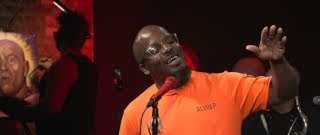
Kill Tony #786 - Donnell Rawlings and Sam Tallent turn a rough bucket night into a chain of callbacks, from couch surfing to government names.

1. Kansai Yasuda gives an accidental misunderstanding a perfect callback. The panel hears culture as couches and wonders whether he is sleeping on one. Later, when they ask about his move to Austin, he says he is staying on a friend's couch. Suddenly the misheard word fits.

2. Chad Ross says he is performing for an audience for the first time after getting eliminated from the poker event that brought him to town. Tony tries the bad Yelp reviews segment on his remodeling business, but the review names Todd, the previous owner. Its age supports Chad's explanation. Redban has also been spelling More as Moore, so the attempted takedown gets derailed by timing and spelling.

3. Mike Holloway wants to finish a parking story, while his Star Wars shirt gives the panel a faster route to jokes. Yoda, Chewbacca, R2-D2 and Boba Fett references pile up as Tony keeps asking for the point. Even the early Texaco detail gets a callback: the panel remembers it because it never goes anywhere. The struggle to tell the story becomes the story.

4. The question What's your government travels across three interviews. Donnell explains it while Young Spence supplies his name. When Tony tries it on Dedrick Flynn, Dedrick thinks he sounds like a federal agent. The panel admits the question works better coming from Donnell. Zachary Myers then simply answers with his full name, giving the same question a third reaction.

5. Zach has an unusually specific refrigerator answer: six full-sized cucumbers. After plenty of detours, the panel learns the ordinary explanation. He eats one a day with hummus and stocked up for the week. The cucumber then keeps finding its way into the conversation.

6. Lucas says he walked out of Whataburger, and his account turns into a debate about how food should reach customers. Redban explains the table-number system and becomes the senior fast-food correspondent. Soon the panel is comparing Whataburger, In-N-Out, McDonald's and Chick-fil-A. These are stage accounts and opinions, rather than checked current restaurant rules.

7. Alvin Perry offers more than a bare experience total: fourteen years doing stand-up, but four years being a comedian. He explains that the earlier material lacked structure, and that learning to shape it made the difference. That is his own assessment of his development. His interview also ends with a Secret Show invitation.

8. Pat spots a connection between both guests and his own milestones. He remembers Donnell being there when he received his Golden Ticket, and Sam being there when he became a regular. They are both at the desk for this closer. Those milestones are his recollection here, and no new award is handed out tonight.

9. The stored automatic text contains 11 matches for "I love it" and nine for "absolutely incredible." These counts include all voices and opening material, rather than isolating Tony's speech. Censored gaps interrupt matches, so these are not independently verified spoken totals.

Sets & timestamps
10:15 - Kansai Yasuda
20:07 - Chad Ross
36:13 - Luella Chavez
42:45 - Mike Holloway
54:45 - Young Spence
1:13:58 - Ronaldo Mercado
1:20:38 - Dedrick Flynn
1:27:49 - Zachary Myers
1:46:10 - Lucas
1:54:28 - Alvin Perry
2:04:06 - Joel Cash
2:10:04 - Juanita
2:26:14 - Pat

Bonus stand-up
59:19 - Young Spence is invited to try another minute

Bonus performances
1:59:18 - Donnell's improvised church-song bit
2:18:07 - Donnell's additional musical riff

Which callback worked best: couches, government names, or the fast-food debate?
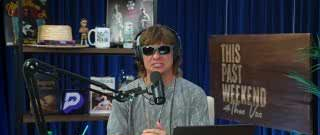
This Past Weekend #684 - Bad Haircut starts without a beginning, takes a very noisy camper through the Midwest, and ends with calls that give the conversation a different kind of weight.

1. Theo solves the opening problem by abandoning the opening. He imagines watching a batter run straight to second base and everybody accepting that this is how the game will begin. It gives the episode its first little piece of logic: sometimes starting in the middle is still starting.

2. The haircut complaint is more specific than simply looking bad. Theo says he requested half an inch off and watched two inches go instead. He can accept a bad-looking hairstyle if it is the bad-looking hairstyle he chose. The measurements and exchange are his recollection, not our independent review of the barber or an identified shop.

3. Complaining to a bald friend changes the conversation. Theo recalls calling Shane to discuss the cut, only to realize that this is not the person most likely to share his exact problem. The remembered stories about childhood hair loss take the complaint down a different road. They are part of Theos comic telling, not independently verified medical history.

4. Roughly three thousand camper miles become a group endurance story. Theo describes traveling with two friends through the Midwest, with rattles, loose items and flying silverware providing the soundtrack. He says it brought them closer together, then makes that literal: they were huddled in the front. The impossible oven temperatures and dramatic parts-loss descriptions are exaggeration, not a vehicle inspection or a documented injury report.

5. The Illinois fishing stop catches data instead of fish once Theo starts improvising. He imagines runoff from data centers producing emails, old Seinfeld downloads, MySpace pages and a very large spreadsheet. This is the joke of treating digital information as something you could reel out of a pond, not an actual data breach or disclosure of private messages.

6. An apology for a muddy Michigan track turns out to be unnecessary. Theo says the wet ATV outing was one of the most enjoyable things he had done. The conditions somebody worried would spoil the experience became the part he loved. That is his personal memory of the outing, rather than advice about operating a vehicle in unsafe conditions.

7. Chicago looks different from the river. Theo describes the cruise through downtown as one of the neatest experiences of the trip, saying he had not seen a huge city from a riverway like that before. Among all the camper chaos, this is one of the moments he slows down just to appreciate.

8. The impossible day comes with two competing instructions. Theo describes needing everything to be perfect while simultaneously feeling he cannot manage it all. He imagines the thoughts running beside each other in a race neither can win. His account of getting support later is personal experience, not a clinical promise about what will work for everybody.

9. A parents voicemail about school-bus shame brings him back to his own childhood. Theo recalls riding beside the bus he did not want to be seen leaving. The conversation he wishes his family had offered is about being loved and belonging, even when the house or money situation is difficult. He wants the child to have an inner voice that can answer the shame, and invites other listeners to contribute their perspectives. We are keeping the focus on the response, without building a profile of the caller or child.

10. Rick gets more than a voicemail response: Theo asks the team to call him. Their conversation becomes a check-in about having a difficult time and being able to tell another person. The mutual appreciation at the end gives the episode somewhere to land. The personal recovery accounts are theirs; this is not a promise of medical outcomes or a current sobriety counter.

Conversation timestamps
00:30 - Starting without a beginning
01:34 - The haircut request
05:58 - Calling the bald friend
09:38 - The camper trip
12:27 - Closer together in the front
15:30 - Fishing in a data-leak pond
17:28 - Michigan ATV mud
18:55 - Chicago from the river
20:33 - The political-news discussion
40:12 - Perfect and impossible thoughts
42:47 - Honesty and getting support
45:21 - The stained-glass voicemail
49:56 - A parents call about shame
51:38 - The school-bus memory and response
57:14 - Belonging across neighborhoods and classes
1:00:40 - Ricks voicemail
1:02:07 - Calling Rick back
1:07:29 - Mutual support and gratitude
1:10:44 - Closing thanks

What stayed with you most: the camper chaos, the river view, or the conversations on the hotline?
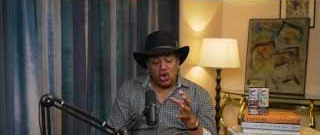
This Past Weekend #683 - Neil deGrasse Tyson brings the universe down to bagel size, then lets Theo take it somewhere very different. The conversation keeps returning to how a good explanation, a joke or a change of perspective can make an unfamiliar idea feel close.

1. The new book is introduced as Lost in Space: 5,000 Facts for Navigating the Universe. Neil calls it a fourth collaboration between StarTalk and National Geographic Books. His example of making a fact memorable is visual: picture the sun as a sesame-seed bagel and Earth as one of the seeds. We are recounting his illustration and the books stated scope, not independently auditing five thousand entries or presenting an exact scale model.

2. Celsius belongs to two different conversations. Theo hears the discussion about celebrity and makes a joke about getting a Celsius deal. Neil immediately takes the word back for his own profession: whatever else it means on this show, to a scientist it is a temperature scale. Neither has to explain the other reference for the detour to work.

3. Neil says he once passed on a proposed parabolic plane ride with a condition attached. The Pepsi offer, as he recalls it, meant wearing a branded jumpsuit and potentially appearing in advertising photos. The zero-calorie and zero-gravity association was clear, but he says it was not worth that to him. This is his account of a proposed airplane experience, not an offer he accepted to orbit Earth.

4. His hypothetical space crew needs a poet and a comedian. Neil says he would bring Theo because the new surroundings would pass through a life experience completely different from his own. He values that lens, not just having somebody on board to repeat a familiar joke. Theo adds Duncan Trussell to the imagined crew; they are not announcing a flight.

5. Turning around from the chalkboard is part of teaching. Neil distinguishes someone who puts information in front of a room from someone who asks how the people in that room learn. His approach is to shape the explanation so it reaches them, rather than requiring everybody to meet him at the board. The conversation itself has been full of those alternate ways into an idea.

6. Twins apparently need a Carfax now. Theo turns his comic skepticism into a request for paperwork and a VIN. Neil plays along, then cannot let VIN number pass without pointing out that the final letter already stands for number. The joke reaches the same destination as ATM machine. It is wordplay, not an attempt to check anyones personal records.

7. The debris visualization gets a very Theo description: a snow globe inside out. Neil likes the image, then explains that the crowded-looking display compresses an enormous amount of space onto a screen. The scale qualification matters to what they are looking at. We are keeping the visual exchange without turning the changing on-air satellite totals into a newly verified orbital census.

8. A book of short facts becomes a plate of galactic biscuits. Theo describes little pieces of information that make you reach for another, then coins starbohydrates. Neil gives this one an enthusiastic approval. It is an unexpected second food model for the universe, after the opening bagel.

9. If Neil did choose a costume, it might be a protector of geeks. He imagines a signal made of digits of pi appearing in the sky, with more digits meaning somebody needs more help. The fantasy grows out of his dislike of people being picked on for being different. We are keeping the imaginary superhero separate from claims about actual fights or an independently checked wrestling record.

10. Even the proposed StarTalk tagline has a punchline. Neil says he wanted learn something for a change, but the marketing response was that it sounded too off-putting. By the end, the invitation is gentler: curiosity and being different are worth keeping. He closes that wider perspective by reading from Carl Sagans Pale Blue Dot, then they revisit an AI-styled clip from their earlier conversation. The replay is older material, not a new exchange recorded for this appearance.

Conversation timestamps
00:00 - Neil deGrasse Tyson introduction
02:33 - The book and the bagel analogy
14:01 - Celsius as a temperature scale
20:27 - Imagining an alien encounter
27:49 - The Louisiana launch-site discussion
32:01 - Where Neil would want to travel
34:03 - The Pepsi plane-ride offer
36:52 - A poet and a comedian in the crew
43:30 - Teaching and meeting the learner
53:53 - Checking the missing-rover claim
1:02:11 - The portable-urinal detour
1:12:05 - Twins and Carfax
1:14:46 - Space debris and the inside-out snow globe
1:30:34 - The moon-restaurant dad joke
1:35:50 - Galactic biscuits and starbohydrates
1:37:53 - The geek-protector fantasy
1:45:16 - Cosmic curiosity as a child
1:59:10 - The rejected StarTalk tagline
2:01:17 - The imagined wormhole destination
2:09:12 - Celebrating being different
2:12:51 - Carl Sagan and the wider perspective
2:15:17 - Replaying the earlier conversation
2:16:38 - Closing thanks and book callback

Which image made the idea stick: the bagel, the snow globe, or the pi signal?
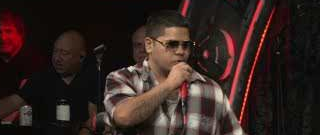
Kill Tony #785 - Duncan Trussell and Kurt Metzger turn a night of returns into a running hotel bill Tony never agrees to pay.

1. Brent Reed's first announced Golden Ticket cash-in opens with a complaint about his dad's redneck riddles. The saying about being so happy he could be twins gets a simple counterexample: what if the twins are sad? Even a childhood Hot Wheels memory ends up tangled in one of his dad's metaphors. The panel keeps that family-wordplay energy going after the set.

2. Patricio Gutierrez has already talked about pausing movies when people talk and rewinding anything he missed. His Harry Potter story even gets the line about his charms making his date disappear. Then Tony spends a long time setting up a question about his dark side or guilty pleasure. The answer is swimming. The harmless answer after all that buildup becomes the payoff.

3. Tim briefly gets the reaction reserved for a first-ever set, then finishes the sentence: his first set in fifteen years. He says he had previously done comedy for twenty years and came to Austin after being inspired by the scene. Signing up for the bucket turns his intended return to performing into an unexpectedly public comeback. This is his account of the hiatus, rather than a lifetime debut.

4. Duncan keeps volunteering Tony for hotel expenses. After hearing about Zane staying in his car, he announces a week at the Four Seasons, and Tony immediately says no. The offer returns during Dedrick's interview and again for Trini, with another explicit denial. It becomes a running joke about Tony's generosity; nobody has actually booked those rooms.

5. Mike Ryan explains the Pink Flamingo Comedy Club name through a shirt. He says he wanted an animal and a color, looked at his pink flamingo shirt, and found the name. He also reports owning thirty-four of the shirts, with his mother still adding to the collection. The interview connects an outfit the panel has teased before with a new chapter in his own comedy work.

6. Trini Martinez says he tried these jokes at a barber competition in Baton Rouge. The panel first wonders whether it was some kind of barber-comedian contest, but he clarifies that people were concentrating on the actual event while he was trying to practice material. Later, Tony points out the difficulty of treating laughter from someone in your barber chair as a clean comedy test.

7. Timmy No Brakes sets up his topical material as guesses about next week because the episode is released on a delay. That frame matters when he reaches a mock Redban memorial video. The supposed tribute plays with Redban still present, and the panel talks about the joke's timing rather than a real death. Even the montage takes a moment to get started.

8. Q Rose remembers not understanding the format on his earlier visit. After doing his minute, he tried to leave because he did not know an interview came next. He says he then learned how big the show was and kept signing up every week for roughly two years before this return. His Batman-and-Alfred description of supporting Air Force pilots gives the catch-up interview another memorable image.

9. The phrase watch finds 21 automatic-text matches for "I love it" and five for "absolutely incredible" in this stored episode. These include all voices and opening material, rather than isolating Tony's speech. Censored gaps break matches, so the figures are not independently verified spoken totals.

Sets & timestamps
08:38 - Brent Reed
12:19 - Donna Lee
19:43 - Matthew Jordan
29:31 - Patricio Gutierrez
41:41 - Sir Winston Pickles
46:03 - Trey Stewart
53:08 - Zane Anas
1:04:46 - Tim
1:12:40 - Dedrick Flynn
1:18:20 - Mike Ryan
1:26:59 - Trini Martinez
1:38:15 - Timmy No Brakes
1:47:16 - Juel
1:57:40 - Q Rose
2:08:30 - Pat

Bonus performances
1:03:50 - Zane's four-bar rap

Bonus moments
1:41:30 - Timmy's mock Redban tribute video
1:45:41 - Timmy asks for an improv suggestion

Which callback stayed with you: the Four Seasons, the spelling, or the pink flamingo shirts?
Story Warz #110

• The highest final score was 20 points, six points above second place.
• A returning guest promises new strategies without naming one. The response: "You said it all without saying anything."
• The club's internet cuts out during the bug-themed game, prompting the inevitable question: "Has your computer been infected with a bug?"
• An imaginary family has children called "Scraps" and "Puddles," plus "Uncle Hot Topic" offering spiky onesies and a Hellraiser movie night.
• A score readout gets interrupted with a request to change the scorekeeper's tone for a guest. The softer delivery is promptly called "fake niceness."
• An invitation to Stand Up on the Spot becomes a two-part objection: "I hate standing up. I hate being put on the spot."
• Before the last reveal, the panel debates whether a vote should follow an honest guess or protect a lead against possible overtime.
This Past Weekend #682 - Bishop Robert Barron and Theo move between questions of purpose, personal memories and the kind of wordplay that only turns up when a bishop visits this show. The lighter detours keep returning to how people connect with something beyond themselves.

1. Becoming a bishop did not feel like waiting for the draft. Barron says he was watching golf on a Sunday afternoon when the appointment call arrived without warning. Theo wonders if it sounded like a scam; Barron says he recognized who was calling. He also explicitly says someone can decline, even as he describes the strong expectation to accept. This is his recollection of the call, not a new appointment announcement.

2. His holy hour supplies a concrete personal routine: one hour each morning. Barron describes readings, the rosary and simply sitting in silence as ways that time can be spent. When speaking to others, he allows for starting much smaller. We are describing his religious practice, not turning it into a mental-health treatment or a rule that everybody must follow.

3. GPS does not answer every kind of being lost. Theo lists navigation tools, stored possessions and all the things people can buy, then asks about what still seems missing. When Barron brings in spiritual exile, Theo gives it a wonderfully ordinary location: Costco. Barron then describes the calm navigation voice on his own Waze as an analogy for trust and direction.

4. Great art gets a very Theo review. Barron recalls reading Romeo and Juliet at school and being struck by the beauty even while joking that he understood only a tiny fraction. Theo first says it is not that great, then nominates The Notebook instead. Barron continues explaining why an encounter with art can move someone beyond a simple statement of liking it. Their disagreement becomes part of the illustration.

5. Not all oil belongs in the same conversation. While they look at a confirmation image and discuss chrism oil, Theo mentions the oil he has been putting on his scalp at night. Barron immediately distinguishes the two. Theo agrees that his came off a shelf. The exchange is a comic change of register, not a claim about hair growth or religious use of a cosmetic product.

6. About six years in the same house is not quite a roommate sitcom. Looking at Cardinal Francis George, Barron says they lived in the same house and describes him as a mentor. Theo asks if they were roommates, and Barron corrects that wording. He has also just corrected the suggestion that the man pictured was the pope. The approximate duration belongs to the guests account; we are preserving both clarifications.

7. One blue drop becomes a lesson that waits until the end of class. Barron remembers a high-school religion teacher adding a drop to a glass of water and teaching for forty-five minutes without explaining it. Only afterward does the teacher point out the changed water as an image of one persons influence. Theo imagines the people who own the water refusing the change. It is a classroom memory and a spiritual analogy, not a newly verified chemistry experiment.

8. Thinking about somebody else apparently has an exclusive flavor. Theo describes how welcome it can feel to wake up with another person in mind, especially when his work involves watching and editing footage of himself. He compares the feeling to ice cream in a flavor nobody else can get. Barron relates that account to his religious understanding of love; the show keeps it personal rather than offering a clinical outcome.

9. The Tower of Babel has an app-shaped interruption. As Barron uses the biblical story to discuss technological ambition, Theo notes that the name now also brings a language-learning app to mind. His six-out-of-four estimate is deliberately impossible. There is no survey behind the punchline, and the guest is offering an interpretation of the story rather than a measured technology forecast.

10. The final relationship idea turns two people toward a shared interest. Barron calls it a transcendent third: art, philosophy or another purpose that both care about. Theo connects it with a similar idea discussed by a previous guest and reduces it to a simple invitation to find a friend and do something together. Barron also illustrates the point with an explicitly fictional film plot. They close with a prayer, then a personal conversation about Theos Bible-study group; this is not a guarantee about any couples future.

Conversation timestamps
00:00 - Bishop Robert Barron introduction
01:41 - How the appointment call arrived
03:44 - Bookstore work and dishwashing
04:36 - The book that influenced him
09:06 - The question about evil
13:17 - A holy hour and daily prayer
25:39 - Willingness and uncertainty
27:45 - Direction, possessions and Costco
29:42 - The Waze analogy
37:32 - The part-time body exchange
42:21 - The hat and a previous guest callback
47:49 - Songs that made an impression
48:43 - Shakespeare and The Notebook
50:12 - What he means by aesthetic arrest
54:31 - Learning from a person and a video
1:01:12 - Two different kinds of oil
1:01:23 - Cardinal George and the shared house
1:05:08 - Humility and giving up are different
1:08:41 - The blue-drop classroom memory
1:12:17 - Editing yourself and the ice-cream metaphor
1:29:39 - The question about indulgences
1:41:04 - Arguments and insults
1:43:47 - Babel and the language app
1:45:44 - The transcendent third
1:48:54 - The shared-direction callback
1:49:13 - Asking to close with a prayer
1:49:19 - Closing prayer
1:49:59 - A personal Bible-study conversation
1:51:10 - Closing thanks

Which detour stayed with you: Costco, the roommate correction, or the impossible app survey?
This Past Weekend #681 - Arthur Williams Jr., introduced here as Art, tells a life story that changes shape as Theo keeps asking about the person behind it. Alongside the criminal past, there are revealing detours about attention, excess, public speaking and finding a different outlet for creativity. The accounts below remain his recollections; this is not an independent audit of criminal cases, business records or financial claims.

1. The moon gets the first uncomfortable spotlight. Theo wonders whether it feels embarrassed when everyone looks up at once. Art reverses the scene: he woke in his room and felt as though the moon was looking at him. Much later, when he remembers walking back into a room full of people staring at him, they explicitly bring that opening image back. A throwaway first exchange becomes the frame for his stage-fright story.

2. More shopping eventually stops feeling like more. Art recalls having so many clothes that another purchase seemed pointless; his example is a hundred and fifty shirts. Theo asks what someone is even supposed to do with all those clothes and shoes. The useful part of the anecdote is the dissatisfaction, not treating the shopping as an achievement or recommending how the criminal proceeds were spent.

3. Basketball offered another way to know the city. Art describes playing with different teams in different Chicago neighborhoods and forming friendships through the sport. It is a personal memory of connection across boundaries. We are keeping that account without repeating sweeping claims about race or turning it into an independently measured map of where somebody could safely go.

4. A limousine has a surprisingly long walk to the exit. As Art remembers the nights out, Theo focuses on the first passenger having to go all the way inside and then make the whole journey back. The luxury detail becomes an inconvenience. The laugh comes from the distance to the door rather than a recommendation about drinking or driving.

5. The conference microphone did not take a break with him. Art recalls being nervous before a speech and stepping outside to talk to himself, only to discover that the microphone was still transmitting. He says the assistant wanted to cancel his appearance, but he insisted on returning. This is his conference recollection; an unrelated true-crime reference from Theo is not a confession by Art.

6. One reassuring face matters more than a packed room. Back at the lectern, Art remembers freezing until an older woman in the audience silently told him he would be all right. He says an opening joke about being around so many agents got a laugh and let him continue. In his telling, that became about forty-five minutes of speaking and thirty minutes of questions. Those are his estimates, not newly verified event timings or an endorsement from a government institution.

7. Art and music became the forward plan. Art describes time spent painting while his son wrote music, and their intention to make those creative pursuits the next chapter. He also credits the community that helped him after release with practical support such as work and a place to live. The point is the change in direction and the help around it, rather than romanticizing their prison experience or adding unverified family case details to a permanent record.

8. He describes five galleries and roughly ten years as a professional artist. Those are source-qualified career measures supplied by Art during the conversation, not a current audited gallery count or independently established business chronology. He says people helped him find another way to make a living, and later mentions that his gallery has begun showing other artists too. His account of an early show involving Arnold Schwarzenegger remains a personal recollection, not a newly verified celebrity endorsement.

9. The final product list leaves out the obvious subject of this episode. They look through an on-air list of counterfeited goods, including shoes, phones and accessories, then realize money is missing. Art makes a joke about wanting it on there. When Theo returns to the digital-money idea, Art explicitly says he is done and retired. This is a joke about that particular screen list, not a reliable worldwide ranking or an invitation to commit fraud.

10. The distinction between money and money-themed art matters. Art explains that his current work is printed on canvas and painted over. Earlier in the conversation, he explicitly says people should not be allowed to counterfeit and that he should not have done it either. Those statements belong alongside the more boastful memories. His excitement about making an image is the creative thread that continues; the episode does not need a recipe, an evasion tactic or an unsupported claim that the crime hurt nobody to make that thread interesting.

Conversation timestamps
00:00 - Art Williams introduction
00:44 - The moon and the opening attention joke
01:28 - Remembering their Chicago meeting
26:38 - The first timeline recap
33:43 - A bookstore and the Bruce Lee book
50:52 - The fear he recalls feeling
53:16 - Shopping and the shirt example
1:05:29 - Basketball and friendships across town
1:09:43 - Theo questions the earlier picture of the story
1:11:29 - The limousine-door detour
1:42:35 - The public-speaking chapter
1:43:25 - Realizing who was at the conference
1:44:11 - Somebody was worried about him
1:46:23 - The microphone stayed on
1:47:33 - The opening moon image returns
1:48:01 - The reassuring audience member
1:48:39 - His speaking and question-time estimates
1:54:55 - Painting, music and a different future
1:55:36 - The community after release
1:56:41 - Choosing the art path
1:56:56 - His five-gallery account
1:59:42 - Theo asks about harm and amends
2:01:55 - Canvas art and the question about counterfeiting
2:02:47 - He explicitly says it was wrong
2:09:36 - His account of professional-art years
2:14:26 - Clarifying the canvas work
2:16:12 - Showing other artists
2:16:42 - The on-air product list
2:17:52 - Money is missing from this list
2:18:04 - He says he is retired
2:18:42 - Closing book mention and thanks

Which moment changed the way you heard his story: the moon callback, the reassuring face, or the art-and-music plan?
Kill Tony #784 - Yakov Smirnoff and Ari Matti meet an inventor, a childhood audience member and a barker who finally reaches the bucket stage.

1. The closing conversation gives Yakov Smirnoff an unexpected connection to the show's beginning. Tony mentions that Kill Tony started in the Comedy Store's Belly Room, and Yakov says he physically helped build that room while working there as a carpenter. He recalls being given work while he was still learning English. It is his own account of that history, and a fitting final callback for his first announced panel visit.

2. Ian Sharp's old metal band gets a much more precise MTV credit after a follow-up question. He says With Faith or Flames had music on MTV, then explains that it was background music for a reality dating show. His defense is simple: he got a royalty check, so it still counts. Tony's imagined Kia endorsement later in the conversation is a joke, rather than another actual music placement.

3. Luther Thompson remembers watching Yakov in Branson on a family trip commemorating his adoption. He says he was young and does not fully remember all the material, but the performer stayed with him. Now the roles have shifted: Luther is doing his own set with Yakov on the panel. He also explicitly clarifies that the trafficking line in his routine is a joke about being adopted, rather than an allegation.

4. Dr. Chuck has an invention story the panel cannot resist: a patent he describes as a poop detector for a robot vacuum. When Tony starts imagining the companies using it, Chuck adds the less glamorous detail. Nobody bought it because the device was too big. The technology and patent are his account; the important distinction is that he never claims it became a successful product.

5. Tony constructs a whole imaginary morning for Dr. Chuck, complete with a ping-pong ball, a coffee delivery train and a shower triggered by the mug. Chuck calls the idea quaint and supplies the ordinary version: he outsources breakfast to people, picking up a taco and coffee at HEB. The fantasy is much more complicated than the actual answer.

6. Joe Newcomer says this was his 116th sign-up before finally reaching this stage. Tony and Redban recognize the positive street greetings they have seen for years, and Yakov then asks the useful outsider's question: what is a barker? Joe demonstrates the sales pitch himself. The sign-up figure is Joe's stated count, rather than an audited attendance total; Tony later retells it with a different number.

7. Chris offers to demonstrate an American accent, then gets told he changed nothing. He keeps trying to sell the impression while the panel stays unconvinced. Much later, after explaining his planned stay in Austin, he says he might pick up a book. That gives Tony a reason to connect him immediately with Dr. Chuck and the earlier book conversation.

8. Kylie Kaiser recalls being only a few months into stand-up on her earlier visit and getting a guest spot with Dave Attell. Her return brings more specific encouragement: Ari Matti praises the way her setup makes the audience picture a scene, and Yakov talks about the intensity and timing that keep a story moving toward a punchline. The interview becomes a small discussion of how the material works.

9. The phrase watch finds 15 automatic-text matches for "I love it" and 11 for "absolutely incredible" in this stored episode. These counts cover all voices and opening material, rather than isolating Tony's speech. Censored gaps interrupt matches, so they are not independently verified spoken totals.

Sets & timestamps
10:42 - Steve Francois
17:27 - Frank McGow
26:03 - Ian Sharp
37:17 - Kylie Kaiser
47:08 - Luther Thompson
1:00:45 - Dedrick Flynn
1:09:12 - Dr. Chuck
1:25:56 - Joe Newcomer
1:36:16 - Chris
1:53:28 - Dulce
2:01:04 - Mason Smith
2:05:20 - Pat

Bonus performances
1:23:05 - Dr. Chuck shares his David Lucas roast jokes
2:10:11 - Yakov's additional jokes during the closer

Bonus moments
59:25 - Luther and Liesel's kiss segment
1:35:21 - Joe demonstrates barking for a comedy show

Which connection surprised you most: Yakov and the Belly Room, Luther's childhood trip, or Dr. Chuck's invention?
Story Warz #109

• The highest final score was 21 points, five points above second place.
• All three challengers were introduced with a zero-and-one record: no announced wins and three losses combined.
• “Double points”: 3 mentions.
• A request to guest on a House of the Dragon recap podcast comes with an admission of falling asleep to the first episode four times.
• The imaginary stadium gets a t-shirt cannon, then the joke turns to aiming it directly at someone in the front row.
• A hearing-test riff ends with the wrong machine: "I was in an MRI." "Stop moving and take out your nose rings."
• Last-second voting becomes a menu analogy: study it, then choose only when the waiter asks. "That's an insane way to look at food."
• An accidental locked-in vote starts a "tablets suck" chant. Once points arrive, the chant flips to "tablets rule."
• A table-falling interruption puts the prize book first: "OH NO. MY BOOK." "WHAT A CATCH." "MY BOOK."
This Past Weekend #680 - Mark Dowdle explains a race with no fixed finishing distance, but the conversation keeps finding the people, habits and images around it. Theo turns crew support into hydration, pacing into a road trip and motivation into a reason to stay put.

1. The hour is the organizing unit. Mark describes a backyard ultra as a 4.167-mile loop starting every hour until one person remains. The time left after completing a loop is time for other needs. An important qualification follows the introduction: he describes fifty-minute loops followed by about five or six minutes of sleep or rest, then a three-minute warning before the next start. This is not an account of ninety-four continuous hours without any sleep, and it is not a training recommendation.

2. The crew offers something he calls separate from the result. Mark says the people waiting for him communicate that they will love him and be proud of him regardless of what happens. Theo calls the stop emotional hydration. That phrase captures the support without turning it into literal hydration or a measured medical effect. Mark later makes the point that someone does not need a four-hundred-mile race to experience meaningful support from another person.

3. The menu briefly sounds like a different kind of event. Mark describes pancakes and syrup, then steak and eggs at three in the morning between loops. Theo calls the scene Roman before comparing the coffee-and-energy-drink side of it to a construction worker. The meals are part of Marks personal account; the joke does not establish a nutrition plan for other runners.

4. The travel story gives the starting photo an extra layer. Mark recalls a missed connection, a change of arrival airport and a hurried final journey to the race. He says he arrived about fifteen minutes before the start and stood among prepared runners in jeans with a suitcase. After changing, he says he reached the starting corral with about two minutes remaining. Those are two different points in his account, rather than conflicting arrival times, and they remain his estimates.

5. His vehicle of choice is a minivan. Mark compares pacing the event to taking a minivan across the country rather than revving a Corvette. He says he walks much of the course and describes his effort as a mix of jogging and walking. The image counters the assumption that an ultra means sprinting continuously. Elsewhere, he emphasizes responsibility for knowing his limits and respects a fellow runner for withdrawing when continuing would only serve his ego.

6. A familiar course produces a very simple Theo explanation. Mark describes a persistent feeling in Germany that he had been there before. Theo points out that he has spent days going around the same loop. His joke about hundreds of repeats is not an official lap count or a diagnosis. The exchange lets an extraordinary subjective experience meet the most ordinary possible explanation.

7. Competitors can also help each other. Mark recounts runners picking rocks off the trail to make it easier for a wheelchair competitor. Theo suggests giving him an HOV lane. We are preserving the human gesture and the imaginary lane, without presenting rough rock estimates as audited counts or adding an independently verified current world record from the on-air article discussion.

8. Feeling motivated can become its own excuse. Mark explains that he tries to use structure and help from other people rather than relying on a feeling to appear. Theo recognizes a funny reversal in himself: sometimes feeling motivated makes him think he is already doing well, and then he does nothing. The joke lands because he notices the gap while saying it aloud.

9. The gratitude list needs a moment attached. Theo describes thinking beyond a name on a page to a walk, a conversation or the experience of being at a game together. Then he gives a less expected example: the doors in his house, and how it feels to move through them. Mark notices how vividly he seems to return to the remembered scene. This is their personal reflection, not an independent claim about brain regions or a treatment for depression.

10. The reward he pictures is a Wednesday movie. Mark describes the freedom to spend an ordinary weekday with his wife as something meaningful on the other side of a demanding race. At the close, their earlier conversation about perfection catches Theo in real time: he says he is trying his best, then immediately wishes he were doing better. That small contradiction returns the episode to the everyday life around the exceptional event.

Caption note: the saved automatic text contains two exact matches for Onward across all voices. That includes quoted speech and does not establish a Theo-only spoken count or an independently checked audio total.

Conversation timestamps
00:00 - Mark Dowdle introduction
01:10 - The hourly backyard-ultra format
04:35 - Crew support beyond the result
05:44 - Emotional hydration
07:02 - Making room to say it is hard
17:21 - A different kind of race
17:48 - The fine print of a prayer
19:36 - Fifty-minute loops and short sleep or rest
20:41 - The between-loop meal service
23:21 - The caretaking conversation
26:00 - A shared mission
30:07 - Holding the food plan loosely
32:57 - The disrupted journey to the start
36:03 - Arriving in jeans with a suitcase
39:31 - The minivan and Corvette analogy
42:09 - Responsibility for limits
43:07 - Respecting a decision to withdraw
48:51 - Discussing the loop-eighty-seven replay
52:01 - Marks account of the competitive exchange
54:49 - A different format at the Midstate Mile
1:00:08 - The discussion of unusual experiences
1:01:15 - The familiar-course joke
1:07:10 - A fellow competitors example
1:09:29 - Clearing rocks from the trail
1:17:02 - The college-sports backstory
1:21:42 - Charity runs and shared purpose
1:24:56 - Journaling and the internal voice
1:32:40 - Thinking aloud without perfect answers
1:34:48 - Imagining a future perspective
1:37:58 - The hitchhiker metaphor
1:41:04 - Recognizing a physical limit
1:44:21 - Discipline and help from other people
1:45:43 - Motivated to do nothing
1:47:17 - His personal calendar challenge
1:50:58 - Gratitude with a memory attached
1:52:10 - Being grateful for the doors
2:04:49 - Returning to the faith conversation
2:09:51 - A drive-through-prayer metaphor
2:12:18 - The meaningful book inscription
2:18:18 - Replaying competitive race banter
2:19:18 - The Wednesday-movie reward
2:23:18 - His three-part way to share the experience
2:26:04 - Closing thanks and the perfection callback
2:27:09 - The charity-run website callback
2:27:25 - Clarifying that the displayed run was in 2022

Which image stayed with you: emotional hydration, the minivan, or the Wednesday movie?
This Past Weekend #679 - Luke Bryan and Theo already have fishing trips and a Hawaiian misunderstanding to draw on, even as Luke describes this as his first time doing the podcast with Theo. That is his on-air description, not an independently audited lifetime appearance count. Much of the conversation is two familiar people trading stories and correcting each others first impression.

1. Reading glasses establish the tone before the big stories arrive. Luke says the beer list becomes difficult without them, and the discussion slides into high-gravity beer. Theo initially hears the phrase as something closer to a carnival ride. Later, the readers return when they look at pictures. The joke is about finding the right words and seeing the right details, not medical advice or a recommendation about drinking.

2. Fishing has its own school system. Luke remembers Theo doing well on an earlier trip and says his guide complimented him. Then he puts the praise in perspective: Theo is still in kindergarten, and learning to catch fish on a fly rod would move him toward ninth grade. It is an affectionate way to promise another lesson. The same grade-level callback comes back near the end when they talk about going again.

3. Luke corrects the peanut-farm picture. He says he grew up in a small Georgia town rather than a house sitting among surrounding fields, with a peanut mill very close by. He also corrects the initial Virginia guess. The conversation then becomes a memory of picking and boiling peanuts. We are keeping his distinction between the town, the nearby industry and the imagined farm setting rather than silently turning one into the other.

4. The Hawaii story was not what Luke thought it was. Luke remembers repeatedly asking who Theo had brought to the resort, expecting a different explanation from a new security guard. Theo says a freeze had disrupted his return to Nashville, so the trip became a different kind of getaway. His estimate is five days of dinners with the guard and about nine proposals at neighboring tables. Those are his recollected numbers, not checked travel records; the joke is their surroundings, not a claim that the two were a couple.

5. Another person can protect an ordinary parenting moment. Luke explains why it helps to have somebody manage photo requests while he is watching his sons football game. He wants to give people their moment without missing the game itself. It is a boundary about timing, rather than an account of refusing every request or a judgment about fans as a group. No new statistics about the children or their teams are needed for that point to land.

6. The camper supplies an entire sound effect. Theo describes the trip as riding in an open toolbox, with every bump setting something off. Luke imagines popcorn bouncing around. When Luke suggests nobody slept, Theo clarifies that they did sometimes sleep in the camper and sometimes stayed with friends. This is a personal travel story and comic description, not an independent finding about the vehicles safety or a recommendation to drive without rest.

7. The Riley Green story includes a correction worth keeping. Luke describes a message about getting together and doing the activities in Fish, Golf, Hunt, Drink. When Theo asks whether they really wrote the song together, Luke explicitly says Riley did not. That clarification matters more than carrying the first assumption forward. The wider discussion is about the online claim that AI wrote the song; describing that rumor is not an admission that it happened, and their later AI jokes do not establish production provenance.

8. A book title takes a moment to settle. The conversation initially names Simon Birch, then arrives at A Prayer for Owen Meany and a wider mention of John Irving. Luke remembers the experience of reading it as something different from the books he had been made to read at school. This is a personal favorite, not an objective ranking, and we are not using the casual movie-credit discussion as an independently verified film record.

9. Luke has a small comedy file already. After Theo says he could have been a comedian, Luke reveals that he keeps funny ideas on his phone. He describes enjoying the interaction with fans when he is at the piano, and imagines a future Vegas setting with guitar, piano and that conversational feel. It is an aspiration, not a newly announced show or a completed standup debut. Earlier, he says settling into a podcast takes him a little time; the comfortable back-and-forth is part of the result.

10. The final fishing advice is mostly about clearing the day. Luke describes the way a hurried outing can start to feel like another task to finish. He suggests making room for a day without an afternoon call hanging over it. Their invitations and grade-level jokes close the conversation with the activity they already share. It is a personal plan to spend time together, not a verified booking or a medical claim about decompression.

Conversation timestamps
00:00 - Luke Bryan introduction
00:41 - Reading glasses and the beer list
01:34 - The high-gravity misunderstanding
04:25 - The football weekend story
15:57 - Clarifying which camp
21:56 - An imaginary short-term marriage pitch
24:40 - Fishing lessons and the grade-level joke
38:25 - School-dance clothes and old brands
44:05 - The Georgia-town and peanut-farm distinction
45:05 - Boiled-peanut memories
47:32 - Remembering Hawaii
48:35 - Who Theo brought with him
50:09 - Dinners beside the proposals
52:39 - Watching the game before taking pictures
58:57 - The hunting-trip memory
1:17:43 - The duck-meat punchline
1:20:24 - Paradise and the frozen-drink detour
1:21:55 - Little drinks after practice
1:33:02 - The noisy camper
1:34:33 - Clarifying that they did sleep
1:35:54 - A different tour-bus memory
1:36:29 - The Billy Strings interview callback
1:37:08 - The song and the online discussion
1:38:18 - Riley Green and the writing correction
1:45:45 - The book-title conversation
1:46:45 - The explicitly denied flag rumor
1:48:18 - The extended-family conversation
1:55:47 - The imagined alternative song
1:57:21 - Settling into the podcast
1:58:14 - A phone file of funny ideas
1:58:41 - Imagining a conversational Vegas show
1:59:41 - The on-air album promotion
2:00:02 - Joking about the cover image
2:00:44 - The fishing invitation returns
2:01:44 - Clearing time for a whole fishing day
2:02:42 - Closing thanks

Which story would you have guessed wrong first: Hawaii, the peanut farm, or the songwriting text?
Kill Tony #783 - Gary Owen and Brian Simpson watch a bucket interview turn into a Golden Ticket night, with a whole trail of callbacks along the way.

1. Shane Camp gets more than a strong reception. Redban invites him to the Secret Show, a hotel-room offer follows, and Tony then explicitly awards him a Golden Ticket. Shane says he has a solid 15 minutes and has been writing for his local open mic. The invitations and offer happen onstage; they are not proof of a later booking or payment.

2. Alan Fox wants people to see him as someone other than another Hans Kim comparison. The twist is that his minute keeps returning to Hans. Tony spells out the contradiction afterward: to distance himself from Hans, Alan chose to spend the set talking about Hans.

3. Clifton Harris gives an unexpectedly quiet answer after the rodeo-clown stories. Asked about the manliest thing he has done, he says being a little vulnerable. It changes the tone of an interview that has spent plenty of time on toughness and storytelling.

4. Shane says he currently works with cabinets, and Tony suddenly has an entire imaginary home renovation ready. Earlier guests have supplied flooring, Toyota sales, homemade cards and life coaching. Those separate interviews become one long callback about everything you could apparently get sorted out at this show.

5. Beth describes an unusual place to start stand-up: an album-release party. A follow-up question makes the picture more specific - she says it was a Christian rock party. It is her own account of that first set, rather than a verified lifetime performance record.

6. Rod says there is more to his clothing store than the outfits. He describes a comedy club in the back and a series called Fashion Will Be Funny. Asked about capacity, he says 65 people and confirms he has chairs for them. That is Rod's stated room size in this interview, not a current independently checked venue figure.

7. Mark Donovan's flooring work gives the panel a different kind of material. They get him into a flooring act-out and turn the floor itself into the punchline. His ordinary day job becomes a visual bit rather than just another item in the interview.

8. The clothing-store thread survives all the way to the closer. When Pat is asked where his shirts come from, the conversation first jokes about buying from Rod and doing a tight five in the back. Pat's actual answer is Hoodie Lab, before the panel jokes about searching for zany clothes.

9. Charlie Mack describes a plan to perform across seven continents and 43 countries. The important follow-up is that transport and funding are still unresolved. He also brings his homemade Write That Down card game into the conversation. The tour is an ambition discussed here, not a completed travel record.

10. The phrase watch finds 26 automatic-text matches for "I love it" and 15 for "absolutely incredible" in this stored episode. These cover all voices and opening material, rather than isolating Tony. Censored gaps interrupt matches, so these are not independently verified spoken totals.

Sets & timestamps
7:25 - Charlie Mack
14:10 - Cousin Maddie
24:54 - Clifton Harris
36:38 - Ivan Volkov
50:40 - Alan Fox
1:02:28 - Dedrick Flynn
1:12:53 - Mark Donovan
1:22:50 - Beth Ann
1:32:13 - Shane Camp
1:42:48 - O.G. Rod Eccles
1:57:16 - Grant Adcock
2:03:29 - Pat

Bonus performances
46:35 - Ivan's short requested impression
1:09:43 - Dedrick's improvised song
1:47:28 - Rod and the panel's brief chant
1:56:30 - Rod's musical tag

Bonus moments
1:41:31 - Shane's Golden Ticket announcement
2:07:23 - The Pat impression and mirror comeback

Which callback landed best for you: the renovation roll call, Alan and Hans, or Rod's clothing store?
Story Warz #108

• The three challengers' announced records totalled 0 wins and 5 losses.
• The highest final score: 21 points.
• An imaginary magician gang brings weaponized canes and "a non-stop array of dove attacks."
• A stud-finder riff goes from testing it on himself to hiring a handyman for the actual job.
• The prize-book reading turns into a grammar debate: a black farmer, or a farmer of black onions?
• Earwax-removal videos get the film-critic treatment: more film grain, less Hollywood production.
• The scorekeeper adds a roast to the standings: "having not scored since round one."
• A tablet mishap gets roasted: "You voted for the volume control."
This Past Weekend #678 - Laura Delano and Theo discuss her memoir Unshrunk, their own experiences with psychiatric treatment, and the language they use to make difficult experiences understandable. They repeatedly identify themselves as non-doctors. Laura explicitly says she is not anti-medication, knows people who benefit, and is not telling people to stop. These are their personal accounts and viewpoints, not independently established clinical conclusions or instructions for changing treatment.

1. The conversation makes room for an important qualifier. Theo says he is not denying that people have real diagnoses or difficulties, and Laura says she is not trying to shame people helped by medication. Her stated focus is informed choice. Later she also talks about communicating with a doctor and having support. Keeping those statements matters more than presenting the episode as a blanket instruction to stop treatment.

2. Lauras account begins with relief as well as later frustration. She remembers returning for help and initially feeling that someone could explain what was happening. Over time, she says being a patient became central to her identity. Those are different stages in her own story; the later criticism does not erase how she describes the earlier relief. Her college crisis is also explicitly described as occurring when she was not taking the prescribed medication, so it should not be silently reassigned to a different point in the story.

3. Theo gives crying a poetic job description. He compares tears to sweat for the eyes, and Laura explicitly calls the thought poetry. The exchange is memorable because it turns a heavy discussion toward an image they can share. We are preserving the metaphor rather than treating it as a biological explanation or a claim about what crying medically accomplishes.

4. The brain goes hitchhiking. In Theos imagined scene, it has cigarettes and peanuts and is waiting beside the road. The image is deliberately strange, but it gives him a way to talk about the possibility of finding his way forward. No brain actually travels anywhere, and the peanuts are part of the joke rather than a nutrition recommendation.

5. The offer is to be a buddy. After Theo talks about trying to manage too much by himself, Laura offers friendship from someone who has had her own difficult experience. They discuss mutual aid and the feeling of being understood. That is a moment of connection in the conversation, not evidence that peer groups replace professional care or that every persons experience will be the same. Their later mention of doctor partnership belongs alongside it.

6. Freeze tag supplies a different kind of safety metaphor. Theo says he has recently gone back on medication and feels safer, like having a foot on base. He describes the possibility of trying again as a hope for the future, not something he has already achieved. This is an important counterweight to any summary that might incorrectly portray both participants as already medication-free or having identical experiences.

7. Previously used cabbage is the word search that becomes a joke. Theo is trying to remember sauerkraut. Laura supplies the name and identifies it as fermented cabbage, while he describes the impression as somebody elses cabbage. It is a small comic break in the broader conversation. The exchange does not establish a dietary treatment result or mean the food was literally somebody elses discarded meal.

8. Laura resists a perfect recovery ending. She says she is not happy, balanced and highly functioning all the time, and describes emotional pain as something she now relates to differently. That is her personal framing of her life, not proof that a diagnosis has been independently disproven or that discomfort never calls for care. Near the end, she also rejects the idea that everything is great or that every painful event happened for a reason.

9. Ten minutes is the small number in the final story. Laura recalls sitting on her couch with discomfort and eventually feeling more centered after about ten minutes. She explicitly says the pain was not gone, and describes later spending longer periods sitting. The useful detail is the difference between how she felt about the experience and a promise to remove it. This is her remembered episode, not a timed protocol for listeners or a guaranteed clinical outcome.

10. The book gets a cover review before a completed reading. Theo asks for two months to read Unshrunk and compares the cover with several familiar literary moods, ending at Little Women. Laura offers to write a message in his copy. A few minutes earlier, his transformation analogy also needed a correction: the worm turning into a bird becomes a caterpillar and butterfly. Both moments keep the ending conversational rather than turning it into a polished claim that everything has been resolved.

Conversation timestamps
00:00 - Laura Delano and Unshrunk introduction
02:44 - School and squash memories
05:55 - Recalling the first appointment
12:13 - Clarifying the college timeline
13:33 - Debutante traditions and the southern comparison
15:22 - Remembering initial relief
16:45 - When the patient identity became central
23:52 - Tears and the poetry comparison
26:03 - The imaginary hitchhiking brain
31:41 - Theo clarifies what he is not denying
32:47 - Laura states her medication qualifier
48:25 - Two months to read and the books own narration
51:43 - Correcting the age in the story
52:06 - Comparing a gerbils pronunciation
58:27 - Two versions of rocking the boat
1:03:12 - A book cover that caught her attention
1:12:19 - Laura describes herself as a layperson
1:24:00 - Introducing an embedded summit clip
1:29:27 - Distinguishing criticism from bad intentions
1:42:18 - Repeating the informed-choice qualifier
1:50:51 - An offer to be a buddy
1:53:06 - An ex-patient, not a doctor
1:54:34 - Doctor partnership and a support system
1:55:10 - Theo invents a word
1:55:41 - Returning to medication and the freeze-tag base
1:56:43 - Finding the word sauerkraut
1:57:39 - The on-air policy discussion
2:06:41 - Rejecting a perfect ending
2:09:11 - A passage from Unshrunk
2:11:57 - Keys, locks and the janitor metaphor
2:12:12 - The conversation turns to parents
2:19:16 - No resentment toward her parents
2:20:02 - Purpose and creative work
2:21:19 - Correcting the caterpillar analogy
2:23:14 - Cover impressions and an inscription
2:23:46 - Correcting Coopers surname
2:24:15 - What feeling free meant to her
2:26:13 - The meaning of Inner Compass
2:27:04 - Closing thanks and a continuing personal journey

Which image stayed with you: the hitchhiking brain, the freeze-tag base, or the keys to each others locks?
This Past Weekend #677 - Gurudev Sri Sri Ravi Shankar and Theo move between spiritual ideas, personal concerns and practical little corrections. The memorable details often arrive when an analogy gets interrupted: another hand, a plant taking its time, or guilt becoming Tabasco. This is a source-qualified account of their conversation, not independent acceptance of its medical, historical or metaphysical claims.

1. A guru by accident is his own description. Gurudev says he kept teaching or sharing what he knew, and people began looking to him as a guide. He remembers being interested in physics, astronomy and ancient scriptures as a teenager. Those are his recollections and interests, not a new academic credential. The way he tells it puts the attention on sharing something before it acquired a title.

2. The trustees were people acting individually. Gurudev remembers a believer and an atheist helping give the organization a framework. Theo initially describes this as the government helping, and Gurudev immediately corrects him: they were acting in their individual capacities. Keeping that correction avoids turning a story about particular people into an unsupported claim of government sponsorship.

3. Concern and fear get different jobs in the conversation. Theo says he worries about technology and the value of being human. Gurudev does not simply answer that nothing matters; he says he is concerned too, and describes concern as a possible motivator for action. Theo recognizes the distinction as useful. Earlier, he also admits he still feels a little scared after the broader reassurance. This is their philosophical framing, not a clinical definition of anxiety or proof that a feeling has disappeared.

4. The library memory changes the technology discussion. Gurudev recalls spending a whole day finding an index and a book, compared with having information at his fingertips now. He sees AI as a challenge to become more original, and Theo follows that thought toward creativity having a new stage. Later, when Theo raises phones and social media, Gurudev explicitly calls them tools whose use matters rather than blaming their existence. These are perspectives about technology, not a technical audit of what AI can or cannot create.

5. The hand metaphor meets its second hand. Theo describes the difficulty of trying to work on the mind with the mind, comparing it with grabbing a hand using that same hand. Gurudev supplies the practical objection: there is another hand. Theo concedes the point. The exchange works because an abstract discussion briefly turns into a simple image that can be challenged. It does not establish a clinical mechanism or a treatment result.

6. Guilt gets compared with a condiment. Gurudev suggests that a little can be like salt or Tabasco, and Theo completes the contrast between a flavor and a meal. The wider discussion includes learning from mistakes and offering comfort when someone has been hurt. That context matters: the metaphor is not a statement that harm never happened or that accountability disappears. It is the way they discuss getting beyond constant self-punishment.

7. The nervous plant supplies another friendly correction. While talking about room in relationships, Theo imagines standing over a plant with a magnifying glass and making it nervous. Gurudev replies that the plant may not be nervous, but the watcher is wasting time. The point is about allowing time and space, not a claim that they have measured a plants emotions. Elsewhere, the relationship discussion explicitly says expressions of affection should be acceptable to the other person; a joke about unanswered texts should not erase that boundary.

8. The joy of giving comes with a limit. Gurudev uses a grandmother cooking for others as his example of finding pleasure in giving. When Theo says he sometimes fears having nothing left, the answer is not to give everything away: Gurudev says to give what you can and to say no when you cannot. The boundary is part of the exchange, rather than an exception to cut away. His later talk of receiving much more love is philosophical encouragement, not an audited numerical return.

9. Seven years of Wednesdays became a book, according to Gurudev. He says Journey Within grew from regular new topics, questions and answers that were circulated as knowledge sheets. Theo wonders whether that makes it a book with many authors, and Gurudev clarifies that the questions came from others while the answers were his. Seven years is his source-reported time span; it does not establish an exact number of weekly editions or independently verified publication history.

10. The final metaphor is mental floss, with an important qualification nearby. Gurudev compares a regular practice with dental hygiene, and Theo gives it the shorter name. Just before that, Gurudev explicitly says that someone in an extreme situation should see a doctor and take medication if a psychiatrist says it is needed. His claims elsewhere about breathing, trauma, intuition and health remain his claims, not independently established medical findings here. The closing philosophical image of a television and consciousness also remains a spiritual belief rather than scientific proof of an afterlife.

Conversation timestamps
00:00 - Gurudev introduction
01:10 - What to call him
02:17 - Childhood expectations and feeling normal
03:38 - A guru by accident
05:29 - Organization and the first trustees
06:18 - The individual-capacity correction
06:23 - The remembered period of silence
08:21 - Teaching in new places
10:34 - Age and consciousness
11:58 - Fear described through love
14:19 - The game metaphor and Theos response
15:08 - Concern and fear
17:21 - The library memory and AI
19:58 - Education and learning to be a friend
20:54 - Past lives and the luggage metaphor
22:39 - The other-hand correction
24:54 - The veterans discussion
27:48 - Sponsor break
30:18 - Theo describes shame
31:29 - The river metaphor
32:03 - A traditional Buddha story
34:28 - Tabasco, flavor and the meal
35:45 - Offering comfort after harm
36:28 - The mirror and the photograph
40:41 - God, space and the painting image
43:48 - Trying to do everything alone
44:20 - Clothes, food and interdependence
46:45 - The Colombia account begins
48:29 - The remembered presidential meeting
50:53 - Social goals and rejecting violence
52:01 - The on-air film discussion
53:07 - Love and reassurance
57:16 - Expressions acceptable to others
58:26 - Common goals and parallel lines
59:27 - Space and the nervous plant
1:00:25 - Sponsor break
1:03:11 - A tempting idea as a character
1:06:16 - The organizations reported reach
1:07:30 - A three-part personal formula
1:08:09 - The intuition-program discussion
1:09:19 - No, unsure and the missing yes
1:11:24 - Different workshops
1:15:12 - Looking at culture-festival footage
1:19:10 - Receiving and giving
1:20:40 - Giving what you can
1:21:04 - Meditation time and the joking answer
1:21:30 - Theo describes space before reacting
1:23:57 - The one-new-friend exercise
1:25:08 - Phones as tools
1:26:37 - A destination and the missed-exit metaphor
1:30:02 - The elephants and the family question
1:31:07 - How Journey Within came together
1:32:29 - Theos student trip and the schools discussion
1:33:36 - The doctor and medication qualification
1:34:24 - Mental hygiene and mental floss
1:34:52 - The closing spiritual metaphor
1:35:21 - Closing thanks

Which comparison would you remember first: the Tabasco, the other hand, or the nervous plant?
Story Warz #107

• The highest final score was 22 points, nine points above second place.
• The two returning challengers' announced records added up to one win and five losses.
• “Double points”: 3 mentions.
• The halftime leader slipped to last place just two rounds later, without gaining another point.
• The prize copy of The Great Gatsby is mocked as a pamphlet with microscopic print. The reading advice: "Get your microscope, dude."
• An ottoman becomes a leg press in a roast about furnishing a house with workout equipment.
• A microphone is declared "a little bland," prompting a request for ranch to dip it in.
• The boxed-wine poverty joke has two steps: drink it, then sleep in it.
• A club-closure aside becomes a mock tragedy: "Where were you when you found out?" "Story Wars episode 3005."
This Past Weekend #676 - Billy Strings and Theo meet in Grand Rapids for a conversation about music, family, grief and the things that make a person feel at home. Their previous podcast visit is explicitly mentioned; this is not being described as a debut or a verified lifetime appearance count. Personal recollections remain source-qualified, including the roughly year-long delay before a letter, and the ending contains three current musical performances.

1. The walking stick has a movie attached to it. Billy connects his cane with Larry Talbot in The Wolf Man, then remembers watching old monster movies with his father. As a child, he says the film made the woods and a full moon feel very different. The prop becomes a route back to a shared interest and a childhood imagination. The monster belongs to the movie and the memory, not a claim that werewolves were actually outside.

2. Friendship is remembered as an offer small enough to picture. Billy thanks Theo for staying in touch during difficult periods and for offering to walk his dog after the leg injury. The offer matters as a sign of somebody paying attention. It is not proof that the walk actually happened, and it does not require repeating the private clinical details or turning a personal recovery account into treatment advice.

3. Recorded calls change the father story. Billy says discovering old family phone recordings let him hear his biological fathers voice for the first time he remembers. He distinguishes those calls from ordinary answering-machine messages. Later, hearing his father talk about him and his brother makes him reconsider an old belief that he had not been loved. At the same time, he explicitly credits Terry as the father who raised him and taught him to play. We are keeping that emotional distinction and leaving unverified named crime allegations out of the account.

4. Parenthood loosens the musical grip. Billy describes music as something that had carried survival, identity and a fear of losing everything. He says putting his family first has helped him play with more joy and less desperation. He imagines his son as a little listener he can sing to wherever the child actually is. That is the artists account of his own experience, not a measured improvement score. He also says the music, fans and career still matter; the point is their place beside family.

5. The interview follows a morning in the garage. Billy says he had been building a monster-truck table for his son, inspired by videos they enjoy together. He describes ramps and a loop, then the pleasure of looking at ordinary things through a childs curiosity. The table is still a project in progress, not a finished present being unveiled. It gives the conversation a concrete scene for the larger point about being present as a parent.

6. The letter takes about a year to become a letter. Billy recalls spotting good stationery at the Saint Cecilia hotel in Austin and deciding it would be right for writing to Bob Dylan. Then he procrastinates. Returning to the same room a year later, he sees the paper again and finally sits down with coffee and eggs to write his thanks. The year is his remembered interval, not a checked itinerary. The important contrast is between choosing the perfect paper and actually sending the words.

7. The invitation is only a few instructions long. Billy separates his first meeting with Dylan at the Hollywood Bowl from the later invitation to sit in. He remembers being told to play All Along the Watchtower and take his turn after the second verse. He changes into a black shirt because the moment feels important, then describes trading music onstage. Afterwards, Dylan comes to the green room to thank him and leaves before the planned band introductions. Billy says he loved the encounter; it is not presented as a feud or an intentional insult.

8. The album title changes when another person hears it. Billy says So Much for Goodbyes began with the fact that he had not been able to say goodbye to his mother. His manager hears a more hopeful meaning: farewell for now rather than a final goodbye. Billy explicitly says that was not how he had initially been thinking about it. Keeping both readings lets the title carry grief and a new possibility without replacing the first intention with the second.

9. The cover preserves unfinished work. Billy says his mother had planned to make the next record cover and was working on the central piece before she died. He describes the hand, crystal-ball imagery and her habit of combining small found objects. The work was unfinished, so portraits were added around it. He is pleased that her art still becomes the cover as they had wanted. That is different from claiming she had completed every part of the final design herself.

10. A song can use real names without becoming a history document. Talking about Milltown Flood, Billy says he drew on people from the history of the Muir area and placed them in a fictional story. The distinction is explicit: historical characters do not make every event in the song a verified event. His interest in the Grand River Valley also returns when he introduces the nostalgic song Im One of Those near the end.

11. The peanut count refuses to stay simple. Theo estimates six bags at the Field of Dreams outing, then starts around four hundred peanuts. Billy asks whether they are counting shells or individual nuts, and the numbers become playful and inconsistent. The six bags remain Theos estimate; the larger totals are a joke being worked out rather than a checked consumption statistic. Likewise, the imagined mayoral campaign that follows is a punchline, not an announced run for office.

12. The ending contains three musical performances. Groundhog follows the Village Market conversation, Im One of Those is introduced through memories of driving around home, and a final Nashville Blues bonus keeps the guitars going after another apparent ending. The mention of Cocaine Blues refers to a previous podcast visit, not the title of that last current performance. We are naming the songs and marking their places without reproducing the lyrics or treating any song narrative as autobiography.

Conversation and full performance timestamps
00:00 - Billy Strings and the Grand Rapids setting
01:27 - The prom he did not attend
03:49 - The imaginary party
05:26 - Remembering local characters
11:56 - Combat sports and the conversation detour
16:08 - The remembered Paddy walkout
21:26 - A smoothie toast to a friend
23:12 - The documentary recommendation
25:32 - Backyard wildlife and the woodpecker word
31:17 - Loss and early funeral memories
34:19 - The cane and the leg update
37:04 - Monster movies with his father
39:31 - The remembered wolf-mask prank
43:07 - The backstage injury account
45:50 - Between the main set and the encore
50:33 - The musical leg metaphor
52:01 - The hospital experience, in his own words
59:25 - A personal boundary after leaving hospital
1:02:18 - Sponsor break
1:04:48 - The conversation about addiction
1:09:52 - Staying in touch and the dog-walking offer
1:10:54 - His mother turning up at shows
1:11:59 - Music in the family
1:17:50 - Hearing old recorded phone calls
1:20:38 - Reconsidering his fathers love
1:26:17 - His account of deciding to stop smoking
1:31:33 - A previous podcast conversation callback
1:33:06 - Meeting Stephen Wilson Jr. at the picnic
1:34:20 - What fatherhood changed
1:36:36 - The pressure on every note
1:40:39 - Family first and loosening the music
1:43:55 - Building the monster-truck table
1:46:08 - Growing up quickly
1:48:32 - Being present as a parent
1:50:49 - A house search and staying put
1:53:30 - Michigan plans and the Midwest visit
1:55:23 - Field of Dreams and the peanut recount
1:57:55 - The Bob Dylan story begins
1:58:18 - Choosing to open for musical heroes
1:59:49 - The letter and the year of procrastination
2:01:37 - The first Hollywood Bowl meeting
2:03:14 - The later invitation to sit in
2:04:07 - The second-verse instruction
2:04:43 - His mothers dream-weaver nickname
2:05:43 - Playing Watchtower
2:06:46 - The green-room visit
2:08:02 - A message relayed afterwards
2:10:30 - Edgar Winter and family music memories
2:14:05 - The song that brings his mother to mind
2:15:51 - The poetry-class memory
2:17:50 - Two readings of So Much for Goodbyes
2:20:07 - The unfinished artwork on the cover
2:22:06 - Milltown Flood: history and fiction
2:23:49 - The on-air hometown-festival plans
2:25:14 - Abbey Road on cassette
2:25:34 - The Bus Boys conversation
2:29:10 - The sponsored quick questions
2:33:04 - Small towns and the hometown sign
2:35:48 - Billy agrees to play
2:36:02 - Groundhog: guitar prelude and setup
2:37:23 - Groundhog: first vocal
2:40:40 - Groundhog ends and the food joke returns
2:41:39 - A second song from the record
2:42:15 - Im One of Those: title and guitar introduction
2:42:47 - Im One of Those: first vocal
2:46:37 - After the song: windshield and rearview
2:47:59 - A previous-visit callback and one more tune
2:48:35 - Nashville Blues bonus: guitar introduction
2:48:39 - Nashville Blues bonus: first vocal
2:50:43 - After the final performance
2:50:56 - Closing thanks
2:51:44 - The string of farewell sayings

Which detail stayed with you: the unfinished cover, the letter finally written, or the monster-truck table?
Kill Tony #781 - Jeff Arcuri's panel debut brings detailed comedy notes, childhood-style confessions and a fly that keeps interrupting the room.

1. Sarah Sloan's work ethic turns up in an unexpected place: Tony's own calendar. He says she manages his schedule and accidentally adds her evening comedy bookings to it too. The daytime assistant role gives him a view of her night-time hustle, before he gets to watch the progress onstage. This is Tony's account of the scheduling mix-up.

2. Dedrick Flynn describes a milestone in Tampa. He says he has been visiting the club for about 11 years and has done over 20 shows there, but this was his first trip headlining and selling it out. The familiar staff and getting his photo put up make it feel like a home-club moment. Those are Dedrick's stated figures, rather than independently audited booking totals.

3. A conversation about Sarah's school-age hair routine becomes a shared collection of style mistakes. Jeff remembers repeatedly adding cologne until the school contacted his mother. Tony then remembers doing something similar at an early writing job, hoping to impress visiting agents. In his telling, the agent who noticed the overwhelming smell eventually became his agent anyway.

4. Jeff's advice to Johnny is unusually concrete. Move the mic stand away, stop letting the cable and stand box him in, and keep his head and shoulders up when delivering a punchline. Tony then pushes him toward more ordinary, authentic details instead of the exaggerated persona. The conversation becomes about what the audience can actually see and believe.

5. Annie says she is afraid of general violence. Tony immediately turns the phrase into a military officer called General Violence, complete with a drill-sergeant voice. It is a small answer that suddenly gives the panel a whole character.

6. Blazing Nana describes a radio identity that predates this appearance. She says she has been a call-in personality on a San Francisco morning show for 11 years, and used another name when doing Bay Area stand-up so she would not get preferential treatment. A call-in personality is the role she describes; this does not establish a paid hosting job or independently verify the station's ranking.

7. Jeff tells Pat he sent congratulations when Pat became a regular and never got a reply. Pat apologizes, and Tony brings up the separate message-request inbox. The joke then expands to other famous people Pat might have missed, but those hypothetical messages are not actual confirmed contacts.

8. Dedrick's old band comes up through music-video memories, revealing that he was the drummer. Tony wonders why he has not done a drum-off. Dedrick's answer is practical: he wants to practice first and proposes doing it later. There is no actual drum-off in this episode.

9. Brian Cook returns with an update on an earlier job-search conversation. He says being picky paid off and that he now enjoys preparing taxes, including helping six comedians the previous year. Jeff also trims the setup of Brian's prison joke, and Brian admits he mixed up its second and third items. The work and client figures are his own account, not verified professional credentials or financial records.

10. The phrase watch finds 16 automatic-text matches for "I love it" across all voices in this stored episode, including opening material. Censored gaps interrupt phrase matching, so this is not Tony's isolated count or an independently verified spoken total.

Sets & timestamps
6:57 - Aaron Helts
19:42 - Mike Saint Hilaire
29:20 - Dave Litz
41:24 - Brian Cook
54:11 - Sarah Sloan
1:04:12 - Uncle Lazer
1:12:34 - Johnny Tiges
1:21:43 - Dedrick Flynn
1:27:27 - Ray Ray
1:37:45 - Daniel Van Tassel
1:44:52 - Annie
1:52:42 - Blazing Nana
2:01:43 - Pat

Bonus performances
1:03:16 - Sarah's requested horse impression
1:35:51 - Tony's Ray Ray rap

Bonus moments
1:29:43 - The fly finally gets caught
1:56:26 - Blazing Nana brings out the birthday gifts

Which moment landed best for you: the calendar mix-up, General Violence, or the missed congratulations?
Story Warz #106

• The highest final score was 20 points, two points above second place.
• “Double points”: 3 mentions.
• An incoming one-win, three-loss record gets negotiated to two-and-two "for the good of the show."
• The player in last place at halftime reached first place just two rounds later.
• The grand Story Warz library pitch collapses into "leave a book, take a book" and a roast of shabby hotels.
• A request to repeat a joke turns into a roast of comics thinking about their own material: "100% of the people missed the joke."
• The late-night plugs collapse into "September. I'm doing a thing" and "This is why I can't get ahead in this business."
• A one-versus-two-stories argument ends with "Security!" and a warning not to embarrass the hosts in front of the Super Troopers.
This Past Weekend #675 - The conversation with Jiang moves through geopolitical models, disputed interpretations, on-air checks and a personal turn toward family and teaching. Its most useful details include the corrections and limits spoken in the room. We are describing those exchanges, not accepting the episodes unverified political, historical, legal, religious or financial claims as independent facts. The personal time estimates below belong to his recollections.

1. The food claim changes denominator during the conversation. Jiang initially says Russia and Ukraine supply a third of the worlds carbohydrates. The on-air check explicitly rejects that reading and introduces a different comparison involving internationally traded food calories and wheat exports. Those are different measures, not interchangeable versions of the same statistic. The discovery here is the correction being made on the show; the replacement numbers are not being independently validated as current trade data.

2. The oil comparison also needs its direction kept straight. Theo hears the discussion of Iranian exports as a statement that China receives most of its oil from Iran. Jiang corrects that: he is describing where Iranian exports go, while saying China has a range of suppliers. An exporters destination share and an importers total supply share answer different questions. The distinction matters even without promoting an unverified percentage into a fresh source-independent statistic.

3. The nuclear discussion contains a qualification that belongs with the alarming scenario. After describing a possible escalation, Jiang explicitly says he does not think nuclear war will happen. Earlier risks and later expectations should not be cut into an inevitable prediction. Their poker comparison also turns toward the idea that a player may stop rather than push every hand to the end. This remains their model of possible behavior, not proof of what governments will do.

4. Theo asks where theory ends and fact begins. Before the embedded Wesley Clark interview, he directly asks whether the surrounding explanation is a theory or a fact. Jiang points to the existence of a policy document and the recorded interview. Their existence is a different proposition from the broader interpretation of who caused later events and why. The embedded account is also someone recalling a memo, not the hosts reading that classified memo itself. We are preserving the distinction rather than treating every inferred motive, espionage allegation or secret-network claim as established evidence.

5. The participants repeatedly distinguish people from a government or an alleged extremist outlook. Theo explicitly says he is not talking about Jewish people as a whole, and presses Jiang about who actually holds the views being described. Jiang acknowledges different forms of Zionism and later says the vast majority of religious Jewish people would reject the extreme theological account he has outlined. Those qualifications are necessary to understand the exchange. The episodes sweeping allegations, including claims about secret societies and explanations of historical atrocities, are not being adopted as facts or as a basis for collective blame.

6. The academic title gets a direct correction. Near the end, Jiang says he is not a professor, is a high school teacher, and does not have a PhD. That is his explicit self-description despite the title used in the episode metadata. Earlier he also corrects the assumption that he grew up in China: he says he moved to Canada at six, grew up in Toronto rather than Winnipeg, and later went back to China for educational work. These remain source-reported biographical details, not new independently verified credentials or identity records.

7. The most personal prediction is about a first date, and it is wrong in a different way. Jiang recalls meeting his future wife about ten years earlier, when he was around forty and going through a difficult period. At a Japanese restaurant in Beijing, he fears the serious question will be about his financial position. About two hours into the date, it is a completely different question, and the surprise becomes the joke. He later says telling that story was his purpose for coming. This is his remembered courtship story, not a universal claim about dating customs or an inference about someones orientation.

8. The episode pauses on the limits of not knowing. Theo describes how gaps in clear information can make conspiracy theories and other interpretations feel more compelling. That describes a route by which people look for explanations; the existence of uncertainty does not establish one particular explanation. There is also a smaller example when he asks about CERN and time: Jiang says he does not know much about it. The episode supplies no answer to turn that question into a discovery about physics.

9. Laughter becomes a practical subject of its own. Jiang says his idea for school reform is to place laughter near the center of a classroom, and he connects that with what he values in Theos work. The conversation also touches on a laughter-club movement and a documentary. We are keeping his educational preference and their shared interest in joy, without presenting the unsourced claims about learning, stress or recovery from disease as established clinical results.

10. The final test is supposed to allow a change of mind. Jiang proposes making predictions from assumptions and then reflecting on the assumptions if events do not match. That is a useful description of the method he says he wants to use; it is not an audit proving his own track record. The opening has already supplied a smaller boundary: he says three predictions proved accurate, while Theo explicitly recognizes the first two. Their closing appeal to showing work is stronger when the qualifications and corrections remain visible.

Conversation timestamps
00:00 - Introduction and the source title
00:50 - A first Los Angeles visit, in his account
01:51 - Predictive History and teaching
02:25 - Three claimed predictions and Theos qualification
03:30 - The on-air game-theory explanation
04:41 - The war and escalation discussion
06:41 - Moving the globe to see the geography
09:32 - The carbohydrates claim and on-air correction
14:10 - A question about the proposed alliance
16:07 - Blackmail, influence and a hypothetical example
17:17 - Stopping to define sectarian
19:06 - Returning to the Strait of Hormuz
20:59 - The escalation-ladder analogy
23:40 - Clarifying which actor is being described
24:52 - Asking where the route stands in the timeline
25:21 - Iranian exports and Chinas total supply
27:27 - A future scenario, explicitly not yet an event
29:04 - The nuclear risk scenario
29:40 - The imagined afterlife detour
30:37 - The guest says he does not expect nuclear war
31:15 - The poker comparison
32:37 - The Clean Break discussion
40:08 - Distinguishing a government from Jewish people
41:25 - Different meanings and an extreme interpretation
41:44 - The on-air check about a divided public
43:35 - Introducing the embedded Clark interview
44:08 - Theo asks theory or fact
44:32 - The embedded interview begins
46:13 - Returning from the embedded clip
47:44 - Questions about inferred motives
52:23 - Distinguishing a country from its influence abroad
53:36 - The surveillance discussion
57:13 - Theo returns to the people-government distinction
57:41 - The attributed theological account and historical claims
1:04:02 - Who holds the views, and what is a prediction?
1:04:54 - Uncertainty and the search for explanations
1:07:13 - The secret-society discussion
1:10:04 - A rumor and an explicit we do not know
1:11:52 - A secondary definition distinguishes real and alleged groups
1:16:03 - Asking how it ends, without certainty
1:16:46 - The whiteboard accusation and the denial
1:17:31 - Bringing China into the model
1:20:24 - The on-air troop-number lookup
1:21:06 - The proposed grand bargain
1:22:46 - The domestic political forecast
1:24:30 - Asking for a positive direction
1:25:36 - How he remembers meeting his wife
1:26:38 - The first-date setup
1:27:24 - About two hours in and an unexpected question
1:28:39 - A difficult period and a biographical correction
1:29:11 - China, Canada and Toronto
1:29:56 - The family-policy discussion
1:31:26 - A family anecdote, not a population sample
1:32:43 - Questions about reaction to his work
1:37:37 - The unanswered CERN question
1:37:53 - Financial forecasts and the turn toward useful skills
1:39:20 - What comedy can offer
1:40:02 - The classroom and laughter
1:41:16 - The laughter-club documentary lookup
1:42:14 - The wife-story callback
1:42:47 - The prediction test
1:43:40 - Not a professor, and no PhD
1:44:23 - Showing the work
1:45:11 - Closing reflections on communication
1:46:52 - The goodbye exchange

Which clarification changed how you heard the conversation: the trade denominator, the academic title, or the difference between a risk and an expectation?
Kill Tony #780 - The Intuit Dome show finds room for two Tonys, an audience member dressed for his opportunity, and a closer with its own writing credit.

1. Mario Bosco gets noticed in the audience and invited onto the stage after saying he has a minute ready. His jacket and bow tie turn out to be part of a much larger collection: he says he owns about 250 bow ties and 150 jackets. Those are his own estimates, not an audited wardrobe count. Tony acknowledges that Mario dressed the part and made the most of the opportunity.

2. Dedrick Flynn's lost-phone story runs into a perfect practical contradiction. He says the phone disappeared in an Uber, then describes trying to replace it. After explaining that his payment information is on the missing phone, he gets asked whether he can use Apple Pay. The solution depends on the thing he has just said he no longer has.

3. Damian says the arena appearance is only his second open mic. He remembers his other mic being in Seattle, while Gabriel points out how composed he looked following Ron White. It is the performer's stated experience, rather than an independently verified lifetime performance total.

4. Adam Ray arrives as Tony Hinchcliffe, does a roast in character, and gets invited onto the panel by the real Tony. From that point, Tony can check in with himself and answer himself. The closing introduction explicitly identifies Adam, so the double is a performance rather than a second actual host.

5. Tony Scar's American Dream song includes jokes tied to the people and panel around him. Afterward, Tony gives him a precise piece of stage advice: nobody knew about his mic-stand trouble until he announced it. The note is about staying with the performance rather than telling the room which parts he thinks went wrong.

6. Greg Garcia comes with something for D Madness and says the bassist has been an inspiration. He asks to meet him, Heidi helps bring them together, and the room gets an onstage handshake. The gift turns into a personal introduction rather than another interview question.

7. Martin Phillips says a parking-app misunderstanding changed his LA trip. He could not pay after 3 p.m. and interpreted that as free parking; instead, he says the car was towed. It is his account of the mix-up, not a reliable statement of current parking rules. He later adds two movie pitches, including What's New Pussycat? and an Air Bud presidency premise.

8. Timmy No Brakes turns the closer into a multi-person roast. Harland performs as the absent Kevin Hart, Redban gets a turn, and the actual Tony ends up delivering intentionally clumsy jokes. Tony explicitly tells the audience Timmy wrote the material. The joke is the staged format, not that Kevin Hart or Mark Normand actually appeared.

9. Poncho explains why stand-up appealed after acting auditions: he gets immediate feedback from the audience and more control over the work. Wesley Brenner supplies another creative detour later, singing a short original-song excerpt after talking about music. Their interviews give the show two different ways of talking about performing beyond the initial minute.

10. The phrase watch finds 19 automatic-text matches for "I love it" and one for "absolutely incredible" across all voices in this stored episode. These include opening material and the character performance, rather than isolating the real Tony's speech. Caption omissions can interrupt phrases, so these are not independently verified spoken totals.

Sets & timestamps
9:04 - Dedrick Flynn
14:57 - Shay Freeman
21:44 - Jack Shaw
26:17 - Chris Aguirre
31:57 - Ron White
37:42 - Damian
44:48 - Adam Ray as Tony Hinchcliffe
53:10 - Poncho Moeller
1:01:39 - Tony Scar - musical comedy set
1:10:00 - Fiona Cauley
1:16:19 - Louis Ooze
1:25:51 - Joe DeRosa
1:32:17 - Wesley Brenner
1:38:57 - Christina Mariani
1:43:30 - Mario Bosco
1:49:49 - Ari Matti
1:59:27 - Joseph Garcia
2:03:35 - David Lucas
2:13:53 - Greg Garcia
2:22:14 - Martin Phillips
2:28:43 - Timmy No Brakes

Additional comedy & bonus performances
6:42 - Harland's opening joke sequence
23:48 - Jack Shaw's prop-gift routine
30:26 - Chris Aguirre's requested extra closer
59:51 - Poncho's rooster bit
1:34:36 - Wesley's original-song excerpt
1:36:49 - Wesley's requested vocal demonstration
2:08:43 - Harland and David's extended roast exchange
2:25:21 - Martin's first extra movie pitch
2:27:00 - Martin's Air Bud pitch
2:33:06 - Harland performs as Kevin Hart during Timmy's roast
2:34:58 - Redban's roast turn
2:36:45 - Tony's turn with Timmy's material

Bonus moments
1:07:31 - Tony Scar's kiss segment
1:21:46 - Louis's kiss segment
2:21:17 - Greg and D Madness shake hands

Which surprise worked best for you: Mario coming out of the crowd, Adam joining Tony, or Timmy's roast format?
This Past Weekend #674 - Scott Payne brings Theo stories from an undercover career, but some of the strongest details concern the person trying to come home afterward. A last-choice assignment, a Christmas-party costume and a friend asking a simple question turn the discussion toward belonging, limits and knowing when enough is enough. These are source-qualified recollections, not independent verification of the cases or legal and medical claims discussed.

1. A mentor changes the size of the job. Scott remembers thinking the FBI only handled bank robberies. A mentor tells him there is much more to it, and he ends up applying to that agency alone. He also describes being the first in his family to enter law enforcement and earn a four-year degree. The useful thread is how another person expands his sense of what is possible; these remain his personal career and family recollections.

2. The assignment he resisted becomes the first stop. Earlier, Scott recalls rejecting a sergeants suggestion that he belonged in New York. Later, he says New York was thirty-sixth out of fifty-six on his office list, yet it became his first FBI assignment. He separately clarifies that although he was assigned there, he was physically in Texas working undercover on September 11. Those details should not be merged into a claim that he was at the New York scene that day.

3. Two years and seven months describe different cases. Scott calls the Outlaws assignment his longest undercover operation, at two years. He describes the later Base case as lasting seven months and feeling relentlessly busy. These are his recollected durations, not independently audited case records or a claim of continuous undercover work throughout his whole career. He repeatedly distinguishes people or specific criminal acts from entire faiths, biker communities and political positions.

4. He redirects attention away from perpetrators. During the extremism discussion, Scott says he deliberately avoids naming mass shooters and would rather people remember the victims. That preference also shapes how he tells the later story: the point is the harm people fear and experience, rather than turning perpetrators into a list of personalities or a scoreboard. His account also distinguishes hateful protected speech from actual planned illegal acts; the episode does not establish that every extreme opinion is a crime.

5. The jokes belong to the retelling, not to an absence of fear. When Theo asks whether he was joking during a frightening encounter, Scott explicitly says he was scared at the time and jokes about it now. Later, he describes immediately returning to humor as a defense mechanism. The contrast changes how the funny delivery lands: being able to tell the story with jokes does not mean the original experience felt light or safe.

6. The debrief changes what he thought he knew. Scott says that during one encounter he believed his cover team could not hear him. Only afterward, at the debrief, did he learn they had been listening that night. That is a change in his own picture of the situation, not a claim that every assignment had flawless communication. The revealing detail is the difference between feeling alone and later discovering colleagues had understood his fear.

7. Two nights later, he is Santa. Scott remembers flight delays on the way home, then changing his shirt, collecting his family and going straight to an FBI Christmas party in the Rio Grande Valley. He says he played Santa for the children about two nights after a frightening case scene. It is a striking change of role, and he immediately connects the story to his old habit of never stopping. This is a personal chronology rather than a new fictional undercover identity.

8. The work mentality became an everywhere mentality. Scott says he wanted to keep producing so management would keep allowing the assignments and training he valued. Looking back, he describes applying the warrior mentality to every situation in life, skipping days off and hardly resting. He does not present that as a sustainable success formula. He also says he should have gone home when he felt unwell, instead of trying to push through.

9. An ordinary question leads toward help. A friend asks how he is doing, and Scott says their conversation helps him recognize that he needs to contact the support program. He contrasts hiding his exhaustion earlier with answering honestly when assessed afterward. He recalls being kept away from field undercover work for at least six months, with an explicit exception allowing telephone work on that existing case. That is neither a six-month absence from every job duty nor a clinical recovery timetable for other people.

10. The necklace is an attempted boundary, not a magic switch. Scott compares changing from a cross to his cover necklace and back again with Clark Kent entering a phone booth. It was a personal way of trying to leave a role behind. Then he admits the job still crept in, recalling his daughter following him through the house while he was on a work call. He says he did fairly well with birthdays but missed some recitals and Fathers Days; that is more specific than saying he missed every family occasion.

11. The relationship can be real while the role is false. Scott describes one target as his closest undercover relationship and remembers holding that mans young daughter while being away from his own daughter of the same age. Near the end, he says the bond was real. He later confirms communication, while separately saying he has not seen the man in person since prison; phone contact should not be rewritten as an in-person reunion. These are Scotts feelings and recollections, not independent acceptance of every allegation about the other person.

12. The ending is satisfaction, not a completed checklist. Scott remembers being on a birthday training trip in Phoenix after the Base case when he first thought he was satisfied with his career. He cannot remember the discussion that triggered the feeling, but he remembers feeling okay. He explicitly does not say he had done everything. That makes the closing realization different from a claim of total accomplishment: he had finally found a point where he could stop.

Conversation and bonus timestamps
1:52 - Accepted by different school groups
15:22 - The bank-robbery misconception
16:05 - One agency application
28:59 - First-generation family milestones
29:51 - Academy duration recollection
1:07:26 - Recognizing a poor assignment fit
1:13:37 - New York office and ranked preferences
1:13:56 - Texas location on September11
1:14:45 - Separate two-week undercover course
1:30:33 - Correcting a broad faith generalization
1:41:08 - Remember victims rather than shooters
2:12:35 - The difficult decision about ending a case
2:25:06 - Seven-month case recollection
2:39:06 - Learning to take days off
2:40:28 - The sad parts belong in the book
2:42:24 - The family cost of service
2:43:51 - Two-year longest assignment
2:56:36 - The closest undercover relationship
3:01:52 - A child reminds him of home
3:16:38 - Joking now and fear then
3:19:18 - Humor as a defense
3:20:42 - What he thought about backup
3:21:18 - The debrief changes his picture
3:25:27 - Home to the Christmas party
3:26:30 - Work mode and no rest
3:29:45 - Should have gone home
3:30:44 - Hiding exhaustion
3:31:45 - A friend asks how he is doing
3:32:10 - Answering honestly
3:32:13 - Field-work pause with phone exception
3:37:40 - The last call and the real bond
3:38:25 - Continued communication
3:41:33 - Some family occasions missed
3:42:11 - Clark Kent and the necklace boundary
3:44:03 - Source account of character letters
3:44:35 - Clocking-out cartoon analogy
3:46:11 - Would he do it again?
3:47:21 - The birthday realization
3:48:07 - Closing thanks and book mention
3:48:48 - Recorded outro music begins

The closing music is a recorded outro, not a new guest musical performance. No extended song lyrics are reproduced.
Story Warz #105

• An 18-point tie forced overtime, where the two wagers were five points and 15 points.
• The two announced returning challengers' records added up to two wins and two losses.
• “Double points”: 5 mentions - 3 within 96 seconds.
• An escort-audition outfit gets called librarian attire. The rebuttal: "Did your librarians wear leather pants and midriff shirts?"
• An Irish accent turns into Shrek, then the exercise is summed up as "the same sentence five stupid ways."
• An unfinished story leaves the panel demanding the ending: "Now I have anxiety." "Continue."
• Asked to avoid date-specific plugs, a guest promotes a future beard and a new fall jacket instead.
• The imaginary bedtime roll call includes the recliner, toaster, microwave and even the doorway.
This Past Weekend #673 - Jshock and Theo turn an accidental handshake, a nine-point rating scale and a one-minute audition into a conversation about the work behind online moments. The standout details move between family stories, editing choices, music and the pressure to keep posting. This is a source-qualified account of their conversation, with personal experiences and estimates kept distinct from independently verified records.

1. The no-look handshake begins with divided attention. Jshock says he was entering his handle into someone elses phone at a deli when the handshake happened without him looking up. A clip circulated, and he did not initially understand the repeated comments. He credits his uncle in Florida with finally explaining what people were reacting to. Later he teaches Theo the move deliberately, turning an accident into a repeatable bit.

2. Nine is the theme, not a new mathematical rule. Jshock ties the number to his birthday and says his signature time is 9:09. His food ratings stop at nine because he likes the idea of continuing to improve instead of declaring perfection. He also explicitly recognizes that nine out of nine would mathematically be a complete score. The point is a personal philosophy and a running motif, not a claim that nine out of nine literally equals ninety-nine percent.

3. The daily streak has a cost as well as a milestone. Jshock recalls recording, editing and posting on the same day for three hundred sixty-five days. He remembers panicking over having no video ready at Christmas. Those are his recollections rather than independently audited posting or follower records. Near the end, the conversation returns to the pressure to keep producing, so the streak is not presented as a workload everybody should copy.

4. The family proposal is quieter than the invented origin stories. After Theo keeps improvising increasingly impossible beginnings, Jshock offers a concrete family recollection: his father proposed to his mother with a ring inside a fortune cookie. He also talks about the annual Cape Cod trip and cutting it short for Streamer University. The restaurant chimneys, lightning and surprise celebrity parentage elsewhere in the conversation are jokes, not alternative biography.

5. The food on screen is not a complete consumption record. When Theo recalls seeing him eat a batch of nuggets, Jshock explains that the edit can make it look as if he eats everything in one sitting. He says some food is set aside, eaten later, taken home or given to somebody else. That is a behind-the-scenes distinction about his content, rather than proof of a particular calorie intake or a claim that he never eats on camera.

6. A small question brings him back to posting. Jshock credits a friend from work with asking what he does for fun and encouraging him to return to food reviews. He explains that lunch breaks became filming opportunities across his regular jobs. He separately calls a Prime drink review his first video and a Chilis video an early major success. Keeping those descriptions separate avoids rewriting first major as first ever.

7. The resignation becomes a creator-name transition. Jshock says the routine videos and reviews eventually helped him feel able to leave his oil-company job. He remembers signing the resignation as Jshock and describes going in as Jerome and coming out as the creator. That is his story and metaphor, not a legal name change or financial advice to quit a job. He also clarifies that the departure clip shown in the episode was filmed when returning equipment afterward.

8. The application almost stays an idea. Jshock says his editor encouraged him to apply to Streamer University when he was not planning to. He recalls an audition of about one minute, submitted about an hour before applications closed. He also says he made the beat used in that video. The application totals and views discussed are source-reported estimates, so they are not converted here into a supposedly verified acceptance rate or analytics record.

9. The hearing-aid memory turns the conversation toward familiar sounds. Jshock remembers crying when he could hear details in music and birds more clearly. He clarifies that he had heard some of those sounds before and had forgotten what they sounded like, rather than hearing birds for the first time in his life. He also discusses health difficulties and a psychiatric episode in his own terms. Those are personal recollections, not independent clinical conclusions or treatment advice; his past belief that he was secretly broadcast is not treated as actual surveillance.

10. Two recorded songs receive two different kinds of praise. Jshock introduces Just Let It Go, saying he made its beat and vocals with engineering help, then plays a second track without a clear title in this source. Theo says he prefers the first overall while appreciating that he can hear more of Jshocks voice in the second. These are recorded playbacks and a personal response, not a live musical performance, a verified release schedule or a claimed collaboration with artists mentioned as comparisons.

11. The team matters more as the output grows. Jshock describes Danny and Jacob helping with editing and the need for a schedule. He says one benefit of the event was learning about his own reactions and ego, and he frames peace as something he still wants to find. His wish to help connect doctors and children with hearing or eyesight difficulties is an aspiration, not an already established medical program or a demonstrated cure.

12. Theo makes room for a day without a post. Near the close, Theo reassures him that he does not need to produce constantly to be valued. Jshock talks about finding satisfaction in the process and the little moments rather than only the result. Their planned future stream or meal remains a proposal: they explicitly say they did not eat the food he brought during this interview. The closing exchange is mutual admiration, with Theo calling him a young mentor.

Conversation, clip and bonus timestamps
1:15 - Learning the no-look handshake
1:54 - The deli origin
3:22 - An uncle explains the reaction
4:46 - Why Theo says What else
5:12 - An early major food-review clip
6:25 - 9:09 and the number-nine theme
8:13 - The daily-posting streak and Christmas
11:28 - Friendship before the camera
12:09 - A pose becomes a shirt
16:00 - The fortune-cookie proposal
17:54 - The annual family trip
22:56 - Past dogs and no current pet
33:48 - The Mr Von honorific
37:00 - Food reviews and what happens off camera
1:03:46 - Hearing familiar details again
1:06:53 - Missed Uber and almost missed flight
1:07:38 - Editing after a late stream
1:09:21 - College rugby recollection
1:13:04 - In-room running demonstration
1:23:14 - Personal mental-health recollection
1:42:19 - A friend restarts the posting rhythm
1:43:07 - Watching an early drink-review clip
1:45:22 - Trying a daily point-of-view video
1:47:21 - Leaving the regular job
1:47:57 - The resignation signature
1:48:29 - The equipment-return clip
1:50:19 - The last-hour application
1:51:09 - Recorded audition playback
1:52:18 - Creator says he made the audition beat
1:54:21 - The yearbook message
1:54:58 - Hearing the acceptance announcement
1:58:42 - Introducing the first song
1:59:27 - Just Let It Go recorded playback
2:00:43 - Replaying the first track
2:00:51 - Introducing a second track
2:01:21 - Second recorded song playback
2:02:24 - Different musical strengths
2:03:12 - No in-room mukbang and a future plan
2:05:05 - The pressure of more output
2:05:46 - Teamwork and a schedule
2:06:27 - Peace and future hopes
2:07:36 - Support without constant posting
2:08:43 - Future collaboration remains a proposal
2:09:39 - Mutual mentoring
2:10:03 - Recorded outro music

Song snippets, the audition and earlier review clips are recorded playbacks. The second song title is not established here. No extended song lyrics are reproduced.
Kill Tony #779 - Adam Ray gets a surprise movie pitch, Big Ed records a birthday greeting live, and the final bucket pull leaves with two invitations.

1. Jacob says he has made about 15 trips to sign up over the past year, with a drive of about five hours. After the set and interview, Adam invites him to open October theater shows in Birmingham and Atlanta. The travel figures are Jacob's own estimates, and the invitations happen onstage; they are not proof those later bookings took place.

2. Martin Phillips brings a backpack full of gifts because the hosts keep forgetting about his dog. The shirts become a separate attraction as the panel reacts to how large and heavy they are. Later, one of Martin's shirts gets offered to Chin Wei instead of the expected joke-book moment. The opening gift keeps finding new uses.

3. Chin Wei says scriptwriting distracted him from stand-up, then pitches a movie he imagined with Redban and Adam in mind. The premise follows canceled comedians who find a receptive audience in the Middle East. What begins as a skeptical interview becomes a discussion of the premise, possible titles and even a sequel. Adam's joking enthusiasm does not establish an actual production or financing deal.

4. Redban catches a small contradiction in Chin Wei's dating story. Chin describes waiting for red lights to kiss while riding in a Waymo. Redban asks why the red light mattered if neither passenger was driving. Tony stops to appreciate the observation, giving the running traffic-light conversation a much simpler ending.

5. Adam asks Big Ed whether he can record a birthday Cameo for his mother. Ed agrees to do it immediately, turning the interview into a live birthday greeting. The message includes his familiar best-view line and the panel keeps interrupting around it. It is an onstage recording, rather than proof of a paid Cameo transaction.

6. Big Ed also gets the recording timeline mixed up. He asks where Jimmy Carr has gone, and the panel explains that the appearance he remembers was recorded two weeks earlier. Adam then steps into a Carr impression. Jimmy is not actually another guest on this episode.

7. The cereal conversation unlocks one of Adam's early open-mic memories. He remembers eating Frosted Flakes for dinner while starting out and turning the slogan from they're great into I'm sad. His assessment is that the recalled joke gets more laughter here than it did when it was new.

8. Orhun's story about his father getting upset over a dropped pen sends Tony into his own hobby. Tony says he has a small pen collection and uses Sharpies onstage but other pens at home. The subject keeps resurfacing, including a closing joke when Tony remembers the days he and Adam worked the Comedy Store door.

9. Redban's running stretch of punchlines becomes its own ceremony. Tony presents him with a Golden Ticket as a comic reward, and the gag later returns with another presentation. Adam imagines two mechanics trying to explain an episode where the guest was Adam Ray but Redban stole the show. These are onstage joke ceremonies, rather than newly accepted archive award records.

10. The phrase watch finds 16 automatic-text matches for "I love it" and six for "absolutely incredible" across all voices in this stored episode. These include opening material, rather than isolating Tony. Censored gaps interrupt matches, so the figures are not independently verified spoken totals.

Sets & timestamps
9:39 - Martin Phillips
17:34 - Chin Wei
33:47 - Fang Chao
42:18 - Big Ed
1:04:44 - Orhun Timur
1:13:17 - Michael Dragon
1:34:49 - Alexis Alizari
1:44:10 - Andre Belton
1:51:49 - Dedrick Flynn
1:58:21 - Maya Shimizu
2:08:58 - Jacob
2:13:39 - Pat

Additional comedy & bonus performances
13:09 - Adam's brief RFK impression during the gifts
14:59 - Adam's Tony impression
45:26 - Adam's Jimmy Carr impression
53:45 - Big Ed's live birthday greeting
2:03:33 - Maya's requested additional jokes

Bonus moments
1:00:06 - Big Ed's kiss segment
1:28:25 - Michael's kiss segment
1:57:24 - Redban's comic Golden Ticket ceremony
2:06:12 - The second Golden Ticket gag
2:12:17 - Adam's two-show invitation to Jacob

Which running bit was your favorite: the oversized shirts, the pen collection, or Redban's big night?
Story Warz #104

• The highest final score was 26 points, ten points ahead of second place.
• The three announced returning challengers' records added up to one win and eight losses.
• “Double points”: 9 mentions - 6 within 96 seconds.
• An accidentally locked-in answer prompts an appeal to the crowd, then a running protest of "Should be 10."
• A complaint about never getting paid gets the reply: "You've been paid in memories."
• A tablet gets mistaken for a big-looking iPhone, before the panel becomes a Goldilocks joke: one comedian too big, one too small.
• A request for half-points gets a Monopoly rebuttal: why not pass Go and collect $300? The response: "I like to complain."
• A repeated "Look at me" stare-down gets recast as two people filming each other with Meta glasses.
• A mock cookbook called "Spoons and Knives" is pitched as nothing but flan recipes from around the country.
This Past Weekend #672 - Trace Adkins and Theo move from old Christmas toys and offshore work to songwriting, quiet friendships and enjoying a career without chasing every competition. The memorable details include a rescued dogs name, a regional win followed by a final loss, and the low note that became a signature. These are source-qualified recollections, with estimates, jokes and future plans kept distinct from verified records.

1. The exciting toy arrives in the wrong landscape. Trace remembers a gas-powered Christmas car that needed a hard surface to run. At home there was grass and a gravel driveway, so it did not work as imagined. He can still picture its green color. The funny mismatch is between the gift and the yard, rather than a recommendation to recreate an unsafe old toy.

2. The rescue dogs name begins at a parade. Trace says Victoria brought a little shelter dog up to his truck while he was pulling a Christmas-parade float. The dogs hair and teeth reminded him of Gary Busey, and that became the name when they took him home that day. Later they watch an old clip of the actor, but that is a recorded playback, not Gary joining the interview.

3. Ten offshore years include six on a drilling rig. Those are the durations Trace gives, with the rig work forming part of the total rather than six additional years. He recalls trying to write songs in the wheelhouse, only for coworkers to come looking for Haggard or Hank Jr. requests. The recollection puts music inside the working day before a record deal, without pretending the employment history has been independently audited.

4. Winning the regionals does not make them national champions. Trace says a connection offshore introduced him to a Louisiana band that had already won locally. He joined them for the Dallas regional round, which they won, and then the finals in Nashville, which they lost. He still describes the experience as giving him the fever for the business. The loss matters because the turning point was the taste of performing there, not a title he never claimed.

5. The first writing session starts like conversation. Trace remembers meeting Vip and being asked where he had come from and whether there was a girl in Texas. His answer becomes the starting point for writing the song. Later he distinguishes that first single from Every Light in the House, which he calls his first hit. The chart positions discussed are recollections, so their uncertain numbers are not promoted into new verified chart statistics.

6. Arlington comes with an authorship correction and a family conversation. Trace explicitly says he did not write it. He recalls knowing the story behind the song, inviting the family connected with it to listen before release, and asking for their blessing. That is his account of a careful personal step, not independent verification of every biographical detail or permission for anyone else to reuse the recording.

7. The visit to George Jones does not become a masterclass full of speeches. Trace remembers sitting with him and watching a game or movie on television. He repeats that they did not talk much. Set beside the excitement of singing with artists he admired, this is a quieter kind of access: an ordinary shared evening, as he remembers it, rather than a newly invented piece of career advice.

8. Buck Owens gives blunt advice about the low note. Trace recalls being in Bucks office with a guitar and being told to put his distinctive low note in every song. The wording sounds harsh in the retelling, but Trace says he appreciated it and followed it in just about every song. Just about is his qualification; this is not an audited claim about the pitch of his complete catalogue.

9. A successful funny song does not make a repeatable formula. Trace says hearing Jamey Johnsons demo of Honky Tonk Badonkadonk made him laugh and want to record it, even though he doubted radio would play it. He names its writers rather than claiming he wrote it. Later he says he expected Brown Chicken Brown Cow to work in a similar way and was surprised when radio rejected it. These are his creative expectations and recollections, not a guarantee that one kind of song will always succeed.

10. The Madonna tour evaporates as soon as he tells it. Trace spins a story about being invited to tour with Madonna, then immediately says he made it up. He does say he will sing Like a Virgin at karaoke. The same distinction applies to the sandal collection supposedly attached to Blake Shelton: they explicitly acknowledge inventing that rumor in the conversation. Neither joke becomes a new collaboration or product fact.

11. The morning-radio complaint becomes an actor analogy. Trace dislikes being expected to sing well very early in the morning and argues that the finished studio recording should be played instead. He imagines asking a movie star to act out a scene on a talk show rather than simply showing a clip. It is his comparison about promotional labor, not a medical rule about every singer. Theo also remembers the travel fondly, so the exchange includes both the grind and what it gave them.

12. Twenty-five songs are followed by a reason to keep going. Trace recalls recording twenty-five songs for an earlier album during the pandemic, thinking that might be enough, then deciding to make another record. He sets a personal standard of still singing the songs in their original keys and feeling satisfied with his performances. He separately says he is no longer competing in the old radio-single game and is doing the work for its enjoyment. Those statements describe a change in motivation, not retirement, an already finished new album or an independently measured vocal-range result.

Conversation, clip and bonus timestamps
2:02 - The Christmas toy and the gravel yard
5:19 - The boxing-glove family story
8:46 - Small-town family recollections
13:31 - The school as a community center
18:01 - The finger and the guitar position
20:04 - Offshore years
20:46 - Writing in the wheelhouse
25:53 - Meeting the dog Gary Busey
28:23 - Recorded Gary Busey clip
30:14 - Construction work before a record deal
31:31 - The door-to-door food story
35:00 - Learning songs from recorded radio
35:57 - Regional win and final loss
37:54 - The Texas question becomes a song
38:47 - First single versus first hit
45:19 - Arlington and a family blessing
46:44 - Apologies and love letters
48:28 - A phrase that demands a song
52:54 - The sandal rumor they invent
1:06:17 - Experience does not make him an authority
1:15:30 - Contentment and a different career game
1:17:44 - Hearing the Honky Tonk demo
1:20:43 - A formula fails to repeat
1:23:26 - The invented Madonna tour
1:26:54 - Specific memories of musical heroes
1:27:44 - Watching TV with George Jones
1:29:03 - The morning-radio complaint
1:30:54 - The actor-scene comparison
1:32:51 - Exceeding the career he imagined
1:34:03 - Buck Owens and the low note
1:39:14 - The college-football reality check
1:40:45 - Accepting somebody elses turn
1:44:24 - Planning another country record
1:44:54 - The twenty-five-song album recollection
1:45:33 - The original-key standard
1:47:38 - Sophomore disappointment
1:49:10 - Keeping a familiar style
1:52:58 - Theo has not heard the new single yet
1:55:23 - The county fair that surprises him
1:58:43 - Bob Kingsleys name finally returns
1:59:30 - Jerry Clower and storytelling
2:00:49 - An on-air check rejects a fixed injury price
2:01:23 - Closing appreciation
2:02:07 - Recorded outro music

The Gary Busey segment and closing music are recorded playbacks. The countdown intro is requested, but this source does not establish a separate completed playback. No new live guest song performance is identified, and no extended song lyrics are reproduced.
Kill Tony #778 - Jimmy Carr gets a surprise fellow panelist, a grocery bag starts an argument, and a staged lie detector opens the night.

1. Tony Scar's musical minute comes with its own lighting concept. The lights act as a comic lie detector during the song. Tony first assumes the house lighting operator is following along, but Scar explains that he brought his own lighting guy. Jimmy later praises the number of gags inside the performance. The effect is part of the act, rather than an actual truth test.

2. Robert Lee's interview briefly becomes a translation exercise. He calls a prison toilet a steel jack, leaving the panel working out what he means. The same conversation eventually gets much clearer when he explains that his truck carries drill cuttings. The clarification is funnier than treating every unfamiliar phrase as another mystery.

3. Lauren Baker says a notebook once made people mistake her for the person running the sign-up list. Her actual minute has another preparation story: she says she spent five hours working on material before swapping it at the last moment. Tony asks for a little of the original tall-men joke, giving us a short comparison rather than a complete second set.

4. Dedrick's trail-mix description is wonderfully simple: a dry smoothie. Then the interview finds a much more divisive ingredient. He calls the raisins a bonus, the panel disagrees, and Jimmy compares finding one to expecting a chocolate chip. A small food preference carries the whole exchange without needing a bigger premise.

5. Jimmy's feedback to Isaac separates the last joke from the rest of the set. He asks to put that ending aside, then praises the unusual, surreal voice behind the earlier material. It is a useful distinction: liking a comedian's individual style does not mean endorsing every joke in the minute.

6. Yayah says she is treating the Austin trip as a comedy summer camp and still lives full time in Houston. The night grows into something larger when Tony invites her to stay onstage and join Jimmy on the panel. During John's difficult interview, her suggestion that he mention volunteering becomes a small attempt to find him a redeeming story.

7. The H-E-B conversation survives a change of performer. John says he is unsure about the store because of its bags, which sets off a surprisingly strong response from the room. Galina gets the same question and immediately answers with a story about seeing a man holding a pigeon inside. Her callback gets the conversation moving again. John's account and the panel's response do not establish a chain-wide bag policy.

8. Jimmy praises Pat's delivery and the density of the closing minute, rather than just giving a general compliment. Yayah follows with a succession of cartoon comparisons, from Rick and Morty to Randall, Jerry, Harry Potter and Gollum. The closing interview gets two very different kinds of feedback from the same panel.

9. Jimmy has six panel appearances listed in our current archive, including this episode: #122, #229, #280, #721, #738 and #778. That is a documented catalogue total, rather than a claim that the archive contains every appearance he has ever made.

10. The full stored caption phrase watch finds 30 automatic-text matches for "I love it" and three for "absolutely incredible" across all voices, including opening material. These are caption matches, not Tony-only counts or independently verified spoken totals. Censored gaps interrupt matches.

Sets & timestamps
5:34 - Tony Scar, musical comedy set
14:27 - Robert Lee
27:50 - Lauren Baker
37:07 - Greg Anderson
47:53 - Michael Head
55:33 - Dedrick Flynn
1:04:18 - Jay Legend
1:12:15 - Jules
1:15:28 - Andrew Packer
1:22:51 - Isaac Kane Brown
1:30:43 - Yayah
1:46:43 - John Sheeran
1:53:52 - Galina
2:01:53 - Pat O'Neal

Additional comedy & bonus performances
31:09 - Lauren's requested original tall-men joke
1:22:39 - Nick's brief dad impression
1:59:27 - Galina's brief response to the Russian-joke request

Bonus moments
52:02 - Michael's kiss segment
1:44:34 - Yayah's invitation to join the panel
1:56:32 - Yayah asks Galina to carry her

Which exchange stayed with you: the staged lights, the trail mix, or the H-E-B callback?
Story Warz #103

• The highest final score was 17 points, just one point ahead of second place.
• A player with just two points at halftime climbed to 16 by the finish, ending one point off the top score.
• All three challengers were introduced as making their Story Warz debuts.
• “Double points”: 8 mentions - 3 within 96 seconds.
• A mustache compliment turns into a joke ultimatum: "The mustache or me." The punchline: "I left my family."
• A fence becomes the end of a hangout: "I actually have to go home. Right here at this fence, it turns out."
• An audience member answers a dating question with an instant head shake. The panel protests: just say yes. "It's an audio medium."
• The prize book is already on a guest's Goodreads want-to-read list, giving them an extra reason to play hard.
• Simply owning a bed gets the mock-luxury treatment: "La-di-da" and "Mr. rich guy over here."
This Past Weekend #671 - Casey Rocket and Theo move between elaborate riffs and a grounded conversation about creative pressure, friendship and a different direction in life. The most useful details include a screenwriting plan, a daily phone call and three prepared jokes that help support an improvised hour. This is a source-qualified account, keeping personal experiences, beliefs and comedy distinct from independently verified records.

1. The next writing project is a change of direction. Casey says he is going to DePaul for screenwriting and thanks Theo for a recommendation letter. He talks about memoirs and screenplays that interest him, while the great American novel remains a future idea rather than an already completed book. The exchange lets Theo encourage a creative interest that is not simply the next stand-up booking.

2. The break is specifically from headlining. Casey says he still did some gigs, featured again and got involved in local shows after leaving Austin. He describes working on a new hour and trying to enjoy the work again. He also credits Kill Tony with giving him a platform; the pressure he discusses is something he was putting on himself or interpreting, not a new allegation that someone else forced him out.

3. The impossible target is his own full potential. Casey describes trying to use one hundred percent of his potential every night and recognizing that he could never feel he had completely reached it. The number is a description of his expectations, not a measured performance statistic. It sets up his later discussion of having value even when he is not succeeding as a performer.

4. New friends do not require a show. Casey remembers making friends outside comedy and being able to talk about movies without needing to be funny. He then offers kicking a soccer ball as another ordinary possibility, immediately admitting he never actually did it. The imagined game grows into a running joke, but the underlying point stays simple: a friendship need not be another audience.

5. One daily call makes connection practical. Casey says he still talks with friends from Austin, including people he worked alongside at the Mothership, and calls a friend every day. That is his own reported habit, not a prescribed recovery schedule. Theo follows with his preference for hearing a friends voice and getting a better sense of how the person is feeling, rather than relying only on text.

6. The room gives them space to find words. In discussing recovery meetings, Theo describes being able to speak before he knows exactly what he is going to say. Casey recognizes the experience of struggling to put feelings into a polished speech. They also describe hearing another person finally express something they had not been able to say. These are their personal experiences of community, not a guarantee that every meeting has the same result.

7. Peace becomes something he can allow. Casey talks about seeking help and realizing he wanted a better way to live. Later, the thought that he does not have to keep living the same way leads to the phrase about letting himself have peace. Theo stops to consider it rather than immediately turning it into advice. Casey also qualifies his happiness as something sustained by continuing to work on himself; this is not a claim of a permanent clinical cure.

8. The correction can be smaller and sooner. Casey says he can still be snippy, rude or emotionally unavailable, but can now notice a mistake and act to repair it. His broader philosophical language is presented as belief, while the concrete example is an interaction with a friend. That makes the point easier to follow than treating every riff about cosmic forces as a literal account of the world.

9. The embarrassment comes before the improvisation. Asked about preparing to riff, Casey describes sometimes singing at the start because an unexpectedly sincere song gets him out of his head. If he has already felt embarrassed, he reasons that the rest of the set may feel less daunting. He is explaining his own stage process, not offering a clinical method or giving a new full musical performance in the interview.

10. Three prepared jokes support a longer improvised set. Casey says he goes into an hour knowing three jokes he will tell. A few reliable openings give him confidence to connect the rest. His later example involving a five-hundred-seat room and a small number of laughs is explicitly hypothetical, so it should not be turned into a real attendance or laughter-count metric.

11. The literal freezer undercuts the imagined one. In an earlier riff, Casey puts a Charleston Chew in the freezer of an unplugged refrigerator. The expectation says cold, while the simple qualification says room temperature. Much of the episodes comedy works this way, with a grand-sounding explanation or image undone by an ordinary detail. The candy-contamination, strange medical-product and missing-person claims around those riffs are not accepted here as independently verified science, medicine or news.

12. The closing admiration goes both ways. Casey says watching Theos No Offense special with friends when he began comedy was formative. Theo admires the direction Casey is choosing, and they discuss Theo attending a show later; that remains an intention rather than a completed guest appearance established by this source. Casey closes by returning to the distinction between a life and the riffs it contains, tying the joking back to the rest of the conversation.

Conversation, clip and bonus timestamps
0:44 - Opening improvised riff
5:27 - The queso-name riff
14:30 - Huntsville correction
19:31 - Chicago via St Louis
20:32 - Screenwriting and the recommendation letter
21:16 - Books and screenplay interests
24:51 - The unplugged-freezer joke
32:18 - A headlining pause with gigs continuing
33:56 - Pressure and the platform
35:01 - The impossible potential target
35:52 - Value beyond performance
36:29 - The soccer game he never played
40:13 - The path into stand-up
41:56 - Persona and a goofy self
43:25 - The smaller victories
52:10 - Still calling Austin friends
53:09 - Hearing a friends voice
53:56 - Room to daydream
59:02 - Wilhelm scream recorded playback
1:00:28 - Replaying the scream
1:03:36 - The spare-hair prop riff
1:04:57 - Recorded street-interview clip
1:09:18 - Seeking a better way to live
1:10:25 - Staying involved
1:12:18 - The slot-machine celebration joke
1:14:57 - Personal experience of meetings
1:16:19 - Room to speak imperfectly
1:17:17 - Someone finds the words
1:18:17 - Contrary action with a safety exception
1:19:08 - Attention toward others
1:21:53 - Meaning beyond rumination
1:24:05 - Allowing peace
1:28:05 - Religious reading and buzzwords
1:30:22 - Correcting small mistakes
1:33:26 - Comedy for the enjoyment
1:36:35 - Preparing to riff
1:36:50 - Singing before the jokes
1:37:38 - Three tent-pole jokes
1:39:16 - A formative special and a later invitation
1:40:20 - Source account of the stand-up fundraiser
1:41:32 - An on-air mall-status clarification
1:42:12 - The closing thought
1:42:36 - Recorded outro music

The scream, street-interview material and outro are recorded playbacks. The brief singing example illustrates a comedy process; no new complete live song performance is established. No extended song lyrics are reproduced.
Erin Brockovich on This Past Weekend #670: the questions, the people, and the pressure behind the public story. These notes describe what the speakers say; their environmental and legal claims are not independently verified here.

Discoveries worth revisiting:

1. 1:41 - Erin prefers people advocate to activist. It sets up her larger point: the communities are the center of the story.

2. 6:12 - Erin says she lost her car-wreck case before getting a job at Ed Masry's office. That setback belongs to a different case than Hinkley.

3. 8:37 - Erin recalls not knowing what a PI file was. Seeing medical records mixed with real-estate paperwork gave her a question she wanted answered.

4. 19:44 - Erin describes keeping a small hot-doc notebook to organize records. Looking backward helped her connect the questions she needed to ask.

5. 32:30 - Erin says thirty emails from the same community about the same issue caught her attention. The repeated questions became a reason to investigate.

6. 33:05 - Erin says her self-reporting map crashed twice within seventy-two hours. The story shows how quickly the response surprised her.

7. 50:05 - When construction jobs enter the discussion, Theo stops to say the workers are supporting their families. Erin agrees with that distinction.

8. 1:30:17 - After reading generated text, Erin says not to take everything AI says at face value. Her advice is to keep thinking critically and asking questions.

9. 1:37:25 - Erin says the film brought expectations about who she should be. That returns to her earlier dislike of being put in a box.

10. 36:40 - Erin calls herself a cheerleader for the communities. Hinkley, she says, was their story; the closing conversation returns to how those communities inspire her in turn.

11. 1:18:15 - Erin says people in eleven countries are reporting to her map. That is the reach of a self-reporting project in her account, not eleven verified national pollution findings.

12. 1:21:31 - The AI letter has a human intermediary: Erin says somebody emailed her generated text signed Gemini. It is not an account of AI independently contacting her. Later she explicitly says she has not seen evidence for the military-base-disguise and population-control theories being discussed.

A useful distinction: the water-use discussion mixes annual figures, daily figures and a Georgia incident with an uncertain time period. Theo explicitly says he does not know whether the thirty-million-gallon incident was a day. Those numbers should not be converted into a single confirmed daily-use statistic.

Guest and conversation timestamps:

0:00 - Opening conversation and Erin Brockovich introduction

1:41 - People advocate, not just a label

2:53 - Kansas upbringing and dyslexia in her own account

5:05 - The first box metaphor

6:12 - The lost case and the office job

8:24 - The film, appearance jokes and the people

8:37 - Learning the files and asking about mixed records

12:54 - Questions without a doctor, lawyer or scientist credential

14:46 - Truth, trust and community experience

19:44 - The hot-doc notebook

21:19 - Her description of the Hinkley legal case

24:18 - Threatened arrest in her account; she says she was let go

26:56 - Recorded sponsor segment: Morgan and Morgan

28:00 - Recorded sponsor segment: Modiphy

31:07 - Data-center discussion begins

32:30 - Thirty emails from one community

33:05 - Self-reporting map and its early response

35:25 - Recorded council-meeting clip

36:40 - The communities own the story

37:09 - Theo explicitly says they do not know whether officials are compromised

40:59 - Reading a secondary report about Spartanburg development

42:09 - Imaginary teamwork and frog-jumping riff

45:05 - The NDA sound joke

45:32 - Reading a statement about local-government NDAs

50:05 - Workers supporting families

52:44 - Proposed pauses versus permanent bans

54:51 - Reading about the Maine veto and an exception

1:00:12 - Reading a secondary account of the Prince William project

1:03:45 - Water-use questions and different units

1:07:03 - One-time construction flush versus a closed loop

1:07:31 - Bacterium name corrected; recruiting joke follows

1:08:47 - Reading about illness reports; no established data-center causation

1:11:22 - Noise discussion and secondary reporting

1:13:33 - Erin says she does not know the motives

1:14:50 - Underwater facilities discussed through secondary reporting

1:16:28 - Water-grab concern explicitly framed as uncertainty

1:18:15 - Eleven countries reporting in her account

1:20:30 - An AI-generated placement answer

1:21:31 - A person forwards an AI-generated letter

1:28:31 - She says she has not seen evidence for military bases in disguise

1:29:47 - She says she has not seen population-control evidence

1:30:17 - Critical thinking and AI limitations

1:31:04 - Superman's Not Coming and people showing up

1:33:24 - Reading a secondary report about Indigenous land

1:35:30 - Mutual inspiration

1:37:25 - Movie expectations and the box callback

1:38:49 - Returning to her sense of purpose

1:39:46 - Recorded musical outro; source ends before a complete track
Story Warz #102

• The highest final score was 23 points, six points ahead of second place.
• “Double points”: 2 mentions.
• A guest narrator gets a full introduction, then the hosts keep calling for the regular narrator anyway.
• The "easiest podcast" pitch gets roasted for having ten minutes of rules, including a made-up exception for a Tuesday in August.
• The freezing venue becomes an imaginary elk-and-bison meat locker: let the audience get comfortable and the meat goes bad.
• Signed story sheets become paper airplanes for the crowd. One gets mistaken for a free drink, then valued at ten cents on eBay.
• Fans bring their own dry-erase answer boards, earning a comparison to old men keeping score at baseball games.
• A free-ticket promise earns a warning about an inbox full of emails, made "stone sober, whacked out on pink Red Bulls."
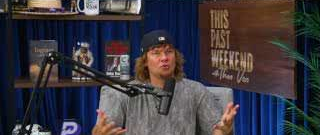
Riley Green on This Past Weekend #669: finished projects, unfinished careers, and a lot of callbacks. These notes follow the speakers' accounts, with personal memories and approximate numbers attributed to them.

Discoveries worth revisiting:

1. 4:47 - Riley says farm work lets him see what he finished at the end of the day. That is a different reward from a touring career that keeps moving.

2. 3:37 - Riley says he bought a hundred and forty-one acres first. At the interview, he puts the connected property at seventeen hundred and eighty acres.

3. 9:13 - Riley says he does not need a surprise to enjoy seeing his family and friends. He would rather know they are getting together and go enjoy it.

4. 18:35 - Riley says all four of his grandparents lived in the same town, so he saw them every day. Family is part of how he explains his musical roots.

5. 48:40 - Riley recalls interrupting a fight by joking that they could finish the song before everyone went outside. He says the two men ended up high-fiving.

6. 1:04:59 - Riley says each record keeps songs that come from the place he started. A few others let him experiment without turning away from his own sound.

7. 1:16:58 - Riley says family enjoying his farm means more to him than things he buys himself. Photos of his niece and nephew fishing make that feeling concrete.

8. 1:27:49 - Riley recalls about eighteen auditions a day, from nine in the morning to nine at night. He also talks about remembering that those singers bring real dreams.

9. 1:42:25 - Theo says a friend held lyric cards beside the stage, but he remembered the words. The joke is that the friend started shaking the unused cards at him.

10. 32:38 - Theo describes reviewing each episode and making notes. Riley recognizes the paradox: working inside music or comedy can leave less time to enjoy other people's work.

11. 1:02:37 - Riley prefers the connection of arenas to the scale of stadiums. He talks about the fan's whole evening: sound, traffic, parking, weather and seeing the opener in daylight.

12. 1:21:19 - Riley distinguishes being the center of attention at his show from drawing attention while someone else is onstage. He says it is not the photo request itself that bothers him.

Corrections worth keeping: the upcoming album is described as nineteen songs, with three tracks already out; it is not described as fully released. Riley explicitly says he did not write Luke Bryan's Fish, Hunt, Golf, Drink. The planned hunt, a future shared performance and a get-ready-with-me collaboration remain invitations or jokes, not completed events.

Guest, music and conversation timestamps:

0:00 - Merch opening

0:33 - Riley Green introduction and future album

1:06 - Recorded theme

1:17 - Bulldozers, farm work and the animal riff

3:37 - First acreage and a growing connected farm

4:47 - Finishing a project versus an ongoing tour

6:34 - The missing coffee maker

7:24 - The backwards introduction

8:54 - Two pieces of birthday cake

9:13 - Why a gathering does not need to be a surprise

9:33 - The surprise ACM announcement

10:31 - Scheduling and a planned guest, not a joint appearance

12:06 - Jon Pardi and balancing commercial appeal with a distinct sound

13:09 - Four-hour beach sets and a three-week run

14:39 - Arm-wrestling story; recorded clip at15:20

18:35 - Family and four grandparents in one town

19:06 - The family music hall

20:07 - Taking the song's wishes literally as a joke

23:24 - They catch themselves sounding like grandparents

24:26 - The first911-call riff; imagined disputes are jokes

27:19 - Old-fashioned baby names and shoe callbacks

28:37 - Coffee before the delayed bar-fight question

28:49 - Recorded PrizePicks sponsor segment

30:07 - Recorded MoonPay sponsor segment

31:32 - Finding time for other people's art

32:38 - Episode editing and review work

33:10 - The computer, home internet and farm photo shoots

34:12 - Changing the coffee cups; illness riff explicitly fictional

35:23 - Two very different hotel-plant stories

37:11 - MoonPie lookup and a joke about online certainty

38:00 - A proposed fishing get-ready-with-me

41:06 - Self-deprecation and being approachable

45:38 - An explicitly pretend fight

48:40 - Getting through one last song in Baton Rouge

50:07 - Turkey hunting and the best-bird debate

51:10 - Learning without a hunting mentor

54:00 - Call tools and Theo's in-room mouth-call attempts

59:33 - Recorded concert duck-call clip, not in-room music

1:00:36 - Tour size and the pressure of opportunities

1:02:37 - Arenas, stadiums and the fan experience

1:04:33 - Riley partly disagrees about changing with an audience

1:06:02 - Easing into acting

1:07:40 - The dog's social-media following in Riley's account

1:08:17 - Dog breeds and the lookup detour

1:12:17 - Mock PuppyTalk host swap

1:13:59 - Filming while touring and wanting more backstory

1:15:36 - Relief after an award-show performance

1:16:58 - Family, farm and personal pride

1:19:07 - Future nineteen-song album and three released tracks

1:21:19 - Attention away from his own stage

1:22:29 - Too little time at home to settle in

1:23:28 - A future lighter schedule, not a current show count

1:24:44 - His account of the Voice opportunity; late-night host uncertain

1:26:52 - A proposed reverse-chair format, not an actual rule change

1:27:49 - Long audition days and the people behind the performances

1:28:58 - Hawaii and the security companion; dinner jokes

1:29:53 - Imaginary mood-ring shoes

1:32:12 - AmericanIdol corrected from America'sGotTalent

1:33:25 - Explicitly not a cowriter of Luke Bryan's song

1:33:51 - Theo reads a short lyric passage as spoken poetry; no full recording played

1:34:57 - A future duck-hunting invitation

1:35:36 - Cake and get-ready callbacks

1:39:28 - Repetition in the early club circuit

1:39:53 - Opening tours and returning to play his own club shows

1:41:01 - Tour support lineup, not additional in-room guests

1:41:45 - Recalling Theo's past guest singing; Riley later saw clips

1:42:25 - Unused lyric cards and a windblown hat

1:43:33 - Reading lyrics versus singing from memory

1:44:41 - A future shared-performance invitation

1:45:15 - Riley as an imagined helper host

1:46:48 - Guest closing

1:47:17 - Recorded musical outro; source ends before full track
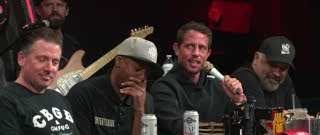
Kill Tony #776 - Dave Landau and Brian Moses meet two very different 59-year-old comics, a job title becomes a reveal, and one interview produces an extra set.

1. Chris Waldeck catches Redban's sad sound effect and makes it part of his answer. Asked about his love life, he says it is nice to hear his alarm clock again. Tony stops to appreciate the improvisation. The interruption becomes a punchline rather than something Chris has to talk over.

2. James and Joel both say they are 59, but describe almost opposite starting points. James says this is his first time performing; Joel says he has spent 40 years in stand-up. That is the contrast the room reacts to. The figures are their own accounts, rather than independently verified career totals or proof of a first-ever pairing in the show's history.

3. James asks whether it is too late to write for other comedians. Tony encourages him to take chances, enjoy open mics and keep going. Then the encouragement loops back to the Atari 400 equipment James says he left behind when selling his house. Even the supportive answer manages to find an earlier detail for a callback.

4. Vasquez's job description takes a few questions to unpack. He calls himself a brand ambassador for major companies, then explains that he gives out free samples, mostly at Costco. Tony initially calls it a lie, but accepts the correction: the title can still be accurate. The comedy is in the gap between the grand description and the ordinary explanation.

5. Joel says he works cruise ships but makes sure he is free on Mondays to keep signing up. It gives his career-minor-league description a practical detail: he is arranging work around the chance to perform here. Later, Dave tells Gerard that he had no idea his weekend opener would also sign up. Established working comics are still putting their names in the bucket.

6. Trenton's interview changes the lineup. When Tony learns that his partner also does stand-up, he asks to bring her up for a minute. Butler then performs a full set. Tony assumes it is her first appearance, and she corrects him: she says she was on about two years earlier. The extra spot comes directly out of the conversation.

7. Dedrick has an unopened Transformer Lego set sitting around as something closer to art than a finished model. In his story, a party guest volunteers to assemble it, then keeps working even when everyone else is ready to leave. The comic contrast is between owning the box and actually wanting to finish the build.

8. Michael Ridley corrects the description of his Roast Battle work: he is running the Austin chapter and booking biweekly battles, rather than simply hosting a weekly show. Brian then says Austin is third in a league with 52 cities. Those are source-announced figures from this recording, rather than a live or independently checked leaderboard.

9. Ahsan's minute prompts a stagecraft discussion. Tony likes that he starts immediately with a setup instead of greeting the crowd or explaining an old appearance. Brian agrees that a short spot is a reason to begin the joke quickly. Later, Tony praises a different skill in Pat's closing set: facial expressions and delivery that add to what is already on the page.

10. The full stored caption phrase watch finds 23 automatic-text matches for "I love it" and three for "absolutely incredible" across all voices, including opening material. These are not Tony-only counts or independently audio-verified spoken totals. Censored omissions interrupt matching.

Sets & timestamps
6:27 - Chris Waldeck
17:24 - James Morris
30:45 - Joel
37:56 - Vasquez
47:11 - Paul Ciphers
56:17 - Trenton
1:04:58 - Butler, invited additional set
1:11:01 - Dedrick Flynn
1:22:44 - Gerard Michaels
1:29:50 - George
1:39:38 - Michael Ridley
1:46:26 - Ahsan Ahmad
1:55:42 - Rodrigo Marin
2:03:50 - Pat O'Neal

Additional comedy & bonus performances
1:22:24 - The panel's requested whispered joke
2:06:59 - Pat recalls an early Providence joke

Bonus moments
1:43:35 - Michael's haircut reveal

Which part worked best for you: Chris catching the sound effect, the Costco reveal, or the extra set out of Trenton's interview?
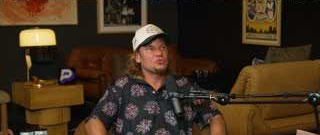
Cristina Mariani on This Past Weekend #668: finding a creative life, keeping promises to yourself, and learning how to be present. These notes follow the speakers' personal accounts; the medical claims, online lookups and fictional riffs are not independently verified facts here.

Discoveries worth revisiting:

1. 16:27 - Cristina says completing a task you promised yourself builds confidence. Theo connects his gym routine to the feeling that he has his own back.

2. 36:47 - Cristina jokes that social media gives away the small updates before people meet. The conversation then has to find something beyond the surface.

3. 50:18 - Cristina says her first live comedy show made stand-up feel possible. Watching someone take the stage and make a room laugh was the direct proof she needed.

4. 1:00:22 - Before moving from California to Texas, Cristina practiced doing things alone. A solo trip and eating in a restaurant helped her face that discomfort.

5. 1:03:47 - Theo says achievements had been his way to measure whether he was okay. Listing his values gives him another way to ask whether his choices fit.

6. 1:16:43 - Cristina wonders when being open to feedback becomes an excuse not to trust herself. She wants room for other opinions without losing her own judgment.

7. 1:17:56 - Theo notices that he can judge his earlier work by beliefs he developed later. Recognizing that mismatch helps him question how harshly he treats himself.

8. 1:22:55 - Cristina distinguishes caring for herself from feeling superior. The love she readily gives her sister becomes a way to explain the difference.

9. 1:28:25 - Cristina says she toured with Theo when she was two years into comedy. She remembers an eight-thousand-person room as her biggest stage at that point.

10. 44:18 - Cristina describes returning to her childhood room in Italy and finding the toys still there. The time-capsule image gives their nostalgia discussion something tangible.

11. 52:26 - Touring has a quiet side for her: she likes airports, planes and hotels. She says she cannot sleep on the plane, but enjoys relaxing and daydreaming.

12. 1:24:24 - Her parents have not seen her perform at the time of this conversation. She says they are okay with comedy now, and part of the hesitation is her own wish to avoid censoring herself in front of them.

The Italy location matters: she corrects the lookup to Corfino in Tuscany, not the similar place the search first returns. Her account puts her move back to California at eleven. The proposed podcast title This Upcoming Weekend remains a naming joke and a conditional plan, not an established rebrand.

Guest, performance and conversation timestamps:

0:00 - Recorded BusBoys promotion

0:27 - Cristina Mariani introduction

0:50 - Recorded theme

1:02 - The invitation mix-up: whose podcast?

4:10 - Narrator framing and an off-camera aloof remark

5:07 - Haircut decisions and an explicitly uncertain hormone discussion

10:55 - Hair comparisons and a recorded celebrity clip

12:24 - Upcoming tour and first LaJollaComedyStore visit

13:05 - Secondary health-news lookup; jokes are not verified medical facts

16:27 - Gym routine and promises to yourself

18:34 - Imaginary musical pitches

19:29 - Theo declines to sing; no song performed here

20:49 - Revisiting and correcting the earlier hormone claim

23:53 - How she perceives other people's reactions

25:33 - A neighbor story; no verified clinical conclusion

26:36 - Theo introduces a brief spoken LockUpTheWolves lyric reading

26:44 - Spoken lyric passage, not a full recording

28:58 - The gym interruption hypothesis, later qualified as uncertain

30:16 - Recorded BetterHelp sponsor segment

31:32 - Recorded Sonic sponsor segment

33:04 - California, Italy and returning at eleven

34:02 - The birthday-party story and hiding under a table

35:12 - What the past looks like in memory

36:47 - Social media and small talk

38:19 - Marketing promises and the filter she bought

40:58 - Recorded online reel; its private allegation may be fabricated

42:09 - She says she has not met NateDiaz

43:27 - Corfino in Tuscany, not the first search result

44:18 - The childhood bedroom as a time capsule

45:21 - Retirement writing and hypothetical book ideas

46:32 - Imagined movies interrupted by recipes

48:28 - Rediscovering writing and creativity after an insurance job

50:18 - First live stand-up as direct proof

50:49 - Making her father laugh

51:49 - Loving writing and stage work without a sitcom destination

52:26 - Enjoying travel and daydreaming

52:57 - Flight CPR anecdote; no medical advice or verified outcome here

53:58 - The separate hotel-buffet story, not the same flight

58:29 - AI health lookup, not clinical evidence

59:47 - Secondary autonomous-truck report

1:00:22 - Leaving home and practicing solo outings

1:01:53 - Touring pauses and identity beyond achievement

1:03:47 - Values as a map

1:05:34 - Taking time to acknowledge pride

1:06:59 - Doing things just right versus being present

1:08:50 - Childhood self-monitoring in their accounts

1:11:08 - Existential-crisis definition explicitly distinguished from a formal diagnosis

1:12:50 - Mental tabs as an attention metaphor

1:13:34 - Sensitivity and personal childhood memories

1:15:40 - Specific gratitude and thought boundaries

1:16:43 - Openness versus trusting yourself

1:17:56 - Past work and present beliefs

1:20:24 - Thought habits compared to familiar food

1:20:50 - Familiar pain and allowing something better

1:22:55 - Self-love versus superiority

1:24:00 - Unexpected venue time limit in Austin

1:24:24 - Parents, performance and self-censoring

1:26:31 - Love, independence and finding her own preferences

1:28:05 - Watching a movie scene by scene instead of predicting it

1:28:25 - Two years in comedy and the tour with Theo

1:28:47 - Her approximate eight-thousand-person room memory

1:29:11 - Upcoming American dates and future European dates

1:29:33 - An unnamed podcast and the proposed title joke

1:30:19 - Guest closing

1:30:24 - Recorded musical outro; source ends before full track
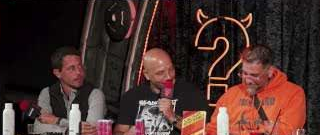
Story Warz #101

• The highest final score was 24 points, 13 points ahead of second place.
• A 17-point tie sent the game to overtime, with wagers of seven points and 17 points.
• “Double points”: 6 mentions.
• A player with one point at halftime surged to 13 and first place after two more rounds.
• The hosts joke that their friendship comes up for renewal every January: argue about it, then agree to one more year.
• The tablets get called dry-erase boards, then pads, with another naming correction needed during overtime.
• A guest objects to being treated like a character. The comeback: "I don't have any fun facts about Elmo's personal life either."
• A guest's fading energy gets compared to a Back to the Future photograph, then a transformation at midnight.
• Even the overtime story announcement needs retakes: "Story number nine" gets restarted until the handoff sounds right.
Duncan Trussell on This Past Weekend #667: a prayer race, the stories people tell themselves, and finding room for kindness. The extraordinary claims and online lookups are discussed as claims, jokes or beliefs; they are not independently verified facts here.

Discoveries worth revisiting:

1. 35:03 - While Duncan recounts an unverified moon story, Theo asks how the caller reached the interview. The answer is a phone call from Florida, not a ride from the moon.

2. 50:48 - Theo says he now meditates for ten minutes a day, sometimes twice. Duncan pushes back on the idea that a short practice is too little to be worthwhile.

3. 54:39 - Duncan completes their timed prayer challenge in an announced nine point eight seven seconds. Theo stumbles through his own attempts, and Duncan gets the win.

4. 1:05:03 - Discussing a book, Duncan suggests that a good memory need not be a huge achievement. Theo offers the example of someone smiling at you.

5. 1:11:58 - Duncan describes a comfortable hotel room as an imagined place of peace. His question is whether that sense of belonging has to wait until the day is over.

6. 1:28:08 - Duncan says that criticism of a religion or philosophy should follow studying it deeply. Theo agrees and wants to explore those subjects with more care.

7. 1:29:40 - Duncan explains interdependence through ordinary things: food, clothes and books. They point back to the work of people whose names he may never know.

8. 2:04:59 - Duncan says making the world better is active work, but fixing all humanity is too much to carry alone. He brings the focus back to small acts of compassion.

9. 2:08:08 - Near the end of the conversation, Theo says few things give him more enjoyment now than walking with a friend. It is a simple answer after the bigger questions.

10. 50:00 - Duncan compares the phone to a vampire that has to be invited in. The humility matters: after talking about choosing attention, he admits he finds it hard to stop too.

11. 1:45:50 - Duncan says he watched animal videos for a while before realizing some were fake. Their later hippo-clip discussion remains uncertain about that specific clip; it is not a verified animal-behavior finding.

12. 2:00:04 - Asked whether he feels hope as a parent, Duncan answers with his belief in fundamental goodness. That warmth sits alongside the earlier dark jokes and worries about technology.

Details that change the reading: Duncan corrects three children to four. His prayer time is announced as9.87seconds, later rounded to9.8; he also notes that denominations use different wording. The earlier Tourette-cure discussion is corrected to a source clarification that the guest does not claim a cure. No medical efficacy is established here. The old Zuckerberg excerpt discusses technology fluency, age limits and monitoring; the mind-traps speech is Duncan's sarcastic paraphrase, not a quotation from that guest.

Guest, challenge, music and conversation timestamps:

0:00 - Recorded MountainDew sponsor opening

0:13 - Duncan Trussell introduction

0:38 - Recorded theme

0:50 - Camera and past-life surveillance riff, not an actual contract

3:04 - The fictional wagon-history detour

8:53 - Upcoming family travel and his father's ashes in Duncan's account

11:22 - MysteryBoys introduction

12:40 - Ghost surveillance and presidential-aging fantasy

16:24 - Four children, correcting three

16:37 - How parenting changes his response to stories of loss

20:54 - Modern comforts through a historical lens

25:12 - Theo's personal childhood medical anecdote; no clinical advice

26:36 - Recorded Manscaped sponsor segment

27:54 - Recorded Acorns sponsor segment

29:35 - MysteryBoys alongside Duncan's continuing own show

30:35 - An unverified caller story about a secret space program

31:21 - The gray-alien IT detail as recounted fiction or claim

35:03 - The interview-journey question and Florida call-in answer

37:53 - Gifted-program speculation, not verified CIA history

39:53 - Explicit uncertainty about the conspiracy claims

42:29 - Cymatics footage and speculative extensions, not teleportation evidence

45:57 - The feed and mixed emotional registers

50:00 - The phone-as-vampire metaphor

50:48 - Theo's ten-minute meditation practice

51:37 - Secondary report about monks, not an independently verified criminal finding

52:24 - The fast-prayer joke that leads to the challenge

53:40 - A friend's monastery story in Theo's account

54:35 - Challenge setup and timing request

54:51 - Countdown for Duncan

54:55 - Duncan's actual prayer recitation

55:08 - Announced9.87seconds

55:19 - Countdown for Theo's first attempt

55:21 - Theo's first recitation stops

55:37 - A restart and a question about the opening words

55:52 - Countdown for Theo's next recitation

55:54 - Theo's second recitation also stumbles

56:17 - Brief in-room musical riff, not a full song

56:25 - Recorded MountainDew sponsor segment

58:27 - Duncan declared winner; denomination wording caveat follows

59:04 - Theo retracts the invented girlfriend remark

59:23 - Changing a limiting story he tells himself

59:58 - A book introduced through a documentary; no cult-treatment endorsement

1:05:03 - Small good memories in the book discussion

1:08:38 - MarilynMonroe anecdote explicitly framed as unverified

1:09:20 - The lampshade metaphor for personality

1:10:37 - Parenting and time for yourself

1:11:58 - The hotel-room oasis thought experiment

1:14:18 - Preferences and the wish to play Diablo

1:14:55 - Past patterns, boundaries and moving forward

1:16:14 - Correction: the earlier guest does not claim a Tourette cure

1:18:14 - The Kurt text-request joke is retracted

1:18:30 - Secondary crime and eclipse trivia, not proof of an occult cause

1:25:26 - Defining a spiritual term before debating it

1:27:20 - The bishop interview and Duncan's account of listener backlash

1:28:08 - Study before critique

1:29:40 - Interdependence and unseen labor

1:32:08 - Religious terms can carry painful associations

1:33:31 - One-on-one contact versus online group stories

1:35:28 - Fear narratives, with real-world harm explicitly acknowledged

1:36:38 - Saul and Paul discussed through a biblical account

1:38:57 - Algorithm concerns and secondary legal claims, not legal findings

1:44:05 - Recorded head-transplant concept clip; not a completed medical procedure

1:45:50 - Fake animal videos and admitting he was initially fooled

1:46:59 - Explicitly fake hot-air-balloon story

1:48:50 - An imagined television-series pitch

1:50:59 - Old Zuckerberg interview playback begins

1:51:36 - Duncan's sarcastic mind-traps riff, not the recorded guest speaking

1:52:04 - Recorded monitoring and age-limit qualifications

1:53:06 - Secondary platform allegations, not an independently adjudicated verdict

1:57:29 - Explicit limit on authority about those allegations

1:59:00 - Recorded hippo clip with authenticity questioned

2:00:04 - Hope as a parent

2:02:05 - Darkness and light as metaphors

2:04:59 - Active compassion in manageable steps

2:06:30 - Drug analogy and fictional business plug explicitly retracted

2:07:34 - Walking with friends and a biblical correction

2:08:08 - Theo's enjoyment of a walk with a friend

2:08:15 - Chopped aura as children's slang, not a medical claim

2:09:28 - Asking what a feeling is trying to show

2:10:43 - Mutual thanks and a future MysteryBoys invitation

2:11:07 - Guest closing

2:11:14 - Recorded musical outro; source ends before full track
Kill Tony #775 - Joe Rogan and That Mexican OT get a night of frog merchandise, a second entrance for Paulie Shore, and some very patient bucket sign-ups.

1. Marty arrives with a marketing idea attached to his frog-jump story. He says he is selling frog stress balls marked Don't Kill Me Marty. When the competition comes up, he also corrects the location from Cleveland to Valley City and explains that the parachute goes on the ground, not on the frog. The small misunderstandings become part of the bit.

2. Patrick has found an unexpected use for his previous joke book. Tony tells him to fill it with jokes, and Patrick says he has turned it into an autograph book for his favorite comedians instead. Earlier, he says he is doing six to eight open mics a week. That is his own estimate, rather than independently checked attendance.

3. Clarence's explanation for starting comedy takes a long route through trying to find a drummer. He says he is a bassist and vocalist, then finally supplies the short answer: comedy is easier to do by yourself. He also describes a project where he plays all the characters, making the solo-work theme keep coming back.

4. Zavi says he bought his hoodie specifically for the chance to get called up, back when April was cooler. He has kept bringing it to sign-ups and now decides to commit to the outfit anyway. His estimate is that this is around his tenth attempt. Later, the interview briefly turns into an actual shadowboxing demonstration.

5. Nick's interview becomes a staged date with Heidi. She gives him an unusually clear opening by asking whether they should go to his place or hers, and he answers by asking which is closer. The pair keep improvising while the panel reacts. This is an onstage roleplay, rather than a real date or relationship announcement.

6. Paulie Shore gets a literal second entrance. After his opening stalls, he asks whether Tony can bring him out again. Tony obliges with a fresh introduction, and Paulie calls it take two. The restart is part of the same appearance, with another run at the material rather than a new performer coming on.

7. Dedrick follows his main minute with extra jokes that he says he wrote in Japan. After the longer run, he announces a detour that has nothing to do with it: granola tastes like outside, or a pencil when you have not studied. Then nuts become wood berries. The small food observations give the extra section a very different ending.

8. Julia describes doing comedy on Cleveland's Funny Bus, comparing the history tour to having a drunk history teacher. Tony asks whether she drives the bus, and she says no. It is a useful clarification about what the job actually involves: performing during the tour, rather than operating the vehicle.

9. Ivan's interview ends with a particularly unexpected request. After the discussion of his accent and background, he offers a Patrick Warburton impression. Tony asks to hear it, and the brief response gets an immediate reaction. It is a small bonus performance tucked inside a much longer interview.

10. Jake estimates that he has signed up about 215 times over four and a half years without another spot. Later, Boon says he has signed up more than 50 times, sporadically across over four years. These are the performers' estimates; the exchange does not establish an audited attendance figure or a confirmed all-time record. Boon also finds a fast reversal when his account of a bad set goes downhill: for him, he says, uphill is the problem.

11. The full stored caption phrase watch finds eight automatic-text matches for "I love it" and one for "absolutely incredible" across all voices, including opening material. These are not Tony-only counts or independently verified spoken totals. Censored gaps interrupt matching.

Sets & timestamps
5:11 - Martin Malloy
14:25 - Patrick Cassaday
22:30 - Clarence Clam Clap
30:06 - Zavi
39:12 - Nick Thomas
49:24 - Paulie Shore
50:53 - Paulie's second entrance and restarted set
56:50 - Dedrick Flynn
1:05:03 - Julia Mary
1:18:30 - Ivan
1:28:18 - Jake Baker
1:39:08 - Boon Blocker
1:45:40 - Poncho
1:54:38 - Pat O'Neal

Additional comedy & bonus performances
13:35 - Marty's additional joke
35:00 - Zavi's requested shadowboxing demonstration
58:33 - Dedrick's additional jokes written in Japan
1:27:21 - Ivan's Patrick Warburton impression

Bonus moments
47:12 - Nick and Heidi's staged date

Which callback was your favorite: the frog stress balls, the autograph book, or Boon's downhill reversal?
Story Warz #100

• “Double points”: 23 mentions - 7 within 96 seconds.
• Three consecutive clean sweeps opened the game, leaving three players tied at four points while two remained at zero.
• A player in last place with one point at halftime surged to nine points and second place after round six.
• A guest delivers a proxy message from comic Joe DeRosa, who told the hosts to go f*** themselves for booking someone else.
• The panel debates whether G.I. Joe and Barbie could date, arguing their proportions are mismatched and Barbie's knees don't bend.
• Comedian Ms. Pat wanders onto the stage mid-game to roast the panel's antics and complain that a host never calls her back.
• A Malaysian roommate gets confused for 'mall Asian' before the storyteller deadpans that Malaysia is Latin for bad Asian.
• The prize book for the 100th episode is '100 First Words', repeatedly read aloud from the stage to calm the room.
• The 100th episode at the festival starts after 1:00 AM, with the hosts blaming the delay on Shaquille O'Neal holding up the venue.
This Past Weekend #666 - John Kennedy and Theo disagree over big questions, then find small, memorable moments in family stories, work habits and Louisiana humor. Interview claims below are attributed to their speakers; disputed political and medical assertions are not independently verified here.

1. The Preston connection: Kennedy recalls his father leaving home at 14 for a town with a high school, staying with relatives and working nights as a janitor. The family story comes full circle when he says he named his own son Preston after his father.

2. Treasurer was not the beginning. Kennedy takes Theo back to working for Buddy Roemer, losing an attorney-general race in third place, then running the tax department under Mike Foster. He recalls 17 years as treasurer before entering the Senate, a tenure stated in the interview rather than a new audit of his career.

3. The unclaimed-property story ends outside the office. Kennedy recalls giving a retired New Orleans teacher a $1,026,000 check tied to her late husband's investments. She said she had no children, but he remembers about ten nieces and nephews waiting outside. This is his recollection, not independently verified financial reporting.

4. The authenticity advice has a trapdoor. Kennedy's answer is to be yourself, immediately followed by the exception: unless you suck. The punchline undercuts any suggestion that authenticity automatically makes someone effective.

5. Theo's restaurant career had a ceiling he chose. He describes being a busboy, never being promoted, and refusing the move to waiter. It is not a story about working his way up to waiting tables.

6. A precise correction in the middle of an argument: Theo separates hostility toward a government from hostility toward its people. Kennedy calls that a good point, and Theo insists the distinction applies across the discussion. Their broader geopolitical disagreements remain disagreements.

7. Kennedy's Bernie Sanders story is about finding a smile. After a gruff passing encounter, he jokes that Bernie should pay his taxes because they need the money. Kennedy remembers a small smile. The greeting is a joke, not an accusation of tax delinquency.

8. Faith is not presented as certainty. Kennedy says he believes in God and also has enormous doubts. He describes asking for faith when he prays, a personal admission alongside his respect for Jimmy Carter's religious commitment despite their policy differences.

9. The reading stat sets up the book joke. Kennedy estimates at least 30 hours of reading per week. Theo asks whether he has read the book in front of them; Kennedy says it is his book. The workload is a self-estimate, not a verified time log.

10. Their data-center agreement has conditions. Kennedy says he supports them if they pay for their electricity and water and the community accepts them. Theo agrees communities should have a say. They are discussing a policy preference, not establishing current legal requirements or approving a specific project.

11. Theo asks AI anxiety for concrete examples. Instead of leaving the subject at a laptop metaphor, he asks what actions an agent might take; Kennedy first says he is no expert, then gives booking-and-errand examples. Later sweeping claims about AI medical accuracy are not established clinical facts.

12. They finish with a proposed coffee trip and a personal tab. The outing is still a plan. Theo jokes about a state deduction, and the exchange lands on paying as a personal expense, not presenting a government-funded visit as a completed event.

Sets & timestamps
00:00 - John Kennedy introduction
00:17 - Introduced book
02:48 - Jerry Clower memories
03:32 - Theo and the LSU Commons
04:57 - Zachary and authenticity
05:24 - Soccer and tennis memories
07:52 - Be yourself punchline
09:07 - Louisiana houses and wildlife
10:34 - Restaurant work and busboy memories
13:34 - Family roots and father
14:41 - Preston and naming his son
15:51 - Zachary school memories
17:50 - School discipline discussion
20:30 - Career sequence before treasurer
22:33 - Unclaimed-property discussion
23:26 - Retired teacher check story
25:09 - Shutdown predictions and political disagreement
26:17 - Refusing hatred
30:02 - Tucker Carlson and Iran discussion
31:45 - Theo asks for proof
35:24 - Killed versus hurt correction
36:15 - UN report discussed, not independently verified
39:29 - Shireen Abu Akleh discussion
41:23 - Civilian deaths and disagreement
44:28 - Qatar and funding questions
46:35 - Kennedy describes claimed intelligence access
50:12 - Acknowledged uncertainty about funding authority
53:24 - Talking despite disagreement
54:19 - Trump tweet steak metaphor
55:34 - Jeff Bridges and Denzel Washington
56:44 - Sponsor segment
58:03 - Sponsor segment
59:50 - Governments versus people
1:01:44 - Clinton peace-offer debate
1:03:38 - Reservations and disagreement
1:05:19 - Biden age and staff discussion
1:08:36 - Hunter joke corrected; conversation recalled
1:09:33 - Addiction discussion
1:10:49 - Political and ideological differences
1:16:52 - Bernie Sanders tax joke
1:19:53 - Anger and social media
1:21:49 - Faith and doubts
1:22:36 - Carter and personal admiration
1:24:33 - Thirty-hour reading estimate and book joke
1:26:05 - Social media and proposed regulation
1:30:43 - Correction that the discussed plaintiff is alive
1:32:10 - Smartphones and lobbying
1:36:00 - AI actions and admitted lack of expertise
1:37:45 - Fishing and Louisiana humor
1:39:18 - Texas comparison joke
1:41:52 - Zoo recipe joke and Louisiana roots
1:41:56 - Resident birthplace statistic discussed, not audited
1:43:04 - College and coaching discussion
1:45:53 - SAVE Act and voting proposals discussed
1:49:27 - Online registration and political disagreement
1:53:18 - Immigration estimates and claims, not independently verified
1:55:27 - Data-center conditions and community say
1:56:41 - AI voice, privacy beliefs and speculation
1:59:50 - Unverified AI medical-accuracy assertions
2:01:42 - Imperfection and dignity
2:04:31 - Closing gratitude
2:05:02 - Denzel invitation hypothetical and egg salad
2:05:36 - Proposed coffee trip and personal expense
2:06:28 - Thanks and signoff

This is a guest conversation, not a stand-up lineup. No additional live song or stand-up set is established in the available text.

Bonus performances
2:06:40 - Recorded outro music begins; separate from the guest interview.

Which small exchange stayed with you after the bigger disagreements?
Kill Tony #774 - Joe DeRosa and Mike Finoia get a night of long drives, practical stage notes, and a last bucket pull that keeps earning more material.

1. Travel becomes an accidental thread through the opening interviews. Dan's trip is described as 19 hours, Otis says about eight and a half, Adam describes an hour-and-a-half commute, and Clay corrects Tony's guess to five hours. The panel turns the shrinking times into a joke about the comedy improving. These are source-stated estimates, and the joke does not establish a real relationship between drive time and ability.

2. Joe shares the invitation he says he received from Tony: can you panel tonight, everybody is out of town. Tony explains a calendar mix-up that left him expecting MrBeast in a different month. The account becomes a sequence of MrBeast, MrLeast and MrFeast jokes. MrBeast is not actually another guest here.

3. Joe's feedback to Otis is unusually specific. He likes how the eye-patch joke keeps moving: eye patch becomes pirate, pirate becomes treasure map, and the map leads to the real-dad punchline. He identifies the chain of ideas instead of simply saying the minute was good.

4. Mike gives Clay a physical stage note: take the mic out and move the stand behind you, so the stage belongs to you. The panel has him do it there in the interview. Earlier, Joe also admits he owns the same blue shirt Clay is wearing, turning the outfit into a separate joke.

5. Javi is advised to slow down so the audience can follow. The conversation then notices the stain on his shirt. He corrects chili to barbecue, and the advice becomes to bring a separate show shirt. Later, the band supplies music while he tries to zip his vest.

6. Brock explains that he works offshore in oil, not fishing. The panel breaks down off the shore for Joe. Brock describes 14 days offshore and seven days onshore when he is lucky. That is his account of the work pattern, rather than a verified fixed schedule for every assignment.

7. Megan says one of her husband's goals was to try stand-up, so she wanted to beat him to it. The panel encourages memorizing material and delivering punchlines toward the back of the room. She supplies an important correction: she had memorized it, but feared stage fright would make her forget. The paper was a backup, rather than proof she had not prepared.

8. The final bucket pull nearly does not happen. Aaron says he and Brock drove together, estimating about eight hours. Tony asks for more material twice, creating three distinct stretches of stand-up. Joe praises the contrast between edgy writing and a friendly, clean delivery. Later, Joe refers to Aaron getting the Golden Ticket; that is an onstage acknowledgment in this source, rather than a newly accepted archive award record.

9. Pat explains that the episode introducing him as a regular is airing that day. Tony says they taped ahead to cover a break, so people were only then meeting Pat on-screen while this later performance was being recorded. Recording order and release order can feel different. The explanation does not supply an exact release date for this upload.

10. The short-setup lesson becomes a callback on Joe. While he tries to finish a joke about Austin's name, Tony interrupts. Joe fires back that he should have used a shorter setup, echoing the advice just given to Mickey. Even after the reset, the joke needs another explanation. Joe's I-have-that-shirt line returns during Pat's interview too.

11. The full stored caption phrase watch finds 22 automatic-text matches for "I love it" and three for "absolutely incredible" across all voices, including opening material. These are not Tony-only counts or independently audio-verified spoken totals. Censored omissions interrupt matching.

Sets & timestamps
5:41 - Mason Bird
13:27 - One Dan Man Band
19:57 - Otis Hicks
27:17 - Adam Luckey
33:54 - Clay McLaren
43:36 - Javi
52:22 - Dedrick Flynn
59:37 - Brock White Lions
1:14:04 - Megan Knights
1:22:29 - Layla
1:32:44 - Mickey
1:40:14 - Austin
1:45:58 - Aaron
1:48:37 - Aaron's first requested additional set
1:49:50 - Aaron's second requested additional set
1:54:47 - Pat O'Neal

Additional comedy & bonus performances
14:29 - Dan's brief musical beat
1:03:51 - The panel's pitcher-announcer impression
1:42:27 - Joe's restarted name joke

Bonus moments
46:59 - Javi's vest-zip attempt
1:36:50 - Mickey's kiss segment
1:45:32 - The audience joins in Austin's name

Which bit stayed with you: the shrinking drive times, Joe's shirt, or Aaron getting called back for more?
This Past Weekend #665 - Jeff Bridges turns love, clay, movie music and an unexpected AI guest into one conversation about staying creative. A photograph of a rejected invitation may be the best place to start.

1. The first words survived on film. After mentioning their 49th anniversary, Jeff recalls asking Sue out while making Rancho Deluxe and being turned down. They later connected at the wrap party. Some 30 years afterward, a makeup artist sent a photograph of that first exchange, now one of his prized possessions. These are his interview recollections, not a new timeline audit.

2. The marriage practice has an important qualifier. Jeff describes sitting face to face, taking turns expressing feelings, and listening without preparing a rebuttal. They try I-feel language rather than you-messages. He says it often helps and explicitly admits that sometimes it does not, rather than promising a universal fix.

3. The diamond metaphor gets corrected. Theo hears a choice between sand and a diamond. Jeff explains that, for him, the choice was taking the whole handful because the diamond was in it. He is describing commitment with the difficult parts included, not finding a life with no sand.

4. Small clay heads lead to a much bigger idea. Jeff starts with clay left over from making pottery. He describes Head for Peace as a semi-abandoned fundraiser idea, then explains a plan for 108 heads and annual rentals supporting Zen Peacemakers. He also recalls losing the heads in a flood. Those were proposed targets and terms, not 108 completed pieces or proven fundraising revenue.

5. A hobby enters Fearless. Jeff recalls buying art supplies and painting as the architect he was playing, covering his hotel room in the process. When Peter Weir saw the results, he wanted them in the movie. Jeff pairs that story with Robert Duvall repeating his advice to young actors: hobbies, hobbies, hobbies.

6. Crazy Heart needed music before it could be real. Jeff recalls receiving the script for years but worrying that it had no music. A chance street encounter with T-Bone Burnett changes the conversation: T-Bone offers to do it if Jeff will. Later, Jeff remembers Ryan Bingham arriving with a cassette of The Weary Kind. It is his account of how the collaboration came together, not a fresh songwriting-credit audit.

7. Crazy Heart 2 stays in their imaginations. Jeff pictures Bad Blake reuniting with Maggie's character and, later, playing in a band with the grown-up Buddy. Theo briefly veers toward a runaway defibrillator. They are inventing possible sequels together, not announcing a real film, official plot or casting deal for a Little Lebowski.

8. Gary has to make the haiku less generic. Jeff brings his AI voice into the interview, asks it for a poem and then haikus. Theo says one could apply to anybody and asks for something more specific; the next names Theo and Jeff. Gary's earlier World Cup results are generated claims, not independently checked sports stats.

9. The Sue song is a separate experiment. Jeff plays a Suno-created song he says he made with his daughter Jessie about Sue, using their knee-jerk-no-but-she-comes-around description. They also propose a song about this interview. A closing song follows their final discussion of that experiment; it is distinct from the earlier Sue playback and from any live human performance.

10. Seventy movies is a stand-in connection. Recommending Lloyd Catlett as a future guest, Jeff recalls him being his stand-in for 70 movies. He then corrects the location mix-up: Catlett is in San Diego; his old music friend John Goodwin is the Nashville connection. This is a source-reported career link, not an audited filmography or 70 podcast appearances, and the guest recommendation is not a booking.

11. The Donnie theory belongs to a fan. Jeff recounts the idea that Donnie exists only in Walter's imagination. He also notes the Dude thanking Donnie once, then invents a possible offscreen coroner exchange to make the theory fit. That imagined missing scene is not established as a filmed or deleted scene, and the theory is not confirmed movie canon.

12. The panoramic photo books are a gift in both directions. Jeff gives them to cast and crew, but says the images also transport him back to those exact people and moments. It returns the conversation to a tangible memory, much like the photograph of his first words with Sue.

Sets & timestamps
00:00 - Jeff Bridges introduction
00:38 - Glasses and relationship conversation
01:56 - Forty-ninth anniversary and meeting Sue
03:31 - First invitation and rejection
04:09 - Letter and photograph decades later
08:22 - Proposal and diamond metaphor
09:16 - Honeymoon mangoes
10:22 - The whole handful, not just the diamond
12:14 - Understanding a partner
12:47 - Listening without a rebuttal
15:20 - Jeff watched Theo interviews beforehand
17:14 - Comfort and challenges
18:28 - Being dean of his own college
19:53 - Clay heads and Head for Peace
21:22 - Meeting Bernie Glassman
22:48 - Lebowski koans and the book
24:54 - Wise friend rather than guru
25:43 - Proposed fundraiser terms and flood
27:02 - Sponsor segment
28:28 - Sponsor segment
29:48 - Creativity outside the script
30:25 - Painting as the Fearless character
31:06 - Duvall and hobbies
32:03 - When hobbies become work
32:49 - Theo ideas for new hobbies
33:53 - Theo recalls learning guitar
35:40 - Passion after starting
36:40 - Recovery and community discussion
38:51 - Anthony Hopkins book and recalled scene
40:08 - Two-word prayer story, not a clinical guarantee
43:00 - Personal sobriety discussion
44:11 - Bowling Alone and community
45:20 - Imagined Bad Blake future
45:59 - Crazy Heart script and missing music
47:00 - T-Bone offers to collaborate
48:16 - Ryan Bingham cassette story
50:43 - Imaginary Crazy Heart sequel
52:27 - Starman and Little Lebowski ideas
53:49 - Comedian with influence
54:36 - Buckminster Fuller and trim-tab metaphor
56:12 - Audience-size guess corrected, not audited reach
56:50 - Interview plans described at the time
57:41 - Sponsor segment
58:44 - Sponsor segment
1:00:06 - Sponsor segment
1:01:18 - Small rudders and future-guest list
1:03:28 - De Niro preparation anecdote
1:05:34 - AI fears and creative challenge
1:07:42 - Jeff introduces his AI experiment
1:08:53 - Gary is named and brought in
1:10:13 - Generated sports results, not independently verified
1:11:13 - Jealousy joke and poem request
1:13:36 - Suno and music experiment
1:15:55 - Prompt about Sue
1:18:46 - Lloyd Catlett and seventy-film recollection
1:19:29 - John Goodwin and song-title correction
1:20:11 - Convenience and the payphone scene
1:22:06 - Minions and Monsters discussion
1:23:15 - Twin brothers and silent films
1:25:37 - Voice work as a jam session
1:25:54 - Own few recording days versus film production
1:27:20 - Why Lebowski lasts
1:28:16 - Fan theory about Donnie
1:29:05 - Imagined coroner scene, not confirmed deleted footage
1:30:14 - Panoramic photos and cast-crew books
1:32:50 - Jeff reminds Theo about his microphone
1:33:57 - Not knowing, bearing witness, action
1:35:09 - Confirmation bias
1:36:23 - Wolves documentary discussion
1:37:16 - Living in the Future's Past
1:38:28 - Relative and absolute morality, personal views
1:39:48 - Purpose and creating meaning
1:43:13 - Closing appreciation
1:43:37 - Recommended future guests
1:44:56 - Closing song experiment discussed
1:45:11 - Thanks and signoff

Guest conversation, not a stand-up lineup. Fictional characters, recommended guests and the AI voice are not extra live stand-up sets.

Bonus performances
00:28 - Recorded opening music
33:43 - Brief Bobby McGee vocal fragment during guitar talk; not a full set
1:09:25 - Gary live AI voice joins, distinct from a human guest
1:11:49 - Gary AI-generated poem
1:12:21 - Gary first haiku
1:12:46 - Gary more specific haiku after Theo's request
1:12:58 - Gary another haiku
1:16:42 - Playback of the earlier Suno song about Sue
1:22:27 - Recorded Minions and Monsters trailer
1:45:24 - Closing recorded song following their Suno experiment

Which hobby would you keep warm even if it never became your job?
Story Warz #99

• “Double points”: 6 mentions - 3 within 96 seconds.
• The prize book 'The Body Keeps the Score' sparks running jokes about trauma recovery and buying a copy you already own.
• A powerlifter stepdad squeezes the storyteller into an unyielding bench shirt eight sizes too small that gets stuck over his head.
• A panelist mistakes Niagara Falls for a neighborhood in Philadelphia during a tour plug exchange.
• A dark childhood revelation reveals a West Texas grandfather who looked like Colonel Sanders solved farm problems with a hammer.
• A work-boot sponsor read derails into banter about an all-nude Kiss tribute band called Detroit Cox City.
• An emergency room run in the pre-smartphone era requires detouring back to the main office to print MapQuest turn-by-turn directions.
• A towering strongman guest entrance prompts jokes that the hosts are smaller Russian nesting dolls who popped right out of him.
• A panelist explains his nickname began when a friend's girlfriend started calling him Big Jay next to another six-foot-one friend named Jay.
Kill Tony #773 - Derrick Stroup and Francisco Ramos get a fundraiser, a fashion pitch, and a final bucket pull that leaves with a future panel invitation.

1. Daniel's interview takes an unexpected turn when the band starts a collection. The panel and audience add to it, and the announced final total is $745 plus a Waffle House gift card. That replaces the earlier over-$700 estimate. It is the amount announced onstage, rather than an independently audited cash total or verified first-ever show record.

2. Kimberly and Jake describe creating their own opportunities. Kimberly is planning a hometown show in Fort Dodge, bringing Austin comics to what she describes as a 500-seat theater. Jake says he started producing around two and a half years earlier and now has a show at the Creek and the Cave. These are their accounts and plans, rather than independently verified bookings or ticket sales.

3. Jake's roofing work has a different punchline from the one the panel expects. He says he does business development, visiting insurance offices, bringing cookies and introducing himself as Jake, not from State Farm. The job description does not establish that he spends the day installing roofs.

4. Daniel clears up why his Chick-fil-A job ended. The first question makes it sound as though he was fired for misconduct, but he explains that he moved to San Antonio. He describes earlier work as a TV news producer and some door work at the Riot Riverwalk. The story is about fitting work around comedy, rather than never having another job.

5. Ya pitches red-bottom Pilates grip socks. What starts as an attempt to break into fashion gets the panel discussing the idea seriously. Tony imagines the design and people replacing the socks as they wear. It remains a pitch, with no brand deal or production agreement established.

6. Aidan gets different responses to the same material within one night. He says the joke closing his minute did not work in another room about two hours earlier. Here, the panel praises his writing. Tony considers sending him to the other room before learning that he has already been seen, while Redban offers a Secret Show spot. The invitation does not prove a later booking took place.

7. Paulina says her writing ranges from AI policy to philosophy and culture. The AI discussion turns into an ay-ay-ay pun, then she offers additional material about a fictional Mexican president and government names. The extra jokes follow a glimpse of her other writing interests.

8. Jimmy remembers meeting Cam Patterson around an Orlando mic that moved from the Other Bar to Harry Buffalo. He credits David Jolly with encouraging him when he doubted himself. He also says a year away for film work interrupted his stand-up timeline. These are personal recollections, rather than verified meeting dates or a continuous career total.

9. Myles's partly tucked shirt becomes a belly-mullet joke: business at the front, party at the back. The interview ends with something more substantial. Tony offers him a panel position on an upcoming episode, and Redban adds a Secret Show invitation. Those are future offers, rather than completed appearances or new canonical role records.

10. Pat says he has recorded about six podcast episodes and released four, while listeners are asking for video. His hesitation is putting his face on camera, and he says he might rethink it after the panel's reaction. The figures describe the project at this recording, rather than its current catalogue.

11. The full stored caption phrase watch finds seven automatic-text matches for "I love it" and two for "absolutely incredible" across all voices, including opening material. These are not Tony-only counts or independently audio-verified spoken totals. Censored omissions interrupt matching.

Sets & timestamps
5:07 - Hans Kim
11:25 - Dan Segal
21:13 - Kimberly Koester
31:29 - Jake Palfy
41:57 - Daniel Velasquez
55:43 - Ya
1:02:07 - Holly
1:08:08 - Aidan McCluskey
1:15:33 - Paulina Perez
1:23:21 - Mark Cunningham
1:29:21 - Jimmy Fontaine
1:41:12 - Myles Johnson
1:52:21 - Pat O'Neal

Additional comedy & bonus performances
1:22:01 - Paulina's additional government-name jokes
1:44:39 - Myles's requested repeat joke

Bonus moments
10:45 - Hans's first spaghetti phrase
10:55 - The phrase repeated after replacing the tooth
49:29 - The band's collection begins
54:01 - The announced fundraiser total and gift card
1:50:56 - Myles's future panel invitation

Which surprise was your favorite: the collection, the sock pitch, or Myles's invitation?
This Past Weekend #664 - Crooners Welcome starts with a greasy plate and ends with a hopeful phone call. Between the rodeo stories and the jokes, the solo check-in keeps returning to how people show up for one another.

1. The grease is the vendor's responsibility. Theo recalls being repeatedly told how greasy his meal is by the person who served it. His comparison is a seller removing a car's windows, then acting surprised by the wind. The windowless sale is an analogy, not an actual transaction, and the joke returns when technical problems get mentioned at the end.

2. He is painting the baseboards, not the whole house. Recounting his Stagecoach moment with Ella Langley, Theo describes moving from nerves over his lines to feeling like a mountain lion. He settles on crooner rather than lead singer, comparing his low supporting vocal to the person who finishes the baseboards. The little demonstrations here are vocal fragments, not another full concert set.

3. Two rodeos since the last solo. Theo names Franklin and Music City and recalls getting right up near the chutes. That is his stated count for the interval between solo check-ins, not a lifetime or yearly total. He is especially animated about barrel racers coming off the third barrel and admits he wants a specialist on to learn the history properly. The read-out rodeo history is not independently checked here.

4. The coffee was a conversation strategy. Theo recalls accepting every extra and buying bags of coffee because he was nervous around a coffee-shop crush. Someone eventually asks whether he is selling it. His answer is that he is trying to flirt without the skills. The roasting car and month of wakefulness are comic exaggerations, not caffeine effects or literal measurements.

5. Michael's jealousy question turns into Theo's confession. Rather than claiming success as an adviser, Theo says he made unrealistic demands, held old relationships against partners, and used that extra grievance to keep one foot out of a relationship. His calendar metaphor makes the point: forcing someone to relive an old bad day does not let either person move forward. He explicitly says he is thinking aloud.

6. Jared asks how to be the father he never had. Theo suggests writing down what felt missing as a starting point. He then reflects on learning judgment as a way of relating to people and admits he is not a scientist. The response is personal reflection, not a guaranteed parenting method; the jokes about the baby are not claims about a child's behavior.

7. Stadium nostalgia is not a rejection of the builders. Responding to Chuck, Theo says he likes the smaller, old-stadium feel and compares his own heart to an old F-150. He also calls himself a transplant, asks that his view be taken with a grain of salt, thanks the people building the new stadium and says he is curious to see it.

8. Nate's recorded message becomes a live conversation. He reports five years since his last hungover morning. Theo calls to congratulate him, starts leaving a message, then Nate answers while out for a supper-and-walk date with his wife. Theo offers to keep the exchange off air; Nate says to keep it on. His five-year milestone is a personal report at the time of the interview, not independent medical verification or a promise that everyone's recovery follows the same path.

9. The ending lets vulnerability stay visible. Nate thanks Theo for sharing honestly, and Theo admits that sharing can scare him. After the call, he describes the man as hopeful while adding that nothing is perfect. Before signing off, he also says he had been afraid of doing solos but had fun with this one.

The gas-station account contains unverified assumptions about another person's age and diagnosis. The data-center section mixes caller allegations, AI-overview material, opinions and deliberately impossible data imagery; it does not establish medical effects, corporate wrongdoing or the speculative theory as fact.

Sets & timestamps
00:00 - Bus Boys release announcement
00:42 - Solo check-in
02:13 - Al pastor and the menu misunderstanding
02:56 - Greasy vendor exchange
03:53 - Windowless car analogy
04:47 - Still an entree metaphor
05:33 - Stagecoach with Ella Langley
06:11 - Nerves before the lines
06:58 - Crooner and baseboard metaphor
09:53 - Thanks to Ella and first-time nerves
10:31 - Addressing a rumor, not reporting current intent
12:24 - Franklin and Music City rodeos
13:56 - Invented rider-name jokes, not a roster
15:38 - Bronc definition read aloud and hug analogy
17:01 - Barrel-racing enthusiasm
17:43 - Imagined talking bulls
19:17 - Rodeo history read and specialist wish
21:10 - Sponsor segment
22:23 - Sponsor segment
23:29 - Coffee-shop crush
24:43 - Coffee car exaggerations
26:11 - Hotline segment begins
26:18 - Michael from Utah recorded call
27:26 - Theo responds on jealousy
27:54 - Unrealistic expectations and his own mistakes
29:43 - Admitting lack of success with the advice
30:22 - One foot out of the relationship
31:11 - Calendar and old-day metaphor
32:28 - Old hurdles and fear of commitment
33:21 - Jared from Indiana recorded call
34:30 - Writing down what felt missing
35:03 - Judgment as a learned way of relating
36:17 - Thinking aloud, not a scientist
36:42 - Mason recorded call; location only guessed
36:58 - Gas-station account with unverified age and diagnosis
37:40 - Comic alcohol response, not legal or medical guidance
39:24 - Underage caveat and jokes
40:32 - Amy recorded call about a proposed data center
41:16 - Theo responds with opinions and absurd data imagery
43:16 - Explicitly speculative hypotheory, not established facts
47:16 - Wish to interview Mexico's leader, not a booking
48:22 - Flock-camera and data-center discussion
48:35 - Company information read from an AI overview, not independently verified
49:49 - Donut-shop camera anecdote
51:32 - Producer mentions a petition; no new action taken here
51:52 - Sponsor segment
52:49 - Sponsor segment
54:14 - Chuck recorded call about stadium work
54:43 - Old-stadium preference
55:07 - Transplant qualifier
55:47 - Thanks to workers and curiosity about the new stadium
56:29 - Nate recorded five-year milestone
57:13 - Theo decides to call back
57:21 - Voicemail greeting and congratulations
57:58 - Nate answers live
58:12 - Offer to keep it off air; consent to stay on
58:22 - Supper and a walk with his wife
59:00 - Finding someone to walk with
59:42 - Personal recovery timeline and initial doubt
1:01:11 - Congratulations and honesty
1:01:36 - Theo admits sharing can feel scary
1:02:00 - Call ends
1:02:09 - Hopeful does not mean perfect
1:02:35 - Closing plans and reflection on solo episodes
1:03:17 - Technical problems and grease callback
1:03:36 - Signoff

This is a solo episode with recorded hotline messages and one live callback, not a guest stand-up lineup.

Bonus performances
07:28 - Short crooner demonstration during the explanation
07:52 - County-fair vocal example, not a full song
08:14 - Brief low-vocal demonstration
08:44 - Short Till You Can't vocal examples, not a full performance
09:26 - Trace Adkins-style vocal reference
1:03:43 - Recorded outro music begins

Which caller exchange or small moment stayed with you?
This Past Weekend #663 - Steven Wolt and Theo talk about recovery, friendship and the everyday life on the other side of shame. Their personal stories carry the conversation; medical explanations, prevalence figures and outside allegations discussed in the interview are not independently established here.

1. The opening keeps their experiences separate. Theo introduces a longtime friend he met in recovery rooms, then explicitly says he did not have the same pornography-addiction experience. Steve describes his own past and the support of family and friends who refused to give up on him. The conversation is not permission to diagnose either every listener or every person who uses pornography.

2. Three parts, beginning with himself. Steve organizes his own journey around healthy intimacy, healthy sexuality and healthy masculinity. His first relationship in that explanation is the one with himself: learning to sit with discomfort rather than always numbing it. These are his descriptions of his experience, not a newly verified clinical framework.

3. Casual use is not the same claim as compulsive use. Theo asks whether all users arrive with the problems they have described, and Steve says not at all. He returns to that distinction later. The interview also raises several different, unsourced prevalence estimates; they should not be combined into one confirmed number.

4. The day counter is not the whole scoreboard. Steve argues that continuous sober days cannot be the sole measure of progress. He also points to social plans, hobbies and other consistent habits, while Theo adds keeping your word. His example of watching 80 to 90 percent less in a month is a hypothetical progress scenario with other changes alongside it, not the program's success rate.

5. A feeling gets corrected without being hidden. Theo describes feeling that he is the only person he has, then immediately says he knows that is not true: he has friends and people who love him. His seed-to-cactus metaphor is about saying something early before it grows, not claiming the feeling is an objective description of his life.

6. The big wish was an ordinary shopping trip. Steve recalls an anonymous client who wanted to go grocery shopping with someone he was dating instead of doing it alone. About eight months later, he says, the man sent a photograph of himself and his girlfriend shopping. It is a personal testimonial told by the coach, not a verified treatment trial or a promise that anyone will find a partner on that timetable.

7. Theo stops a statistic at its denominator. When Steve mentions men under 30, Theo asks what ages that phrase includes. The follow-up read-out distinguishes adults aged 18 to 29 from younger single men. That keeps different populations from becoming one shared statistic; it does not independently validate the survey claims or prove a cause.

8. A complaint is not a ruling. After the outside reporting and allegations are read, Theo checks what kind of document they are discussing. The producer explicitly says it was a complaint, not a ruling. A company response is also read. The discussion does not establish criminal wrongdoing, and this recap does not turn the allegations into a verdict.

9. Ashley is not just a route to helping her boyfriend. In their response to her recorded call, Steve says she needs a place and person to talk to as well. He repeatedly qualifies the hope that couples can improve together: it does not always work out that way. Her own wellbeing stays part of the conversation rather than making her responsible for somebody else's recovery.

10. A good life does not erase every old hurt. Theo says forgiveness and moving forward can coexist with pain returning. Steve agrees that both a good life and hurt from the past can be true. That is a personal reflection, not a promise of a life without discomfort.

11. Coaching and therapy are not presented as identical. Steve describes Valor as a virtual coaching program, while also saying therapy is valuable and mentioning referrals when someone needs a higher level of care. Those are his descriptions of his work, not independently checked credentials, outcomes or an endorsement of a provider. Theo also tells the hotline audience that they are two people sharing experience, not expert authorities on every caller's life.

12. The friendship gets a practical ending in the middle. When they talk about making time for connection, Theo suggests a walk after the interview. Steve says he will make time. It is a proposed walk, not footage or proof that the outing happened. The final thanks also recalls Steve attending Theo's Bend comedy show, distinct from Steve performing a set or making another documented podcast appearance.

Sets & timestamps
00:00 - Steven Wolt introduction and topic context
01:13 - Valor introduction and their friendship
01:41 - Meeting in recovery rooms
01:48 - Theo distinguishes his own experience
02:41 - Steve late-1990s personal story
04:21 - Escalation and laptop-chute anecdote
07:54 - Personal shame, not a judgment about orientation
10:02 - Learning emotion regulation, his account
12:06 - Not describing casual use
13:12 - Asking for help and not giving up
15:24 - Family and his own recovery story
16:05 - His three-part framework
17:19 - Building a life, not only stopping a behavior
18:59 - Defense versus a life outside it
21:09 - Fourteen-day-fix claims criticized
22:09 - Guest medical explanations, not independently validated
24:02 - Sponsor segment
25:37 - Sponsor segment
27:06 - Casual versus compulsive distinction
28:14 - Theo clarifies his experience
32:58 - Progress beyond continuous day counts
34:25 - Hypothetical monthly reduction, not outcome data
34:59 - Other signs of consistency
37:36 - Uncertain recalled dopamine claim
39:06 - Secondary internet statistics read aloud
39:42 - Tennessee age-verification discussion, not current legal advice
40:52 - Separate self-report prevalence figure, not audited here
41:57 - Sexual dysfunction discussion and personal history
46:09 - Secrecy and communication
51:00 - Age-range and single-men denominator clarification
53:16 - Not an automatic fix
54:05 - Rehab tour-shirt joke
57:26 - Personal therapy, groups and community
58:51 - Keys and locks metaphor
1:00:33 - Seed and cactus metaphor
1:01:44 - Feeling alone, then correcting the feeling
1:03:35 - Sponsor segment
1:04:40 - Sponsor segment
1:06:01 - Steve says his life no longer feels like a war
1:07:07 - Laughter and connection
1:08:18 - Outside article discussed, not independently verified
1:12:08 - Fatherhood and presence, guest reflections
1:15:10 - Anonymous client grocery-shopping goal
1:16:29 - Photo recalled about eight months later
1:17:04 - Further testimonials, not clinical trial data
1:19:05 - Closer-to-or-further-from-values question
1:23:53 - Podcast vulnerability and reported calls
1:26:09 - Planning around patterns
1:27:25 - Proposed walk after the interview
1:29:26 - Phone scrolling, stillness and boredom
1:31:14 - Outside site-traffic statistics, not audited here
1:32:15 - Outside exploitation reporting, not independently checked
1:34:02 - Card-company and complaint discussion
1:37:19 - Company response read
1:37:55 - Producer clarifies complaint, not ruling
1:38:21 - Program described as virtual coaching
1:39:15 - Coaching distinguished from therapy
1:41:32 - Other behaviors and resources discussed
1:44:12 - Theo reflects on past relationship patterns
1:47:07 - Past-tense attachment discussion, not a new diagnosis
1:49:36 - Help and possible higher-level-care referral
1:50:17 - Steve recalls personally handling incoming calls
1:51:07 - Purpose, voice and listening
1:53:55 - A good life and pain can coexist
1:55:14 - Recalled December 2016 podcast beginning
1:55:59 - Hotline introduction and limitations
1:56:24 - Siege from New Mexico recorded call
1:57:23 - Response about overlapping struggles
1:58:45 - Harm-reduction nuance discussed, not individualized medical advice
2:01:28 - Ashley recorded call
2:03:04 - Concern for Ashley and her own support
2:04:01 - Relationship outcomes not guaranteed
2:05:15 - Sensitivity and empathy, personal view
2:06:16 - Past partying anecdote
2:09:01 - Donald recorded call
2:10:08 - Caller name corrected to Donald
2:10:25 - Personal experience versus expert certainty
2:11:44 - Professional help and community mentioned
2:13:12 - Cody from Florida recorded call
2:14:34 - Theo apologizes for joking and responds
2:15:37 - Steve response about asking for help
2:16:37 - Closing corporate opinions and allegations, not verified facts
2:17:51 - Thanks and service-call description
2:19:04 - Remembering Bend and mutual friends
2:19:45 - Final thanks

This is a guest conversation with recorded hotline messages, not a stand-up lineup. The calls are not presented as live diagnoses.

Bonus performances
2:19:53 - Recorded outro music begins; no additional live song or stand-up set is established in the available text.

Which small moment of connection stayed with you?
Story Warz #98

• “Double points”: 5 mentions - 4 within 96 seconds.
• The prize book Heated Rivalry sparks running jokes about sports romance novels and an all-male hockey league spinoff.
• A panelist claims he worked at an ad agency where his team personally created and designed the Pillsbury Doughboy character.
• A story describes the urge to seize the airplane PA system and warn potential hijackers that a former hockey player is aboard.
• A panelist recounts accidentally acting as a getaway driver when a friend tossed two stolen beer cases into the trunk and yelled drive.
• Comedian Jeff Ross wanders in from the hallway bathroom after hearing familiar voices and gets recruited to read a round from the booth.
• A guest ruthlessly roasts a host's fresh spray tan and orange hoodie, dubbing him a squished traffic cone and melanoma with a goatee.
• A discussion of higher education reveals a comedian studied classical animation in Ontario, drawing comparisons to Steamboat Willie.
• A midnight motel snack search leads to eating dusty vending machine treats before stealing an abandoned Steak 'n Shake delivery bag.
Kill Tony #772 - Dallas gets yo-yos, homemade tap shoes, a green screen, and a jumping-jack running gag with a few clear refusals along the way.

1. Lawton makes a bucket gamble. He says he flew in from West Virginia solely to sign up, with a return flight already planned. Redban offers a Secret Show spot, and Joe praises how his clothes, persona and comedy fit together. The trip is Lawton's account, and the invitation does not establish that the later booking happened.

2. Joe notices Albert's composure after the meow timer. Instead of panicking, he takes his time and finishes the joke. That small bit of stage feedback is especially interesting beside Tony's advice to Marco: slow down so a room this size can follow the Instagram-ad premise.

3. Colt's appearance has a backstage punchline. After his set, extra jokes and yo-yo demonstration, he heads back to the crew. Tony explains that Colt takes the selected slip, finds the bucket performer and brings them backstage. Colt also recalls meeting Tony at Hyenas and working with him for about six years - his account at this recording, rather than a verified employment timeline.

4. Tony contrasts turning up a character with a natural stage presence. He says Colt does not constantly address him with the same exaggerated delivery offstage, while Aya is much like her onstage self. He pairs that observation with praise for the originality of her writing.

5. Tomek makes a Dallas connection through sporting disappointment, comparing supporting Poland's soccer team with supporting the Cowboys. Joe then praises the challenge of doing stand-up in another country, remembering difficult sets of his own overseas. That is a comic comparison and personal recollection, rather than a sports statistic or complete travel history.

6. Gil's minute becomes a comeback in real time. After a hesitant start, the jokes build momentum. Tony asks him to continue and restart the crocodile joke rather than stopping at the timer, and Gil keeps offering more material. Gil says he has performed stand-up about ten times before; that is his estimate, not a verified lifetime total.

7. Martin brings homemade tap shoes made from crushed soda cans and duct tape beneath sneakers. The prop gets its own demonstration before the Dallas jumping-jack gag returns, now with the tap shoes still on. His earlier batting-a-thousand story is a self-reported college club-baseball anecdote, not a professional sports record.

8. The jumping-jack gag travels through the show, but a request is not always a performance. Scott refuses, Aya is explicitly spared, and Timmy says to imagine an edited version instead. The actual demonstrations and other extra bits are timestamped separately below.

9. Trenton explains why he has kept his chicken-frying job for what he describes as about nine years: the flexibility leaves room for stand-up. He also corrects the introduction - he recalls an earlier Mothership appearance in 2023. That remains a source-announced return, rather than a verified lifetime ordinal.

10. William says he switched up the topical references after Tony's recent feedback about older references. His Buc-ee's discussion then turns into another reversal: enthusiastic cereal talk gives way to criticism, followed by an explicit admission that he was kidding. The routine is not an independently tested food review or health advice.

11. Timmy builds a whole finale around postproduction. He asks the room to imagine effects behind him, keeps the green screen through the interview and stages a mock toothbrush ad. Tony also offers a future panel appearance. The invitation is not proof of a completed panel debut, and the props and characters do not establish real products or relationships.

12. The full stored caption phrase watch finds 11 automatic-text matches for "I love it" and six for "absolutely incredible" across all voices, including opening material. These are not Tony-only counts or independently audio-verified spoken totals. Censored omissions interrupt matching.

Sets & timestamps
8:52 - Dedrick Flynn
17:58 - Jefe
25:31 - Lawton Parnell
31:38 - Liz Splatt
37:06 - Marco Garcia
43:41 - Albert Moreno
51:57 - Colt McNeely
57:27 - Ashlie Ann Knox
1:04:32 - Scott Ramos
1:12:21 - Aya
1:21:53 - Tomek
1:31:06 - Gil
1:45:26 - Martin Phillips
1:52:09 - Steven Taco
2:03:06 - Trenton Tebow
2:10:24 - William Montgomery
2:19:18 - Timmy No Brakes

Additional comedy & performances
19:49 - Jefe's requested ending after the timer
53:42 - Colt's additional jokes during the interview
56:01 - Colt's yo-yo demonstration
1:32:37 - Gil's requested extra joke and restart
1:33:59 - Gil continues with another joke
1:50:12 - Martin's homemade tap-shoe demonstration
2:04:41 - Trenton's requested final punchline

Bonus moments
34:50 - Liz and Heidi's dance challenge
1:03:35 - Ashlie's jumping jacks
1:11:17 - Val's jumping jacks
1:18:52 - Aya's question for D-Madness
1:29:26 - Michael Gonzalez joins the staged audience-kiss bit
1:40:47 - Gil's jumping jacks
1:51:24 - Martin's jumping jacks in the homemade tap shoes
2:09:00 - Trenton's jumping jacks
2:14:16 - William's jumping jacks
2:23:32 - Timmy's future panel invitation
2:24:21 - The staged Kevin Hart substitution
2:25:27 - Timmy's mock toothbrush demonstration
2:28:21 - The staged finale character reveal

Which surprise worked best for you: the yo-yo, the tap shoes, or the green screen?
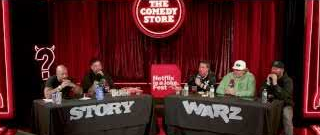
Story Warz #97

• “Double points”: 7 mentions.
• A panelist recounts being ordered six months sober after a scare and asking if they meant in a row.
• The prize book Men Explain Things to Me sparks running banter about mansplaining and speaking over others.
• A panelist jokes about being frequently mistaken for deceased comedians rather than living rock stars.
• A debate on sentence punctuation spirals into a panelist admitting he has never understood what semicolons do.
• An argument erupts over whether an ice cream cake can reasonably be returned for being smaller than expected.
• Tipping dancers in Canada leads to jokes about performers carrying coin changers like vintage bus drivers.
• A narrative recounts roasting an audience member for wearing a tin foil grill, unaware he was a world-famous rapper.
• Late-night poolside banter recalls friends repeatedly making transparent excuses to visit their hotel room.

This Past Weekend #662 - Matt Rife is introduced as a first-time visitor, but the conversation reaches back to the people who helped him start. The funniest clip may be an impersonation that failed by looking too convincing.

1. The first Ralphie invitation did not become the first show. Matt initially says Youngstown, corrects the canceled invitation to Cleveland, then recalls getting a later chance in Youngstown. He describes that later show as his first theater appearance and says it paid $100. It is a personal career memory, not a claim that this was his first ever open mic or a new audit of his earnings.

2. Ralphie's diner order was a groceries plan. After Matt moved to LA, he recalls Ralphie taking him to a diner and telling him to order three entrees. The leftovers were for Matt to take home, not simply a giant meal for Ralphie. He also remembers early Nashville holiday work paying roughly five or six hundred dollars, enough for a high-school kid to buy family Christmas presents.

3. Grandpa was buying tickets, not taking the microphone. Matt recalls his grandfather bringing him to early shows and buying five tickets for the bringer arrangement. He says his grandfather loved comedy but did not perform. He lived to see Matt sell out a comedy club, even though Matt wishes he could have shared the later scale of his success with him too.

4. Seven months of acting did not mean seven months away from stand-up. Matt recalls filming during the week in Vancouver, flying to weekend shows, then taking Sunday red-eyes to be back on set Monday morning. The move itself came quickly: he remembers getting the call on a Friday and being needed there Monday. These are his descriptions of that demanding period, not verified production logs or a recommended work routine.

5. One crowd-work project had a very small crew. Matt says he and Elton made an experimental special with Elton operating the camera alone. He describes the process as exhausting but creatively fulfilling. That is his account of their two-person production effort, not a claim that only two people were in the theater.

6. Eighty minutes became a ten-minute highlight. Recalling the Christina exchange in Des Moines, Matt says it lasted about an hour and twenty minutes and had to be edited down for the online clip. His view estimate is broad and collective rather than independently counted here. Christina is a crowd participant, not his mother or an ex, despite the confusing photo search earlier in the conversation.

7. Kyle looked too much like Morgan Wallen. The AMA bit was supposed to announce Morgan, cut to an obviously fake stand-in, and reveal the joke. Matt says the problem was that Kyle looked convincing enough for people to accept the cameo. The recorded clip they watch is part of that gag; it does not establish that Morgan was actually making a first AMA appearance.

8. The Warren house is not Matt's home. He corrects the idea that he is living with Annabelle, says he is hardly there, and says he does not handle the doll box himself. The conversation contains supernatural beliefs and recalled experiences, not independently demonstrated paranormal facts. His later museum expansion dates are plans expressed with uncertainty, not confirmed current opening information.

9. The awkward crowd-work conversations stay offline. Matt says he gets duds too, and he does not post those clips. He enjoys the spontaneous moments because they give him something fresh without burning his written stories. He also explicitly says he was not the first to do crowd work and credits Schulz as an inspiration.

10. The teacher clip belongs to somebody else. Theo asks about a crowd-work moment with a teacher; Matt identifies it as Trevor Wallace's clip. The joking suggestion that Trevor was stealing is immediately withdrawn. It is a mix-up and a friendly riff, not a plagiarism accusation or a story about Matt's former teacher.

11. The second house is framed as a relocation for his mother. Matt says the isolated Georgia place was not working for her and describes moving her closer to his sister and grandchildren in Colorado. This is a personal family account, not an independently checked property portfolio. His mother April is distinct from the Christina crowd-work image that appears in the search.

12. Quiet does not automatically mean uncaring. Their discussion about news and attention leaves room for people who do not speak publicly about every issue. Matt says that does not mean they lack empathy; Theo also notices that worrying about distant problems can sometimes help him avoid dealing with his own. Those are personal reflections, not a test of anybody's politics or mental health.

Medical stories, supernatural beliefs, outside legal/corporate claims and reported crimes remain interview accounts rather than independently verified findings.

Sets & timestamps
00:00 - Sponsor and merchandise opening
00:49 - Matt Rife introduction, first visit as announced
01:33 - Opening banter
02:03 - Whoop theory joke and no-evidence qualification
03:37 - Cold-reading compliment and were punchline
05:34 - The good-looking-comedian label
06:36 - Justin Tucker singing clip introduced
08:25 - Side quests and magic
10:02 - Onomatopoeia and the spelling surprise
11:01 - Saving TV series for a hypothetical hospital stay
12:49 - Magic power words and voila
13:44 - Personal past medication story, not dosage guidance
15:46 - Apartment story corrected to one bedroom
16:57 - Learning guitar and past serenading
17:24 - Matt couch and bedroom cover story
18:13 - CMA Fest and Red Clay Strays award
18:50 - The award introduction and empty space
19:40 - Song discussion and lyric reading
21:12 - News, attention and bliss
22:31 - Local attention and broader concern
23:52 - Silence does not automatically mean no empathy
24:57 - Worrying as personal escapism
25:51 - Sponsor segment
27:29 - Sponsor segment
29:22 - Early Nashville gigs
29:33 - Ralphie holiday pay recollection
30:29 - Old photo and plastic watch
32:31 - Remembering Ralphie as a mentor
33:00 - First invitation: Cleveland correction
33:58 - Canceled invitation, later Youngstown theater and $100
34:32 - Meeting Tony Hinchcliffe's mother at the show
36:32 - Ralphie orders extra food for Matt to take home
37:11 - Death-cause guesses corrected in the discussion
38:09 - Prayer and belief, not demonstrated physics
39:33 - Home and museum interests
41:02 - Land, airports and comedy scene
43:48 - Vancouver and the sudden move
44:19 - FTX project and Paul Rudd misidentification
45:35 - Shaq and Netflix festival recollection
46:07 - Sponsor segment
48:09 - Learning dialogue and acting
48:56 - Weekday filming and weekend shows
49:45 - Creative purpose beyond venue milestones
50:17 - Theo reflects on a break, not retirement
54:18 - Past busy schedule and insomnia discussion
54:44 - No caffeine, as Matt describes it
1:00:00 - Past health-related cancellation account
1:01:31 - Weather cancellations and performer limits
1:02:31 - Kyle acknowledged in the room
1:03:05 - AMA impersonation intended to look fake
1:04:31 - Uncertain unnamed award process discussed
1:05:49 - Touring and real-life fan connection
1:08:00 - Kyle explains the beard accident
1:09:06 - Secondary Michael Jackson Rio story read
1:12:19 - Warren house and museum discussion
1:14:50 - Annabelle beliefs and handling claims
1:16:08 - Matt clarifies he does not live there
1:16:30 - Future horror ideas and uncertain Salem plans
1:17:26 - Unverified supernatural-experience recollections
1:18:55 - Grandfather and personal grief
1:20:43 - Early bringer-show tickets and grandfather's support
1:21:08 - Grandfather saw an early club sellout
1:22:21 - YouTube specials and creative control
1:23:09 - Matt and Elton small-crew special account
1:23:29 - Platform reach as a possibility, not counted results
1:24:36 - Crowd-work inspiration and not being first
1:26:02 - Teacher clip corrected to Trevor Wallace
1:26:41 - Crowd-work expectations and jukebox metaphor
1:28:27 - Venue differences and interruptions
1:29:49 - Duds and which clips get posted
1:30:10 - Crude crowd-work anecdotes, not verified body or medical claims
1:34:25 - Mother relocation and personal family account
1:35:26 - Christina image clarified, not mother or ex
1:35:39 - Eighty-minute exchange versus ten-minute clip
1:36:41 - Kyle filming and collaborative editing
1:37:37 - Europe tour and unverified Romania incident account
1:38:56 - Kyle recounts his own experience
1:39:40 - Romania shows and European audiences
1:40:36 - Scotland crowd-work and accent humor
1:41:05 - Data-center opinions and admitted limited knowledge
1:43:03 - Recorded clip introduced as Larry Ellison
1:45:16 - Nostalgia and hypothetical birth decade
1:46:57 - Privilege of childhood boredom
1:48:40 - Flock-camera clip and speculative GTA joke
1:50:07 - Reported company counts, not independently audited
1:50:52 - Tour plans at the time of the interview
1:51:27 - Future film discussion, not verified release status
1:52:08 - Thanks and signoff

Guest conversation with Kyle acknowledged in the room, not an additional stand-up lineup. Recalled past sets and recorded clips are distinct from live performances here.

Bonus performances
07:05 - Recorded singing clip introduced as Justin Tucker
17:12 - Brief Tears in Heaven vocal fragment, not a full performance
19:47 - Brief Red Clay Strays vocal fragment
20:13 - Spoken song-lyric reading, not a live band set
44:56 - Brief sung callbacks during the Paul Rudd detour
1:07:31 - Recorded AMA gag with Kyle impersonating Morgan Wallen
1:08:11 - Kyle speaks in the room about the beard accident
1:38:02 - Kyle speaks in the room about his Romania account
1:43:21 - Recorded clip introduced as Larry Ellison
1:44:21 - Replay of that recorded clip opening
1:49:01 - Recorded Flock-camera commentary, claims not independently verified
1:52:30 - Recorded outro music begins

Which small act of support in Matt's story stayed with you?
John Kiriakou | This Past Weekend #661

Episode notes from the available automatic captions. Personal recollections and opinions stay attributed; political, intelligence, medical, criminal and legal claims are not independently verified here. These notes focus on the conversation's telling details, not acceptance of every assertion.

1. 4:31 - A college invitation ends with tuna sandwiches. John recalls being the whole speakers committee as a sophomore in 1983. A letter led to a call from George McGovern, a theater visit and an invitation into the campaign announcement. The smaller ending is the memorable one: he says McGovern's wife made tuna sandwiches in the kitchen. This is his personal account, not a checked election chronology.

2. 14:44 - The assignment that became a recruitment story. John says his graduate professor asked students to shadow a boss for a week. He quit his union job midway through, wrote his paper and received an A plus a request to stay after class. The professor then raised joining the CIA. John later emphasizes concise writing and backing up an analysis. The boss's clinical labels in the anecdote are John's characterizations, not diagnoses established here.

3. 18:33 - He took the long way into work. John recalls parking far away so he could walk around to the main entrance, cross the seal and see the flags and wall of honor. It gives the later disillusionment a starting point: he says he was proud to belong there. This is a personal memory, not current access guidance.

4. 21:07 - Seven and a half years as an analyst came first. That is John's own description of his early career, before the field stories. He says Iraq was handed to him because leadership thought nothing ever happened there. The turn comes when he recalls the invasion of Kuwait and being told not even to take off his jacket before a White House trip. He says he was twenty-five, and remembers realizing that everyone in the room was looking to him. Those numbers and the meeting are personal recollections, not verified personnel records.

5. 30:12 - Theo describes fear changing an ordinary sight. He remembers being in Charleston on September 11 and seeing an ongoing stone-walkway construction project differently. What had felt like an improvement suddenly suggested rubble after the images on television. His point is the changed lens, not that anything had happened to that local project. No clinical conclusion is being drawn about him or anyone else.

6. 51:19 - A limit worth keeping attached to the intelligence stories. John explicitly says he cannot speak to the FBI, and that his CIA information is dated because he left more than twenty years earlier. The episode contains many political, historical, legal and intelligence assertions, but this interview does not independently establish their accuracy or make them current agency policy. Questions, guesses and disputed stories stay distinct from findings.

7. 58:15 - The clothing question breaks up a serious distinction. John says he knew how to interview people but had not been trained for the interrogation work being demanded of him. Theo asks what someone even wears for that, then objects to the polo-shirt answer and suggests a Chicago Bears jersey. The joke is about clothes; it does not turn coercion into approved practice. Later John distinguishes reports he saw after a promotion from things he personally witnessed.

8. 1:05:17 - Theo has a separate memory of Guantanamo. He says he went there to perform comedy for troops. He recalls the bright perimeter lights looking like a wedding ring in the distance on the approach. That is Theo's own visit recollection, separate from John's detention accounts and not an endorsement of the conditions or a check of current custody figures.

9. 1:18:40 - The Piers Morgan question needs a Zoom qualifier. John says he appears on the show but has not met Piers in person, only on Zoom. Theo's uncertainty about his height leads to an exchange-rate joke after an on-screen answer. The useful detail is the distinction between being a recurring remote guest and actually meeting someone; this comment is not recording the screen-read height as verified biography.

10. 1:35:14 - The spy advertisement is selling museum visits. John brings up a bus campaign for the Spy Museum, and Theo initially wonders if the point is to hire more spies. John corrects that: it is to get people into the museum. The advertisement is not an audited intelligence census. Later, the Acoustic Kitty read itself says the taxi-death version is disputed, so the cat's fate is not being presented as a settled fact here.

11. 1:51:22 - Monthly family visits survive a boundary in the conversation. John says his former wife brought the children every month during roughly two years of imprisonment; later he describes twenty-three months. Theo recognizes the effort. When asked about the later breakup, John says he cannot answer and they move on. The support is the point, without speculating about private family matters. He also directly rejects the suggestion that prison was fun.

12. 2:10:14 - The closing plugs describe two different stages. John presents Dead Drop as already operating, while The Briefing Room is planned to launch in about four weeks at the time of recording. That is an announcement, not confirmation of a later launch or a verified chart position. Theo then reframes uncertainty as something that can contain excitement, before the interview returns to one last story and the goodbyes.

Navigation and bonus moments (source timestamps; sponsor reads and serious allegations labeled):
0:00 - Guest introduction and book announcement
0:27 - Recorded opening music
0:37 - Pardon application discussion, not a granted pardon
4:31 - College speakers committee and McGovern invitation
5:54 - Announcement memory and kitchen ending
10:23 - Memory and a colleague's stories
11:51 - Graduate leadership-psychology class
12:10 - Yalta example and historical claims
14:44 - Shadowing the boss assignment
15:33 - Argument and leaving the union job
16:14 - Paper grade and professor conversation
17:37 - Recruitment-process and legal-history claims
18:33 - The walk to the main entrance
21:07 - Early analyst years and Iraq assignment
22:09 - Invasion recollection and first White House briefing
24:04 - Post-September-11 agency and legal claims
25:44 - Saily sponsor read
26:55 - Morgan and Morgan paid advertisement
28:18 - Conspiracies and the guest's stated rejection
30:12 - Theo's Charleston construction memory
31:22 - July briefing recollection, unknown time and place
33:58 - Planned White House meeting and book issue
35:06 - Watching the second plane hit
36:10 - Carlos the Jackal historical account
40:05 - Pursuit and disputed diary account
42:28 - Advance-warning speculation and stated limits
44:50 - Government-versus-people distinction and conspiracy screen read
46:13 - Guest explicitly says no evidence of attack involvement
47:16 - Election-spending screen read, not an audited result
48:55 - War, lobbying and legal characterization discussion
51:19 - Guest dates his CIA knowledge and cannot speak for FBI
51:30 - Old liaison and security recollections
55:38 - BetterHelp sponsor read
56:45 - CarShield sponsor read
57:59 - Interviews versus interrogation experience
1:00:01 - Mosaic metaphor for fragments of information
1:00:29 - First prisoner interview recollection
1:02:00 - Unexpected religious invitation and respectful decline
1:05:17 - Theo's comedy trip and perimeter lights
1:06:09 - Reports seen later versus personal involvement
1:07:08 - Disturbing abuse discussion, details not repeated here
1:10:06 - Plea-agreement discussion and screen-read corrections
1:12:55 - Flotilla reporting and allegations
1:16:49 - Proposed legislation discussion, not enacted law
1:18:40 - Piers Morgan on Zoom and height joke
1:19:35 - Wrong clip recognized and a different debate recalled
1:19:53 - Condemning attacks on civilians
1:23:19 - Proposed defense bill screen read
1:28:33 - Dog-tail metaphor
1:28:55 - Libya guess corrected to Iran proposal
1:30:17 - Larger-psyop theory raised and rejected
1:31:24 - Unverified hamburger video and ingredient-table discussion
1:35:14 - Spy Museum advertisement, not recruitment
1:36:05 - Old animal-surveillance stories
1:37:08 - Borrowed-dog anecdote and personal recollection
1:38:47 - Historical pay and expense claims, not current rates
1:39:52 - Acoustic Kitty screen read includes disputed account
1:41:50 - Data-center questions and speculative claims
1:44:32 - Book compilation and privacy-policy assertions
1:48:44 - Yemen radio-project recollection
1:49:46 - Theo directly asks why a former agent should be believed
1:51:22 - Monthly family visits and a private boundary
1:52:01 - Prison was not fun
1:54:29 - First-day seating story
1:56:43 - Violent prison anecdote, unverified and not advice
2:01:26 - Guest admits inventing a claim before violence
2:04:13 - Sentencing and source-framed legal account
2:06:24 - Can peacekeeping avoid terror?
2:06:40 - Patriotism, criticism and wanting reform
2:08:28 - Hope for a long path to change
2:09:00 - AI concerns and proposed Vatican conversation
2:10:14 - The Briefing Room announcement and Dead Drop
2:11:10 - Uncertainty and excitement
2:11:38 - Final surveillance recollection
2:15:38 - Asking the counterpart, no shooting described
2:17:11 - Reported psychiatrist conversation, not a diagnosis
2:17:56 - Storytelling and Ohio insurance joke
2:18:34 - Family greeting and closing thanks
2:18:48 - Recorded outro music

Story Warz #96

• “Double points”: 3 mentions.
• The prize book White Fear prompts running jokes about surplus copies and author pseudonym theories.
• A story describes attending a party at a foreign monarch's estate and needing dental travel the next morning.
• A panelist admits to using hotel lobby restrooms rather than risking awkward odors while dating someone new.
• A passenger caught vaping in an airplane restroom escapes trouble with a disarming excuse upon landing.
• A story about encountering an unusually large third nipple leads to an audience survey on anatomical placement.
• A birthday party narrative details inviting a bullied classmate to a pool before an unlatched ladder collapsed.
• A late-night cooking mishap involves falling asleep while leaving an extra-large pizza in the oven at 450 degrees.
• A concert memory recounts stealing a rock singer's red cap at Ozzfest before sneaking back under a security fence.
Kill Tony #770 - Tom Segura and Sheryl Underwood turn a rough early bucket into a night full of specific writing advice, callbacks, and one very committed bow.

1. Dedrick turns furniture shopping into a full routine. The expensive couch becomes a used-car comparison, the cheaper vacuum-packed couch needs to breathe, and buying a big television creates a new problem: nowhere to sit. Tony lets him continue after the initial minute. The prices are part of the source story and comic premise, rather than verified shopping comparisons.

2. Sheryl gives Princess Rubber Ducky a clear direction: polish the jokes, bring the set into focus, and aim for more than shock. Princess also describes Austin's buses and sidewalks as a positive change in getting around. That is her personal experience, rather than a general accessibility assessment or medical claim.

3. Max says he put his story together that day, prompting a useful distinction from the panel. Tom says an opportunity like this calls for tested material. Sheryl suggests studying a favorite comedian's mechanics, rather than borrowing the material itself. The feedback is about preparation and structure, not simply getting louder.

4. Nila Mack explains that he has signed up as Joel for about a year and a half, then gets pulled under a different name. That does not establish that changing a name improved his odds. Another correction comes later: after saying he makes donuts, he admits he has not actually been hired. The earlier job description should not be treated as his current employment.

5. Blix's interview finds a clearer comic lane in the work he describes. When he finally uses that background for a joke about internet searches, Tony says he should have started there. The lesson is writing from what he knows; the search-volume estimates themselves are not independently verified statistics.

6. Chris gets advice about getting to the point. Sheryl likes his confidence but wants the material to match it. Tom suggests that the ending of the story should arrive around the twenty-second mark, leaving room to develop more jokes. Chris separately describes changing jobs to fit gigs more easily around work.

7. Sir Winston's look and material line up. Tony praises the preparation and presentation, and Sheryl tells him that the whole package works. His Alamo-to-Enterprise rental-car pun gets an unexpected callback when Ronnie later mentions his former Enterprise job.

8. Ronnie and Chris have a source-stated Corpus Christi connection: Ronnie calls Chris one of his day ones. Ronnie corrects the idea that they drove in together, explaining that he now lives in Austin. His quick response to the description of fancy hotels is another small interview joke: he does not think the Super 8 qualifies.

9. G-Pow gets two ways to expand a strong bit. Tom wants more from the label-less clothing premise before the suspenders payoff. Sheryl proposes a rule-of-three progression, with the strongest joke last. Redban then offers a Secret Show spot; the invitation does not establish that a later performance took place.

10. Tony recalls changing a planned roast joke about Sheryl's hair on the spot when he saw her actual hairstyle. It is a glimpse of adapting prepared material to the person in front of him, rather than sticking to a setup that no longer fits.

11. Steven's repeated bow has a source-stated childhood connection. He remembers discovering that another bow brought more applause, then recreates the loop here. His acting discussion also needs its later qualification: he says his Walker, Texas Ranger scene was cut. His proposed street-interview show likewise has not recorded any interviews yet. Neither should become a completed aired credit or established series.

12. Pat closes with compact, dark jokes that receive a different kind of feedback. Sheryl describes irreverence with humanity, while Tom praises ending the night with solid jokes. Pat's reply about being glad to be on Sheryl's good side ties that exchange back to the panel's reactions throughout the episode.

13. Our archive lists nine Tom Segura panel appearances including this episode, spanning episode numbers 35 through 770. That is documented coverage in our archive, rather than a claim to a complete lifetime total. The full stored caption phrase watch separately finds four automatic-text matches for "I love it" and two for "absolutely incredible" across all voices, including opening material. These are not Tony-only or independently audio-verified spoken counts; censored omissions interrupt matching.

Sets & timestamps
7:08 - Dedrick Flynn
13:17 - Princess Rubber Ducky
25:26 - Max Imum
32:17 - Nila Mack, introduced under his stage name and later addressed as Joel
38:59 - Blix Hansen
48:58 - Chris Longoria
56:15 - Sir Winston Pickles
1:02:27 - Ronnie Fryar
1:11:55 - G-Pow
1:22:38 - David Lucas
1:32:14 - David Hall
1:38:13 - Steven Glenn, including the song parody
1:57:23 - Swayde McCoy
2:04:50 - Pat O'Neal

Additional comedy & bonus performances
8:53 - Dedrick's requested continuation
58:59 - Sir Winston's additional fighting-weight joke
59:51 - Sir Winston's Alamo rental-car joke
1:01:57 - Sir Winston's additional hair joke
1:44:23 - Steven's repeated-bow bit

Bonus moments
21:44 - Princess's gift for D-Madness
1:16:56 - Trombone accompaniment to G-Pow's interview
1:31:00 - Tony describes changing his planned roast joke
1:48:32 - A clip appears during Steven's acting discussion
1:56:35 - Another clip during Steven's exit
2:09:27 - The episode drawings are revealed

Which piece of writing advice would you most want to hear a comic try: test it first, get to the ending faster, or expand the strongest premise?
Nate Bargatze | This Past Weekend #660

Automatic-caption notes: source memories, estimates, plans and jokes, not independent verification.

1. 3:07 - Wanting a routine is different from following one. Nate describes loving the structure of a film set after working for himself in standup. Theo supplies the contradiction: he wanted an alarm, but hid the phone between mattresses far enough away that he would not hear it. Their bad-employee-for-yourself bit is a self-management joke, not a recommended sleep strategy.

2. 9:21 - There is nobody to hand a comedy resignation to. Nate recalls an old joke about not being able to call Seinfeld and announce that he is quitting. Later they acknowledge the other side: with an audience, even quietly fading away can become something people expect explained. Neither is announcing a retirement here.

3. 18:17 - The empty seat has a shared example. Nate says he will move if strangers sit immediately next to him in an otherwise empty theater. Then he and Theo remember attending a Kevin James movie together and keeping one seat between them. This is their own outing, not a rule theaters imposed on them. Earlier, the shirtless moviegoer is a recorded fan clip, not someone joining the live interview.

4. 37:26 - Listen past the first theater estimate. Nate initially says he thinks The Breadwinner is opening in about three thousand theaters and explicitly is not positive. An on-air update later gives thirty-three hundred, which Theo repeats in the closing plug. That is the source-announced figure at this recording, not an audited distribution count or confirmation of current availability. The four-theater alternative is a joke, not a second factual total.

5. 43:41 - Cutting out a ticketing company still leaves the work. After a recorded Oliver Anthony clip, Nate agrees fees are frustrating but points out that booking venues, selling tickets and spreading the word takes a system and people. He adds that audiences already know where their usual comedy club is; a different venue can create its own friction. The point is the workload behind direct audience contact, not a verified finding about any company's legal conduct.

6. 46:26 - The restaurant jobs were different. Nate says he met his wife at Applebee's on Thompson Lane: she was a waitress and he was the host. Their birthday-of-Daniel-Boone answer is a callback joke, not an anniversary date. In a later waiting-tables memory, Nate says discounting a soda did not earn the bigger tip he expected because diners often tipped on the bill. That is his experience, not a controlled tipping study.

7. 1:03:33 - Clean comedy is not the same as writing children's material. Nate says kids can stay in the room even when the subject is marriage and they do not catch every joke. He frames limits as a creative challenge and emphasizes that other comics can make their own choices. The sports discussion makes a related distinction between wanting reliable commentary in the car and expecting an emotional fighter interview to sound restrained.

8. 1:13:15 - A work trip became roller-coaster research. Nate says he was in Hershey for shows, and a Storyland designer walked him through rides made by possible suppliers. He describes the strange feeling of riding while considering what a coaster does and how it feels. This is Hersheypark, not the Kennywood guess earlier in the exchange. It does not establish that those rides were purchased for his project.

9. 1:16:36 - The park has studies before it has an opening. Nate gives an approximate three-hundred-and-fifty-million-dollar project budget, then says his own money is currently funding feasibility and economic work. He withholds the land details. The rendering, location search, financing process and possible attractions are planning-stage claims at this interview; the whole projected budget has not been described as already spent. The medical-fix rides and band-name ideas later in the conversation are improvised jokes, not confirmed attractions.

10. 1:17:55 - Water meters and a park job came before the arena. Nate recalls reading meters manually, including one with a snake curled on top. He also says his first job was at Opryland at fifteen, sweeping and working in the dog kennel; his father did magic there. Those are source career memories, not checked employment records or instructions for handling wildlife. He expressly says he did not decide back then that he would someday build a park.

11. 1:23:34 - What comes after the goal you spent twenty years imagining? Nate says headlining Bridgestone had been his long-running dream, and reaching it left a new question. He announces nineteen thousand three hundred sixty-five tickets, then playfully links nineteen plus three hundred sixty-five to twenty years. The ticket total is his recollection, not a venue audit, and the wordplay is not literal time arithmetic. His explanation for the Nateland name is audience trust and responsibility for selling tickets, rather than building a shrine to himself.

12. 1:55:53 - The premiere changes the scale of watching yourself. Theo says he had watched and edited his movie privately before seeing it with an audience at the premiere. Both describe how strange that transition feels and how easy it is to notice what they would change. Nate also leaves room for uncertainty about the park: perhaps it will work and perhaps it will not. The closing movie description concerns a fictional family, not Nate's actual wife and children.

Navigation and bonus moments (source timestamps):
0:00 - Guest introduction and future film announcement
0:38 - Recorded opening music
0:48 - Sleepover mornings versus being last up
3:07 - Movie-set structure
3:41 - Spike TV writing and channel detour
6:34 - Call-time buffers and self-employment
8:53 - Alarm phone hidden between mattresses
9:21 - No one to resign to in comedy
10:03 - Daniel Day-Lewis and movie-title guesses
10:51 - Wrong My Left Foot plot corrected
12:08 - Train-film title confusion
12:57 - The Breadwinner and Nate Rate discussion
13:42 - Iron Lung and touring-style release comparison
16:01 - Theo's audience memories
17:02 - Recorded Golden Cheeseburger fan clip
18:06 - Going to theaters alone
19:05 - Shared Kevin James outing and spare seat
19:26 - Beetlejuice invitation that was declined
20:02 - Mountain Dew sponsor read
21:29 - Acorns paid endorsement and risk disclaimer
23:02 - Experience venues versus watching shows
25:05 - Live comedy and an unmediated voice
26:43 - Tickling truth riff, not a real technique
28:32 - Segway guide anecdote
29:57 - Crockett and Boone assumptions
30:34 - Betty Crocker fictional-person correction
32:04 - Boone and Crockett chronology screen read
33:11 - Anachronistic explorer-shoe jokes
34:26 - Hypothetical Bigfoot geography riff
37:26 - Initial uncertain theater estimate
37:48 - The shared ticket-selling business
39:22 - Wanting a break from phones
40:27 - Watch-versus-phone personal habit
41:15 - Theo's movie release regrets
42:40 - Recorded Oliver Anthony booking clip
43:41 - Direct booking still needs a system
45:29 - Unfamiliar venues and audience habits
45:53 - On-air theater figure updated to 3300
46:26 - Meeting his wife at Applebee's
47:43 - Empty high chairs and imaginary baby troubles
48:39 - Soda discounts and tip expectations
49:46 - Breadsticks and O'Charley's rolls
51:24 - Copycat recipe already includes sugar
52:19 - Manscaped sponsor read
53:33 - Writing, directing and filming roles
54:31 - Jaleel White seen at a restaurant
55:36 - Trilith article identified as old
58:19 - Touring and the ability to decline a location
59:57 - Multiple crews for multiple productions
1:01:56 - Source-estimated film budget and cast
1:03:33 - Kids can stay, but the act is not written for them
1:04:34 - Profanity, control and creative boundaries
1:07:03 - No secret dark-material folder
1:07:32 - Family background and his own clean-act choice
1:08:40 - Sports commentary in the car
1:10:24 - Commentators versus in-the-moment fighters
1:11:18 - Park stage: studies, renderings and location search
1:12:40 - Possible year-round front area, not confirmed tenants
1:13:15 - Hersheypark ride research
1:14:34 - Ride-cost estimates and guesses
1:15:34 - Kid Rock riff, not an actual ride deal
1:16:36 - Projected park budget and withheld land details
1:17:09 - Feasibility studies and a jobs ambition
1:17:55 - Water-meter work and snake memory
1:19:24 - Earlier food-sales and delivery jobs
1:21:05 - Current studies funded by his own money
1:21:46 - Opryland first job at fifteen
1:23:34 - Bridgestone milestone and source ticket total
1:24:37 - What next beyond arena shows?
1:25:51 - Name, trust and responsibility
1:26:33 - Personal faith and choosing a direction
1:27:30 - Name riffs, not actual restaurant founders
1:28:24 - No water-park plan
1:28:58 - Food-truck exaggerations, not safety findings
1:30:19 - Roast invitation declined and affection in roasts
1:34:12 - Theo explicitly says he is doing fine
1:36:09 - Imaginary rides, not park specifications
1:37:27 - Brief Time After Time vocal fragment
1:39:58 - Imaginary swamp and crocodile riff
1:40:41 - Funeral recollection and limits on acquaintance
1:41:38 - Nate Inch Nails and other imaginary band names
1:42:19 - Sponsored Mountain Dew summer questions
1:43:01 - Hypothetical barbecue and burned-meat answers
1:44:14 - Two-liter soda and breakfast-soda memories
1:46:33 - Drive soundtrack question, Toby Keith suggestion
1:47:29 - Returning to life and career transitions
1:47:52 - School graduation and summer conversation
1:49:00 - Limited riding experience and hoped-for trail rides
1:49:48 - Theo's own touring span and time off
1:50:37 - Explaining a big idea through skepticism
1:53:49 - Studies, overwhelm and uncertain outcomes
1:55:53 - Watching a film with an audience at a premiere
1:57:28 - Source all-age park intention and film synopsis
1:58:37 - Closing thanks
1:58:40 - Recorded outro music
Ari Matti | This Past Weekend #659

Notes from automatic captions, with memories, plans, estimates and jokes kept source-qualified. Adult episode; explicit childhood material is omitted rather than quoted or expanded.

1. 0:29 - The episode comes with its own warning. Theo tells listeners up front that this is a raunchier conversation and that some platforms have marked it for adults. These notes focus on the nonexplicit career, travel and storytelling details; the detailed childhood sexual recollections are not reproduced. Ari Matti is the Estonian guest, distinct from the American comedian Ari Shaffir whom he later mentions meeting on the road.

2. 32:19 - The Subway birthday had a reveal. Ari says he thought the Subway he visited in Estonia was a family restaurant, liked it enough to have a birthday there, and then saw another Subway on a trip to Sweden. The chain realization is the joke. His memory of a single location then is not a current count of restaurants in Estonia.

3. 1:16:20 - Theo catches the distance between a headline and its support. Reading a wartime article, he stops at may and at the statement that an official could not confirm the report. He does not establish the story as true or false; he questions how confidently the wording can be read. The unconfirmed claim is not being promoted here as a verified military finding.

4. 1:18:38 - His airport-running idea is elective. Theo imagines using a long layover to go for a jog inside a large airport. He notes the contrast with people running because they are late for a plane. It remains a wish, not a completed route, a measured two-mile course or advice to ignore airport rules. The surrounding stretching and cranium jokes are not medical recommendations.

5. 1:27:08 - The move to America followed several comedy bases. Ari describes Tallinn, Melbourne, a year in Bangkok, featuring around Asia and time in Canada. He says that is how he met Ari Shaffir, and that he later invited Sam Tallent to Estonia and arranged gigs. These are his own career recollections, not a verified itinerary, count of podcast appearances or evidence that the two Aris are the same person.

6. 1:27:39 - There is still a club back home. Ari says his group of about eight friends owns a comedy club and that the group is still working and doing summer shows while he is away. The approximate group size is source-reported, not checked corporate ownership. When the conversation turns to national and city population, the guesses and joking estimates are not adopted as demographic statistics.

7. 1:32:05 - A new scene does not mean no comedy existed before it. Ari calls his group a first generation of the standup scene he describes, but also explicitly acknowledges earlier comedic influences in a more formal style. He recalls open mics attracting crowds, then admits early subjects could be familiar by American standards. His airplane-closer example illustrates different audience starting points; it is not a timed performance record or an accusation of copying jokes.

8. 1:34:37 - Blade becomes a nightlife picture. Ari remembers sunglasses and leather outfits being everywhere around clubs after the film reached them, turning the image into Blade checking Blade at the door. The leather-sales explosion and the idea that all Estonia dressed this way are comic exaggerations, not measured fashion data. The nearby delayed-film-release jokes are not reliable release dates.

9. 1:39:51 - A voyage made elsewhere feel real to Theo. He recalls Semester at Sea, waving goodbye to strangers because he did not know people on the ship, and the crossing from Vancouver to Japan. He says getting off in South Africa changed how he could imagine people living in other places. Earlier he describes working in the bookstore and using college credits and financial help. These are personal memories, not current program pricing, an advertised itinerary or travel-safety guidance.

10. 1:47:26 - A message from an old colleague narrows the headline lens. Ari recalls a former Melbourne nightclub colleague reaching out after hearing him on a podcast. When Ari checks whether he is all right in Iran, the reply describes ordinary life away from the fighting. Ari explicitly adds that war and atrocities are real. The point is that another person's day need not be only the frightening image, without making a claim that a whole country is safe or identifying the private correspondent.

11. 1:49:07 - The familiar face was Road Rules. After asking to take a picture with an old camera, Ari says he had seen Theo on MTV and that it took weeks to connect the memory after meeting him. He initially names Real World; Theo corrects it to Road Rules. Keep that correction attached rather than turning the wrong title into a new credit.

12. 1:50:38 - The La Jolla special is a plan, not a finished credit. Ari says he has never visited that Comedy Store but is planning to shoot a special there. Theo describes the piano-led atmosphere he likes before a show. Ari then says he misses the ocean while living in Austin, leading to a joking request that Rogan acquire an ocean and build an airport for comics. Neither is an actual acquisition or a confirmed airline project.

Navigation and bonus moments (source timestamps; no explicit detail repeated):
0:00 - Merchandise opening
0:29 - Adult-content warning
0:49 - Ari Matti guest introduction
1:09 - Recorded opening music
1:25 - Headphone choice
2:00 - Nashville weekend and earlier Broadway puddle memory
3:10 - Aging and old skateboard-story exaggerations
4:49 - Cranial-release videos and unverified treatment jokes
5:59 - Recorded treatment-video discussion
7:29 - Another recorded treatment clip
8:08 - Conversion-therapy satire, no cure claim accepted
8:36 - Adult park and rest-stop conversation
9:21 - Vancouver park recollection
12:04 - Unwanted adult exposure account, details omitted
17:17 - Leaving the park and recognizing a family on the trail
17:41 - The Grey comparison
18:15 - Telling the park story on stage
18:42 - Park reviews and unverified rumors
22:16 - Anonymous older friend and social-history discussion
24:48 - Friend's personal account, private details omitted
26:59 - Estonian musician recollection, unverified private details
29:10 - Shopify sponsor read
30:22 - Dutton Ranch promotional read, fictional story
31:19 - Estonia and the Kalamazoo comparison
32:19 - Subway birthday and chain realization
32:45 - Adult restaurant and dating recollections
34:27 - Semester at Sea program and bookstore work
36:25 - Childhood recollections, explicit details omitted
38:03 - Family communication recollections, details omitted
40:26 - Childhood story, explicit details omitted
44:20 - Childcare and parental-rule discussion
48:15 - Babysitting story, detailed content omitted
51:33 - Child-development screen read, not independently verified
56:48 - Morgan and Morgan paid advertisement
58:10 - BetterHelp sponsor read
59:52 - Family communication and childhood context, details omitted
1:01:17 - Guest explicitly limits family experience to his own family
1:03:40 - Communication and safety discussion
1:04:21 - Unverified cultural claims and explicit material omitted
1:05:10 - Hypothetical adult game-show riff
1:06:35 - Not being parents and imagining parental worries
1:08:28 - Childhood recollections, explicit details omitted
1:11:34 - Unrequited-love screen read, not a prevalence finding
1:13:12 - Old media-access recollections, explicit details omitted
1:15:48 - Wartime article and its unconfirmed qualification
1:17:48 - A story interrupted and a cranium callback
1:18:22 - Airport stretching and voluntary-jogging idea
1:19:24 - Ongoing comfortable communication at a high level
1:20:30 - Early relationship recollections, explicit details omitted
1:21:32 - Bowling-alley recollection and fan-written reviews
1:23:37 - Family-communication discussion, details omitted
1:24:50 - Childhood exposure anecdotes, explicit details omitted
1:27:08 - Comedy route from Estonia to the United States
1:27:39 - Comedy club and friends back home
1:27:51 - Population guesses and comic exaggerations
1:28:46 - Humor, language and political-history opinions
1:29:25 - Quiet, space and national identity
1:30:07 - Censorship and creative-pressure opinions
1:32:05 - Developing standup scene and earlier influences
1:32:46 - Crowded open mics recalled
1:33:15 - Early familiar subjects and the airplane example
1:34:03 - Film-title guesses and delayed-release jokes
1:34:37 - Blade outfits in clubs
1:35:03 - Racial-language and ignorance discussion
1:37:58 - Explicit acknowledgment that a racist action is racist
1:38:52 - Airport deadline and future travel wishes
1:39:51 - Semester at Sea and seeing other places
1:40:30 - Hitchhiking memory and an unverified caretaker connection
1:41:07 - South Africa and imagining lives elsewhere
1:41:21 - Travel perceptions and patriotism opinions
1:42:44 - Algorithms and human editorial choices
1:44:04 - Different feeds and an unverified programmer account
1:45:09 - Attention, frustration and personal habits
1:46:38 - Moving to practice standup
1:47:26 - Old Melbourne colleague reaches out
1:48:06 - Ordinary lives alongside real war and atrocities
1:49:07 - Old camera and corrected MTV-show memory
1:50:06 - Closing invitation and tour mention
1:50:38 - Future La Jolla special plan, no prior visit
1:51:24 - Missing the ocean in Austin
1:51:52 - Imaginary ocean and airport for comics
1:52:20 - Closing thanks and recorded outro
Kill Tony #768 - Shane Gillis and James McCann get a dog-whistle callback, a tire-pun run, and a final bucket pull with an entirely different kind of creative project.

1. Martin brings a different instrument. He says the harmonica had already been done, so he found a dog whistle instead. It gets an actual demonstration and later becomes a callback during Liv's veterinary-work discussion. The routine and pet story do not establish veterinary advice or independently verified health facts.

2. Cameron's hardware-store job supplies a neat callback. He describes getting tools for customers, mentions a drill, and the panel connects it straight back to the drill-rap conversation. His later musical contributions are short Michael Jackson and Elvis parody excerpts. A discussed backflip does not become an actual performance.

3. Liv explains the Waffle House jacket by recalling her mother's long connection to the restaurant. She also remembers wearing her mother's Undertaker shirt on an earlier appearance. The wardrobe gives the interview a personal creative thread; the employment duration remains her recollection, rather than a verified company record.

4. Frankie's YMCA role gets a correction worth keeping. He jokes that he is a trainer, then makes clear that he works reception. James offers a different kind of invitation from the usual Secret Show spot: come and watch his upcoming San Diego show, with a front-row seat. That is an audience invitation, not an opening slot or proof of a completed booking.

5. Dicky's microphone becomes a scene of its own. He backs farther from it during the minute, then the panel encourages him to remove it from the stand. The small victory gets an Excalibur comparison. It is a concrete stagecraft moment distinct from the unverified personal allegations in the longer interview.

6. Ronaldo turns the music discussion into a Korn-to-elote pun. When the panel asks for Spanish, he explains that he is from St. Louis. He also describes moving from a former Home Depot job to door work at the Sunset Strip, before Redban offers a future Secret Show spot. These are source-stated roles and an invitation, rather than verified current employment or a completed appearance.

7. Brandon's next job arrives with a ready-made wordplay run. He says he has left flooring sales and starts selling tires tomorrow. Good-year, Toyo and tired jokes follow, while the panel shares its own sales stories. The start date is relative to this recording, rather than proof that he currently holds the job.

8. Lucas's motorcycle-sales pitch turns into a sidecar daydream for the panel. The conversation imagines who would ride beside whom; no one actually buys a motorcycle. Lucas describes his stand-up experience as about ten years on and off, rather than a continuous decade of performing.

9. Matt Gonzalez first pretends that his upgrade from a hammock is a second hammock, then corrects the joke: he has a full-size bed. His desert-rock explanation produces another misunderstanding, with the panel connecting his examples to songs that mention a desert. That exchange is a joke about a label, rather than a definitive musical genre description.

10. James Swanson describes reviewing video of his own stand-up as part of taking comedy more seriously. His opening relationship premise is explicitly fictional, and a later request for another short joke does not produce another set. He says his other stories run longer; the request for two minutes is declined.

11. Matt Worldly says he returned to open mics through a night out performing with his father in Denver. His alien-wizard-scientist persona leads into an art project: rotating glass, light and music made together in real time. The panel watches clips and praises their visual production while he calls the project a work in progress. Those are artistic descriptions, not validated scientific or clinical claims.

12. Pat's closing interview includes two corrections to the introductions. James says this is his second time seeing Pat, and Shane also does not think it is his first. Pat then says he lost the timing of the ending. It is useful performance feedback without turning the dark fictional material into an account of actual acts.

13. Our archive documents 18 Shane Gillis panel appearances including this episode, spanning episode numbers 387 through 768. That is documented archive coverage, rather than a complete lifetime total. The full stored caption phrase watch finds ten automatic-text matches for "I love it" across all voices. These are not Tony-only or independently audio-verified spoken counts; censored omissions interrupt matching.

Sets & timestamps
6:17 - Martin Phillips
11:47 - Cameron Sheppard
22:50 - Liv Taylor
30:06 - Frankie Gonzalez
40:16 - Dicky
54:09 - Ronaldo Mercado
58:39 - Dedrick Flynn
1:04:10 - Brandon Fields
1:13:50 - Lucas Hinderliter
1:22:18 - Matt Gonzalez
1:40:13 - Dusty Carter
1:46:11 - James Swanson III
1:54:24 - Matt Worldly
2:04:02 - Pat O'Neal

Additional comedy & musical excerpts
17:18 - Cameron's short Michael Jackson parody excerpt
18:32 - Cameron's short Elvis parody excerpt
31:36 - Frankie's requested ending after the pause

Bonus moments
9:29 - Martin's dog-whistle demonstration
34:03 - James invites Frankie to watch his San Diego show
42:51 - Dicky removes the microphone from its stand
1:07:08 - Brandon's hat reveal
1:36:22 - Matt Gonzalez's live phone call
2:00:02 - The panel starts looking at Matt Worldly's art videos
2:09:58 - The episode drawings

Which callback stayed with you: the dog whistle, drill rap, or the tire puns?
Mike Tyson | This Past Weekend #658, live at the Wiltern

Source-based notes from automatic captions. Recollections, jokes, uncertain plans and corrections remain attributed; no independent medical, legal, financial or sports-record acceptance is implied.

1. 1:55 - Casually sharp is his own dress code. Mike says he had not intended to wear a suit, but wanted to look sharp for the live Wiltern conversation. He adds that he likes trying on clothes without needing an occasion. The earlier pigeon-coop and dance memory gives that interest a personal background, without treating crime as a recommended way to afford clothes.

2. 4:08 - The guest corrects the introduction. Mike directly pushes back on the drug-dealer label Theo used at the opening, saying his own drug use would have made him a poor dealer. It is a correction and a joke at his own expense, not permission to record the introduction as a verified criminal occupation. Later substance-use accounts and allegations about unnamed professionals are not independently established here.

3. 4:43 - Nine years is a self-report, not a clinical certificate. Mike says he has been sober for nine years at the time of this conversation. Later he talks about recovery as ongoing work rather than permanent victory. That perspective does not mean relapse is inevitable or that anyone seeking help has no hope. The episode's speculative claims about drugs, needles, longevity and cures are not being treated as medical guidance.

4. 7:31 - The mentor memory has an emotional boundary. Asked what part of his life he would want filmed, Mike returns to finding boxing and his mentor. He describes being loved and protected, then asks Theo to stop pressing that memory. Theo backs off. Their later discussion of chores supplies a concrete detail: Mike remembers sweeping and mopping the gym even after magazine-cover photographs and attention. Those are source memories, not independently checked household or magazine records.

5. 6:30 - A documentary can change the audience more than the story. Mike says he has repeated many life stories over the years and that other people can hear something different in them. Earlier he says he believes a new documentary is coming but does not know when. Keep that uncertainty attached: this is not a verified release announcement or a claim about what is streaming now.

6. 29:06 - The SeaWorld party is denied in the room. Theo asks about a rumored private party with Michael Jackson; Mike says it did not happen. Theo then clarifies that his Don King attribution was a joke. Mike describes a later call changing his personal view of Jackson. Neither a friendly memory nor an unfavorable first impression settles the separate allegations discussed in the episode.

7. 33:19 - Whitney's visit was time together, not a song. Mike says Whitney Houston and her family visited him in prison. When Theo asks whether she sang, he says they came and hung out. He also recalls Florence Henderson coming to visit on a different occasion, but says he declined to come out in restraints. That distinction matters: an attempted visit is not a completed face-to-face meeting or a musical performance. The remembered visitors are source accounts, not checked prison records.

8. 35:42 - Theo shifts from waiting for someone to keeping his own word. He says he had spent much of life waiting for somebody to show up and is starting to think he meant himself. His practical example is promising to do something and then not doing it until he no longer trusts his own words. Mike follows with his own recovery perspective. These are personal reflections, not diagnoses or a guaranteed treatment method.

9. 39:40 - The positive-self-talk lesson is attributed to his mentor. Mike says he learned at twelve not to speak negatively about himself and connects that early lesson with becoming a champion later. The subconscious explanation is his account, not an independently validated psychological rule. Asked for a particularly hard ring walk, he instead says they became routine and connects showing up to providing for family, even when the result was a loss.

10. 47:46 - Love is not the culprit in his corrected sentence. Mike initially says he has had trouble being in love, then revises the thought: he has trouble with himself, not with love. He follows by describing himself as an acquired taste, replaceable but still unlike anyone else. The introspection is more precise than turning the earlier sentence into a dramatic claim about a partner.

11. 1:30:58 - The closing parenting answer qualifies the earlier hardship talk. Mike finds meaning in the life he survived, but says he will not put his children through the same conditions. It might make them strong, he says, and it might also kill them. He likes the life they have now and credits a lot of help. That explicit limit keeps the conversation from becoming a claim that deprivation or abuse is necessary for success.

12. 1:32:02 - The last coaching note is imagined. Mike credits his wife with writing his one-man show, while the question of a tour stays conditional. When Theo imagines what the mentor would say about his whole career, Mike pictures a correction about not moving his head enough. The hypothetical quick knockout is an example, not a new measured fight record or a fresh quote from his late mentor. The live thanks and applause then give way to the recorded outro.

Navigation and bonus moments (source timestamps; allegations and sponsor reads labeled):
0:08 - Live opening and welcome at the Wiltern
1:13 - Mike Tyson guest introduction
1:19 - Live entrance applause
1:55 - Casually sharp outfit and liking clothes
2:34 - Pigeon-coop and early clothing recollection
4:08 - Guest corrects the drug-dealer introduction
4:43 - Nine-year sobriety self-report
6:20 - Documentary timing remains uncertain
6:30 - Different listeners hearing old stories differently
7:31 - Mentor memory and emotional boundary
9:13 - Chores, school and a sense of home
10:04 - Magazine pictures, then sweeping the gym
12:40 - Fasting recollection, not medical guidance
13:07 - Kiki acknowledgment from the room
13:17 - Curfew and running home
14:58 - Wanting the crowd to call his name
16:48 - His wife had asked him not to judge Theo
19:44 - A Christmas meal memory
22:13 - Racial-language pressure and adult stage banter
25:11 - PrizePicks sponsor read
26:14 - MoonPay sponsor read and crypto-risk disclaimer
27:24 - Dutton Ranch promotional read, fictional story
28:16 - Television memories and an airport catchphrase story
29:06 - SeaWorld party rumor explicitly denied
29:38 - The call that changed a personal view of Jackson
31:15 - Concert-backstage recollection
33:19 - Whitney Houston and family visit recalled
34:00 - Visitor-name guesses, not a verified list
34:21 - Florence Henderson visit declined
34:45 - All-night lights, correcting the darkness assumption
35:07 - Solitude and personal reflection, not clinical advice
35:42 - Theo waiting for himself to show up
36:33 - Ongoing recovery, not a guaranteed outcome
37:19 - Mortality and spiritual reflection
39:28 - Mentor lesson about self-talk
40:18 - Ring walks as routine and providing for family
41:46 - Pigeon and early fighting recollection, harm details omitted
43:36 - Adult dating banter, details omitted
45:41 - Relationship rumors and explicit correction
47:46 - Love statement corrected toward personal responsibility
48:45 - BlueChew sponsor read, not medical advice
50:09 - Liquid IV sponsor read
51:37 - Tecovas sponsor read
52:55 - Public image versus his ordinary day
53:44 - Family greetings and Kiki appreciation
56:35 - Parenting, fame and opportunities
57:46 - Cam Newton mistaken-identity anecdote
1:01:47 - Unverified mental-health and government claims
1:02:49 - Speculative longevity discussion, not clinical findings
1:05:15 - Probation-test recollection, not validated test guidance
1:06:25 - False death-report story
1:07:23 - Past sleeplessness and drug harms, details omitted
1:08:16 - Unverified doctor and rehab-staff allegations
1:10:27 - Lost-item search story and its irony
1:11:28 - Cuba travel recollection and no Castro meeting
1:13:15 - Travel, language and unsupported demographic claims
1:16:17 - Japan fights and loss corrected on air
1:16:32 - Purse estimate revised, not an audited payment
1:16:59 - Theo's communal fight-watching memory
1:17:20 - Disaster comparisons and speculative claims
1:18:06 - Hogan funeral and Jim-versus-Vince correction
1:18:35 - Adult McMahon anecdote, details omitted
1:21:21 - Vince memorial recollection and wrestling as childhood story
1:23:09 - Bruno Sammartino as a remembered hero
1:23:45 - History, mythology and lasting names
1:25:13 - Ego and mood reflection
1:25:58 - His personal definition of discipline
1:26:22 - Carrying bags and paying homage to older fighters
1:27:03 - Influences before the idea of being self-made
1:27:51 - Identity and speculative parallel-life questions
1:28:12 - Theo's survival-mechanism metaphor
1:29:08 - Need for attention, harm details not repeated
1:29:44 - Future special announcement and adult hypothetical
1:30:58 - Children: explicitly unwilling to repeat the hardship risk
1:31:37 - A lot of help, not doing it alone
1:32:02 - Wife credited for the one-man show
1:33:06 - Tour remains a conditional possibility
1:33:27 - Imagined mentor response and head-movement correction
1:34:27 - Closing family thanks and live applause
1:35:03 - Recorded outro music
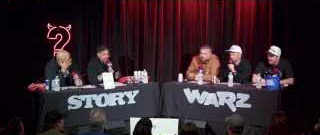
Story Warz #93

• “Double points”: 3 mentions.
• The prize book Think Like a Pancreas leads to running commentary on insulin regimens and healthy diets.
• A story recounts an elementary school bathroom flood blamed on a faulty urinal to avoid paying damages.
• A festival shuttle ride gets uncomfortable when a claustrophobic passenger insists on riding up front.
• A date ends with a casual wave before the guest sprints full speed down the sidewalk to catch a shift.
• An argument leads to being locked on a back porch while vintage magazines are shredded page by page.
• An after-school endurance dare ends in disaster when bathroom access is blocked at an awkward moment.
• A high school dance dinner turns mortifying when an empty bank balance forces an awkward booth exit.
• A childhood health misunderstanding involves trying to swallow medicine still sealed inside foil wrapping.
Kill Tony #767 - Ari Shaffir, Luis J. Gomez and Peyton Ruddy get a drum-off, a surprise Wee Man visit, and plenty of comedy about how comedy gets made.

1. Golden Tickets come with a booking process. Tony explains that performers submit availability, then he considers regulars, open spots and a rotation based on who last appeared. He qualifies the initial anytime-you-want description instead of promising unlimited access.

2. Orhun says he did about 16 shows in seven days. It is his account of a busy comedy week, rather than an audited attendance log. The conversation then reveals the scheduling behind those Golden Ticket appearances.

3. Serjan tries to make the one-minute cat sound part of his knock-knock joke. He reaches the intended moment early and says he sped through it. His claim of having 100 practice videos makes the missed timing an extra twist, although the phone recordings are not independently counted here.

4. Keegan's bilingual burrito premise makes English cheese free and Spanish queso extra. The longer conversation becomes a debate about delivery and artistic identity. He explicitly denies having said that he had never heard of Mitch Hedberg, then leaves with a Secret Show invitation. A stylistic comparison is not proof of copied material, and an invitation is not a completed booking.

5. Adam says he created a New York open-mic website and runs a weekly Brooklyn show. The panel gets stickers, then an actual kiwi appears from his pocket. His interview gives the minute an unexpectedly tangible prop.

6. Royal gets to finish his interrupted joke, then asks to tell another. Tony gives him the spotlight for a full additional holiday bit and tattoo reveal. That extra performance is separate from the original minute; the later suggestion of another one is immediately withdrawn as a joke.

7. Stephanie describes starting with TikTok videos during the pandemic and moving into live stand-up after reopening. Her insurance-claims job also supplies a callback to Orhun's earlier Houston car story. It is a connection between interviews, rather than insurance advice.

8. The later Adam says stand-up is a route toward scripted comedy and a writers' room. Ari then gives him a practical storytelling edit: remove birthdays that never pay off and characters who never return. Peyton's future-TV-writer response is encouragement, rather than an actual job offer.

9. Keenan's interview turns into a drum-off. He plays, Michael Gonzalez responds, and the audience reaction favors Michael. The job-trading premise is part of the show's joke, rather than an actual employment change or a verified lifetime competition record.

10. Miranda still has the red vest Luis left her and says she wears it when cold. Their shared Comedy Store door-work connection gives the exchange some history, without establishing exact employment dates.

11. Wee Man drops in to say hello and describes an early filming stint: five days yielding 40 minutes of footage. Those are his figures for that shoot, rather than an independent production audit or proof that the whole film was finished. He also talks about taking photographs on an old Canon film camera.

12. Pat says his writing happens throughout the day. The panel's vampire characterization gets a callback when he describes flying to a spot and hanging upside down to write. He leaves with Skankfest and Secret Show invitations. Peyton also receives a Skankfest invitation, while Tony repeatedly rules out a Kill Tony show there despite Ari's comic insistence.

13. The full stored caption phrase watch finds 12 automatic-text matches for "I love it" and one for "absolutely incredible" across all voices, including opening material. These are not Tony-only counts or independently audio-verified spoken totals. Censored omissions interrupt matching.

Sets & timestamps
6:59 - Dedrick Flynn introduction
11:51 - Tom Frank introduction
20:13 - Chris Gerasimou introduction
28:47 - Keegan Carmichael introduction
40:25 - Adam Malev introduction
48:37 - Royal Oates introduction
1:01:32 - Serjan introduction
1:12:25 - Orhun Timur introduction
1:19:32 - Stephanie Anne introduction
1:29:01 - Adam Beck Areola introduction
1:37:09 - Keenan Womack introduction
1:43:56 - PHX98 introduction
1:50:11 - Miranda Meadows introduction
2:05:51 - Pat O'Neal introduction

Additional comedy & bonus performances
41:50 - Adam finishes the cupcake joke after the minute
50:21 - Royal finishes his interrupted joke
51:00 - Royal requests an additional set
51:16 - Royal's extra holiday bit begins
52:44 - Royal's tattoo reveal
1:07:30 - Serjan takes off his jacket
1:41:04 - Keenan's drum solo
1:42:19 - Michael Gonzalez's response
1:47:19 - PHX98's requested rap
1:48:02 - The rap ends

Bonus moments
1:32 - Winston Marshall's banjo guest introduction
3:44 - Ari, Luis and Peyton's panel introduction
9:09 - The rabbit-foot gift story and shared-recipient correction
1:18:34 - Tony explains the Golden Ticket rotation
1:59:23 - Wee Man's surprise hello
2:10:01 - Pat's Skankfest invitation
2:10:11 - Pat's Secret Show invitation
2:10:39 - Peyton's Skankfest invitation
2:11:32 - Tony rules out a Kill Tony show at Skankfest

Names follow the stored lineup where caption spellings vary; introduction times follow this episode's captions. No new identity records or verified lifetime debuts are inferred.

Which stood out most: the drum-off, the timed knock-knock attempt, or the writing advice?
Bobby Lee | This Past Weekend #657

Source-based notes from automatic captions. Recollections, jokes, estimates and future plans stay attributed. No independent medical, political, casting or audience-rank verification is implied.

1. 9:38 - The prayer becomes a long-running setup. Bobby asks for space to pray, but interruptions lead through fish, sharks and a movie-poster complaint before the eventual amen. Later he calls the prayer a joke while admitting the poster really bothered him. Both parts matter: the exchange is comic, but the concern about being asked before using his image is not erased by that label.

2. 4:58 - The travel story gets corrected immediately. Theo frames Bobby as having been in the jungle; Bobby says he went to Waikiki and denies the suggested drug-retreat premise. Their omakase discussion supplies another correction: Bobby admits he does not know what the word stands for, while explaining the dining format he means. Neither is evidence of military service, a retreat or an actual foreign allegiance.

3. 44:08 - The geography quiz does not produce a reliable geography lesson. Bobby argues that Asian countries have distinct languages and cultures, then their attempted North American comparison runs into its own uncertainty. The fun is the argument losing its footing, not a verified count of countries. A final-rebuttal movie analogy stalls over titles, and an Andrew Santino phone call interrupts it again.

4. 47:38 - Santino is an actual phone cameo, not an in-person guest. He praises Project Hail Mary, and the conversation redirects toward Bus Boys through a deliberately exaggerated genre comparison. The call is distinct from the hypothetical casting jokes elsewhere in the episode. Later, Bobby first says Karen Carpenter when recalling Coachella; the name is corrected to Sabrina Carpenter. Keep the correction rather than inventing a performance by the wrong artist.

5. 1:03:11 - They describe the pressure behind the long gap. Bobby says the expectation of creating magic or another viral clip made returning feel difficult. Theo says silence can make him rush toward another subject. Their answer is to let the conversation happen, even if no special moment appears. A crew member says they already have enough material, then an ordinary microphone-and-framing adjustment interrupts the reflective mood.

6. 1:09:54 - Not living in the results is followed by a mangled saying. Asked about his audience in other parts of the world, Bobby says he does not know the stats. Theo reaches for the watched-pot expression but says a cooked pot instead, and Bobby points out the literal difference. The earlier top-ten compliment is not an audited ranking. The point is how quickly a conversation about letting go becomes another wordplay detour.

7. 1:11:55 - Silence is reframed as listening. Bobby says comedians can dislike a quiet room even when the audience is listening, and they discuss performing for an algorithm rather than enjoying each other. He attributes changes in his own comfort to personal experiences including therapy and medication. Those are self-reports, not prescribing advice or an independently assessed treatment outcome. They return to the simpler goal of having a good time together.

8. 1:27:53 - The missed Henry photo changes his approach to fandom. Bobby recalls being in a New York hotel while filming The Dictator and sharing an elevator with Thierry Henry. Theo assumes he introduced himself; Bobby says no words came out. He contrasts that regret with later asking Chris Bianco for a photo. The contrast is a sighting without an introduction versus a later request he actually made, not two podcast guest bookings.

9. 1:44:08 - Maybe ten guests explains a different show format. When Theo jokes about waiting hundreds of episodes for an invitation, Bobby says Bad Friends is not a guest-driven show and estimates maybe ten guests over its run. He names a few examples and says the issue is scheduling, not a personal slight. That is an approximate statement in this conversation, not a newly audited lifetime count or a reason to rewrite the archive.

10. 1:47:16 - The poster argument reaches an uncertain answer. David Spade answers by phone and says he does not think Theo knew about the image, suggesting somebody else made it. That is not a confirmed designer credit. Bobby then says no one is to blame and thanks him for including him in the movie. Theo still says he should have asked. The different guesses about the number of lines are comic and inconsistent, so they are not a script statistic.

11. 1:49:15 - The special is a way to force new material. Bobby says he had been doing a familiar act and slowly adding jokes. Recording it would put it out into the world and require him to evolve; he says he is already writing new work. His explanation for waiting is that a club career had provided a living and he felt no hurry. The November special and probable game-show timing are interview-bound plans, not independently confirmed current release dates. He describes the new game show as two guests competing in games they developed.

12. 1:40:17 - The invitation needs no invented fighting career. Theo offers to bring Bobby to a later UFC event if the seating and access work out. When he suggests introducing him as somebody who used to fight, Bobby asks for the real description: his friend. The episode eventually returns to its poster joke, a game-show invitation Bobby says Theo declined, and one more Spade call joking about a rescue password. Those callbacks are not a booked fight, a guaranteed event seat or an actual emergency.

Navigation and bonus moments (source timestamps; phone cameos and sponsor reads labeled):
0:00 - Recorded opening and Bobby Lee introduction
2:16 - Prayer request and interruptions begin
4:58 - Waikiki correction, not a jungle retreat
5:29 - Omakase wordplay and definition distinction
9:38 - Prayer attempt returns
10:20 - Childhood recollection, explicit details omitted
11:34 - Karate discussion and counterexamples
12:51 - Prayer restarts
13:50 - Movie-poster complaint enters the prayer
14:33 - The eventual amen
16:41 - Clothing reset, gratitude and poster grievance
18:07 - Joking but genuinely bothered
27:29 - PrizePicks sponsor read
28:47 - MoonPay sponsor read
30:04 - Mountain Dew sponsor read
35:47 - Uncle label corrected
40:49 - Heated Rivalry discussion and gesture demonstration
44:08 - Different languages, traditions and cultures
44:51 - Geography quiz and uncertainty
46:58 - Hat removed before the final rebuttal
47:17 - Movie analogy loses its point
47:38 - Andrew Santino joins by telephone
49:53 - Seeing a perspective without calling it right
50:40 - Moving slot-machine clip and hypothetical scenarios
51:43 - Crane-game attempts
56:03 - Acorns sponsor read and investment-risk disclosure
57:34 - Superpower sponsor read, not medical advice
58:41 - BetterHelp sponsor read
1:00:18 - Smoking and quitting wordplay
1:00:42 - Karen Carpenter corrected to Sabrina
1:01:03 - Morgan Wallen walkout suggestion
1:02:07 - Improvised country-song parody
1:03:11 - Silence and pressure to produce viral clips
1:04:28 - Crew says there is enough material
1:04:45 - Microphone and framing adjustment
1:09:31 - Another pause to slow the conversation
1:09:54 - Unknown audience stats and watched-pot correction
1:10:43 - Theo clarifies discomfort with silence
1:11:39 - Personal therapy and medication self-report
1:11:55 - Quiet can mean the audience is listening
1:14:55 - Fear and blocked threats, no sender identified
1:15:32 - Dating-app recollection and deletion
1:17:44 - Colonoscopy self-report; hygiene tangent follows
1:21:16 - Boat-survival claim explicitly admitted false
1:22:44 - Volleyball clip and imagined acting role
1:25:38 - Poster exclusion callback in fictional movie pitch
1:26:33 - Brad Pitt as a wished-for guest
1:27:11 - Arsenal fan story and listening interruption
1:27:53 - Thierry Henry hotel-elevator recollection
1:29:10 - Asking Chris Bianco for a photo
1:30:57 - Marilyn versus Charles Manson correction
1:34:47 - WWE offer question remains unconfirmed
1:35:24 - Hypothetical tag-team match and tax wager
1:37:33 - Comparing UFC seats
1:39:36 - The entrance-seat perspective
1:40:17 - Conditional next-event invitation
1:40:25 - Friend, not a fabricated former fighter
1:41:08 - Dog-loss condolences
1:42:57 - Returning to viral pressure and avoiding the visit
1:44:08 - Bad Friends guest-format estimate
1:44:52 - Crew feedback and not living in results
1:46:48 - David Spade joins by telephone
1:47:16 - Spade is uncertain who made the poster
1:48:06 - Theo says he should have asked
1:48:49 - First-special plan and interview-bound timing
1:49:15 - Releasing familiar material to write anew
1:50:08 - A club career and no hurry
1:51:28 - Tentative Bad Game Show timing and two-guest format
1:51:46 - Put me on the poster anyway callback
1:52:00 - Spade callback and attempted FaceTime
1:52:34 - Rescue-password joke
1:53:12 - To be continued and recorded outro
Kill Tony #766 - Sam Tallent joins a night with a live promotion, three drum solos, and a pickup line that takes the scenic route.

1. Pat's set leads directly to an onstage promotion. After the panel praises his dense writing and callbacks, Tony offers to move him from Golden Ticket winner to regular. The closing conversation repeats that announcement. Tony presents it as a historic first, but this review does not independently establish an all-time first or update canonical role records.

2. Asked about his writing, Pat estimates around 15 new jokes per week and says he has done a longer set of about 40 minutes. Those are his accounts, rather than an audited writing log or a performance timed here. The useful connection is between the work he describes and the panel's response to his tightly packed minute.

3. Akshay's band interview becomes a drum-off, then expands again before the guest drummer gets his turn. Akshay plays first, Sam Tallent is added second, and Justin Heights closes it. Tony jokes that everyone except Akshay won. It is a three-player musical detour, rather than an actual job swap or a verified first-ever competition category.

4. Cbas describes hosting team-building games at Game Show Battle Rooms. The panel initially imagines an escape room, while he explains the game-show setup and how reluctant participants can warm to it. He also says this is his last signup before a planned move back to Miami. The plan does not establish that the move or a later brewery show took place.

5. Joe's interview turns into a live improvisation exercise with Heidi. He starts a Tennessee pickup line, but she answers Wisconsin. He has to react to the actual answer, and the later curtains exchange circles back to his blind-installation work. The stage exchange does not prove a later relationship.

6. Aaron says he came both to perform and to sell barbecue chicken. He reports selling out, then corrects the panel's picture of him cooking behind the bar: he grilled at home and brought the food with him. It is his side-business account, rather than a sales audit, a permit finding or a food recommendation.

7. The chicken interview triggers a search for a negative sauce review. The initial all-five-star description gives way to a two-star rating, but there is no written complaint to read. Sam calls out the stalled detour. The joke about a rival sauce maker leaving it does not establish who posted the rating.

8. Caleb is pulled from inside the audience and calls this his first stand-up set. Later he remembers his theater background, including playing Donkey in Shrek, and gives the panel a brief waffles line. That separates a source-announced comedy debut from having no prior stage experience at all.

9. Kandyce spells out her name because people could not find her after the earlier episode. Sam initially thinks he has not seen her, then the conversation recalls festivals in Santa Fe and Hawaii and a restaurant pronunciation disagreement. Those are their recollections, rather than independently verified meeting dates.

10. David Edwards says he is returning to fiber-optic work and deliberately styled his hair for this appearance. The panel uses the hair as a recurring visual hook, then praises his confidence and interview timing while encouraging his writing to catch up. His account of a tenth mic is not an independently verified lifetime appearance count.

11. Sammy's purple-card sales job becomes a purple-stuff smoothie callback. The conversation moves from his earlier airport credit-card work to his account of working at a smoothie shop, before the free-smoothie offer turns into another joke. No new employment or financial record is inferred from the banter.

12. Dedrick closes with an extended shower-product bit that turns a crowded bathroom shelf into a seasoning-cabinet comparison. The seven-in-one product's absurd ingredients are part of the joke, rather than real product, health or criminal claims. His later cartoon conversation describes a prospective sale, not a verified completed deal.

13. The source-bound phrase watch finds 11 automatic-text matches for "I love it" across all voices, including opening and sponsor material. This is not a Tony-only or independently audio-verified spoken total. Censored omissions interrupt matching.

Sets & timestamps
7:55 - David Jolly introduction
16:32 - David Edwards introduction
28:18 - Kandyce August introduction
42:34 - Cbas Mattar introduction
51:21 - Austin Ingalls introduction
59:45 - Pat O'Neal introduction
1:04:51 - Akshay Bimbhet introduction
1:15:24 - Joe Jacques introduction
1:24:02 - Aaron McPherson introduction
1:33:49 - Paul Mendoza introduction
1:37:50 - Sammy Smith introduction
1:48:01 - Caleb Andrews called from the audience
1:48:36 - Caleb's stage reintroduction
2:04:16 - Dedrick Flynn introduction

Additional performances & bonus exchanges
1:08:47 - Akshay's drum solo
1:09:55 - Sam Tallent's drum solo
1:10:37 - Justin Heights's drum solo
1:19:57 - Heidi joins Joe's improvisation
1:20:18 - The Tennessee line meets Wisconsin
1:51:54 - Caleb's brief Donkey line
1:59:18 - Michaela's guest hello
2:04:27 - Dedrick's extended closing set begins

Bonus moments
1:24 - Carlos's birthday acknowledgment
1:42 - Guest drummer Justin Heights introduced
4:30 - Sam Tallent's panel introduction
31:10 - Kandyce spells her name
1:03:05 - Tony announces Pat's promotion
1:32:34 - The sauce-review search begins
2:12:35 - Chris Rogers's drawing uses an older Sam reference photo

Names follow the stored lineup where caption spellings vary; timestamps follow this upload's captions. No new identity records or verified lifetime debuts are inferred.

What was your highlight: Pat's promotion, Sam joining the drum-off, or Joe improvising with Heidi?
Fahim Anwar | This Past Weekend #656

Source-based notes from automatic captions. Recollections, jokes, estimates and future plans stay attributed. No independent medical, political, casting or audience-rank verification is implied.

1. 3:18 - The promotional title goes missing for a moment. Fahim briefly blanks on the name Intrusive Thoughts, then explains that he had his previous special in mind. The correction happens in the room rather than being hidden behind a smooth introduction. The source says the special is available on YouTube at the time of the interview; this is not a fresh check of its current availability.

2. 3:58 - Working on stuff means jokes, not carburetors. Fahim describes a weekly Belly Room series in which he brings paper, tries ideas and records the process. Some of those attempts eventually became material in the special. Theo had imagined a repair show, and a generated mechanics image extends the misunderstanding. The picture is explicitly AI imagery, not evidence that they worked together as mechanics.

3. 20:10 - Large venues feel like a wave before they feel familiar. Fahim thanks Theo for the Midwest tour dates, correcting the initial Seattle guess. He recalls earlier playing to about seven thousand and some tour crowds around eighteen thousand. Those are his remembered audience estimates, not audited counts or venue-capacity records. Looking at the empty seats in daytime reminded him of the giant wave in Interstellar; after doing a show, he recognized the work again.

4. 22:26 - The selfie has competition from a hat. In the Clear Lake story, a fan tries to keep pace for a photograph, only for the wind to take his hat. Fahim says the cycle happened three times. The precise distance is guessed, while the Kleenex and kite comparisons are jokes. They remember laughing about it all day, then visiting the Surf Ballroom and getting matching shirts. Their memories of that visit are not independently checked historical quotations from the venue.

5. 42:25 - Trying something new can beat crushing with something proven. Fahim says that as a young comic he sometimes wanted to test a fresh joke when he might instead have tried to impress industry people. Later he distinguishes performing established bits on the road from experimenting around town. Getting a new or mediocre thought to work is the rush he is chasing. That is his creative preference, not a rule that everyone should risk every important set.

6. 45:42 - Dance supplies a second instrument. Fahim says he first danced by himself, copying the movement he enjoyed and practicing in front of a mirror. He directly rejects the suggestion that it was organized dance training. He connects that comfort with movement to his act-outs: sometimes a look or walk gets another laugh without a new sentence. An old video from his engineering years adds context; the guesses about its exact age are not a newly verified production date.

7. 51:18 - A smaller scene is not the same as a dead one. Fahim recalls crowded pre-pandemic Comedy Store lineups and says he did not realize their intensity at the time. He describes departures as opening space for a younger tier of comics to get practice, while still calling the club strong. Digital reach can begin elsewhere, he says, but he distinguishes that from places to practice stand-up. This is his scene assessment, not a measured census or a promise of equal algorithmic reach.

8. 1:02:54 - SNL points him toward a practical route. Fahim says the show inspired him to research how people got into comedy. He saw improv and stand-up as two possible paths. Improv schools were elsewhere and cost money, while stand-up was something he could start doing in Seattle and practice without needing scene partners. That explains his choice; it does not mean those are the only hiring routes or that effort alone guarantees a career.

9. 1:33:17 - Engineering was part of the route to Los Angeles. Fahim says he studied mechanical engineering, applied to Southern California jobs and worked in stress analysis at Boeing in Long Beach for about four years. Comedy was already the goal: he says he started after high school at eighteen, correcting the idea that he first began after the engineering job. These are his career recollections, not checked employment or school records, and the title does not make him an expert on every technical subject.

10. 1:40:55 - Leaving the office was more complicated than a clean break. Fahim recalls an MTV job requiring three months away and wanting a leave so he could return. He says the leave was refused and the engineering job eventually ended. Later he identifies the show as Disaster Date and says he did two seasons. He also says the transition was still financially dicey, despite comedy going well enough to take the opportunity. His statements about unemployment rules are not being offered as legal guidance or a strategy to copy.

11. 2:00:54 - It is fourth, not third, and the chapter needs closing. Theo asks whether this is his third special; Fahim corrects it to fourth. That is a source-reported ordinal, not an independently audited filmography. He describes touring and tightening material, then filming it so he can move on. The whole-vase comparison makes the reason concrete: clips can be useful, but he also wants viewers to see how a cohesive set hangs together.

12. 2:04:46 - The final metaphor is about being seen before being known. Discussing his own experience after September eleventh, Fahim describes feeling just as American as other people while being read differently because of appearance. His away-jersey analogy expresses that perspective; it is not a claim that every person treats him the same way. He also says people are generally nice. The information-overload conversation then lands on intrusive thoughts, bringing the special title back at the close. The extended imagined scenarios elsewhere remain jokes, not verified crimes, products or incidents.

Navigation and bonus moments (source timestamps; phone cameos and sponsor reads labeled):
0:00 - Upcoming live Mike Tyson show announcement
0:32 - Fahim Anwar guest introduction
3:18 - Blanking on the special title
3:58 - Fahim Works on Stuff and the workshop process
4:39 - Repair-show misunderstanding
5:49 - Generated mechanics picture, explicitly AI
14:22 - AI lookup and overbuilt-infrastructure joke
20:10 - Tour thanks and Midwest correction
20:34 - Large-audience source estimates
20:48 - Empty seats and the wave comparison
21:41 - Basketball behind the curtain
22:26 - Clear Lake and walking to lunch
23:25 - Fan asks for a selfie
25:02 - Three repetitions, in the retelling
25:49 - Surf Ballroom visit and matching shirts
26:42 - Meet-and-greet story and seeking context
28:08 - Manscaped sponsor read, not independent health statistics
29:36 - Quo sponsor read
30:51 - Being known outside the comedy clubs
33:00 - Photos as a way to remember travel
33:56 - Crazy Horse is a different mountain
38:46 - Life as SimCity analogy
42:25 - New material versus established success
44:47 - Lance character and dance memories
45:42 - Dance as the first foundation
46:13 - Old dance clip from engineering years
47:07 - Self-taught, not organized dance training
48:01 - Physical comedy as another instrument
51:18 - Pre-pandemic lineup memories
52:24 - Departures and opportunities for newer comics
54:29 - Digital reach versus places to practice
55:31 - Modiphy sponsor read
56:31 - Tarantino conversation remembered from Hat Trick
59:46 - A late set with John Stamos in the room
1:02:09 - Damon Wayans laugh as validation
1:02:54 - SNL as an inspiration
1:03:46 - Choosing a practical path into stand-up
1:06:12 - Role models and human uncertainty
1:09:27 - Switching from set mode to host mode
1:10:44 - Liking dance without liking nightclubs
1:17:16 - What helps or quiets the imagination?
1:17:44 - Comfort, familiarity and introversion
1:19:00 - Gratitude and different podcast dynamics
1:20:37 - Clip framing versus a full conversation
1:25:02 - Road Rules question and MTV comparison
1:28:23 - Road Rules memory and early popularity
1:31:56 - A trial run for navigating later fame
1:33:17 - Mechanical engineering and moving to Los Angeles
1:34:25 - Stand-up began before the engineering job
1:35:01 - About four years at Boeing, in his account
1:37:00 - Waymo stand-up clip, a fictional vehicle character
1:39:07 - The joy of testing a new idea
1:40:55 - The engineering departure story
1:41:08 - Three-month leave requested and refused
1:42:07 - Employment ending recalled, not legal advice
1:44:31 - Two seasons and a wrap-party memory
1:45:08 - Engineering title is not universal expertise
1:51:17 - Robot-dog clip setup
1:53:06 - Resident-expert label questioned
1:53:19 - Apartment robot-dog clip
1:57:38 - Honorary cousins and close friends
1:58:28 - Recorded anti-drug public-service announcement
2:00:54 - Fourth special, correcting third
2:01:05 - Finishing a chapter and moving on
2:01:49 - Whole vase versus fragments
2:02:15 - Watching and sharing the special
2:02:55 - Media framing and personal experience
2:04:46 - Being American and being read differently
2:05:36 - Away-jersey metaphor
2:07:22 - Information overload and the title callback
2:08:07 - Guest thanks and closing
2:08:38 - Recorded outro music
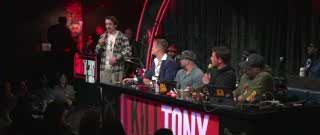
Kill Tony #765 - Dustin Poirier and Ari Matti get a night of unusual jobs, live callbacks, and a very soft-spoken surprise.

1. Dustin says he had planned to be a spectator before joining the panel. His conversation with Ari connects fighting and comedy: being good in practice does not guarantee the same result when the lights come on. Ari later calls back to his own MMA comparison after the opening bucket pull. Tony introduces this as Dustin's panel debut, rather than this review independently establishing a lifetime first.

2. Pat's almost-empty apartment becomes a shared premise. He has a wall-mounted TV, a recently acquired vanilla candle, and an uncertain answer about his table's size. The panel builds an entire room around those details, while Pat says he mainly writes jokes and stares at a monitor. The guessed dimensions are not a measured floor plan.

3. Benny's day job gives the panel a ready-made callback. He says he represents a flooring company at home shows, and his Lebowski-style appearance leads straight to the rug that ties the room together. He has performed five-minute sets and thinks he could do ten; that second figure is an aspiration, rather than a completed set measured here.

4. Bryce says he produces around three or four comedy shows a month across two Jacksonville venues. He is visiting Austin, rather than living there. Those figures describe his account of producing work, without establishing audited ticket sales, income or a complete booking history.

5. Eddie traces his comedy start to a stranger at an Atlanta party asking whether selling cars was what he had wanted to do growing up. His answer was to make people laugh, and he recalls promising to try comedy within a year. Later in this interview, a question about the color of his microphone becomes a return roast.

6. The soundboard problem becomes material of its own. Redban says it crashed; later the missing effect has to be delivered verbally. It is a live adaptation to the technical problem, rather than evidence of a new permanent show format or a verified thirteen-year-old device.

7. Chase says he is arranging comedy shows in aquariums. The panel keeps finding ways back to that setting: fishy, deep water, and finally a bit having fins instead of legs. These are prospective shows in his account, rather than completed performances or independently verified contracts. He also says he found comedy after doing acting and self-tapes.

8. Fiona's laugh has escaped the episode. She says a phone went off during one of her own shows, and it was playing her laugh. The panel asks for another example, while she points out that doing it on request is different. It is her recollection of that show, rather than a measured claim about ringtone popularity.

9. Isaiah recognizes an old comment under a recording of his father's music: it came from his own comedy account. He remembers previously knowing the music from a CD and being surprised to find it online. The exchange connects the recording to his personal history, without establishing uploader identity, ownership, revenue or current platform statistics.

10. Flash's calm delivery turns out to hide an unexpected hobby. He says he has gone wing walking three times and enjoys adrenaline activities. The contrast surprises the panel, who keep returning to how politely he responds. This is his hobby account, rather than verified flight logs, an activity recommendation or a confirmed first in the show's history.

11. B Lee connects taking up rollerblading again with having an active dog and a background in hockey. The interview also clears up an earlier misunderstanding: Tony says he failed to hear the word bear because of an audio issue. That is different from B explaining the show's timer to somebody who did not know it.

12. Dedrick's closing tattoo premise starts with his account of a car-wash dress rule, then reaches the actual room. He points to an audience member and the drummer to keep extending the bit. The exaggerated claims about tattoos, jobs and hospitals are comic premises, rather than literal employment or medical facts.

13. The full stored caption phrase watch finds 19 automatic-text matches for "I love it" and one for "absolutely incredible" across all voices, including opening and sponsor material. These are not Tony-only counts or independently audio-verified spoken totals. Censored omissions interrupt matching.

Sets & timestamps
5:43 - Pat O'Neal introduction
13:03 - Anastasia Nadraga introduction
19:54 - Benny Bruce introduction
26:02 - Bryce Wright introduction
39:51 - Eddie Adams introduction
47:58 - Karen Feehan guest-set introduction
51:18 - Luke Aaron introduction
57:52 - Chase Stanton introduction
1:07:05 - Fiona Cauley introduction
1:15:50 - Isaiah Washington introduction
1:27:01 - Mark Noyer introduction
1:33:45 - Flash Goran introduction
1:48:19 - B Lee introduction
1:58:31 - Dedrick Flynn introduction

Additional comedy & bonus demonstrations
50:11 - Karen's additional New York-versus-Austin material
1:03:41 - Chase's improvised solar-sales pitch
1:12:24 - Fiona's additional playback-speed bit
1:31:54 - Mark demonstrates his putting stance
1:58:39 - Dedrick's extended closing set begins

Bonus moments
2:29 - Ari Matti and Dustin Poirier's panel introduction
3:44 - Dustin explains his spectator plan
10:24 - Pat's candle becomes part of the apartment premise
22:24 - Benny's flooring job meets the Lebowski comparison
44:35 - The soundboard problem emerges
46:45 - Eddie's comedy origin story
56:53 - Luke receives the proposed fifty-open-mic challenge
1:00:13 - Chase's aquarium-show plans
1:14:58 - Fiona's laugh-as-phone-alert story
1:24:45 - Isaiah recognizes his old comment
1:43:13 - Flash reveals wing walking
2:06:23 - Ryan J. Ebelt and Chris Rogers's episode drawings

Luke's proposed two-minute poem is declined; it is not an extra performance. Names follow the stored lineup where caption spellings vary, and times follow this upload's captions. No new identity records or verified lifetime debuts are inferred.

Which interview surprised you most: the aquarium producer, the laugh alert, or Flash's hobby?
Sal Vulcano | This Past Weekend #655

Source-based notes from automatic captions. Recollections, jokes, estimates and future plans stay attributed. No independent medical, political, casting or audience-rank verification is implied.

1. 1:09 - The next season is approaching in his account. Sal says Impractical Jokers has been on the air for fifteen years and that season thirteen is about to start filming. Those are interview-bound production statements, not a fresh network-schedule check or an audited broadcast history. Their discussion of a show people can watch together also stays grounded in feedback he says he hears, rather than an invented audience survey.

2. 3:32 - A remembered conversation becomes a television rabbit hole. They recognize a shared earlier discussion of Highway to Heaven and look up its premise and ending. The question about a satisfying conclusion leads into their frustration with Lost. Their jokes about viewers falling apart are exaggerated reactions, not evidence that a television finale caused deaths or divorces. A reboot they find while searching is distinguished from the new show they initially meant.

3. 12:56 - The Bruno moment happened while he was not hearing it. Sal recalls being at the concert when Bruno Mars quoted Impractical Jokers during the finale. He thought the people beside him were simply especially excited about the song; fireworks meant he missed the words. The played shoutout supplies a separate recorded moment. Murr missing the show is another recollection, with the drive estimate revised and uncertain rather than an exact travel statistic.

4. 27:03 - Dancing brings a different kind of visibility. Sal says he went to a Motown night for a friend's birthday and danced for a couple of hours. Theo contrasts that freedom with worry about being filmed and seeing himself dance badly. He wants room to believe he is a good dancer without a mocking clip taking that away. The bar and night are source memories at the interview, not a current event recommendation or a diagnosis of either person.

5. 33:07 - The old podcasts are on hiatus, in his words. Sal distinguishes Hey Babe with Chris DiStefano from Taste Buds with Joe DeRosa. He says they still intend to return and describes recent conversations about doing more. That is not proof that a relaunch has happened. He also describes ten already-shot episodes for a new talk-show idea, planned in ten-episode seasons with conversation and sketch comedy. The likely release timing remains tentative, and the captioned title is not being treated as a verified official spelling.

6. 37:18 - Confidence changes his part of the exchange. Discussing the film, Theo compares himself first to a wall someone bounces a ball against, then to somebody who catches it and throws it back. He describes moments of growing confidence and improvising with a friend. The production stories include wind and fires, but their comic imagery is not a safety report or proof of who caused a fire. Sal separately explains that a staged fire-related prank was pulled after the real fires because of the sensitivity.

7. 44:17 - A disclosure on his own terms is different from giving up privacy. Sal says the earlier family conversation felt comfortable and that he could choose whether it stayed in. He now talks about family in his touring material and says the public acknowledgment lifted a weight. He still explicitly says he will not post his children online. The headline framing of a secret wedding also gets corrected: he describes simply not having announced it, rather than a covert event.

8. 47:11 - The second time has a different foundation. Sal says raising another child lets him notice fleeting stages with experience he lacked the first time. He describes ordinary moments of the siblings sitting together and the difficulty of expressing how much he loves them. His bedtime question about what made a child proud is a personal parenting practice, not a universally proven method. The episode's medical and child-development opinions are not being offered as clinical guidance.

9. 1:01:47 - The wedding tape still needs a reunion. Sal says he and a friend bought a home wedding video at a thrift store in nineteen ninety-five. He explicitly warns that the exact date may be wrong. A later possible sighting led nowhere; contact through a relative also did not become a completed return. He says he still wants to give it back and has a digitized copy he does not plan to share. This story is not an instruction to find or contact the private couple, or permission to publish their tape.

10. 1:15:55 - A natural laugh is not the same as manufacturing a laugh. Sal says he enjoys himself on stage but worries it could look like a crutch. Theo questions rigid rules about what comics can use and encourages the laugh as part of who Sal is. They separate having a good time with a room from doing something merely to force a response. It is a conversation about their craft, not a guarantee that any particular technique improves every set.

11. 1:20:20 - Fish has become an unusually long goodbye. Sal recalls keeping the goldfish for seven years and then keeping its remains frozen for over fifteen, including three moves. Those are his remembered spans, not independently checked pet records. He does not name the fish beyond calling it Fish, and he qualifies the feeding story by admitting it may not have proved a special bond. His suspicion about how it died remains unproven and is not an accusation against a named person.

12. 1:30:48 - The horse story ends at a tree. Sal remembers a frightening school ride and qualifies the initial rodeo comparison: it was enough to scare him, rather than literally a professional rodeo. After he called for help, he says he was moved to an older horse that stayed eating leaves while the others followed the trail. Later space questions produce corrections about a puppy and the Challenger's destination. At the close, production and tour dates remain source plans, and the wedding-tape wish returns as an unfinished callback.

Navigation and bonus moments (source timestamps; phone cameos and sponsor reads labeled):
0:32 - Sal Vulcano guest introduction
1:09 - Season thirteen filming and fifteen-year statement
2:35 - Shared background viewing and family overlap
3:32 - Remembered Highway to Heaven conversation
6:20 - Question about a definitive ending
7:16 - Lost and viewer frustration
8:35 - Doctor friend from school
11:04 - Medical lookup and exam questions, not guidance
12:56 - Bruno Mars concert recollection
13:52 - Fireworks and missing his own shoutout
14:15 - Recorded Bruno shoutout and uncertain drive estimate
22:45 - PrizePicks sponsor read
24:02 - Ultra sponsor read, not verified health claims
27:51 - Motown birthday outing
28:40 - Theo and the fear of a mocking dance clip
30:05 - Blues and the food-table memory
33:07 - Hey Babe and Taste Buds changes
33:28 - Hiatus and stated intention to return
33:58 - Ten episodes and the new talk-show format
35:18 - Learning while making a movie
37:18 - Acting confidence: wall versus returning the ball
40:38 - Foul Play and a prank removed after the fires
43:52 - Family disclosure in the previous appearance
45:54 - Secret-wedding headline corrected
46:45 - Another child and a different parenting foundation
48:18 - Ordinary sibling moments
51:08 - Emotion language as a personal family practice
52:27 - Bedtime and the question about feeling proud
53:44 - Shopify sponsor read
55:05 - BetterHelp sponsor read and unverified sponsor statistic
56:36 - Talking about family while keeping children private
1:01:47 - The thrift-store wedding tape story
1:05:30 - The unfinished show idea and renewed wish to return it
1:11:19 - The exaggerated count is explicitly admitted false
1:15:55 - Laughing during a set
1:16:52 - Crutch labels and natural amusement
1:17:27 - Theo encourages Sal to keep his laugh
1:21:40 - Seven years with the goldfish, in his account
1:22:30 - Frozen fish and three moves recalled
1:24:16 - Hand feeding and the bond qualifier
1:28:34 - Naval Academy photo and salute uncertainty
1:30:48 - School horse ride and calling for help
1:32:03 - The replacement horse stays at a tree
1:37:22 - Remembering the Challenger broadcast
1:38:08 - No puppy: explicit correction
1:43:58 - Neither has tried zero gravity
1:45:06 - Not headed to the moon: explicit correction
1:45:32 - Christa McAuliffe recording and abrupt clip detour
1:48:53 - Legal-work-at-the-coffee-shop interview excerpt
1:50:26 - What happened to dog stars?
1:52:16 - Wanting a dog later and fearing another loss
1:53:57 - Parenting question and sleep changes
1:55:23 - Family boundaries and different approaches
1:57:35 - Theo hopes for a future family
1:59:39 - Siblings and childhood Christmas
2:03:53 - Roast recollection and feeling mean
2:07:44 - Wedding-anniversary callback
2:08:08 - Source plans for shows and touring
2:09:01 - Closing thanks and the unfinished reunion wish
2:09:20 - Recorded outro music
Something New | This Past Weekend #654

Source-based notes from automatic captions. Recollections, jokes, estimates and future plans stay attributed. No independent medical, political, casting or audience-rank verification is implied.

1. 0:05 - Gratitude comes before the jokes. Theo thanks people who went to see Bus Boys or offered support from afar. He describes trying an unfamiliar public project as if everybody had shown up for his first dive. The odd audience anecdotes remain messages he says he received, not an audited opening-weekend count. The comments about expansion and future online availability are tentative source plans rather than a current cinema guide.

2. 4:17 - Spring gives the episode a way to talk about possibility. Theo says the season reminds him that something new can happen. He returns to that thought at the end, while admitting that he is scared to say change might be possible for him. The ending is not a victory declaration. Speaking honestly about a possibility, even without certainty that it will last, is the new attempt he says he is making.

3. 9:26 - The dirt becomes an imaginary business opportunity. Theo says the Supercross event involved twenty-six million pounds of dirt and recalls being told it is stored around town for the next visit. That is a source-reported quantity, not a weighed or independently verified event statistic. His offers to put dirt in cupboards and an air fryer, with constantly changing prices, are comic inventions. The bigger memory is enjoying an unfamiliar event and recognizing the childhood urge to ride a bike.

4. 12:23 - The stepdad label gets an important qualification. Describing a birthday meal, Theo says the person is not his literal stepfather. He means someone who influenced him and whose family he lived with. That correction keeps an affectionate family label from becoming a new genealogy record. His food preferences and the imagined fryer greeting him stay part of a personal recollection, not a current restaurant recommendation.

5. 13:31 - The market is about the people as well as the purchase. Theo likes seeing people make things and learning where food comes from. He says knowing something about the person and process changes his respect for what he buys. He also acknowledges that a farmers market can cost more or be unavailable nearby. Those limits belong with the enthusiasm; the episode is not claiming everyone can choose the same shopping experience or that every purchase has a proven health advantage.

6. 20:26 - A crow story launches imaginary inventions. A browser item about birds exchanging trash for food prompts enthusiasm for useful ideas, then comic proposals for rubber cars, walking pants and squirrels polishing cars. The item is being discussed, not independently validated here as a city-wide working service. The imagined products are not actual devices, safety guarantees or instructions to involve animals in a business. His broader interest is in things he thinks could make everyday life better.

7. 28:13 - The retired delivery driver receives a mock military tribute. An unnamed voicemail asks what comes after feeling at the pinnacle of DoorDash work. Theo turns the response into a salute and a fictional delivery reserve force. The twenty-one-year career, dangerous delivery missions and ghost-dashing are embellishments Theo adds, not details supplied or verified by the caller. The imagined medical claims and benefits are also jokes, not a diagnosis or practical benefits guidance.

8. 33:40 - Alex gets a callback rather than only a recorded answer. In the voicemail, Alex reports three hundred thirty-one sober days and asks about feeling social without substances. Theo calls back and asks whether he still has the time; Alex says yes, without supplying a new exact day count. Their conversation includes moving, work, support and personal health history. The useful distinction is a time-bound self-report and ongoing effort, not a clinical certificate or a promise that an anniversary is already complete.

9. 37:55 - Showing up becomes more concrete than feeling enthusiastic. Theo says taking care of himself helps him be present in other people's lives, while admitting he does not always do it well. Later he describes activity and small commitments rather than a perfect transformation. The Los Angeles comments include his own limits as an adviser and remembered support from meetings. They are not an independently ranked treatment network or a replacement for professional care.

10. 43:40 - The second caller is a different, unnamed person. This voicemail describes repeating a cycle of isolation, a wild night and disappointment about stalled goals. Theo answers from a struggle he says is still current. He describes changing his prayer to include the part of him that expects to repeat the behavior. A Bible story becomes a question about whether he wants a different story, while he explicitly leaves room for listeners with different beliefs. These are personal spiritual reflections, not a universal cure or evidence that faith alone resolves addiction.

11. 53:20 - The mother story has a present-day qualification. Theo describes how childhood disconnection felt to him, then says he and his mother have a great relationship now and that he wants her to be happy. He reflects on becoming more able to give the kind of care he once wanted. The earlier pain should not be clipped into a claim of present estrangement, a diagnosis of his mother or an independently established account of a crime.

12. 1:01:38 - Keeping his word is a small form of trust he can hear. Theo describes recent efforts to be active and do what he says he will do. He says a part of him starts to notice that reliability. He still does not know the full answer to escaping a cycle and says he would share it if he ever got all the way out. Quinn's final voicemail offers a verse as comfort, and Theo imagines hearing encouragement from his younger self. The close preserves both hope and uncertainty.

Navigation and bonus moments (source timestamps; phone cameos and sponsor reads labeled):
0:05 - Bus Boys support and trying something unfamiliar
1:55 - Three source-announced Lexington shows
4:17 - Spring as a reminder of possibility
4:50 - First Supercross visit
9:26 - Dirt quantity and staff storage account
11:24 - Trying a new event and childlike enjoyment
12:23 - Birthday meal and a family-label correction
13:31 - Farmers market and community
14:32 - Knowing more about food and its makers
16:07 - Learning something new feels different
20:26 - Browser crow-recycling story
21:07 - Imagined useful inventions
25:17 - BlueChew sponsor read
26:37 - Valor Recovery sponsor read
28:13 - Listener calls begin
28:28 - Unnamed retired-delivery-driver voicemail
29:13 - Mock salute and delivery-reserves response
33:40 - Alex voicemail and source sobriety count
34:46 - Theo decides to call back
35:14 - Live phone callback connects
36:57 - Theo qualifies his own advice
37:55 - Self-care and showing up for others
41:29 - Tired of writing an old story
43:40 - Different unnamed caller describes a repeating cycle
46:10 - Theo thanks the caller for being articulate
46:50 - Answer from an ongoing struggle
48:10 - Asking for help with the part that expects to repeat it
49:26 - Not being able to do it alone
51:17 - John five introduced as a story
52:33 - Ambivalence about wanting change
53:20 - Childhood feelings and self-worth, a personal account
56:08 - An old story that served him and now feels tiring
57:39 - Saying he wants a new story
58:09 - The relationship with his mother now
59:56 - Trevin offers a thought
1:01:38 - Recent activity and showing up for himself
1:02:02 - Doing what he said he would do
1:03:51 - He explicitly does not claim the complete answer
1:04:33 - Quinn voicemail and a verse offered as comfort
1:05:58 - Imagining encouragement from his younger self
1:06:48 - Closing thanks and Trevin sign-off
1:07:16 - Spring and uncertainty about maintaining change
1:07:34 - Trying something different today
1:08:01 - Recorded outro music
Hannah Strickland | This Past Weekend #653

Source-based notes from automatic captions. Personal memories, jokes and future plans stay attributed; medical discussion remains the family account, not independent clinical verification.

1. 0:49 - Hannah arrives with her mother, Dawn, and later her sister, Grace, joins the foreground conversation. The episode gives the family room for food preferences, jokes, ambitions and their own account of living with medical needs. The brothers discussed in family stories are not additional guests in the room. These notes keep the focus on the conversation rather than expanding private details about children or treating family recollections as clinical records.

2. 2:21 - A yes day still has a no. Hannah remembers using the occasion for doll accessories and describes her parents agreeing to her requests. When Theo asks about another pet, she says her father does not want one in the house. That exception makes the story more specific than an unlimited promise that anything goes. The huge cat she imagines afterward is a wish, not an animal the family actually bought.

3. 15:27 - The pasta restaurant begins as a running joke about who cooks. Dawn says she does cook; Hannah disagrees and claims pasta every night. Seven Nights of Pasta later becomes Seven Days of Pasta in the conversation. Neither name establishes a real business. The useful menu twist is that shrimp pasta is out, but shrimp can still be an appetizer. Her dislike applies to that combination rather than every possible shrimp dish.

4. 16:45 - Dawn supplies the family numbers. She says she has four children and remembers being engaged two months after meeting her husband. About twenty-six years later is how she describes the relationship continuing. Those are source-reported family details, not an audited biography or an exact anniversary calculation. Grace being described as a dropout is also corrected in the conversation: she is doing school online.

5. 35:39 - The imagined menu makes room for customers with different tastes. Hannah says pickle pasta could suit somebody who wants something sour even though she does not like pickles on pasta herself. Bread, oil and shrimp appear as possible appetizers. The plan remains playful and prospective; the discussion does not establish a current menu, a nutritional recommendation or a food allergy.

6. 39:59 - The chef ambition is more specific than just liking dinner. Hannah wants a cooking competition show and imagines cooking with Bobby Flay. A Parmesan-wheel video fascinates her, but she says she has always wanted to try it. Watching and wanting are different from having cooked that dish. The conversation offers aspirations, not a confirmed booking, training credential or completed recipe test.

7. 49:01 - The foundation discussion widens the frame from one patient to a family. Dawn describes wanting to help with practical costs and support around ongoing medical care. Her emphasis includes parents and siblings, because people need support to be able to care for someone else. She also explicitly says they are still working out what they will help with. These are stated aims rather than proof that a particular grant, service or eligibility route is already available.

8. 58:56 - The desert-island answer sidesteps the size of the question. Asked to pick one meal, Hannah chooses a whole Olive Garden. Earlier, a soup preference is clarified as clam chowder rather than oyster soup. Both exchanges work because a broad food question gets a very particular answer. They are jokes and preferences, not current restaurant advice or a plan to put a business on an island.

9. 1:05:32 - Grace joins with a baking story of her own. She recalls a kit arriving at home and starting to bake because her father liked sweets. Her mother made a channel to document it when Grace was about eleven. She thinks Nutella was probably the first cake, so the uncertain wording stays attached. A planned concert remains a plan, and she says she has never met the group being discussed.

10. 1:09:40 - Two cakes make for one busy day. Explaining a SpongeBob cake, Grace says the sand was made from graham crackers. She also made toppers because she did not have the ones she needed. Her explanation gives a practical origin to the decoration instead of turning it into an invented professional accolade. What she loves most is contributing to a celebration: a cake can be part of a wedding, birthday or another moment people share.

11. 1:12:10 - The dessert contest is not resolved in this episode source. The conversation proposes comparing three tiramisus, then an editorial interstitial explains that the dessert footage is on the clips channel because the edit became confusing. There is no tasting result or winner to infer from the main-episode captions here. The distinction matters if somebody follows the proposed contest expecting its outcome in this recording.

12. 1:16:39 - The goodbye returns to the birthday and the future. The family gives Theo an engraved Bible and a Niceville shirt, prompting Niceville-versus-Nashville wordplay. Theo asks about a July or August opening for the pasta restaurant. Hannah instead says at least sixteen, and they joke about waiting outside. The restaurant, its timing and a possible discount all remain part of an imagined future rather than a present business announcement.

Navigation and bonus moments (source timestamps; actual participants, sponsor and editorial interstitial labeled):
0:49 - Hannah and Dawn introduction; Grace mentioned
2:21 - Yes day and the no-extra-pet exception
4:52 - Name preferences and family recollection
11:05 - First Nashville visit, as reported
15:27 - Who cooks and the imaginary pasta restaurant
16:45 - Dawn reports four children
18:35 - Two-month engagement and approximate twenty-six-year recollection
23:36 - Family account of ongoing medical needs
26:36 - Hannah explicitly states her age
31:12 - Ratatouille and a favorite character
35:39 - Chef ambition and the imaginary menu
39:59 - Dream cooking show
40:43 - Parmesan-wheel dish she wants to try
46:28 - Food preferences with an immediate qualification
49:01 - New foundation and family-care account
51:44 - Supporting every member of a family
52:40 - Support details still being worked out
55:21 - Foundation name repeated in source
57:12 - Staying home rather than going to space
58:56 - Desert-island meal becomes an entire restaurant
59:27 - Acorns sponsor read
1:05:32 - Grace joins the foreground conversation
1:08:38 - Baking kit and documenting the craft
1:09:40 - Two cakes and graham-cracker sand
1:10:16 - Homemade toppers and the reason for baking
1:11:28 - Cake memory gets a date correction
1:12:10 - Proposed three-tiramisu comparison
1:12:37 - Editorial interstitial redirects dessert footage to clips channel
1:14:16 - Salmon preference is qualified
1:16:39 - Birthday thanks and family gifts
1:18:05 - Niceville shirt and place-name wordplay
1:19:00 - Future restaurant opening joke
1:19:47 - Recorded outro music
Kill Tony #764 - Theo Von and Jelly Roll get mutual encouragement, a yo-yo demonstration, a surprise cameo, and an invitation that sends Lil Mo over the moon.

1. Dedrick tells Jelly Roll about his friendship with Teddy Swims. He says they encouraged each other to pursue comedy and music, and hearing Lose Control on the day he was finally picked helped him believe he could make it too. He recalls signing up 39 times. That is his account, rather than a signup log independently counted here.

2. Charles's yo-yo company produces an unusually immediate response: Tony brings out crew member Cole to demonstrate. The conversation's ups-and-downs pun becomes a real yo-yo performance. The disputed story about the company's business problems is separate from the demonstration and is not verified by it.

3. Lil Mo's travel story corrects itself in real time. He first says twenty hours, then says the drive from Oklahoma was about six. He also describes mistaking a rental car's miles-per-gallon display for remaining fuel. Those are his recollections, rather than measured route times or verified vehicle specifications.

4. The long Lil Mo interview ends with a future offer. Tony invites him to perform a minute at Madison Square Garden, and Lil Mo answers that he is on top of the world. The invitation is the episode moment; it does not establish a completed arena appearance or an accepted historical performance credit.

5. The band interruption turns out to be a brief Shane Gillis cameo. Tony names him afterward, instead of introducing another full stand-up set. The host's ten-second description is an estimate, rather than a duration measured here.

6. Shari's fridge answer takes several attempts to land. She means soy chicken, while the panel hears soul chicken, sword chicken and chicken with soy sauce. Her clarification that it is fake chicken resolves the misunderstanding. The exchange works because each new guess creates another version of the same answer.

7. Brian says he published an Italian book and planned to walk with 100 copies in a shopping cart, exchanging them for food and lodging. He says he ran out of books and money in Rome. It is a source-described creative promotion project, without an independently verified route, sales total or completed end-to-end walk.

8. Matt's Buster Bacon nickname gives Jelly Roll an opening to tell his own nickname story. That leads Tony to search his phone for the old Nashville roast and read some jokes from the file. The file keeps scrolling while the conversation tries to move on, making the interruption part of the bit.

9. Luke connects his dog-centered writing with his walking projects. He describes Austin to Boston as his favorite walk, reporting about 2,300 miles over two years. The figures are his recollection, rather than a verified route log, and the account does not establish the medical claims raised elsewhere in the interview.

10. T Austin's sample-counter job becomes a performance inside the interview. He complains that customers praise the food without buying it, then shows how much the tone of a greeting changes his response. His source-described job supplies the material; the scene is not a claim about every customer or demographic group.

11. Theo describes Bus Boys as a movie they made themselves and says he is nervous but excited about showing it. Jelly Roll is introduced in a different role from his previous musical visits: tonight he is on the panel. Those are the participants' accounts of the projects and roles, rather than an independent release-calendar or lifetime-debut audit.

12. The full stored caption phrase watch finds nine automatic-text matches for "I love it" and four for "absolutely incredible" across all voices, including opening and sponsor material. These are not Tony-only counts or independently audio-verified spoken totals. Censored omissions interrupt matching.

Sets & timestamps
6:56 - Dedrick Flynn introduction
12:40 - Michael A. Keaton introduction
22:24 - Shari Vasseghi introduction
29:38 - Ethan Grigsby introduction
41:20 - Charles Haycock introduction
50:05 - Lil Mo Mozzarella guest-set introduction
1:02:26 - T Austin introduction
1:08:32 - Brian Stupek introduction
1:17:08 - Luke Robinson introduction
1:25:49 - Matt Campbell introduction
1:35:53 - Anthony Martin introduction
1:47:09 - Gabriel Adam introduction
1:58:55 - Closing guest introduction, listed as Ari Matti in the stored lineup

Additional comedy & bonus performances
11:42 - Dedrick and the panel's improvised sermon
18:57 - The brief Kansas City music call with Jelly Roll
29:03 - Shari's house-music moment
49:06 - Cole's yo-yo demonstration
55:05 - Lil Mo's variations on how you doing
55:46 - Lil Mo's additional shoe-box joke
57:34 - The surprise band cameo, later identified as Shane Gillis
1:05:34 - T Austin's sample-counter act-out
1:12:42 - Brian and Jelly Roll's story act-out
1:27:22 - Matt finishes his interrupted nickname punchline
1:30:16 - Tony begins reading the old Jelly Roll roast
1:43:31 - Anthony and Jelly Roll's story act-out
1:56:04 - Heidi's guest moment with Gabriel
1:59:20 - The extended closing guest set begins
2:06:24 - The closer's additional outlet-store bit

Bonus moments
3:53 - Theo Von and Jelly Roll's panel introduction
9:44 - Dedrick explains the Teddy Swims connection
28:24 - Soy chicken starts the fridge misunderstanding
31:51 - Ethan notices Theo after meeting Jelly Roll
47:40 - Charles's yo-yo company comes up
1:01:07 - Lil Mo's Madison Square Garden invitation
1:10:44 - Brian's Italian book-tour project
1:28:51 - The old roast file comes up
2:02:43 - The closer discusses getting the call that day and improving the ending

Names follow the stored lineup where caption spellings vary. The closer's stored lineup name is Ari Matti, while these captions repeatedly say Ari Shaffir; that discrepancy remains flagged for owner review. Timestamps follow this upload, with no identity or historical records rewritten. William does not perform a set in this source, and Jelly Roll does not close with a full song.

Which surprise was your favorite: Cole's demonstration, the band cameo, or Lil Mo's invitation?

Matt McCusker | This Past Weekend #652

Source-based notes from automatic captions. Personal memories, estimates, jokes and future plans stay attributed; no independent clinical, legal, political or historical verification is implied.

1. 0:43 - Matt arrives as the sole featured guest, introduced through his stand-up and Matt and Shane's Secret Podcast. The tour discussion begins with a particular room: a Phoenix theater in the round. His worry that a sparse crowd might leave him performing to only part of a circle is a joke about an upcoming show. It is not evidence that the show sold out, failed to sell or achieved a particular attendance.

2. 5:17 - Gardening starts with a change of timing and a disappointment. Matt says he planted earlier after the previous year became too hot, and recalls hail damaging plants. The first blueberry harvest becomes the smallest family feast: one berry cut into four pieces. He explicitly says he could not feed the family from the garden. Those numbers are a source-reported recollection, not a harvest audit or a claim of self-sufficiency.

3. 13:24 - The lone-wolf gardener still leaves room for one mentor. Matt says a whole gardening group sounds like too much interaction, while one knowledgeable person might help. That distinction is more interesting than saying he rejects all help. His stern-father description of plants is a comic persona. The pest-control stories elsewhere in the discussion are not practical chemical, animal-care or poisoning guidance.

4. 26:20 - Trying not to use a phone can become another distraction. Matt remembers being able to sit outside and let his mind wander. On a plane, he now catches himself congratulating himself for putting the phone down instead of actually daydreaming. Eating alone produces a similar joke: he waits for praise that never comes and starts rearranging cutlery. The observations concern his own habits, not a clinical diagnosis of all people who use screens.

5. 28:00 - The free-ice-cream story gets a limited scope before they move on. A browser item describes families putting phones away during a meal. The follow-up specifies selected individual restaurant operators rather than a company-wide program. A fictional enforcement character grows out of the idea. These notes do not turn the source item into a current universal offer or suggest that the invented phone police really exist.

6. 42:13 - The homemade weights explain an old misunderstanding. Recalling teenage efforts to impress somebody, Theo describes carving wood into shapes that looked like weights without appreciating that the weight itself mattered. The broader memory is of a weekend with little information and plenty of imagination. Explicit childhood sexual recollections in other parts of the source are not expanded here.

7. 52:44 - The garden rewards patience more reliably than spectacle. Matt contrasts satisfying radishes with a carrot that had impressive greens but a tiny root. He estimates roughly fifty to sixty square feet in total after first giving a smaller figure. Garlic planted six months earlier is still a possible harvest a few weeks away, while some berries require longer waiting. The figures stay approximate and prospective, not a universal planting timetable or food-safety recommendation.

8. 58:50 - A morning routine gives the day a different starting point. Theo says getting up earlier over the preceding month has helped him make room for himself before work. He lists activities and support he has chosen, while explicitly saying the days have not all been perfect. Matt connects that to the shift from being placed into school or other activities as a child to choosing commitments as an adult. This is a personal account of agency, not a guaranteed treatment plan.

9. 1:00:54 - The opera was the misdirection for a fortieth birthday party. Matt recalls accepting his wife's plan without researching it, then discovering family and friends where he expected to meet opera singers. He says the attention initially shocked and angered him, and estimates around a hundred fifty people were there. Those details belong to his recollection. The crucial later qualification is appreciation: after processing the surprise, he calls the event sweet, impressive and fun.

10. 1:04:18 - Thanks maxing gives earlier internet language a gentler callback. After the discussion of appearance comparisons, Matt turns the same verbal pattern into walking around his party thanking people. Near the end, age maxing becomes another variation: he says he likes getting older and looks forward to fifty while being forty now. His claim that his gray hair is actually a dye job is immediately denied. The jokes are not a hidden cosmetic biography or proof that he is already fifty.

11. 1:13:56 - The AI discussion becomes less absolute as it goes. Earlier, Matt says he is not worried. Later he says he would be afraid if it destroyed his livelihood, and repeatedly qualifies his hopes and guesses. Their kings, villages and limited-computer-memory scenario is comic speculation. The useful ending is a return to what they can affect nearby: gardening, walking, neighbors, family and making people laugh. No economic prediction, political allegation or universal income entitlement is established here.

12. 1:24:25 - Books explain where the history material came from. Matt discusses his interest in complicated historical narratives, then clarifies at the close that these episodes are part of the existing Patreon. With Shane away filming, reading books supplied material he could talk about. The conquest discussion remains his account of what he has been reading, not an independently verified history lesson in these notes. Shane and people shown in the party photo are discussed, not extra in-person guests in this episode.

Navigation and bonus moments (source timestamps; actual participants, sponsor and editorial interstitial labeled):
0:43 - Matt McCusker introduction
2:45 - Theater in the round and an imaginary partial circle
4:30 - Personal experience of different ticket markets
5:17 - Planting earlier and hail damage
5:55 - One blueberry shared four ways
6:31 - Stern-father garden persona
7:08 - Pest-control story, not practical guidance
13:24 - Lone-wolf gardener and the possibility of one mentor
15:52 - Driving-under-the-influence jokes explicitly qualified as dangerous
19:58 - Family account of a former police career
21:29 - Unwanted violent social-media feeds
23:35 - Controlling what he takes in
24:41 - Browser legal story discussed, not independently verified here
26:20 - Daydreaming and the phone-free congratulations trap
27:25 - Solo dinner and rearranging cutlery
28:00 - Phone-free meal promotion discussed
28:54 - Selected operators, not a company-wide program
31:04 - Plant-photo AI and explicit uncertainty
31:31 - Good Ranchers sponsor read
32:48 - Tecovas sponsor read
34:03 - AI and Y2K comparison
38:48 - Early website recollection and search-result correction
42:13 - Imagination and wooden weights
43:09 - Appearance-comparison culture discussed critically
43:52 - Dangerous non-scientific trend explicitly rejected in source
52:44 - Radishes and the disappointing carrot
54:43 - Approximate garden size
55:18 - New buds and waiting for future harvests
56:00 - CarShield sponsor read
57:13 - Valor Recovery sponsor read
58:50 - Earlier mornings and making commitments
1:00:54 - Surprise birthday story begins
1:02:25 - Recognizing family instead of opera singers
1:03:25 - Planning the party months ahead
1:04:18 - Attention, adjustment and thanks maxing
1:06:29 - Appreciation for his wife and the event
1:13:56 - AI hopes gain an explicit livelihood qualification
1:23:06 - Personally mailing early merchandise
1:24:25 - History reading and Patreon episodes
1:35:59 - Returning to what they can control nearby
1:39:44 - Creating a sense of purpose
1:41:26 - Enjoying aging and the age-maxing callback
1:41:59 - Dye-job claim immediately denied
1:42:08 - Source-announced tour wrap-up
1:42:57 - Birthday thanks and the living-eulogy joke
1:43:31 - History material is on the existing Patreon; Shane away filming
1:43:55 - Recorded outro music
Ella Langley | This Past Weekend #651

Source-based notes from automatic captions. Personal memories, estimates, jokes and future plans stay attributed; no independent clinical, legal, political or historical verification is implied.

1. 4:48 - The small class helps explain a later comparison. Ella recalls homeschooling through sixth grade, returning in seventh and graduating with thirty-two students. She describes Nashville and public attention as having something in common with a small town: people hear stories about one another. The class size is her recollection, not an audited school record, and the comparison does not make every rumor true.

2. 13:59 - A church potluck had a very practical limit. Ella says people were allowed only two deviled eggs on their first visit to the food, with a Wednesday potluck full of familiar dishes. The rule is a remembered way to share a popular item, not an exact attendance count or a statement about every church. Her judgment-house story is also a personal memory: a frightening presentation led her to seek reassurance despite already considering herself saved.

3. 19:31 - The early-gig stories need their different labels. Ella calls weddings her first gigs and recalls being about fifteen and earning perhaps two hundred dollars. Earlier she describes a small bar as a first show. These are her ways of describing different beginnings rather than a settled, independently verified debut date. Falling through a low, damaged stage is another recollection, explicitly not a deliberate finishing move.

4. 34:38 - Admiration does not require copying another person's energy. Ella appreciates the work and generosity she sees in Lainey Wilson but says she needs time at home to recharge. She also says she can take chances while still having fears. The confident impression and the private uncertainty coexist in her account. The conversation does not diagnose either performer or claim that needing rest means somebody lacks ambition.

5. 36:23 - The writing room is allowed to be enjoyable. Ella says she does not arrive demanding a perfect radio-ready uptempo song or a predetermined acoustic result. Sometimes a title interests her; sometimes somebody else says something that makes everyone connect. That shared response is what she wants to chase. She treats writing as the job she wanted rather than something that should lose its fun once it becomes work.

6. 1:02:54 - The bangs have a badly timed origin story. Ella remembers taking off a troublesome hat, liking the hair around her face and then trying to trim her fringe shortly before a show. With first-record artwork due the next week, she committed to the bangs after the trim went wrong. The story is not proof that a hairstyle created her career. A separate billboard story gets an even clearer correction: the person Theo had mistaken for Ella was not her.

7. 1:07:52 - The journal sketch becomes a collaborative stage set. Ella describes having a hand in production, videos, set lists and the look of a show. She says she drew a set idea in her journal and gave it to a designer, who made it. When Theo frames the result as all hers, she immediately credits an incredible team. The distinction is artistic direction with collaborators, not one person doing every creative and technical job.

8. 1:09:21 - The disputed change concerned her spoken part. Ella recalls being asked to return and sing verses that she wanted to keep spoken. She clarifies that this was not about replacing Riley's contribution. She says she did not know what the song would do, but believed in what felt different and enjoyable about it. That is confidence in a creative choice, not foreknowledge of a commercial result or independently verified access to the label discussion.

9. 1:14:58 - The tour progression supplies a compact source-reported stat. Ella describes starting first in a four-act running order, later moving to second of four and then becoming direct support on the Morgan tour. That progression remains her account of those tours rather than a lifetime ledger. The stadium and tour dates discussed nearby were future plans at the time of recording, not current ticket recommendations.

10. 1:18:54 - A year and a half of record-making overlapped with two tours. Ella says she was co-producing for the first time while balancing the shows and getting vocals finished. She recalls Miranda offering both encouragement about creative choices and a reminder to step back when burned out. She describes a sonic-reference playlist of a hundred and something tracks, looking for guitar tones, drums and background vocals. The approximate numbers are source-reported workload and reference size, not an independently counted archive.

11. 1:21:03 - The title came before the reference playlist. Ella says Dandelion was the oldest song on the record and had nearly gone on the previous album before she pulled it. It suggested a direction she wanted to grow into. The later comparisons are artistic metaphors, not evidence that a tea provides a clinical detox or that an album proves a medical outcome. The three recorded previews in the episode are listening segments, not complete new live performances, and no lyrics are reproduced here.

12. 1:31:45 - A family phrase and a sing-along aim explain different parts of the record. Ella says her father's reassuring words supplied the Bottom of Your Boots title. Later she describes wanting big, memorable choruses so somebody who knew only one or two songs could still join in. Her brother, introduced as Mustache Stew, makes a brief contribution from off camera during the listening section. The conversation ends with thanks and an Inside Out recommendation, while her request to keep private home details undisclosed is respected.

Navigation and bonus moments (source timestamps; actual participants, sponsor and editorial interstitial labeled):
0:37 - Ella Langley introduction and source-announced album
1:36 - Brother mentioned in the room; other family recalled elsewhere
4:48 - Church and early schooling recollections
7:54 - Homeschooling, return to school and class of thirty-two
11:20 - Small-bar first-show recollection
13:28 - Easter eggs and the first-round deviled-egg limit
15:15 - Judgment-house recollection
17:02 - Taking chances while still having fears
19:31 - Early weddings, venues and gigs
20:33 - Falling through a stage, not a finishing act
21:08 - A buried well misheard as a whale
23:18 - MoonPay sponsor read
24:32 - BetterHelp sponsor read
25:46 - No personal fights, but microphone-stand collisions
27:10 - Grandparents, music by ear and hymnals
28:55 - Determination and self-criticism
33:11 - Nervous before an interview despite the confident impression
34:38 - Resting instead of copying another performer's pace
36:23 - Not forcing the songwriting result
40:54 - Photo request during a workout
42:30 - Theo changes the face he makes in photos
44:10 - Running-on-stage advice and a correction about laziness
46:21 - Still learning to schedule rest
47:20 - Source touring account with breaks, van travel and one bus
49:43 - Hunt Brothers name correction
50:05 - External comedy clips discussed, not in-person guests
51:51 - Snail-story lead-in and Morgan and Morgan sponsor read
55:27 - Valentine restaurant idea discussed
56:34 - New Year's visits remembered as five or possibly six years
57:49 - Flapjack meaning and the thin pancake Theo wants
58:31 - Brother briefly acknowledged off camera
58:46 - Tzatziki pronunciation detour
1:02:54 - Bangs and the pre-show fringe trim
1:04:19 - The billboard was not Ella
1:05:38 - Childhood Valentine bear story
1:07:09 - Microphone adjustment and Trevin crew interjection
1:07:52 - Production, journal sketch and collaborators
1:09:21 - Why she kept the spoken verses
1:14:58 - First-of-four to direct-support progression
1:18:54 - Record workload and two tours
1:19:33 - Mentorship, rest and creative confidence
1:20:35 - Sonic reference playlist
1:21:03 - Dandelion title and the song held from the previous record
1:24:24 - Source co-writing discussion
1:25:57 - Last Call for Us selected; recorded preview follows
1:28:26 - Ryman memory and the teleprompter disagreement
1:29:37 - Stadium lyric nerves and a later missed lyric
1:31:45 - Bottom of Your Boots title from a family phrase
1:32:27 - Recorded Bottom of Your Boots preview
1:34:18 - Brother joins briefly from off camera; Mustache Stew
1:35:32 - Broken selected; recorded preview follows
1:37:58 - Writing choruses for listeners to join in
1:39:39 - Viral reinterpretations and the artist's response
1:42:31 - Source-announced tour and supporting artists
1:46:00 - Inside Out recommendation
1:48:57 - Closing thanks, including Mustache Stew
1:49:27 - Recorded outro music
Jake Paul | This Past Weekend #650

Source-based notes from automatic captions. Personal memories, estimates, jokes and future plans stay attributed; no independent clinical, legal, political or historical verification is implied.

1. 0:34 - The introduction frames this as their first real extended sit-down. That source description is a useful boundary: it is not a complete audit of every past meeting or podcast appearance. Jake is the sole featured guest. Friends, relatives, public figures and fighters discussed later do not become extra in-person guests just because a photograph or earlier recording appears.

2. 5:00 - Making a film means discovering work that does not do itself. Theo says he expected somebody else to handle some tasks, only to find responsibility falling back on him. He also distinguishes getting the project made from getting it into theaters. This is an account of staying involved, not a claim that there were no collaborators or crew. His public release nerves remain mixed with excitement rather than a declaration of a finished commercial outcome.

3. 5:35 - The public nature of a release changes the anxiety. Jake contrasts that with pay-per-view information he says can remain private, while Theo realizes movie buying may not behave like selling comedy-show tickets. The discussion of another event competing for attention is speculative. Claimed viewing totals and rankings are not independently audited here, and an imagined extra audience is not counted as viewers the event actually had.

4. 33:16 - A past joke becomes a direct conversation. Theo cannot precisely remember the old remark but apologizes for the verbal jab. He considers bandwagon thinking and the ease of saying something from a distance, explicitly avoiding using that as an excuse. Jake thanks him for the honesty and accepts the apology. Their discussion of allegations and lawsuits remains their account; this comment does not decide a doping, fight-integrity or legal case.

5. 37:02 - The career-length estimate gets corrected in the room. Theo suggests seventeen years in entertainment; Jake says it has been about thirteen. The useful stat is the corrected, approximate source estimate, not a newly established debut date. The surrounding discussion asks how somebody can keep changing public roles while an audience retains an older picture of them.

6. 40:26 - The Olympic memory starts before the final result. Jake says he knew his fiancee's effort and watched the timing board as the race developed, so the emotion was building before the finish. This is his personal account of supporting a partner. No official time, record table or claim that he knew before every other spectator is independently verified by these notes. Asked later about a gift without money, he chooses a letter rather than a purchase.

7. 1:08:14 - The parent story is about an adult relationship still changing. Jake describes his mother moving from supporting at a distance toward more confident opinions and protection. He appreciates noticing growth in both parents. The earlier flirtation and imagined-stepdad jokes do not establish an affair, a new marriage or a change to the actual family relationships. A separate discussion of personal recovery and experiences with substances remains source self-report, without endorsing treatment or cure claims.

8. 1:34:09 - The promoter uses a startup analogy rather than a neutral market report. Jake compares established boxing promotion with taxis and his company with Uber, describing a fighter-first aim. His claims about pay, follower totals and competitors are his promotional perspective rather than independently verified business rankings. Being open to a partnership or purchase is also different from a transaction having happened.

9. 1:38:47 - Two kinds of wrestling cause a brief misunderstanding. Jake is talking about grappling becoming central to MMA; Theo initially hears a reference to professional wrestling. They clarify the difference. The Paramount login discussion then becomes a fictional high-pressure game show, not a real contest or an instruction for accessing accounts. The event and rival-company discussion stays distinct from a verified broadcast-contract or fighter-pay audit.

10. 1:47:32 - Taking damage is not the compliment Jake wants. He says being praised for absorbing punches can mean being praised for getting hit, and recalls coaches emphasizing boxing as mental. That is a personal sporting perspective, not a medical judgment about another fighter. His wish to meet Nate in MMA is prospective; he identifies business as the obstacle and does not announce an agreed bout or payment.

11. 1:43:32 - The Nate segment is a clip from a different interview. Theo introduces the prior recording before asking Jake to respond. The two accounts disagree about business relationships and the earlier fight; neither account is converted here into a contract ruling or a new scorecard. The later discussion of women at the front of an event describes the company's stated priorities, rather than establishing that it represents every leading athlete.

12. 1:59:46 - The teasing about fatherhood ends in clear affection. Jake jokes about his brother's earlier bedtime, then calls him a great dad and says he is happy for the family. He describes feeling closer through shared family updates. Private child photographs and personal developmental details are not expanded. The ending returns to how impressions change through conversation; the final mock death notice is an explicit comic bit, not an actual obituary or allegation that anybody was killed.

Navigation and bonus moments (source timestamps; actual participants, sponsor and editorial interstitial labeled):
0:34 - Jake Paul introduction and first extended sit-down description
2:24 - Idiocracy comparison, a fictional-film discussion
5:00 - Making a film and taking responsibility for the tasks
5:35 - Public release nerves and private pay-per-view information
6:49 - Competing event dates, with hypothetical audience effects
9:53 - Comedy-sketch discussion and differing opinions
15:59 - PrizePicks sponsor read
17:16 - MoonPay sponsor read
18:58 - Funeral story and Jim-versus-Vince name correction
21:20 - Fish joke and imaginary opponent
22:51 - Sensitive subject raised and declined
24:20 - Personal recollection of a difficult earlier period
28:40 - Public impressions versus ordinary human behavior
31:13 - Attention and assumptions from headlines
33:16 - Theo addresses an old verbal jab
34:49 - Jake accepts the apology
37:02 - Seventeen-year estimate corrected to about thirteen
38:38 - Uncertainty about motivation and a turn toward community
40:26 - Supporting his fiancee at the Olympics
44:00 - Unnamed prospective foundation discussed
45:04 - American Giant sponsor read
46:24 - IQ Bar sponsor read
47:35 - Valor Recovery sponsor read
49:12 - Hypothetical gift without money: a letter
51:38 - Political aspirations discussed conditionally, not a campaign announcement
56:51 - Explicit uncertainty about a political path
59:13 - Skepticism about conspiracy claims and entertainment incentives
1:04:47 - Family teasing and a relationship clarification
1:08:14 - Mother as a supporter and increasingly confident protector
1:11:40 - Seeing parents change as adults
1:13:42 - Theo describes current personal effort and improvement
1:16:40 - Personal psychedelic-experience discussion, not medical guidance
1:26:31 - Source bill discussion specifies trials rather than general legalization
1:32:39 - Boxing and promotion discussion begins
1:33:48 - Promoted-event estimate supplied by host, not independently audited
1:34:09 - Taxi-versus-startup analogy
1:34:38 - Nikisa business-partner clarification
1:36:50 - Openness to a possible partnership, not a completed deal
1:38:47 - Grappling versus professional-wrestling misunderstanding
1:40:01 - A projected percentage gets challenged as an assumption
1:41:11 - Login trouble becomes a fictional game-show idea
1:42:17 - Source-announced MMA card discussed
1:43:32 - Recorded Nate Diaz interview clip, not a live guest
1:45:01 - Jake responds to the prior interview clip
1:47:32 - Toughness and taking punches
1:48:16 - Desired MMA meeting and business obstacle
1:52:30 - Women at the forefront and the women's promotion arm
1:53:46 - Separate promotional organizations clarified
1:55:54 - Jake reads a self-written Instagram verse
1:59:46 - Brother's fatherhood: teasing followed by appreciation
2:01:25 - Feeling closer as a family
2:03:33 - Closing reflections on getting to know somebody
2:04:19 - Explicit fictional mock-obituary bit
2:05:32 - Recorded outro music
Vince Vaughn | This Past Weekend #648

Source-based notes from automatic captions. Personal memories, estimates, jokes and future plans stay attributed; no independent clinical, legal, political or historical verification is implied.

1. 1:42 - A home is tangible, but it still has costs. Theo repeats a friend's point that somebody cannot live inside the stock market. Vince follows with property taxes, a possible mortgage and maintenance around the hoped-for value of a home. His rental-property history is personal experience, not a recommendation, guaranteed return or independently audited investment record. The balancing question is also where somebody enjoys living.

2. 4:04 - The basement makes the horror experiment too effective. Vince recalls choosing The Evil Dead, turning the lights off and testing how frightening the room could become. When he had enough and ran for the lights, he hit a pole. The punch line is a real obstacle in his recollection, not evidence of something supernatural entering the house. He connects the episode with the double edge of a strong imagination.

3. 5:37 - The toys came with samples and an assembly problem. Vince says his father worked in toy sales and became a manufacturer's representative. He distinguishes products he remembers his father selling from a favorite stunt-cycle toy he is not sure belonged to that list. When it came to building things, he was happy to find somebody who could help and offer something in return. Calling that extortion is the joke, not an actual criminal allegation.

4. 13:37 - The education stories belong to different people. An earlier recollection calls Vince's father the first in his family to attend college. Later, when Theo asks about dorm life, Vince says he never went to college himself. He describes trying improv in Chicago while in high school and moving to California afterward. Those source distinctions prevent one family member's experience from becoming another's credential.

5. 15:25 - The tour grew by finding more places to play. Theo says a tour kept going for about three years as additional markets opened up. He clarifies that he had worked on the material; the difference was spending more time performing a base set in venues than doing short practice sets. Vince asks about the road and the people around him, and they agree that enjoying a crew does not remove the need for a break.

6. 21:22 - Work widened the map. Vince remembers childhood trips by car and relatives in Canada, with travel to Europe coming later through work. Theo describes separate visits to South Africa for a comedy festival and as a Semester at Sea student. These are different speakers' recollections. The point is travel expanding experience, not a claim that Vince attended that program or had visited every country they discuss.

7. 38:40 - Two versions of a character mean extra work in the same scene. Discussing Mike and Nick and Nick and Alice, Vince describes filming one side and then the other so the versions can appear together. He likes the variation because repeating the same thing can get dull. A separate claim that he nearly appeared in The Matrix remains unconfirmed: he says he does not remember that being one of the roles in question.

8. 42:34 - Thirty cities in thirty days is the source-reported Wild West itinerary. Vince recalls performing thirty nights in a row while trying to create opportunities for comedian friends. That story is about the touring show, rather than the number of performances at a different festival mentioned in the question. The figures stay attributed as his recollection; they are not a newly audited touring record or proof that every participant had an identical experience.

9. 43:54 - Training for fun becomes a surprise at the seriousness around it. Vince remembers enjoying improv as a teenager, then later noticing rival camps and arguments over whose style mattered. His alternative is comedy as a big tent, with room for cerebral work and physical humor. The surrounding industry and talk-show discussion contains opinions about causes and incentives. It does not supply independently measured ratings or prove one reason explains an entire business.

10. 1:16:49 - A time-travel question turns toward the present. Theo thinks about having handled a past relationship differently. Vince says he has regrets too, but wonders whether removing those experiences would also remove what he learned. He returns to applying the knowledge now rather than endlessly revisiting a previous version of himself. This is a conversation about reflection, not approval of hurting somebody or a claim that either person has finished learning.

11. 1:27:59 - Campfire stories are the frame for the comedy. Vince describes fictional entertainment as something people can enjoy without treating every character decision as instruction. In his account, Swingers centers on friends helping a friend move through a breakup, with imperfect people whose choices have consequences. The later banter about risk and safety is not turned here into practical advice to avoid protective equipment or imitate a dangerous scene.

12. 1:39:41 - The closing sports conversation makes room for what a measurement misses. Vince suggests that a perceived disadvantage can sometimes motivate effort and argues that evaluation should leave room for qualities beyond a physical prototype. He also acknowledges the place of measurements. The historical records, speculative team moves and player opinions nearby remain source discussion, without creating an official result, a current roster update or an independently verified greatest-ever ranking.

Navigation and bonus moments (source timestamps; actual participants, sponsor and editorial interstitial labeled):
0:29 - Vince Vaughn introduction and source-announced film
1:42 - Home versus stock-market metaphor, with costs acknowledged
2:58 - Saving and childhood hiding-place recollections
4:04 - The Evil Dead basement experiment
5:37 - Father's toy-sales work and samples
6:35 - Favorite stunt-cycle toy, with uncertain family-sales connection
7:44 - Assembly help and knowing limitations
11:01 - Imagination and a conversation overheard
12:10 - Bicycle high-five after a fight with other children
13:24 - Nostalgia and being present
13:37 - Vince did not attend college; Theo recalls LSU
15:25 - Tour growth and worked-on material
16:27 - Tour crew and the need for breaks
16:57 - Family schedules and differing parenting styles
19:47 - Shared values, with good and bad people everywhere
21:22 - Separate work-and-study travel recollections
24:00 - Mistaking Amish travelers for pilgrims as a child
26:21 - Different schooling approaches, as a family recollection
28:04 - PrizePicks sponsor read
29:17 - MoonPay sponsor read
30:33 - Family aspirations and making time for a personal life
34:25 - Childhood tears-in-a-jar recollection
34:43 - Relationship with mother better now
37:49 - Mike and Nick and Nick and Alice discussion
38:06 - Stylization attributed to the director
38:40 - Science-fiction premise and two versions of a character
39:58 - Matrix casting claim explicitly not recalled
40:53 - Meeting the real Rudy briefly
41:45 - Winter holidays versus adult maintenance
42:20 - Peter Billingsley friendship mentioned
42:34 - Wild West comedy show and source itinerary
43:54 - Improv training and competing camps
44:41 - Comedy as a big tent
49:08 - Studio responsibility and comedy, an industry perspective
53:55 - Getting along with people despite differing views
56:38 - Good Ranchers sponsor read
57:50 - AG1 sponsor read
59:09 - Different cities and still liking California
1:00:17 - Bears and Saints fan discussion
1:01:50 - A close-game counterfactual, not a changed result
1:03:03 - Possible stadium move discussed with uncertainty
1:04:09 - Source football-history discussion
1:07:34 - Why comparing sporting eras is difficult
1:08:44 - Old boxing records discussed, not independently verified here
1:11:18 - Commercial timing and safety as different explanations
1:13:10 - Tobacco recollection includes learning it was harmful
1:15:49 - Time-travel premise becomes a personal question
1:16:49 - Regret and lessons to bring forward
1:19:05 - Supporting a friend without being able to force change
1:20:39 - Moving from reviewing the last set to doing the next one
1:22:17 - Regrets acknowledged; changing the past remains uncertain
1:24:29 - Film character's motives and surprises
1:26:19 - Downtime and processing experiences
1:27:59 - Campfire stories rather than instruction manuals
1:29:09 - Swingers and friends after a breakup
1:34:40 - Talking through a breakup and then moving forward, a personal view
1:36:34 - Cast and source-announced film wrap-up
1:38:11 - Player evaluation and a hoped-for draft choice
1:39:41 - Measurements have a place, but not the whole picture
1:40:37 - Closing thanks and source-announced release
1:40:50 - Recorded outro music
Kill Tony #761 - Houston turns the interview into a dance floor, a piano jam and a running hometown roast.

1. The crowd gives the timer a local twist. Someone calls out Montrose, and Tony folds it into the warning about the bear that ends an overlong minute.
2. Enrique's blue-heeler premise is really about small talk: a dog gives him an instant connection with the older guy at Tractor Supply, before the imagined conversation takes its turn. Sugarland becoming Candyland, then caramel, keeps the local wordplay going in the interview.
3. Max keeps finding ways to launch another bit. Adam's response is to imagine him turning toward a different wall during a normal conversation with friends. Even a question about living in Florida becomes a retirement-community weather punchline.
4. Mackenzie says two years of improv earned a certificate. That gives some context to the part the panel singles out: energy, act-outs and keeping the room's attention.
5. Kyle has a neat full-circle moment. He says he previously watched Chris Rock and Jay Leno at this same Smart Financial Centre; now he is the one performing on its stage.
6. Nunzio says he wrote his minute about a year ago but did not review it. Adam separates two things the room is mixing together: the set is struggling, but staying up there through that reaction still takes composure.
7. Young asks Adam about Dr. Phil Live, and he says sure. Later he makes an important distinction: they had met at the Mothership before, but this is his first time seeing her perform live. That is a first viewing, not their first meeting or a claim about her career debut.
8. Smiffy says this is only his second Kill Tony signup. Tony guesses the first was in Austin; Smiffy corrects him to the Forum show in Los Angeles. His H-E-B dancing story then becomes an actual dance-off with Adam, backed by the band.
9. Chris's interview becomes a lesson in giving the room enough context. Tony points out that the opening drink apology refers to something the audience does not know about, and asks what the impression adds beyond repeating familiar lines.
10. Jasmine opens by saying she notices patterns for a living. The interview reveals she is a corporate accountant, which gives that opening line another layer. Her imaginary Amish meeting ending in an email complaint is a joke premise, rather than a report about a real community.
11. Hans says his new Sprinter does not work and that he already had a van. The punchline is the attempted upgrade turning into a worse second vehicle, before the interview lands on Vans Kim.
12. Devin says he has played piano for twenty years. That turns the final bucket-pull interview into a live jam on John's keys, with Tony improvising a Houston song. The musical detour is distinct from Devin's stand-up minute.
13. Dedrick's Buc-ee's shopping story gets a callback: he went in for slides, came out talking about a chain, then asks Tony to let him off the leash. Tony points out that he is putting himself in chains.
14. Phrase watch: the full stored automatic text contains 30 matches for "I love it" and 2 for "absolutely incredible," across all voices. These are text matches, not a verified Tony-only spoken count; censored omissions can hide words.

Sets & timestamps
6:57 - Enrique Chacon
12:26 - Max Whistinger
22:12 - Jake McFarland
30:03 - Colin Sledge
37:35 - Brandon Brown
45:21 - Mackenzie Jewel
57:13 - Uncle Laser
1:06:14 - Kyle Clinton
1:15:16 - Nunzio Giani
1:23:42 - Young
1:31:11 - Smiffy
1:43:05 - Chris Martinez
1:47:06 - Clay McLaren
1:54:58 - Jasmine Flowers
2:01:55 - Hans Kim
2:13:23 - Devin Callahan
2:20:43 - Dedrick Flynn

Additional jokes & bonus performances
15:40 - Max's additional cars joke
17:38 - Max's retirement-community weather joke
18:02 - Max launches another bit during the interview
31:28 - Colin's requested additional joke
59:24 - Uncle Laser brings the saxophone and drums into the bit
1:02:31 - The trombone joins the callback
1:22:31 - Nunzio's brief dance with the band
1:37:09 - Smiffy's brief walk demonstration
1:41:20 - Smiffy's dance-off performance
1:41:50 - Adam Ray takes his dance-off turn
2:00:31 - Jasmine chooses an audience guest to join her onstage
2:15:07 - Devin finishes the interrupted hotel joke
2:16:57 - Devin begins the piano jam
2:17:14 - Tony starts improvising over the keys
2:22:36 - Dedrick's extended New York riff
2:26:01 - Dedrick's extended closing riff
2:27:35 - The closing Houston call-and-response

Bonus moments
3:55 - Adam Ray and Kim Congdon's panel introduction
6:06 - The Montrose timer joke
15:11 - Adam hands the interview question back to Tony
51:37 - Mackenzie discusses improv training
56:55 - Uncle Laser's introduction explains he was never officially a Golden Ticket winner or regular
1:07:54 - Kyle's previous visits to this venue come up
1:16:58 - Nunzio explains the year-old minute
1:26:15 - Young asks about Dr. Phil Live
1:30:06 - Adam distinguishes meeting Young from seeing her perform
1:34:45 - Smiffy corrects the location of his earlier signup
1:44:35 - Tony discusses Chris's missing setup context
1:57:14 - Jasmine reveals the corporate-accounting job
2:11:44 - Hans explains the second van
2:15:49 - Devin describes his piano experience
2:24:31 - Dedrick's Buc-ee's chain story
2:29:19 - Chris Rogers's episode artwork is revealed

Times follow introductions on this upload; caption name variants are kept episode-local. Uncle Laser's later inclusion in a group thank-you does not override the explicit role qualification in his introduction.

Which detour would you replay first: the dance-off or the piano jam?
Kill Tony #760 - Steve-O and Tim Butterly get a writing breakdown, a future Garden invitation and a very unusual set of props.

1. William Montgomery opens instead of taking his usual closing slot. Later, he walks through his writing process: changing a familiar roast into the past tense leads him to another joke through the same underlying premise. We get the workshop as well as the finished minute.
2. William also brings a new hobby to the interview: polishing and brushing walnuts. His initial hour-or-two description grows to four hours a day as he explains the long wait for their color to change. That is his account, not a stopwatch measurement.
3. Chase Alexander builds his set around a family group chat, then discovers his supposedly special earlobes do not impress Tony at all. The elaborate search for a surprising personal fact ends in a very ordinary pair of ears.
4. Timmy D and Tony get stuck on different meanings of original. Timmy says he wrote the song; Tony is asking for something that is not already on a published record. Their guitar segment turns into a prolonged misunderstanding. His songwriting credit is a claim made onstage, not independently checked here.
5. Emily Wade says she got her first three feature spots in the past year, including a Davey Jackson show. The interview also finds an unexpected karate demonstration, and Redban invites her to Thursday's Secret Show. The invitation is announced here; this episode does not show that later gig.
6. Emily's jellyfish tattoo has a story: she says her sensei's spider tattoo inspired her to put something she feared on her own body. Her attempt to keep karaoke out of the interview succeeds, but the karate kick happens anyway.
7. Blake describes a practical change behind his improved set: he estimates going from about three minutes of stage time a week to thirty in recent months. Those are his own estimates. The episode explicitly identifies his drug-sale punchline as a joke.
8. Michael Good leaves with an August Madison Square Garden invitation after Tony praises his set. This is the offer happening onstage, not a claim that the future appearance has already taken place.
9. Dedrick's Steve-O impression grows into a Steve-O/Steve Harvey hybrid and a mock Family Feud exchange. His smoke-detector premise also becomes a recurring soundboard callback during later interviews.
10. Redban gets a running victory celebration: the older-parents jab, Batman not having a father and the Robin pun culminate in Tony calling it a hat trick. The room keeps returning to the sound effect for his successful jokes.
11. Jerrel explains his Wheel of Comedy format: comedians spin for topics such as relationships or crowd work. Tim Butterly offers a Dayton spot, but Jerrel says he already has a Hartford feature booking. The offer does not turn into a confirmed shared gig.
12. Martin Phillips brings a voice changer with robot, ghost, alien and monster modes. A second airline-food joke and repeated attempts to make the settings work become the performance. Freddy's interview later has a smaller prop problem: the exclamation point on his name slip gets mistaken for an extra letter.
13. Tony's note to Kendall is very specific: promising premises need finished punchlines, rather than being read out like set-list reminders. With William already used as the opener, Timmy No Brakes takes the closing slot and turns it into a Jackass-style parody with separate segments.
14. The phrase watch finds 22 automatic-text matches for "I love it" and one for "absolutely incredible" across all voices in this upload. These are caption matches, not Tony-only or independently audio-verified spoken counts; censored gaps can hide words.

Sets & timestamps
06:35 - William Montgomery
17:31 - Chase Alexander
29:34 - Timmy D
42:58 - Emily Wade
52:52 - Blake
1:05:12 - Michael Good
1:14:29 - Dedrick Flynn
1:24:16 - Gus Swanda
1:32:04 - Jerrel
1:44:05 - Martin Phillips
1:51:18 - Freddy Do Less
2:02:57 - Kendall
2:07:16 - Timmy No Brakes
2:08:44 - Timmy No Brakes - first minute attempt
2:09:11 - Timmy No Brakes - first restart
2:09:32 - Timmy No Brakes - second restart

Bonus performances
40:16 - Timmy D - brief guitar segment before the interruption
47:29 - Emily Wade - karate kick
1:03:01 - Blake - brief physical demonstration
1:18:17 - Dedrick Flynn - Steve-O impression and Family Feud riff
1:46:46 - Martin Phillips - robot voice and additional airline-food joke
1:47:32 - Martin Phillips - further voice-changer demonstrations
1:54:01 - Freddy Do Less - mock interpreted phone call
2:01:30 - Freddy Do Less - signing demonstration
2:13:41 - Timmy No Brakes - taste-test parody; the challenge is not to drink
2:15:36 - Timmy No Brakes - trivia segment
2:19:04 - Chris Rogers - live drawing reveal

Which stayed with you more: the writing advice, the Garden invitation or the prop chaos?
Bus Boys and a personal check-in | This Past Weekend #646

Source-based notes from automatic captions. Memories, estimates, jokes and future plans stay attributed; no independent personal, political, legal or medical verification is implied.

1. 10:25 - Checking the magnet is his description of making space. Theo says he is taking a break from dating to focus on himself and his relationship with a higher power. The image becomes a way to ask what he is drawn toward and whether he wants to change. He describes being hopeful, while admitting that following through can feel frightening. This is his personal reflection, without assigning a diagnosis or prescribing a solution to listeners.

2. 18:15 - Not every silence means indifference. Responding to requests that he cover more issues, Theo explains that he sometimes lacks enough information, feels overloaded, or already has guests arranged for a different conversation. He wants room to learn and to meet responsibilities to people around him. The later political claims remain his opinions and predictions, rather than independently verified conflict reporting or legal analysis here.

3. 30:57 - Probably seven years is the source estimate for his busboy experience. Theo remembers different restaurant jobs and later says that he and David Spade had both worked as busboys in Arizona. He sees their shared desert restaurant experience as common ground for the film. His separate claim to a top-seven ranking south of Phoenix is comic self-promotion, not a documented industry leaderboard.

4. 33:48 - The last tub carries some sympathy. Theo describes knowing how exhausted the dishwasher is when one more load arrives. Sometimes he would swap in so the coworker could take a break, turning the arrangement into the World Washing Federation. It is a wrestling-style joke about shared work, with appreciation for the person doing the hot, messy job. It does not turn the restaurant shift into actual military service.

5. 38:19 - The friendship came before the movie. Theo says he met David Spade through a Comedy Store connection, remembers receiving a Joe Dirt hat, and recalls Spade bringing gasoline when he ran out. He jokes about initially treating Joe Dirt like a documentary and connects its feeling with his own childhood loneliness. The roadside near-miss remains a recollection; he explicitly does not know whether the possible collision would have been fatal.

6. 42:02 - Putting their own money in changed the project. Theo says they had trouble finding the backing they wanted and eventually financed the film themselves. The account is about deciding to act after writing and meetings, without establishing exact ownership percentages or an audited production ledger. He credits friends, cast and crew elsewhere in the episode, so doing it themselves does not mean that only two people made every part of the movie.

7. 43:17 - The first set made the emails tangible. Theo remembers the writing sessions and planning, then arriving to trailers, crew and other actors on the first filming day. That was when the project finally felt real to him. He also describes the editing process as full of choices, and admits there are things he would adjust with what he learned. Pride in finishing sits alongside uncertainty about whether audiences will like it.

8. 44:42 - About three million dollars, or something, is how he puts the budget. That uncertainty stays attached to the number rather than becoming a precise audited cost. Theo calls the experience the most expensive education he has had and says he learned a great deal about how he would work next time. The film premise he gives is two men trying to become waiters, with love stories alongside the restaurant ambition.

9. 49:01 - The first filming day shifted by a week. Theo recalls roughly two days notice because of fires in California. The source is imprecise about the broader date, so no exact production or fire chronology is invented here. He describes the movie as lighthearted and goofy, and hopes a successful release could help them make other projects, including ones in which they would not necessarily star.

10. 50:53 - The rollout is described as an experiment. Theo thinks an initial group of about a hundred theaters could expand if those screenings sell. That is his estimate and a conditional plan, not proof of the eventual screen count or current ticket availability. In the same stretch he acknowledges how much time editing took and how many decisions were involved. His view of critics is comic defiance, not an actual review score.

11. 54:10 - Restaurant calls arrive with different levels of certainty. Jacob, Charlie, Ryan, Jackson, Ethan, an unnamed caller and Jason V contribute memories. Ryan tells a secondhand-oyster story; Ethan says he understood why his lightly used barback position disappeared. Theo explicitly doubts Jackson's pancake-and-assault account, so it is not presented as an established crime. Private relatives and sexual material involving a remembered minor are not expanded into profiles or graphic detail.

12. 1:11:05 - A story changes the ending mood. After Jason V describes a winding work history and says he later became an Army National Guard recruiter, Theo thanks him and says a good story restored some hope. The career remains a caller account, without independently certifying military records. Theo finishes with being good to yourself and asking whether you can get through today instead of trying to answer for an entire lifetime.

Navigation and bonus moments (source timestamps; callers and recorded material labeled):
0:00 - Solo opening: St. Patrick's Day
3:09 - Source browser reading about St. Patrick; legend distinguished
7:23 - Albuquerque basketball visit and Frontier meal
8:45 - Bus Boys voicemail callout
10:25 - Dating break and checking the magnet
13:11 - Trevan responds to personal check-in
17:18 - Why some audience-requested subjects go uncovered
20:27 - Political opinions and concerns, not independently verified here
28:22 - El Modelo visit and welcoming staff
29:46 - St. Patrick reading revisited
30:57 - Busboy career recollections
33:48 - Dishwasher tag team
34:46 - Source-announced film and ticket dates
36:06 - Why performing standup mattered
38:19 - David Spade friendship and Joe Dirt hat
40:16 - Writing during the pandemic and gasoline memory
40:54 - Shared Arizona busboy experience
42:02 - Financing the project themselves
43:17 - First day on set
44:42 - Approximate budget and education metaphor
45:43 - Cast mentioned; not current episode guests
47:17 - Movie premise: trying to become waiters
49:01 - Source-reported filming delay
49:57 - Future projects hoped for
50:53 - Contingent theater rollout
52:31 - Audience busboy calls begin
53:24 - Solo episodes and audience connection
54:10 - Jacob voicemail: restaurant memory; sensitive details omitted
57:26 - Charlie voicemail: food and doing the job well
58:33 - Ryan voicemail: secondhand oyster story
1:02:19 - Jackson voicemail: pancake story explicitly doubted
1:04:04 - Ethan Anderson voicemail: barback role eliminated
1:05:47 - Unnamed caller voicemail: unusual lost item
1:06:46 - Theo recalls items left under tables
1:08:22 - Jason V voicemail: winding work history
1:11:19 - Thanks to Jason and story restores hope
1:11:50 - Closing St. Patrick's Day and green-chile callback
1:12:27 - Be good to yourselves and focus on today
1:13:16 - Gang gang and final green-chile callback
1:13:20 - Recorded outro music
Chris Robinson | This Past Weekend #645

Source-based notes from automatic captions. Memories, estimates, jokes and future plans remain attributed; no independent personal, historical, clinical or legal verification is implied.

1. 3:44 - Poetry came first. Chris describes words and writing as the first creative work he thought he could do, with music arriving later. His focus on a song's opening is about catching a feeling or an image in its first few words. The contrast is with making listeners wait for something interesting in a later verse. This is his description of craft, without reproducing a full song or assigning a measured formula for successful lyrics.

2. 10:49 - The same record can lead two listeners in different directions. Chris says he can hear an old guitar sound as something alive in the room now, rather than automatically returning to his parents' house. Theo calls himself more of a nostalgia junkie. Neither response becomes a diagnosis or a universal rule about memory. The exchange is useful because the guest's appreciation of older music is distinct from wanting to live in an earlier time.

3. 16:19 - The muse has to fit around ordinary life. Chris describes being a husband, a parent and a pet owner while still needing room for creative attention. Calling the muse jealous is his metaphor for the spark that can disappear when neglected. Nearby, their conversation about remakes also gains a counterexample: both praise the newer All Quiet on the Western Front, even while Chris prefers the original's particular magic.

4. 20:55 - The video store widened what he could discover. Chris remembers the VHS era, unusual films and a father puzzled by what he was watching. He describes returning to The Elephant Man rather than treating it as a one-time curiosity. Those are source memories about discovering art. They do not establish a clinical explanation for his childhood, an exact inventory of a shop, or an independently verified history of every film they mention.

5. 32:30 - Rich's talent looks different when resentment is out of the picture. Chris says he always knew his brother was talented, but now sees his musical contribution more clearly without his own anger and ego obscuring it. He describes their songwriting as central to the band and credits Rich's playing on the new record. The praise stays a personal assessment, rather than an official ranking of guitarists or a rewritten personnel record.

6. 34:41 - Seven years without speaking is Chris's estimate. The difficult period is not reduced to one person's fault: he says he was mean, lashed out when he should not have, and should have reached out. Theo relates the feeling to resentments of his own. No exact start and end dates are invented from the approximate story, and the recollection does not independently certify every detail of the brothers' relationship.

7. 37:22 - The E in Crowes belongs to a naming story. Chris says the earlier band name, Mr. Crowe's Garden, came from a book somebody showed him. He then remembers settling on the Black Crowes name while driving to a show in Rome, Georgia. The grand arrival meets a small opening-family audience eating sandwiches. His estimate of three or four people stays uncertain, and he explicitly does not know whether the opening act was a Christian group.

8. 1:12:24 - Acknowledging a mistake is different from changing the past. Chris says he has had opportunities to tell people that something he did was wrong, while still not wanting to rewrite his life. That connects with his account of Steven Tyler telling him to save money after the first record's success. Chris remembers appreciating the experience behind the advice but not wanting to play it safe at twenty-four. This is a past reaction, not present financial guidance.

9. 1:14:40 - Books, records, clothes, travel and food are the interests he names. Chris says he began collecting records at twelve and left his parents' house with cases of records and boxes of books. Travel downtime often centers on food for him. The story is about what remains meaningful, without creating an audited collection size, a spending total or a recommendation to visit a particular private location.

10. 1:19:31 - The album began with ideas and riffs rather than completed songs. Chris describes the studio group as himself, Rich and drummer Cully. He puts the recording time at eight or nine days, with uncertainty. His line that they could have done it in five days if they had written songs first is a joke about the process, not the actual duration. He also mentions notebooks of ideas while making clear that not every idea becomes a finished song.

11. 1:21:19 - Belonging mattered before a sales forecast. Chris remembers the excitement of seeing the band's record in a store alongside music he loved, and says writing with his brother still has meaning. He describes imagination and human connection as enough purpose for the work. The conversation returns to protecting creativity during bleak periods, without turning that personal stance into a treatment claim or an independently audited prediction of future record sales.

12. 1:30:04 - Wanting an audience response is not the same as banning phones. Chris says screens can create a wall in the exchange between performer and crowd, then explicitly says he does not police people who bought tickets. Theo supplies his own example of trying to film Steven Tyler and missing the live moment. The ending returns to music as a connection between brothers, with Rich and Theo's brother mentioned rather than appearing as additional guests.

Navigation and bonus moments (source timestamps; sponsors and recorded material labeled):
0:00 - Source-announced Jacksonville shows and special preparation
0:24 - Chris Robinson introduction and source-announced album
1:05 - Fifty-nine winters, a personal age reference
1:41 - Jean Cocteau reference, as attributed in conversation
3:44 - Poetry before music
5:43 - Why the first line matters
6:27 - Concert memories and Nine Inch Nails
8:41 - Phones and shared concert attention
10:49 - Present listening versus nostalgia
14:09 - The Outlaw Josie Wales title clarified
15:01 - Musicals and remake opinions
16:19 - Creative attention and family responsibilities
17:24 - Quest for Fire and film recommendations
18:06 - Early-film memories belong to different speakers
18:56 - All Quiet remake praised as a counterexample
19:47 - Twelve Angry Men recommendation recalled
20:55 - VHS-era discovery and unusual films
24:35 - Theo recalls sharing music with his brother
25:31 - Chris recalls records from family and neighbors
27:09 - Theo recalls tour-managing Josh Kelley
27:38 - Radio-promotion costs, a source anecdote
28:17 - CarShield sponsor read
29:31 - Good Ranchers sponsor read
31:11 - Working with a brother
32:30 - Rich's musicianship and a clearer perspective
34:41 - Seven-year estrangement, a source estimate
35:34 - Responsibility for lashing out acknowledged
36:09 - Honesty and the burden of remembering a lie
37:22 - Mr. Crowe's Garden and the E in the name
38:40 - New band name and the small club audience
49:23 - Past experiences versus using drugs to write
50:50 - Present responsibilities and recovery self-reports
53:41 - Bad intoxication memories; not instructions
58:29 - Prius and Louisiana, comic recollection
59:32 - Tecovas sponsor read
1:00:44 - BlueChew sponsor read
1:02:06 - Grateful Dead musical influence
1:06:00 - Personal effects of losing musicians
1:07:48 - Rick James concert ticket and why he missed the show
1:12:24 - Acknowledging mistakes without rewriting the past
1:13:28 - Steven Tyler's saving advice, a past recollection
1:14:40 - Food, travel, books and records
1:17:20 - Bammy the dog and the naming story
1:19:31 - A Pound of Feathers: three-person studio account
1:20:09 - Eight or nine days, with five days hypothetical
1:20:17 - Notebooks of ideas, not completed song counts
1:21:19 - Record-store belonging and continued creative work
1:23:06 - Barton Fink and making things up
1:25:03 - Protecting creative attention
1:28:05 - Hypothetical battle-song and catering banter
1:29:05 - Source-announced tour and Whiskey Myers
1:30:04 - Audience phones; explicitly no policing
1:31:27 - Theo's missed live moment while filming
1:31:59 - Closing thanks and brothers mentioned
1:32:37 - Recorded outro music
Kill Tony #759 - Joe List and Steve Rannazzisi turn tiny details into running jokes, from stage energy to one very stubborn word.

1. The opener gives the panel a roast of their own. After their back-and-forth about energy, she asks why she could not get an episode with bigger comedians. Steve says they had the same thought backstage.

2. Mark Pittman describes this as roughly his sixth open mic, which makes his composure stand out. There is a useful distinction behind it: he says he studied improv at Second City and Improv Olympic in Chicago in the nineties. New to stand-up does not have to mean new to performing.

3. Angel has a very specific answer about putting in stage time: he says he once did eight mics on a Wednesday. He calls that his personal record while describing how Austin's midnight mics helped him get more repetitions.

4. Saul names Norm Macdonald as an inspiration and gets permission for another joke about him. The interview then gets its own callback: not long enough and not enough become his answers to questions about experience and stage time.

5. Ty's interview gets a prop tailored to the conversation. Tony hands him a joke book covered in hair and connects it to being in a hairy situation.

6. Luke Aaron does not just mention a poem - he brought it. Sleepless Nights turns out to be double-sided. Tony tries to stop the reading, allows him to finish and then reverses course: he loves it. There is a part two, but that is saved for next time.

7. The smallest joke book causes one more bit of chaos when it gets deflected toward Joe. Even handing over the prize becomes part of Luke's exit.

8. Simply Courtney's opening Uber premise leads into a career clarification: he says his income comes from comedy, running open mics and producing shows. The interview gives the room the person behind the set.

9. Amicable becomes a word the episode will not let go. Courtney gets a pronunciation correction, brings it back himself and then hears it resurface during Dedrick's interview when Joe says the exchange is not very amicable.

10. Dedrick's big-TV material grows past the minute. He and Tony debate remotes versus dials and which generation had the bulkier set, before Dedrick lands the callback that he used to watch Tony on one.

11. Phrase watch: the automatic transcript contains 18 matches for “I love it” across all voices. That includes two close together when Tony changes his mind about Luke's poem; it is not a verified host-only spoken count.

Sets & timestamps
04:23 - Yumi (later captions also render the name as Young)
09:25 - Rock Turner
20:40 - Mark Pittman
28:57 - Saul Wilson
34:50 - Ty Marion
44:55 - Angel
1:08:58 - Luke Aaron (first available set text; his introduction is missing from the stored captions)
1:18:27 - Casey Connor
1:23:26 - Simply Courtney
1:31:32 - Dedrick Flynn

Bonus performances & extra bits
06:38 - Opener's Martin Phillips impression
32:15 - Saul's requested additional Norm Macdonald joke
1:13:24 - Luke introduces Sleepless Nights; the reading starts at 1:13:34
1:16:15 - Luke continues the poem after the panel's interruption
1:17:46 - Joke-book deflection during Luke's exit

The stored captions have gaps around Angel's ending and Luke's arrival, so Luke's set marker uses the first available text rather than an invented introduction time.

Which callback stayed with you: amicable or the big TV?
Bryan Johnson | This Past Weekend #644

Source-based notes from automatic captions. Personal experiments, memories, estimates, metaphors and plans remain attributed. Clinical efficacy, safety, longevity and biological-age claims are not independently established here; these notes do not provide medical protocols.

1. 1:16 - A question about a drink becomes a question about commitment. When Theo is asked whether he feels better, he says that having a plan and sticking to it gives him a sense of integrity with himself. That response is different from demonstrating a particular ingredient's health benefit. The opening sets up a recurring theme: the gap between what somebody intends to do and the choices they actually make, described as personal experience rather than a diagnosis.

2. 4:06 - Companionship is introduced as stable ground. Bryan describes a relationship he values and explains acrimony as a persistent unresolved negative state. His comparison with an explorer reaching land is explicitly an overly dramatic metaphor. They move from there to the ordinary comfort of a good hug and a hypothetical hug bank. Private partners are mentioned in the conversation, without becoming new guests, diagnoses or profiles here.

3. 14:00 - Theo asks who can afford to reject the grind. Rather than treating financial security as irrelevant, he asks whether the perspective changes after a company sale. Bryan acknowledges that it is easier to speak from the other side and says he does not want to blame individuals. His criticism of company incentives remains a social argument, not an independently verified finding of criminal intent or a claim that everyone has the same resources.

4. 18:57 - Forty hours, followed by seventy, are the two social-media breaks Bryan reports. He describes his reaction afterward but also says he likes posting and interacting online. The tension is unresolved: the source does not say he permanently quit. The durations are personal recollections, not a controlled experiment establishing clinical effects, a measured change in lifespan or a recommendation that one schedule fits everybody.

5. 21:53 - The proposed filter is something he wants somebody to build. Bryan imagines an AI layer between himself and the feed that removes performative metrics and unwanted material while preserving the parts he values. That is a design wish, not a shipped service or validated therapy. Theo separately describes telling people when he is about to enter his phone, a small social courtesy rather than evidence that every online interaction has the same effect.

6. 45:42 - Care is the business principle Bryan says he wants to pursue. He asks what acting in a customer's interest would mean when it costs a company money. Theo connects the subject to a holiday project with Mike Rowe that he says highlighted ten American companies. Those are an aspiration and a source-reported project count. Neither independently certifies a company's ethics, product benefits, profits or the completion of a proposed platform partnership.

7. 49:30 - The Tyson story is about anticipation meeting disappointment. Bryan remembers saving money from summer work to watch a pay-per-view with friends, then seeing the result he did not want. The emotion belongs to his recollection, without inventing a precise chronology from the ages nearby. A later invitation to meet Tyson is conditional, not proof that the meeting or a future podcast booking happened.

8. 59:09 - A color-coded chart is not the end of the question. In the cooking-oil discussion, Bryan asks what compounds are being evaluated, at what temperatures they form and how that would support a conclusion. This observation is about missing context in a graphic. It does not adopt the surrounding health claims or provide a cooking, testing or treatment protocol. The useful distinction is between an easy label and the information needed to interpret it.

9. 1:05:42 - Standup is an alternate path he says he would enjoy. Bryan talks about the freedom to express a thought and make fun of himself. Theo suggests a possible Kill Tony visit; Bryan says he has not been on that show. The invitation and enthusiasm are not counted as an actual appearance or entered into podcast history. Other comedians mentioned are references, not additional participants in this episode.

10. 1:17:16 - Sleep Bryan is the name of a character in his own routine. He describes ambitious and anxious impulses lining up, with an idea acknowledged and written down to revisit tomorrow. The personification is not a claim about separate people or a diagnosis. Theo then discusses staying up editing and leaving demanding tasks until later. The accounts stay personal, without presenting the surrounding physiological claims as established treatment advice.

11. 1:40:05 - The expense figure changes when the question becomes specific. Bryan says a couple of million dollars a year was more true initially and thinks the current amount is lower. He attributes much of the earlier cost to doctors, scientists, equipment and measurement. That is an approximate source account, not an audited current personal budget or proof that the same sum was spent only on food and supplements. Later he describes enjoying the project, while acknowledging choices about social life.

12. 1:56:44 - Routine does not mean there are no exceptions in his story. Bryan describes sleeping before a late DJ set and returning to bed afterward as a compromise with ordinary social life. Near the close, a fast-food photo is explicitly identified as trolling, so it does not prove a cheat meal. The final discussion also leaves a question open: Theo wonders whether a synthetic interaction can feel like a real hug. Their different views are not evidence that AI has consciousness or replaces human companionship.

Navigation and bonus moments (source timestamps; sponsors and recorded material labeled):
0:00 - Bryan Johnson introduction and longevity premise
1:16 - Plan, feeling and commitment distinguished
2:52 - Personal relationship check-in
4:06 - Companionship and acrimony explained
6:24 - Stable-ground metaphor
7:53 - Hypothetical hug bank
8:22 - Expectations and robot banter
10:14 - Speculative longevity premise, not demonstrated lifespan
12:53 - Entrepreneurship and the grind
14:00 - Theo asks about financial security and choice
15:26 - Guest says he does not want to blame individuals
17:21 - Social-media breaks introduced
18:57 - Forty-hour and seventy-hour personal breaks
20:06 - Enjoyment and ambivalence remain
21:53 - Proposed AI feed filter
24:04 - Theo announces when he enters his phone
24:48 - MoonPay sponsor read
26:05 - Acorns sponsor read
27:36 - Source browser discussion of social-media litigation; claims and denials
31:20 - Phase-transition analogy
34:14 - Information and relationships, an analogy
35:22 - Project and measurement self-description
39:40 - Cup question and microplastic claims, not independently accepted here
43:17 - American Giant clothing project mentioned
45:42 - Care and customer incentives
46:53 - Holiday project with Mike Rowe
48:43 - Food-policy opinions and Tyson mentioned
49:30 - Childhood Tyson viewing recollection
50:37 - Conditional future Tyson meeting invitation
51:11 - Regulation and experimentation views
54:15 - Diet discussion; personal practices, not guidance
59:09 - What a chart omits
1:00:47 - Own product and sourcing account
1:03:07 - Morgan and Morgan sponsor read
1:04:25 - BetterHelp sponsor read
1:05:42 - Possible standup path and expression
1:08:00 - Kill Tony invitation; guest says no prior appearance
1:08:49 - Blueprint product discussion and commercial relationship
1:13:35 - Food uncertainty and limits of generalization
1:17:16 - Sleep Bryan personification
1:20:01 - Theo's late editing and procrastination
1:21:04 - Personal experiments; no protocol recommendations here
1:25:53 - Underwear product still being worked on
1:28:05 - Family plasma experiment, not established clinical rejuvenation
1:29:48 - Emerging measurement; guest says not gold standard
1:35:33 - Recorded break and fluid discussion
1:40:05 - Earlier expense versus current cost
1:42:08 - Therapies discussed as source self-experiments
1:46:01 - Psychedelic experiment discussion; not clinical advice
1:50:29 - Safety question: guest says he does not know
1:50:38 - Guest recalls an experiment with an adverse reaction
1:51:53 - Criticism, enjoyment and cost of the project
1:55:33 - Welcoming competition, a stated attitude
1:56:41 - Friends and routine flexibility
1:58:03 - Past mental-health experiences and current gratitude
2:01:22 - Burnout recollections and limits of trying harder
2:03:46 - AI and a future thought experiment
2:09:07 - Philosophical goal and cooperation
2:11:05 - Comedy and roasting revisited
2:11:33 - Fast-food image explicitly called trolling
2:12:50 - Dancing exception and merely proposed livestream experiment
2:13:25 - Belief and uncertainty, a philosophical discussion
2:16:31 - Synthetic versus spiritual connection questioned
2:19:09 - The hug question remains unresolved
2:19:49 - Closing thanks and earlier UFC meeting recalled
2:20:34 - Recorded outro music
Kill Tony #758 - Donnell Rawlings and Trevor Wallace get a night of callbacks, surprise poetry and two very different Golden Ticket moments.

1. Uncle Laser builds his opener around how much he hates helping people move furniture, then ends by asking to borrow a pickup. The premise gets another life when Julian's interview prompts a request to help move a couch.

2. Julian says he now drives regular Uber rather than Uber Eats. His explanation is the joke: he prefers packages that get in and out on their own. Tony singles out his ability to find a premise and says the delivery can catch up with it.

3. Seth tells Tony that the Big Lebowski comparison is not new - Tony made the same voice comparison on his earlier appearance. He also clears up the timing: roughly his eighth time onstage referred to that earlier visit, not tonight.

4. Jay Legend already has a big joke book, but says he has filled it. Tony hands over another one. It is a small moment that says something about the work happening between appearances.

5. Donnell gives Nick Cano a specific joke-order suggestion: move the opening material to the close. Nick pushes back with another joke about why he put it first, and Donnell laughs. The writing discussion becomes an improvised exchange.

6. Randolph Davies turns a request for special skills into a band-backed spoken-word performance. He asks for something in E, immediately adds dealer's choice and keeps going with the musicians. The roadie stories are part of the onstage persona; the closing plug points viewers to Adam Ray's tour.

7. Pat O'Neal asks for a Golden Ticket. Tony first says he just gave away the only one he had, then produces another and announces Pat as a winner. The closing recap names both Randolph and Pat - two on-air award announcements, without treating the persona's stories as a biography.

8. Dedrick says Donnell's earlier praise mattered enough that he screenshotted it and immediately sent it to his mother. They also recall an earlier Laughing Skull encounter. The useful connection here is encouragement between comics, rather than an invented lifetime appearance total.

9. Jerry Debo Smith explains that Debo is his stage nickname, not his middle name. He also separates where he is from from where he started comedy: Washington, DC is his origin, while he says he began at Laugh Out Loud in San Antonio.

10. Ralphie answers a time question with a distance. Asked how long she has ridden motorcycles, she says about 3,000 miles. The panel's response: how long, not how far. Her stunt-work mention remains her own account, rather than verified production credits.

11. The musical closer stretches FOMO into a refrain the panel joins. The captions then turn some of the responses into four more and full moon. The song is satire, not evidence that its celebrity stories happened.

12. Phrase watch: the automatic transcript contains 10 matches for “I love it” and four for “Absolutely incredible” across all voices. These are text matches, not verified host-only spoken totals.

Sets & timestamps
05:02 - Uncle Laser
10:58 - Seth Shepard
21:44 - Julian (surname rendered as Quesus in the captions)
29:57 - Jay Legend
38:16 - Derek Larson
45:46 - Nick Cano
53:08 - Randolph Davies (onstage persona)
1:07:44 - Pat O'Neal
1:15:07 - Dedrick Flynn
1:22:04 - Vincenzo (surname varies in the captions)
1:27:56 - Jerry Debo Smith
1:34:43 - Ralphie the Bartender

Bonus performances & extra bits
1:04:19 - Randolph offers spoken word; the musical performance begins at 1:04:56
1:42:02 - Tony Star musical closer (introduction captions also render the name as Tony Scar)
1:46:00 - FOMO refrain and panel responses

Which moment landed best: the pickup reversal, the poetry or Pat asking for the ticket?
Kill Tony #756 - Jim Norton and Ian Fidance get a new Golden Ticket winner, plenty of writing talk and a surprise Star Wars detour.

1. William Montgomery takes the opening slot instead of his usual closing position. That changes the bookends of the night: Ari Matti eventually closes. Tony also makes a point of calling William an exception to his usual preference for real-life material, so the outrageous stories should not be mistaken for a factual biography.
2. Zachariah Tippet's day-job interview starts with everyone picturing him serving customers at Chili's. He corrects both the location and the role: San Antonio, working in the kitchen. The imagined front-of-house scene was the panel's setup, not his actual job description.
3. Ian gives Quinton Jones a clear writing compliment: the whole minute follows one theme. Later, Young gets the same one-premise praise. Two different sets become examples of getting mileage from a connected idea rather than changing subjects every few seconds.
4. Quinton also says he was playing Catan next door just before his name was called. He explains that he started his own board-game group with friends because he wanted a group where he felt at home. The bucket interrupts game night.
5. CJ Kaiserman's date story keeps stopping for explanations of Pizookies and Buc-ee's. When Tony finally asks what they did on their most recent outing, the answer is Chevron. The gas-station callback supplies a much cleaner ending than anyone expected.
6. Matt Banwart gets another chance with a short rock-climbing joke after his first minute. Jim talks about how an audience's confidence changes after a rough set, while Matt's interview unexpectedly turns into a discussion of touring logistics.
7. Matt says he makes city-specific parody videos before arriving, researching each place rather than filming everything there. He describes his current rooms as roughly fifty to seventy seats. That is his reported room scale, not a count of tickets sold or money earned.
8. Orhun Timur immediately reads the room and reacts to the set before his. The response gets loud enough that he misses the timer; Tony explains that he held off the bear to see where the bit was going. The first few seconds become a lesson in adapting instead of ignoring what just happened.
9. The interview ends with Tony announcing Orhun as the newest Golden Ticket winner and Redban offering a Thursday Secret Show spot. The award announcement happens here. The later invitation is not proof that the future gig has already happened.
10. Dedrick Flynn turns a spider premise into a long chain of wordplay: Black Widow, a mother figure, church and Charlotte's Web. The fun is in how far he keeps building the same imaginary relationship, not in treating the story as a wildlife report.
11. Dedrick also thanks Tony for the crew jacket. Tony says the holiday gifts arrived late, just in time for the weather to warm up again. The gift gets its own timing joke.
12. Nicholas Ceppaglia stops on a laugh as the timer arrives. Jim specifically praises that instinct: knowing when to leave the stage can be part of the joke's success.
13. Jordan Macdonald says his 2024-25 touring took him to twelve countries. His Tanzania recollection includes openers performing in Swahili before his English-language set. This is his account of the tour, not an independently audited itinerary.
14. Jordan's pizza story exposes Tony's Star Wars enthusiasm, and Joey's interview keeps it going with cantina references until Tony actually performs his Princess Leia impression. For once, the host ends up doing the requested bonus performance.
15. The phrase watch finds 13 automatic-text matches for "I love it" and four for "absolutely incredible" across all voices in this upload. These are caption matches, not Tony-only or independently audio-verified spoken totals. Censored gaps can hide words.

Sets & timestamps
04:28 - William Montgomery
10:39 - Zachariah Tippet
24:38 - Quinton Jones
33:04 - CJ Kaiserman
45:03 - Matt Banwart
49:51 - Matt Banwart - additional rock-climbing joke
54:02 - Orhun Timur
1:07:28 - Dedrick Flynn
1:13:42 - Nicholas Ceppaglia
1:19:11 - Kirstie Hayden
1:28:42 - Young
1:37:48 - Jordan Macdonald
1:46:42 - Joey Johnson
2:00:34 - Ari Matti

Bonus performances
1:50:28 - Tony - Princess Leia impression

Which writing moment stood out most: the connected premises, Orhun reading the room or Nicholas ending on the laugh?
Kill Tony #755 - Sal Vulcano and Greg Fitzsimmons get a surprise Dr. Phil visit, a four-way phone call and a musical finish.

1. Sal and Greg are introduced as the panel, then Dr. Phil arrives as a surprise third guest. This is Adam Ray's comedy character, not a visit from a practising physician. William Montgomery opens rather than taking his usual closing position.
2. William's vest becomes a room-wide nacho debate. When Tony asks how he found it, William describes searching for a vintage nineties vest online. Nachos were not part of the search; the red zigzags supplied that interpretation once he got onstage.
3. Sancho Poncho Villa's doggy-door line gives several panelists the same instinct at once. Sal and Greg compare the variations they were about to say. We get to hear the jokes collide rather than one perfectly planned response.
4. The first interview also triggers an impromptu weigh-in. Several people take turns, and the scale itself becomes part of the argument. The readouts are part of the onstage game, not independently calibrated body measurements.
5. Sal gives Mario Zapata a specific note: telling the audience to buckle up promises something much bigger than the next joke delivers. Dr. Phil counters that turbulence is exactly when people get told to buckle up, then makes the phrase a musical refrain later in the interview.
6. Mario distinguishes six years of stand-up from twelve years of comedy overall, including musical comedy. The interview puts that background to use with a song before Dr. Phil takes over with an improvised response. Those career lengths are Mario's account.
7. Tarique Morales tries to explain a job built around matching client numbers and clicking red or green. The panel lands on Severance as the comparison. It is a TV joke about the description, not a claim that he works for the fictional company.
8. Taija says this is his third anniversary of doing stand-up. He also corrects the picture of his day job: industrial electrical work, including data centres, rather than residential house calls. The anniversary and occupation are his own account, not independently checked records.
9. Greg McCowan's customer-service background becomes a live roleplay. He starts opposite Dr. Phil, Redban joins, then Tony gets patched in. By the time someone asks who arranged the call, there are four people in the scene. None of the bills or balances in that scene are real customer accounts.
10. Jack Shaw brings prop comedy, and the panel and band build a recurring jingle around the transitions. The simple oinkment pun sits alongside props that get a much rougher reception. The responses become as much of the segment as the objects.
11. Sal's note to BHC Tommy is about density and clarity: there are plenty of attempted jokes, but the setup goes by so quickly that the audience has trouble finding its footing. Tommy explains he compressed material from a longer set into the minute.
12. Sion Lazar's entrance stalls at the curtain. Dr. Phil imagines him waiting for an automatic gas-station door, and Tony resets the introduction. That physical entrance joke returns when Sion leaves.
13. Leyla Ingalls asks to finish a joke after the timer. The extra attempt turns into a short replay and an acknowledgment of the interruption. Later, Thursday travel prevents a Secret Show slot, but Adam Ray offers a weekend guest spot instead. These are offers made here, not proof of completed later gigs.
14. Timmy No Brakes opens his closing set with a knowingly labelled cover of earlier material. Tony recognises it; Timmy borrows music's language of covers to defend the bit. It is a joke in this performance, not an independently established authorship or copyright judgment.
15. Tony calls this Timmy and Dr. Phil's first shared episode. That is his announcement, not a claim from a complete independent archive. Their encounter ends in an entourage routine and an improvised duet, giving the episode a musical closer after William handled the opening.
16. The phrase watch finds seven automatic-text matches for "I love it" and six for "absolutely incredible" across all voices in this upload. These are caption matches, not Tony-only or independently audio-verified spoken totals; censored gaps can hide words.

Sets & timestamps
07:30 - William Montgomery
15:07 - Sancho Poncho Villa
27:39 - Mario Zapata
37:06 - Robert Carroll
47:20 - Tarique Morales
55:17 - Dedrick Flynn
1:05:58 - Taija
1:14:18 - Greg McCowan
1:24:48 - Jack Shaw
1:30:47 - BHC Tommy
1:37:37 - Lorenzo Tyree
1:43:55 - Sion Lazar
1:44:31 - Sion Lazar - reset introduction
1:55:06 - Leyla Ingalls
1:57:03 - Leyla Ingalls - requested additional ending
2:10:42 - Timmy No Brakes

Bonus moments & performances
05:18 - Dr. Phil - surprise panel entrance
21:26 - The impromptu weigh-in
32:53 - Mario Zapata - musical-comedy song
33:35 - Dr. Phil - improvised buckle-up response
1:00:37 - Dedrick and panel - brief Too Short musical callback
1:27:11 - Jack Shaw - prop-comedy segment
2:15:50 - Timmy No Brakes - rap attempt
2:17:10 - Timmy No Brakes - musical crowd-work auditions
2:20:52 - Timmy No Brakes and Dr. Phil - closing duet

Which improvised scene worked best for you: buckle up, the phone call or the closing duet?
Kill Tony #754 - Bert Kreischer and Rick Ingraham get a night where interviews turn into songs, movie reviews and second chances at a minute.

1. Tony introduces Rick with a connection to the beginning of the show: he says Rick was the guest on episode one, when it was called Hinchcliffe's Notes. They immediately turn the naming history into jokes about Redban's other podcasts.

2. Big Vinnie sounds so enthusiastic about his chicken-salad sandwich that the panel asks why the food gets more energy than the stand-up. That becomes a bread discussion, then a live roast from the horn section. The verdict: they just got baked.

3. Eleazar says he brought newer material. Bert asks to hear an older joke he knows works, and the extra set changes the room. Tony's advice is to use that next time. Eleazar also explicitly says the little-stepfather premise is fictional, so the bit is not a family biography.

4. There is another useful writing note during Sharon Ruth's interview: Bert says to respect the joke rather than rush to cram everything into the minute. His suggestion is to slow down and find the pacing.

5. Dedrick's Greyhound premise keeps growing after the set. When the band starts playing, he turns the interview into an improvised song. Bert later praises that ability to own the stage when the music kicks in. The joke about a commercial stays a joke, not a real advertising deal.

6. Zack says he was in town opening for Bert at the Moody Theater. Another connection comes out when he mentions the Kill Tony video-game sketch: Tony says the team loved it and shared it around. A real game is floated as an idea, and Zack gets an invitation for a future Nashville arena spot - neither is treated as already completed.

7. Angel's movie summaries become their own format. He has only watched part of Oppenheimer, then moves to Talladega Nights and Forrest Gump. Keep That in Mind gets proposed as a review-podcast name during the exchange.

8. The format gets a live test with another comic. Andrew Low receives a second set so Angel can watch his Coinstar routine and give the synopsis afterward. That is an actual extra stand-up section, followed by an instant comic review.

9. Tony announces a Golden Ticket for Angel during the first interview, before bringing him back for Andrew's material. The double-keyboard exchange is another joke afterward; Angel does not actually play a keyboard or become a band member.

10. Spencer says his opening material was shortened for the minute. Bert asks for the longer version, and the matching PT Cruiser details give the panel a more specific image. It is a practical example of a premise getting stronger when the missing details return.

11. Martin lands a clean comeback when Bert asks whether putting on sweaters stretches them out: that is what Bert does with his shirts. The room immediately connects it to the shirt-off comic asking a shirt-on question.

12. Phrase watch: the automatic transcript contains seven matches each for “I love it” and “Absolutely incredible” across all voices. These are text matches, not verified host-only spoken totals.

Sets & timestamps
06:15 - Hans Kim
12:59 - Big Vinnie
25:33 - Greg Bergman
39:45 - Eleazar Guzman (name spelling varies in the captions)
43:39 - Eleazar - requested older material
49:42 - Sharon Ruth (surname varies in the captions)
57:31 - Dedrick Flynn
1:06:46 - Zack (surname varies in the captions)
1:14:20 - Angel Diaz
1:33:45 - Andrew Low
1:37:46 - Andrew - requested second set
1:43:42 - Spencer Boon
1:50:46 - Spencer - requested longer material
1:54:13 - Martin Phillips

Bonus performances & extra bits
1:02:04 - Dedrick’s Greyhound song begins with the band
1:28:21 - Angel’s movie-review sequence
1:37:12 - Angel returns to watch Andrew’s second set
1:39:08 - Angel gives Andrew’s Coinstar synopsis
1:40:14 - The double-keyboard exchange (no musical performance)

Which interview moment should come back: the Greyhound song or Angel reviewing another set?
Kill Tony #753 - Jim Breuer and Sam Tallent get a night where the strongest details often arrive after the timer.

1. Young says she studied music and is more a singer than a guitarist. That becomes an actual a cappella performance after the band introduction keeps getting interrupted. The singing is a separate bonus performance, rather than another stand-up minute.
2. Sam offers Fern a useful delivery note: quiet confidence and letting the jokes linger. Fern describes the less glamorous work behind it - fifty-eight hours at his job alongside comedy five nights a week. Those are his own estimates, not an audited schedule.
3. Hank stops his minute just as another premise is beginning. Tony asks him to finish, and the continuation gets the response the set was looking for. Tony's advice is direct: that should have been the minute.
4. Hank also thanks the Riot Riverwalk for giving him a door job. His description of improving is about continuing to show up, learn and try again, rather than a sudden overnight transformation.
5. Trevor's one-year answer surprises the panel after the writing and delivery of his set. He says he first wanted to make independent films, was writing screenplays and hit writer's block. Watching Mothership shows helped turn his attention to stand-up.
6. Trevor gives the interview a wonderfully specific reading answer: Fredric Jameson on postmodernism. Later, his football story gets a correction of its own. He says he was the backup quarterback, names Caleb Williams as the starter and clarifies that they were not friends. That remains his recollection, rather than an independently verified sports record.
7. Dedrick's travel minute builds around one comic problem: on a little plane, he can see and hear too much of what the pilots are doing. His escalating fear is the premise, not evidence that the aircraft was unsafe.
8. The flight discussion gives Sam an imagined headline in which Tim Dillon gets named and he does not. It is a hypothetical joke, not a report of a crash. Dedrick's send-off then changes his stage nickname from the Dark Storm of Atlanta to the Dark Storm of Austin after he calls Austin his new hometown.
9. Mike draws a clear boundary when the interview turns toward stock tips: he says he will not give financial advice. His more tangible onstage reward is the bigger joke book after Tony praises the improvement from his previous visit.
10. Sherry explains that Sheikh Ahmed is an experiment in delivering her lines through a character. The panel likes the confidence and commitment of the look, while saying the regular voice works better. It is a discussion about character and writing, not a change to who the performer is.
11. Anthony says he is less nervous this time. His interview also picks up an earlier detail: Sam brings Derek's shoes-at-the-hotel moment back into a completely different conversation. The callback travels between interviews.
12. William's collecting hobby has a distinction worth keeping: he says he has finished seven puzzles but owns twenty. Some vintage ones stay unopened because he likes the original price tag. The thousand-piece manger scene is a proposed next puzzle, not one he says he has completed.
13. Phrase watch: the full automatic transcript contains 9 matches for "I love it" and 6 for "absolutely incredible," across all voices. These are text matches, not a verified Tony-only spoken count; censored omissions can hide words.

Sets & timestamps
6:28 - Young (introduced with a longer name rendered as Ya Chao Yong)
14:38 - Tina La Coina
25:16 - Fern
37:11 - Hank Garza
44:40 - Dave Litz
53:41 - Trevor Lewis
1:05:20 - Dedrick Flynn
1:13:35 - Mike (surname rendered as Holder in these captions)
1:21:56 - Jay Moody
1:28:21 - Derek Dimple
1:42:43 - Sheikh Ahmed (Sherry's onstage character)
1:48:38 - Anthony Walton
2:01:48 - William Montgomery

Additional performances & bonus moments
13:09 - Young's singing introduction; the short song follows around 13:32
21:14 - Tina mentions the fifty-state skill; the full list is not performed
35:15 - Sam's spam-call wordplay
38:34 - Hank starts the requested continuation after his minute
41:45 - Hank thanks the club that gave him a door job
55:44 - Trevor gives his one-year stand-up answer
56:18 - Trevor explains the screenwriting-to-stand-up switch
59:20 - The Jameson reading discussion
1:01:05 - Trevor and Sam stand for the height comparison
1:01:45 - Trevor corrects the quarterback assumption
1:02:16 - Caleb Williams is named in Trevor's recollection
1:10:57 - Sam's hypothetical flight headline
1:13:06 - The Dark Storm of Austin send-off
1:15:53 - Mike declines the financial-advice request
1:21:43 - Mike's bigger joke-book handoff
1:46:23 - Sherry explains the character in her regular voice
1:59:09 - Sam brings back the hotel-shoes detail
2:08:27 - William describes the completed puzzles and unopened vintage boxes
2:11:13 - The episode artwork is revealed

Introduction names follow this stored source where spellings vary; stage characters stay separate from identity records. The song title, sports recollection and personal hobby/work estimates have not been independently verified.

Which after-the-minute moment would you replay: Hank's continuation, Young's song or the interview callbacks?
Story Warz #77

• “Double points”: 11 mentions - 5 within 96 seconds.
• A guest brings an autographed comedy club table tent to serve as a bonus grand prize alongside the baby book.
• A late-night rental story recounts hurling a stuffed kitchen garbage bag from a fourth-floor balcony into an alleyway.
• A childhood sleepover story involves sneaking around a neighbor's yard before the girl's parents pulled into the driveway.
• A comedian reveals digging up decade-old fan contact forms late at night and placing surprise calls blaming slow dial-up.
• A late-night highway story details an asleep driver launching a clunker car over a discarded truck tire on the road.
• A European travel story recounts attempting to buy street contraband at 3:00 a.m. only to end up sniffing folded table salt.
• An old-school touring memory details encountering a roadside car accident while heavily inebriated and forgetting the scene.
• Late-night smartphone browsing involves looking up fellow comedians' inflated profiles on celebrity wealth ranking websites.
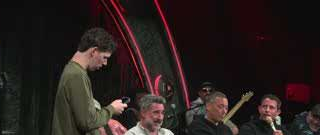
Kill Tony #752 - Steve Byrne and Tommy Pope get a soundboard substitution, a borrowed guitar and a night of callbacks that keep escaping the minute.

1. Redban temporarily leaves after Tony says the wrong episode was uploaded. That puts Tony on sound effects for the opening stretch. Redban's return then gets its own greeting during Yehee's interview. This is the show's onstage explanation, rather than an independent audit of the upload.

2. JJ Alexander has a useful road story: he says he had 45 minutes of material but ended up covering 90 in Sioux Falls while Enrique Chacon was delayed. He says the expanded plan included crowd work. Those are his reported durations, not a separately timed recording.

3. JJ and Mason Bird have another connection away from the stage. JJ says they now work at the same Dutch Bros and that he helped Mason get the job. The touring story ends up next to an extremely enthusiastic coffee-shop update.

4. Yehee says this was her ninth signup, not her ninth appearance. Her first attempt came with birthday balloons - one saying Happy Birthday and the other Get Well Soon. Later, the online math teacher briefly takes charge of the joke-book handoff with I am the teacher here.

5. Tommie Tickles says he has put in about 100 open mics. There is a smaller sign of practice too: he points out that he moved the mic stand out of the way. The panel notices the improvement in his performance, rather than treating the self-reported count as an audited record.

6. Tony Scar's first material does not need a guitar, but he explains that musical comedy is his specialty. The room finds him one, he performs his comic love song and the reaction ends in a Golden Ticket announcement. His nine months of experience is his own account; the award here is an on-air event.

7. Collin Sledge gives Yehee a shout-out for following through. He says she asked where she could get onstage in Houston, he shared the places he knew and she later started showing up. It is a small connection between two performers in the same episode.

8. Timely Rain's festival job gives the interview a built-in performance. She demonstrates the British voice she uses serving customers, and John Deas instantly supplies Renaissance-style music. Her mention of singing Wicked with Collin also leads to a brief requested vocal bit.

9. Jimmy Prescott gives the panel an unusually specific marker for his short film: fourteen minutes, thirty seconds. Tommy comes back to the same timestamp much later, even after the interview has moved on. The repeated number becomes the callback.

10. Daniel Sheppard introduces his new job as being a stripper, then reveals the actual job: stripping wires and fabricating cables. The occupation supplies its own setup and reveal.

11. Ahren Belisle asks to be allowed to cook. Tony stretches that into microwave and frozen-dinner jokes, until Ahren replies that he has an air fryer. A figure of speech turns into a very literal kitchen argument.

12. Phrase watch: the automatic transcript contains 16 matches for “I love it” and three for “Absolutely incredible” across all voices. These are text matches, not verified host-only spoken totals.

Sets & timestamps
05:38 - JJ Alexander
14:39 - Yehee
28:30 - Blake Apatow
34:57 - Tommie Tickles
44:04 - Ehsan Ahmad
49:10 - Tony Scar (first available stand-up text; introduction missing from stored captions)
58:56 - Collin Sledge
1:04:00 - Timely Rain
1:10:14 - Biddy O'Loughlin
1:16:32 - Jimmy Prescott
1:24:41 - Matt Rivas
1:28:53 - Emanuel Martinez
1:33:46 - Saul Wilson
1:43:02 - Daniel Sheppard
1:49:42 - Ahren Belisle

Bonus performances & extra bits
13:18 - JJ describes and demonstrates his belly-impression bit
23:49 - Yehee joke-book handoff sequence
52:47 - Tony Scar introduces his guitar song; music starts at 53:06
1:06:14 - Timely’s festival-voice demonstration with band music
1:06:56 - Collin’s requested Wicked vocal bit
1:37:37 - Saul’s requested beatboxing attempt
1:40:04 - Saul’s announcer-voice attempt
1:41:54 - Tommy Pope shirt-opening callback during Saul’s interview

The stored captions omit Tony Scar’s stand-up introduction and alternate Scar/Star. The first marker uses his first available set text; the guitar performance is listed separately. Performer spellings follow this episode’s stored lineup where captions vary.

Which callback stuck with you: fourteen-thirty or the air fryer?
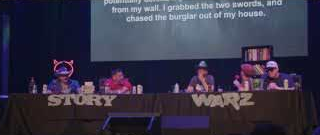
Story Warz #76

• “Double points”: 2 mentions.
• Festival merchandise sparked running banter after thousands of custom foam fingers yielded only two early sales.
• A home break-in narrative described defending a residence using two small ornamental swords snatched from the wall.
• The comedians joked about ancient warrior oaths, repeatedly confusing traditional Bushido vows with Sudoku puzzles.
• Grammar ignited an onstage debate when a single comma in a prompted confession was examined as proof of college roots.
• A scandalous dining hustle astonished the room when a panelist admitted planting stray hairs in food to dodge checks.
• A former theme park escort recalled a desperate parent tossing a live infant at a costumed character for a picture.
• A youth basketball memory recalled an eight-foot hoop airball prompting a referee to chant taunts from the floor.
• A regulation deadlock led to an overtime wager where contestants staked nearly all accumulated points on one guess.
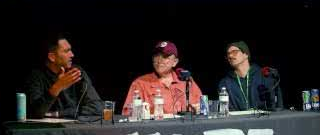
Story Warz #75

• “Double points”: 7 mentions - 5 within 96 seconds.
• A prompted confession sparked forensic scrutiny when correct elementary school spelling and two quote marks raised suspicions.
• The panel roasted an author for allegedly typing out confessions on a mechanical typewriter rather than sending casual notes.
• An elaborate Chinatown recipe involving boiling pig ears for hours led to a blender mishap that ruined Thanksgiving dinner.
• A bathroom shower slip sending feet straight in the air drew instant roasts comparing the resulting head bump to Doc Brown.
• A freshman college dispute outside a bar turned painful when an unexpected punch to the nose instantly shattered false bravado.
• A basketball exhibition matched an undefeated girls varsity squad against an inept boys junior varsity team with bruising results.
• A contestant on the brink of an unprecedented zero-point finish celebrated avoiding the historic shutout on the final prompt.
• A vocal concertgoer in the audience interrupted a tense endgame tally by repeatedly demanding an appearance by Hatebreed.
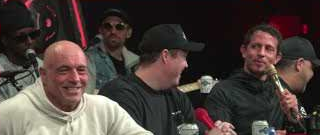
Kill Tony #751 - Joe Rogan and Shane Gillis get Hanukkah props, an unexpected comedy couple and a drum-off.

1. Jack Shaw opens by reviewing his own jokes while he is still telling them. The panel points out that he is leaving them less work to do. His Rocket Money bit has a neat reversal: the app meant to identify subscriptions reveals two subscriptions to itself. That is the joke, not a verified billing report.
2. Jack's Hanukkah gift segment changes the energy. After the props and presents, Joe suggests leaning into prop comedy because those ideas worked better than the opening material. It is advice offered in this episode, not proof of what caused any later career move.
3. Kojak's waiter interview comes with recognition from Shane, who remembers being served by him. His claim to be Austin's number-one waiter is his own sales pitch, not an independently established ranking.
4. Nick Tormey mentions that his fiancée, Holly Jensen, also does comedy and signed up that night. Tony sends for her at the bar next door. She is brought into Nick's interview rather than independently drawn as the next bucket pull, then gets a formal introduction and a full minute.
5. Their unusual collection supplies an actual prop: a toad-shaped purse named Winston comes out before Holly's set. The collection is their account; the stage appearance does not independently authenticate the specimen.
6. Holly's set ends with a Pandora-commercials premise, and both comedians leave with big joke books. Redban's Secret Show invitation sounds distant when he says next year, until the panel clarifies that he means January after Christmas week. The future gig is an invitation, not a completed appearance shown here.
7. Floyd Jones gets visibly excited about facing Joe and Shane, then reveals that he is a metal drummer. The interview becomes a drum-off: Floyd plays first, Michael Gonzalez answers, and the audience gets to react. The full-time-job stakes are part of the show's game, not an actual personnel change.
8. Dedrick and Tony recall their first road gig together in Lincoln, California. Dedrick turns the difference between commercial-travel expectations and a private-flight welcome into a comic contrast. That shared recollection is not an independently checked career chronology.
9. Tyler says he has only been doing stand-up for four months, inspired by watching Kill Tony and then hitting local mics. The interview keeps returning to his too-tight necklace; even the discussion of selling houses becomes a suggestion to buy a few extra links.
10. Diamond Debbie says this is her 111th signup before getting this opportunity. That is her reported count, not a native audit of every signup or proof about the bucket's odds. Her explanation of starting comedy is just as interesting: after giving speeches with Toastmasters, she decided to focus on the jokes people remembered.
11. Debbie also talks about restoring wheelchairs and giving them to others. Her stage name comes from a character in a book she says she is writing. These are her accounts of creative and community projects, not verified medical-device work or a published-book claim.
12. Kelly Quinn explains that she makes stockings from Crown Royal bags, including custom Kill Tony versions. Tony and Redban say they received them while the panel jokes about whether the gifts survived. Her three years in Italy also brings back the earlier necklace-and-pinky-ring roast.
13. Ari Matti closes while William Montgomery is away for Christmas break. Ari thinks he scrambled the order of his AI material; the panel says the disruption was not obvious to them. His traffic-light CAPTCHA and driverless-car contrast is a comic premise, not a technical claim about AI capabilities.
14. Tony describes the new set as coming together in roughly thirty-six hours. Ari says he tried the material at rough gigs the day before and trusted the underlying logic. We get an account of testing and revising, not a stopwatch measurement of the writing process.
15. The phrase watch finds 18 automatic-text matches for "I love it" and seven for "absolutely incredible" across all voices in this upload. These are caption matches, not Tony-only or independently audio-verified spoken totals; censored gaps can hide words.

Sets & timestamps
05:53 - Jack Shaw
14:19 - Kojak
26:43 - Nick Tormey
33:03 - Holly Jensen - invited during Nick's interview
37:14 - Floyd Jones
44:59 - Dedrick Flynn
54:22 - Tyler
1:07:04 - Diamond Debbie
1:22:53 - Kelly Quinn
1:29:50 - Tadpole Triplett
1:41:26 - Gordon Dixon
1:44:04 - Lindsey Campbell
1:49:07 - Ari Matti

Bonus moments & performances
08:33 - Jack Shaw - Hanukkah gifts and props
32:17 - Holly and Nick - Winston the toad-purse appearance
41:36 - Floyd Jones - drum solo
42:50 - Michael Gonzalez - answering drum solo
1:17:54 - Diamond Debbie - audience-volunteer stage moment
1:20:07 - Diamond Debbie and D Madness - second stage moment
2:00:04 - Ryan J. Ebelt and Chris Rogers - artwork reveals

Which surprise changed the episode most: the gifts, Holly's invitation or the drum-off?
Story Warz #74

• “Double points”: 2 mentions.
• Gramercy Theater hosted the show at 87% capacity, leaving the hosts in suits calculating the unseated ten percent.
• House band The White Roots performed the Jackass theme on bass, earning high praise from the panel.
• A panelist parsed FAA smoke detector rules as a seat loophole, leading to a fine before reaching Diamond Elite status.
• A 1994 school bead venture making international flags overlapped with custom lighter necklaces on band tour.
• A high school phone dispute escalated into a lawn standoff soundtracked by Chicago's ballad If You Leave Me Now.
• A fourth-grade show-and-tell featuring a borrowed 1970s horror film caused the basement handyman to vanish overnight.
• An employee cased out a department store throw pillow closet as a fortified hangover refuge after comedy open mics.
• Caught skipping class to watch daytime game shows at home, a student named an uninvolved peer to clear the truancy record.
Kill Tony #750 - episode notes

Lance Armstrong, Matt McCusker and Tim Butterly join the panel. A few discoveries, callbacks and useful details from the episode:

1. 6:27 - Aya turns an unaffordable vacation into a lucid-dreaming premise: Hawaii becomes somewhere to visit at night. The joke works by changing the meaning of a budget holiday.
2. 13:07 - Tony's feedback to Remy is specific: the sandlot idea has a premise, but it ends before a finished punchline. It is a writing note about completing an idea rather than merely introducing it.
3. 16:58 - Remy's unexpected hobby is a Milli Vanilli fan group. He says he started it after a hashtag search in 2014 and that it has over 7,000 members. Those are his episode-time claims, not audited platform statistics. Later, he explicitly says he keeps his standup clips separate from that group.
4. 25:18 - Lo's interview ends with a big joke book, an on-stage upgrade that gives the segment a clear finish.
5. 27:46 - Joe Hansen identifies his job as IT help desk, correcting the server-admin suggestion. When a panelist relates to that starting point, Joe recasts the move into full-time comedy as working your way up.
6. 35:21 - Sir Winston Pickles's rowing-machine bargain becomes expensive because, in the joke, he has to flood the living room. The panel completes the literal interpretation: that is a boat, or a kayak.
7. 39:10 - Taylor describes this as roughly a tenth time performing, then explains a break around the pandemic and a return a couple of months earlier. That is a self-described stage-experience estimate, not a tenth Kill Tony appearance or six uninterrupted years of performing.
8. 52:50 - Michael Moses explains his recurring video format: visit the same restaurant at the same time, order the same thing, and wait for someone to ask whether he wants the usual. At 53:46 he says his Sandy's Hamburgers run in Austin has reached day 22 without that payoff. The counter is his report at recording, not an independent visit count.
9. 1:00:33 - Dedrick turns a classroom recollection into a demonstration of popcorn reading. The interview gives him room to perform the situation rather than only explain it.
10. 1:11:55 - Lorenzo's joke-book progression gets its own payoff: Tony recalls the previous small book and upgrades him to a medium one.
11. 1:23:45 and 1:27:06 - Ron White and Pauly Shore arrive for surprise standup appearances back to back. At 1:29:49, Liv Taylor becomes the bucket pull who has to follow both. Tony's intervening Shane Gillis introduction is immediately revealed as a joke; Shane does not come out.
12. 1:42:01 - Ian Sharp's IT-support job brings the help-desk discussion back around. Tim Butterly relates to the work and Ian says he feels seen, turning an earlier interview topic into a later connection.
13. 1:46:14 - Ian says he was a vocalist in a metal band and gives a brief requested vocal demonstration. It is a short bonus moment, not a full song performance; his comments about copyright are not a rights clearance.
14. 1:48:39 - William Montgomery reviews Beethoven as though he were a band that sold out with its fifth release, then praises the first EP. The time-period mismatch is the punchline.
15. 1:52:41 - Lance calls out William for not following him back. William offers to fix it after the show, turning earlier admiration into an on-stage social-media reversal. This records their exchange, not independently checked account activity.

Phrase watch: the native full-source automatic-text scan finds 24 matches for "I love it" and 2 for "absolutely incredible" across all voices. These are caption-text matches, not Tony-only or independently audio-verified spoken totals. Censored or missing text can hide speech.

Performer introductions / entrances (source-caption timestamps):
3:18 - Lance Armstrong, Matt McCusker and Tim Butterly - guest panel.
5:56 - Aya - opening standup.
11:19 - Remy - bucket pull; surname varies in the automatic captions, so first name is used here.
19:39 - Lo Rodriguez - bucket pull; stored lineup uses Lino Rodriguez.
25:33 - Joe Hansen - bucket pull.
31:42 - Sir Winston Pickles - bucket pull.
37:33 - Taylor - bucket pull; stored lineup uses Taylor Ferrer.
46:13 - Michael Moses - bucket pull.
55:18 - Dedrick Flynn - regular standup.
1:02:21 - Lorenzo - bucket pull; source surname varies, stored lineup uses Lorenzo Tyree.
1:12:29 - Buffy - bucket pull; minute begins around1:12:50.
1:23:45 - Ron White - surprise standup; performance begins around1:24:16.
1:27:06 - Pauly Shore - surprise standup; performance begins around1:27:21.
1:29:49 - Liv Taylor - bucket pull; minute begins around1:30:17.
1:39:49 - Ian Sharp - final bucket pull; minute begins around1:40:01.
1:47:53 - William Montgomery - closing standup; minute begins around1:48:07.

Additional / bonus moments:
10:49 - Aya receives a future Secret Show invitation; this is an invitation, not evidence the later gig happened.
59:23 - Dedrick's jokebook-launch prop bit, followed by the classroom-reading demonstration around1:00:33. No additional standup set is introduced.
1:15:59-1:18:42 - The breathalyzer stage interlude during Buffy's interview; Officer Barbosa is introduced around1:16:51. The displayed/read-out values and legal discussion are not independent clinical measurements or legal guidance, and Buffy says she is not driving that night.
1:46:14 - Ian's requested brief metal-vocal demonstration.
1:55:03 - Chris Rogers's closing Matt McCusker portrait reveal.

All times are approximate source-caption positions. First introductions are listed separately from minute starts. The stored lineup places William at1:47:17, but that source passage is still the preceding segment; his actual introduction is1:47:53. Names and timing differences are preserved in the private review rather than changing canonical records. These notes distinguish jokes, personal recollections and future invitations from verified history; private clinical, family-crime and sexual claims are not presented as facts.
Kill Tony #748 - Ari turns the bucket into a stagecraft workshop, Dedrick brings a prepared band number, and William somehow makes a refrigerator puzzle the finale.

1. Ari gives Luke Aaron three practical fixes: move the microphone stand out of the audience’s sightline, bring the mic closer, and hold it naturally. It is a miniature lesson before the interview even gets going. (16:58)
2. Luke demonstrates his former window-sales pitch, opening with “How old is your home?” Ehsan then lands “too many windows, not enough mirrors” when Luke discusses other beginners. The lighting cue gives that line its own celebration. (20:08, 21:09)
3. That sales opener returns later as “How old’s your church?” The interview has turned an ordinary work question into a callback. (28:21)
4. Evan Quigley describes assessing trees and points to yellow leaves. The panel immediately asks whether he is confusing sick trees with fall. Ari later adds a separate performance note: lift the hat so the audience can see his eyes. (45:44, 48:08)
5. Alexa changes vocal registers during the set, then keeps that voice available in the interview. Tony reaches for a mirror-image and Venom comparison rather than letting the character switch pass unnoticed. (53:07, 53:48)
6. Ari and Dedrick recall their Facebook memories surfacing a photo of them at the same open mic seven years earlier, on the day Dedrick became a regular. They also explain that they had not really kept in touch. It is their onstage recollection, and a neat persistence story. (1:08:16)
7. Dedrick’s rap is a prepared collaboration: before performing it with the band, he says they had been working on the song. The Kill Tony references are part of that planned musical bonus. (1:11:00, 1:11:21)
8. Jedi describes being Woody Harrelson’s stand-in during camera and lighting setup, then explains that people on set helped him write jokes. He later explicitly says he did not work on every Woody film or on True Detective. (1:37:07, 1:38:04, 1:42:38)
9. The taped microphone gets a red-versus-black upgrade joke earlier in the show. When Matthew LaCour’s mic causes another interruption, he receives a replacement and resumes the same set. It is a recurring piece of live-show chaos. (1:24:22, 1:56:44)
10. Ari’s advice to Matthew is to leave a little silence before launching into material, and adapt when something goes wrong. The panel also discusses ending after the strongest laugh instead of packing in one more line. (2:01:42)
11. William describes finishing a thousand-piece puzzle in under 48 hours - his own estimate, not a timed record. The image turns out to be an open refrigerator with watermelon and milk. Cakes belong to the next puzzle, which gets him a “Bob Ross of puzzles” comparison. (2:11:09, 2:12:26, 2:16:06)
12. Phrase watch: “I love it” has 9 automatic-text matches and “Absolutely incredible” has 3 across all voices in the stored captions. These are text-match counts, not verified Tony-only spoken totals; censored captions can miss words.

Sets & timestamps
03:34 - Ari Matti and Ehsan Ahmad, panel introduction
07:17 - Mason Bird
08:30 - Mason Bird, additional short joke
15:38 - Luke Aaron
32:38 - Charles Adams Jr
42:03 - Evan Quigley
52:13 - Alexa Irizarry
1:04:02 - Dedrick Flynn
1:14:10 - Mitch
1:24:53 - Sancho Poncho Villa
1:34:55 - Jedi, introduced as his stand-up debut
1:47:03 - Ryan Shields
1:49:44 - Ryan Shields, requested additional material
1:56:01 - Matthew LaCour
1:56:52 - Matthew LaCour, same set resumes after microphone change
2:07:07 - William Montgomery

Bonus performances & onstage moments
20:08 - Luke’s improvised window-sales demonstration
59:31 - Request for Alexa to speak Russian; any response is not transcribed
1:03:31 - Alexa catches the joke book
1:11:21 - Dedrick’s prepared rap with the band
1:24:22 - Taping the stage microphone
1:33:25 - Sancho stands beside Ari for the height comparison
2:18:10 - Brief closing knife reveal; no additional stand-up set

Names follow the episode’s local lineup where captions vary, including Matthew LaCour and Sancho Poncho Villa. Timestamps follow this upload’s available introductions and continuations.

Which Ari stagecraft tip made the biggest difference to you?
Kill Tony #747 - Harland Williams and Nick Rochefort build an entire second show out of lasagna, old references and whatever detail the interviews give them.

1. Harland's lasagna starts at seven layers, then becomes a much bigger construction project. Nick adds his own eight-layer answer. By the time the conversation reaches H-E-B, Harland is claiming twenty-two layers. It is an escalating bit, not a cooking record.
2. Danny's charcuterie pronunciation gets an interview of its own. Asked whether he has ever said the word to anybody else, he falls back on the practical version: can I have extra cheese and meat? The exchange is about how he says the word, not a medical or literacy diagnosis.
3. Offender's new apartment supplies a small but very effective distinction. He says he has decorated it with a medicine cabinet; Tony points out that the cabinet came with the apartment. Later, he also corrects Tony's assumption about the joke book: he has received a big one before.
4. Emo says travel has taught him that there is one human race. Harland hears a different meaning of race and calls him a marathon guy. His Saskatchewan story then gives Harland another opening for a deliberately exaggerated flat-land joke.
5. Ari's extended set connects movie premises before he acts out the Denzel-at-a-diner pattern. Tony explicitly lets the longer movie chunk stand. The imaginary international titles and exaggerated plots are jokes, not a guide to real film releases.
6. Ari says his Kill Tony hoodie became its own conversation starter in Mexico. People would look at the words and ask what Tony did. The joke comes from reading the show's title as an accusation rather than a name.
7. Harland turns the Halloween conversation into another candy joke: going out dressed as a pinata means getting the Three Musketeers beaten out of him. That is part of the onstage fiction, not an assault report.
8. Jack McWills says the coming Valentine's Day marks ten years since he started stand-up at a Bloomington open mic. He says he was single and the mic happened to be on that day. His account also includes eight years in Chicago; these are his recollections, not independently checked dates.
9. Jack's set links a Pepsi reference in a song to a conspicuously clean truck in a zombie show. It is one product-placement premise leading into another. The interview later brings a real onstage offer: Redban invites him to the Secret Show, while the Mothership door-job discussion remains a callback and a possibility, not a confirmed hire.
10. Paula requests one more joke after the bear. Tony lets her try it, so there is an actual additional attempt. Harland then keeps returning to the Child Catcher impression, and Redban pulls up the character to give the room the visual reference.
11. Jenny says the Mustang she pitched on an earlier appearance was sold to a father and his sons to restore. Her shoe-model recollection also has an unexpected image: running around a track while a giant marshmallow chases the group. Those are her accounts, not independently verified transactions or advertising credits.
12. William's rug-and-lamp shopping brings Nick's antique business straight into the closing interview. Nick asks why William did not buy from him. A description of lampshade shapes then turns into an explicit request to keep improvising, rather than simply listing the real options.
13. Phrase watch: the stored automatic text contains 7 matches for "I love it" and 1 for "absolutely incredible," across all voices. These are caption matches, not a verified Tony-only spoken count; censored omissions can hide words.

Sets & timestamps
7:07 - Danny Martinello
14:08 - Matthew Coffin
21:42 - Offender
30:50 - Emo (surname rendered as Maj in the captions)
43:11 - Ashley Anne
49:50 - Ari Matti
1:01:21 - Jack Hemphill
1:08:22 - Doc Ferry
1:19:55 - Jack McWills
1:30:05 - Paula
1:31:38 - Paula's requested additional joke
1:38:14 - Jenny Anne
1:47:31 - William Montgomery

Bonus moments & performances
3:29 - Harland Williams and Nick Rochefort's panel introduction
4:23 - The lasagna opener begins
8:50 - The charcuterie pronunciation discussion
24:15 - Offender describes decorating with a medicine cabinet
30:26 - Offender corrects the first-big-joke-book assumption
34:31 - One human race becomes a marathon joke
36:08 - Harland's Saskatchewan dog joke
53:01 - Ari's Denzel act-out within the extended set
56:28 - Ari's Kill Tony hoodie story
59:10 - Harland's pinata and Three Musketeers joke
1:09:29 - Doc's brief second-verse musical punchline
1:10:15 - Tony and Nick realise they had the same HVAC pun
1:21:32 - Jack describes the Valentine's Day anniversary
1:23:27 - H-E-B sets off the grocery-store detour
1:24:31 - The twenty-two-layer lasagna callback
1:29:28 - Jack's Secret Show invitation
1:33:21 - Harland's Child Catcher impression begins
1:34:00 - The room gets the visual reference
1:40:00 - Harland brings the impression back for Jenny
1:40:11 - Jenny discusses the Mustang sale
1:41:08 - The giant-marshmallow shoe-shoot story
1:51:01 - The antique-shop disagreement
1:51:30 - William describes the duck lamp
1:52:11 - Lampshade descriptions become improvisation
1:53:27 - William's Jamoka-shake voice change
1:57:30 - The episode artwork is revealed

Names follow the supported episode-local reading where caption spellings vary. The Secret Show invitation and possible door job are future opportunities, not proof of later performances or employment. Dedrick does not perform a set in this source.

Which running bit worked best for you: the lasagna, the lollipops or the lampshades?
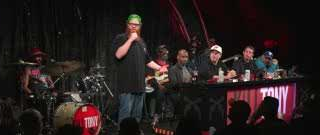
Kill Tony #746 - episode notes

Adam Ray and Ian Edwards join Tony for a night of returning comics, improvised scenes and an unexpected hosting swap. Here are some details worth another look:

1. 4:33 - The advertised last Dr. Phil Live becomes a farewell joke before the bucket even starts: the panel compares its returns to the McRib. It sets up another Dr. Phil promo callback later in the night, rather than proving this was a final-ever performance.
2. 10:35 - Martin Phillips's patterned shirt becomes a Magic Eye-style sailboat joke, followed by a safari-principal comparison. His explanation that clothes arrive through a styling service gives the visual roast a surprisingly practical answer.
3. 12:15 - Martin's processing noises become a dial-up-internet impression. A later misunderstanding about videos being sent to him turns into the running eating-sand joke; the correction matters because he is not describing actually eating sand.
4. 40:00 - Michael Hines says the big joke book he received previously is full. Tony gives him a replacement, a small on-stage detail that connects the return visit to writing new material.
5. 40:38 - Big Stew reverses his language-app premise. After describing Spanish that sounds out of place, he imagines an English learner arriving with a very British accent. The accent switch is the joke, not a verified claim about the app's courses.
6. 41:50 - Big Stew clarifies his experience as roughly a year and a half added together: a few months in 2015, a few in 2019, and a consistent run since March at recording. That preserves the stop-start timeline rather than turning it into a continuous decade of comedy.
7. 46:39 - Big Stew's work making flags gives Redban a Mario soundboard opening. The fast sound cue turns a description of a custom design into a little production joke.
8. 37:08 and 51:23 - The imaginary unframed movie posters become a recurring improv detail. Goonies 2 in Michael's scene becomes Jurassic Park 9 in Big Stew's. These are invented scene decorations, not actual sequel announcements.
9. 1:01:37 - Adam recalls Taylor opening for him recently in Hermosa Beach and San Diego, and praises both sets. Those are two shows remembered by Adam in the episode, not an independently audited lifetime total. Ian also connects Taylor's comedy with his work as an artist.
10. 1:19:05 - Dedrick looks forward to playing Atlanta's Fox Theater that week, calling it one of his dream venues. At 1:21:23, the panel recalls his account of 39 signups before getting called. The signup figure is their source recollection, and the hometown show is still a future plan at this recording.
11. 1:32:09 - Brian Holtzman arrives during Pauly Shore's cameo and jokingly casts himself as Pauly's minder. Tony then asks Brian to do a set, so the apology/cameo and Holtzman's actual standup are separate parts of the interruption. Pauly explicitly retracts his earlier claim that he had been banned.
12. 1:42:46 - Sebastian says he does not have a handle, meaning an Instagram handle. Tony hears a handle on the craft. At 1:43:47, Tony also challenges the idea that a Kill Tony appearance is only gambling: prepare the material and try it at open mics first.
13. 1:47:03 - Tony hands the chair to Adam, who hosts in a Tony impression and introduces Brandon. When the real Tony returns, the two versions briefly share the stage. The impression's debut introduction is corrected later by Tony acknowledging Brandon has been on before.
14. 1:52:25 - Brandon describes using virtual-reality comedy to keep practising when getting out to open mics is difficult. His Spider-Verse avatar adds a visual punchline. At 1:54:28, Adam gets him to perform an actual additional joke, Only Dads, rather than leaving the unfinished minute as the last word.
15. 2:16:39 - William's rug-shopping story becomes a measurement problem: he says his small tape measure means making repeated marks across the floor. The interview turns an ordinary household project into a long comic process. Earlier, Adam praises William for committing and powering through a difficult audience, around2:10:18.

Phrase watch: the native full-source automatic-text scan finds 10 matches for "I love it" and 1 for "absolutely incredible" across all voices. These are caption-text matches, not Tony-only or independently audio-verified spoken totals. Censored or missing text can hide speech.

Sets & timestamps
2:45 - Adam Ray and Ian Edwards - guest panel introductions.
6:04 - Martin Phillips - opening standup; minute begins around6:18.
18:21 - John Cheney - first bucket pull; minute begins around18:31.
28:04 - Michael Hines - bucket pull; minute begins around28:13.
40:24 - Big Stew - bucket pull; minute begins around40:32.
57:16 - Taylor - invited standup, not a bucket pull; minute begins around57:23.
1:03:03 - Muhammad - bucket pull; minute begins around1:03:14.
1:15:23 - Dedrick Flynn - regular standup; minute begins around1:15:33.
1:22:26 - Stevie One Leg Wonder - bucket pull; minute begins around1:22:33.
1:32:09 - Brian Holtzman - cameo entrance; invited to do standup around1:33:10, with the set beginning around1:33:41.
1:36:16 - Owen - bucket pull; minute begins around1:36:24.
1:40:59 - Sebastian Santamaria - bucket pull; minute begins around1:41:07.
1:48:18 - Brandon - bucket pull introduced by Adam; minute begins around1:48:32.
1:54:28 - Brandon - requested additional Only Dads joke.
1:56:00 - Kendall Junior - final bucket pull; minute begins around1:56:08.
2:04:44 - William Montgomery - closing standup; minute begins around2:04:57.

Bonus performances & moments
12:15 - Martin's brief dial-up impression.
15:16-15:59 - The tuning-fork stage bit with Martin and Adam. It is comedy, not evidence of a medical treatment or cure.
17:15 - Martin's requested glasses-off reveal.
35:57-39:12 - Adam's improvised scene during Michael's interview.
44:07-45:17 - Big Stew's physical trick and Redban's attempted response. Redban's attempt is unsuccessful; no clinical effect is established by the jokes about it.
50:54-53:36 - The second improvised scene with Big Stew and Adam.
1:02:45 - A real Fruit by the Foot prop arrives as a callback to Taylor's set.
1:14:20 - Muhammad's brief requested flexibility demonstration.
1:25:47-1:26:06 - Stevie's prop demonstration answers the earlier physical-trick callback.
1:31:20 - Pauly Shore's apology/cameo entrance; he does not deliver a separate full standup minute here. Brian joins around1:32:09.
1:39:58 and 1:40:13 - Owen's two requested cricket-noise attempts; neither produces the promised impression.
1:47:03-1:50:01 - Adam's temporary hosting impression, through Tony's return; the two briefly trade places before Adam returns to himself.

Names and times follow the source captions, with first introductions distinguished from minute starts. The source's Big Stew is also a separate Stuart Watson entry in the stored lineup; this comment does not merge those records. Captions vary on Taylor, Muhammad, Owen and Brandon's surnames, so shorter supported names are used. The stored Pauly, Brandon and William times point to different source passages; the markers above use their actual source entrances. Jokes, personal recollections and announced future gigs are distinguished from verified history, and private medical, family and crime claims are not presented as facts.

Which callback landed best: the imaginary sequel posters or Adam taking over as Tony?

Kill Tony #745 - A ramen reveal, a gong in the car, and a sung roast turn this bucket into a very unusual night with James McCann and Jeff Dye.

1. Kai tries demonstrating his “really good English,” but “my favorite color” becomes the phrase he cannot escape. Every attempt to fix one word seems to trip up another, and the panel keeps the exercise going. (08:25)
2. Kai has an elaborate gift hidden behind his back: a bowl and thermos of ramen. The reveal becomes a long production, complete with toppings, noodles for Redban and a bite for Tony. (19:47, 22:24)
3. Tarique’s unexpected hobby is a gong he says is sitting in his car. Asked what he does with it, his answer is simply “hit it.” James then imagines Redban scrambling for the right sound effect. (29:46, 30:44)
4. August 28 becomes a running date. Diego uses it for his move to Austin, then names the same date for his previous move to New York. James wonders what next August 28 will bring, and retrieves the callback again when Frank arrives. (34:13, 35:21, 42:33)
5. Frank gets two specific performance notes: address the audience rather than Jeff alone, and try other open mics before returning. His ghost-jeans joke supplies the “boo jeans” callback; Tony also asks him to bring back his previous joke book. That is a return request on air. (43:11, 45:32, 48:50)
6. Bob says he has been signing up for three years, then gets pulled after changing the slip from Robert back to Bob. That is his recollection, rather than proof the name change affected selection. Later, his “shooting” roadkill story turns out to be camera misdirection. (51:29, 57:02)
7. Dedrick’s interview becomes a musical build: amusement parks, slides and arcades feed an “I’m in there” chant with the band. He follows it with a short a cappella riff and says he just made that one up. (1:13:13, 1:14:14)
8. Chen explains doing soundboard at Shakespeare’s open mic after this show. It is a creative-role connection hiding inside an interview with Redban right there at the desk. (1:23:06)
9. Asher says he produces a comedy show at the Ice House once a month, and connects that decision to Tony’s advice about producing a show to control your own stage time. The monthly frequency is Asher’s account of his show, not an independently audited schedule. (1:39:14, 1:41:51)
10. Straight No Chaser gets invited to assess Josh’s set and answers in harmony. The sung roast becomes a full cameo; Tony then offers Josh another chance at a joke. (1:49:21, 1:53:31)
11. William’s interview turns into a discussion of audience fit: written jokes and autotuned crowd work can draw different expectations. The panel connects it to the a cappella roast we just heard, and plays excerpts from the festival appearance William is discussing. (1:58:34, 2:04:20)
12. Phrase watch: “I love it” has 2 automatic-text matches and “Absolutely incredible” has 3 across all voices in the stored captions. These are text-match counts, not verified Tony-only spoken totals; censored captions can miss words.

Sets & timestamps
02:57 - James McCann and Jeff Dye, panel introduction
05:35 - Kai Yasuda
23:49 - Tarique Morales
32:07 - Diego Delgado
39:56 - Frank
45:29 - Frank, requested additional ghost-jeans joke
49:59 - Bob
58:35 - Benny Benoit
1:09:45 - Dedrick Flynn
1:16:11 - Chen, introduced as Charlie
1:31:08 - Asher Kassin
1:47:00 - Josh, introduced as Josh Canada
1:53:31 - Josh, requested additional joke
1:55:51 - William Montgomery

Bonus performances & onstage moments
08:25 - Kai’s English demonstration
19:47 - Kai’s hidden ramen gift reveal
22:24 - Tony samples the ramen
27:48 - James’s brief close-up-magic gag with a phone
1:13:13 - Dedrick’s hobby list builds into a chant with the band
1:14:14 - Dedrick’s short improvised a cappella riff
1:30:22 - Chen’s joke-book catch
1:49:21 - Straight No Chaser’s sung roast
2:04:20 - Playback of William’s festival clips; recorded excerpts during the interview

Names follow the episode’s local lineup where captions vary, including Tarique Morales, Benny Benoit, Chen and Asher Kassin. Josh’s surname pronunciation is discussed on air and rendered inconsistently in captions, so the shorter name is used here. Timestamps follow this upload’s introductions and additional sets.

Which callback stayed with you: August 28, boo jeans, or the musical verdict?
Story Warz #68

• “Double points”: 3 mentions.
• The Comedy Mothership in Austin hosted a sold-out crowd in the Fat Man room, prompting playful digs at the host club.
• A trivia prize book sparked debates over whether elephants can jump alongside facts on ketchup and presidential jelly beans.
• An online dispute manifested as a nightmare about being shot in the stomach, sparking comparisons to historical premonitions.
• A dream about evacuating dancers during an active emergency unraveled into a workplace reality check on exotic club managers.
• A hallucinogenic voyage in Brooklyn felt like an organic bubblegum spaceship with friendly extraterrestrials tapping the hull.
• Harsh fluorescent lighting in a dream bathroom repeatedly tricked a sleeping traveler into waking up midway through an accident.
• A bizarre dream about an Antarctic body bag strangely mirrored an authentic French Quarter historic hotel suicide story.
• A twenty-five year recurring dream set in a cliffside labyrinth featured doorless, malfunctioning bathrooms on the lower level.
Story Warz #67

• “Double points”: 3 mentions.
• Announced book: How I Helped OJ Get Away with Murder.
• The hosts opened their first main showroom appearance at the Mothership with self-deprecating stage blunders.
• An elementary school math lesson led to an impulsive combat boot shin kick and a purse raid from the teacher's desk.
• A middle school gym coach pitted students against each other in absurdly titled dodgeball tournament matchups.
• A boy conducted an amateur outdoor science experiment by monitoring a neighbor's waste behind a bush for months.
• A babysitting job turned chaotic when an unruly child spat at the caregiver and charged out with a kitchen knife.
• After getting ejected over a disputed home plate call, an aggressive father attempted to scout from the outfield bushes.
• Watching an acquaintance get chased out of a thrift store over cargo shorts sparked a decision to become a self-reliant thief.
Story Warz #56

• “Double points”: 5 mentions.
• Announced prize book: the classic A Tale of Two Cities by Charles Dickens.
• A late-night comic book argument over superhero combat capabilities turned hostile and ended with flying patio chairs.
• An ill-advised home grooming experiment paired heated salon wax with thirty straight minutes of blistering heavy metal.
• Adolescent relationship drama flared when a high school partner agreed to attend an elite debutante ball with someone else.
• A quiet session browsing the living room desktop computer was interrupted by an unexpected and shocking roommate prank.
• Borrowing janitorial overalls allowed a determined fan to slip past arena security checkpoints and wander backstage.
• An unattended seven-year-old fueled by sugary red fruit punch steered an idling vintage sedan into a bank's brick exterior.
• A teenage restaurant greeter attempted an unprompted late-night television impression while escorting a celebrity guest.
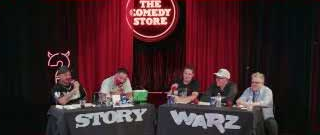
Story Warz #54

• “Double points”: 5 mentions - 4 within 96 seconds.
• Announced prize book: At Home with the Queen by Brian Hoey.
• A teenager took an entry-level video store position and discovered internal system notes blacklisting his family.
• Answering mail-order switchboards in a pre-internet industrial warehouse provided absolute leverage over discreet buyers.
• A hillside beverage errand turned into a chaotic evasion when unexpected household occupants prompted a closet retreat.
• A convenience store clerk routinely entrusted counter operations to random browsing customers while stepping out for bakery treats.
• Suburban movie cinema employees recycled admission tickets to pool petty funds for illicit after-hours beverage purchases.
• A customer service billing call escalated into an unforgettable shouting match over a disputed television subscription.
• An employee claimed to be diligently working at his station just as his manager dialed him directly from his empty chair.
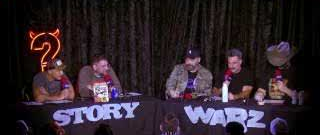
Story Warz #51

• “Double points”: 3 mentions.
• Announced prize: The Best and Basic and Easy Recipe of Texas Cooking.
• Finding loose cash in an unlocked vehicle financed an impromptu summer day trip to an amusement park for neighborhood friends.
• A promotional sweepstakes mailing convinced an optimistic parent that generational wealth had finally arrived in the mailbox.
• A late-night diner breakfast after golf course drinking led to coordinated restroom exits to beat the check.
• Taping currency allowed quick mechanical retractions from candy and cigarette vending machines before collection.
• Scavenging discarded supermarket parking lot receipts provided itemized shopping lists to claim fraudulent cash refunds at customer service.
• An interstate highway police stop escalated into comedy when a panicked comedian proclaimed royal theatrical titles from the pavement.
• The hosts traded rapid-fire banter about regional living expenses and personal financial philosophies before opening tournament play.
Story Warz #48

• “Double points”: 3 mentions.
• Announced prize: Lucid by Michael S. Milano.
• Teen driving flirtation leaning back into the rear seat while a trusting front passenger took the steering wheel.
• An ambitious skater attempting to drop into a skatepark halfpipe on a heavy rented metropolitan commuter bike.
• Delivering backup newspapers out of a car while refusing dangerous neighborhood housing project drop-offs.
• Visiting an unfamiliar residential apartment to greet a friend's newborn infant amidst chaotic urban surroundings.
• Scaling a rocky quarry ledge to impress summer onlookers before losing footing on the ascent.
• An accidental soft-drink spill over ride controls at an amusement park sparking a park-wide foot pursuit.
• Opening banter celebrating the comedy showcase's Manhattan headquarters and contrasting room energies.
Story Warz #47

• “Double points”: 5 mentions.
• Announced prize: Fierce Love by Reverend Dr. Jackie Lewis.
• Faking illness on a summer road trip to sequester in highway rest stop stalls while examining private mobile photos.
• Shopping for urban headwear in New Jersey before an approaching local street crew prompted an emergency paternal ride home.
• Hasty kitchen tempers hurling a lunch across the room, followed by reassembling the fallen ingredients from the linoleum.
• Pointing out ordinary wilderness birds to divert a romantic partner's attention during emergency trailside stops.
• Coasting into an elite all-city scholastic marching band by silently miming percussion cymbal strikes behind skilled peers.
• Frustrations following a comedy club scuffle prompting a hasty bare-knuckle punch into a solid hidden wall stud.
• Energetic return to the Austin comedy flagship debating previous road experiences and panel rules.
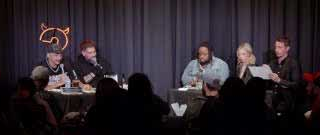
Story Warz #44

• “Double points”: 14 mentions - 3 within 96 seconds.
• Announced prize: Permanent Record by Mary H.K. Choi.
• Childhood vacation overwhelmed by emotional tears after an hour inside a major Orlando theme park.
• Hallucinogenic escapades ending when retail security discovered an unauthorized nap inside an aisle display tent.
• Family folklore recounting an eccentric relative robbing local banks with a shotgun and a getaway companion.
• Preserving a deceased relative's cremated memorial ashes inside an ordinary closet footwear container.
• Relocating an immobile recreational vehicle across neighborhood curbs on alternate sides for municipal sweepers.
• Sanitizing cutlery in a suburban kitchen after an altercation escalated into an unexpected blade puncture.
• Touring headliners contrasting arena sellouts with the gritty roots of tiny subterranean comedy annexes.
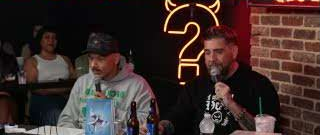
Story Warz #42

• “Double points”: 5 mentions.
• Announced prize: Mockingjay by Suzanne Collins.
• An intense vehicle argument ending with a frustrated passenger spitting directly onto their own front windshield.
• Family history of an eccentric grandfather conversing with wild birds prior to undergoing clinical electrotherapy.
• Arranging hourly birthday floral deliveries to brighten an aging parent's spirits, only to provoke comical exasperation.
• Childhood memory watching a fierce suburban sidewalk fistfight between a mother and an erratic neighborhood resident.
• Choosing over-the-top public theatrical eccentricity over polite apologies whenever committing awkward social blunders.
• Mortified childhood peer embarrassment as a thrifty grandmother scavenged discarded cigarette packs for catalog points.
• A seasoned guest astonishing the showroom by revealing a personal leg tattoo matching the tournament's prize cover art.

Story Warz #38

• “Double points”: 8 mentions - 4 within 96 seconds.
• Announced prize: The Light Within the Light by Jean Braham.
• Failing a written motor vehicle examination after assuming all road regulation questions were general common sense.
• Family history lore recounting a father breaking both legs in a stair tumble en route to a maternity hospital ward.
• Creating highway toll gate gridlock before automated electronic transponders by begging booth operators over the intercom.
• Childhood mischief leaving a fabricated handwritten ransom note for a relative to stage a mock abduction scenario.
• Needing to transfer remedial summer school sessions following hostile hallway encounters on the very first morning.
• Sneaking through a crowded comedy club to playfully ambush who turned out to be an utter stranger instead of an old pal.
• Opening banter channeling comedic ghosts inside the historic Manhattan showroom before kicking off competition play.
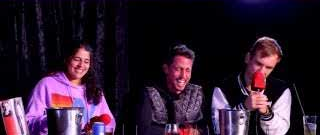
Story Warz #37

• “Double points”: 2 mentions.
• Announced prize: Living History by Hillary Rodham Clinton.
• Submitting online stock photographs of a spacious suburban lawn to satisfy rigid rescue pet adoption rules.
• Solicitations with a curbside cardboard charity bucket redirected directly toward live touring concert admissions.
• Displaying high school yearbook headshots to out-of-town summer peers while claiming a passionate romance.
• Exaggerating high-end hospitality pedigree to land upscale restaurant shifts while skimming cash registers.
• Disbelieving family drama regarding relatives falsely announcing catastrophic medical conditions across the year.
• A young child discovering a secret visitor and being reassured the overnight guest was merely a female companion.
• Opening banter complimenting the stage layout and joking about format suggestions inside the comedy headquarters.
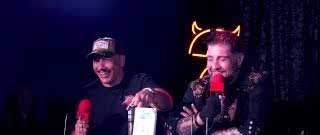
Story Warz #35

• “Double points”: 4 mentions.
• Announced prize: JavaScript Pocket Reference by O'Reilly Media.
• Secretly concealing ultra-spicy hot sauce beneath the mozzarella cheese of a single shared pizza slice.
• Swimming in the Atlantic surf before discovering underwater entanglements of floating police perimeter barrier tape.
• Tropical resort holiday devolving into a passionate argument with a romantic partner over obscure true crime trivia.
• Escalating a collegiate prank rivalry by utilizing hidden electronics and CPU exhaust fans to disperse pungent odors.
• Adolescent loyalty taking full neighborhood blame for an escalating altercation to shield a buddy from severe grounding.
• Indulging in extra-spicy restaurant chicken wings and neglecting proper hand-washing before an agonizing bathroom visit.
• Opening comedy banter marking the show's Austin showroom premiere and trading rapid-fire jokes with front-row fans.
Story Warz #30

• “Double points”: 4 mentions - 3 within 96 seconds.
• Announced prize: Drama on Deck by B. Joseph Smithson.
• Attending a celebrity Hollywood mansion birthday gala hosted on the historic Manson murder residential acreage.
• Shielding a distressed coffee shop patron from erratic sidewalk harassment in downtown metropolitan Los Angeles.
• Rushing down studio television aisles to aggressively celebrate alongside an ecstatic game show showcase champion.
• Comedy opening set for a touring musical rock group ending with venue managers requesting an immediate departure.
• Managing conflicting simultaneous romantic dates across the showroom by fabricating a high-stakes meeting with an agent.
• Enduring sharp comedy club heckling from a legendary entertainer before sharing a poignant backstage dressing embrace.
• Opening comedy banter marking the show's arrival at the legendary Sunset Strip venue with visiting comedy peers.
Story Warz #25

• “Double points”: 7 mentions.
• Announced prize: Murder at the Sunshine Mental Asylum by Danielle Written.
• Displaying an iconic historic civil rights speech compact disc on the passenger seat to discourage vehicle burglaries.
• Discarding a smoldering cigarette down an ankle boot and catching trouser fabric ablaze on a Manhattan sidewalk.
• Overzealously psyching up a relative before high school varsity kickoff by grabbing his helmet cage and jabbing an eye.
• Pre-show performance anxiety rushing an incomplete restroom visit and taking the stage with visible front moisture.
• Parlor board game hilarity triggering an embarrassing involuntary gastrointestinal blast in front of a high school crush.
• An unprecedented tiebreaker round requiring full point wagers on a bonus story to decide the showroom crown.
• Raucous crossover banter celebrating longstanding comedic brotherhood and debating stage cigar etiquette.
Story Warz #5

• Announced prize: Delco Dirtball by Mike Rainey.
• Saving mobile screenshots before boarding flights to navigate airplane internet restrictions.
• Adolescent Caribbean nude beach excursion with family relatives witnessing coastal volleyball.
• Comedy opener leaping out of a moving vehicle during a Georgia road trip and sprinting into the woods.
• Visiting a Hollywood video producer mansion featuring expansive floor-to-ceiling media shelves.
• Secret adolescent romantic encounters on an airplane while an unsuspecting parent sat four rows back.
• Witnessing an aggressive waterfront dispute involving a large stone while visiting a Caribbean island.
• Airport security screening hold resulting from a friend critique of department store safety.
• Front-row showroom patron savoring an entire tomahawk steak dinner at the table while gameplay unfolds.
Kill Tony #738 - episode notes

Andrew Santino and Jimmy Carr join the panel, with Zac Brown playing alongside the band as the musical guest. The night mixes concrete writing advice, a ponytail stage moment and Mason Bird's Golden Ticket announcement.

1. 11:00 - Asked about his unusual laugh, Jimmy turns it into a genie-and-mistranslation joke. The story is a comic explanation of the laugh, not a literal account of a wish coming true.
2. 12:30 - Jack Shaw adds a brief jazz-scat performance after his minute. Zac Brown's reaction makes the musical guest part of the interview too; no full Zac Brown solo song follows in this source.
3. 18:49 - Jimmy notices that Marvin Izzy's warm smile contrasts with the tough entrance. The feedback is specific: smiling could help the delivery, and he can remain focused while doing it.
4. 21:23 - Marvin says he plans to cut and donate his hair. The ponytail is then cut on stage around22:23, and he leaves with a medium joke book while keeping the smaller one. The donation is his stated intention; the episode does not show a completed charity handoff or medical outcome.
5. 32:36 - Jimmy asks Justin whether he has material about cleaning pools. It is a recurring theme of the night: the job and personal experience may be more useful than a generic dating premise. Justin also clarifies that the dating-app material is an older joke, rather than a description of his current app use.
6. 43:14 - The advice to Jesse is to build first-person material before trying the heaviest shock topics. The point is about what he can make work on stage; the interview's private crime accounts are not independently established records.
7. 48:56 - Paul answers how old he is with scared because he heard how are you. The panel then asks him to stop trying to have a joke for every question and just answer. Later, he explains that he has been doing standup for four years as of the previous day, so the high-school setup is older material rather than proof he graduated at21.
8. 58:11 - Chris pairs horror movies with detailed horror colouring books. Later, he says he enjoys guessing film twists and mentions Severance without revealing the twist. The haircut request during his interview is declined; a second haircut does not happen.
9. 1:05:15 - Ari critiques his own last tag immediately after the minute, saying he should have stopped at the earlier checker punchline. It is a useful little example of editing an ending in real time, rather than assuming the final line is automatically the best stopping point.
10. 1:10:18 - A distinction about Ari's Comedy Store appearances is made on stage: he says he gets spots there but does not think he has officially been passed. That preserves his answer rather than turning the host's question into an accepted induction or current profile label.
11. 1:15:04 - Jimmy tells Aaron West that he has the presence and face of a comic actor, even while criticising the writing. The suggestion is to try writing with other people and explore where that performance ability fits. It is a possible creative direction, not a new acting credit or signed collaboration.
12. 1:28:13 - Mason says he has accumulated about20 minutes of good material and tries to write about5 minutes a week, while admitting some attempts do not work. These are his estimates and writing target, not independently timed output. The interview moves from that process to a future Secret Show offer and an actual on-stage Golden Ticket announcement around1:29:25. No canonical profile or history change is implied by these notes.
13. 1:38:32 - Donna Lee's explanation of being alone builds into a large emotional answer, then her mum clarifies that she only meant the drive to Houston. The change in scale is the punchline. Donna also describes a return to comedy in May2024 after a12-year break; that is her source account, not19 uninterrupted years since her stated2006 start.
14. 1:46:34 - Redban offers Donna an eight-minute future Secret Show spot, bringing back the cupcake joke from earlier in the interview. The offer is an invitation rather than a completed eight-minute performance or regular status.
15. 1:55:01 - Ronnie's current delivery work and former pool work bring back jobs already discussed earlier in the episode. Near2:11:32, he says he recently did a half-hour road set and receives a future Secret Show invitation. The set length is his report, not a checked recording or longest-ever total.
16. 2:13:22 - William opens with a Batman/Bruce Wayne property premise, then acknowledges the opening did not land as intended. Tony still sees something in the idea. The exchange separates a promising premise from an execution that needs another pass; it does not turn the fictional land-deed story into a real financial claim.

Phrase watch: the native full-source automatic-text scan finds15 matches for "I love it" and6 for "absolutely incredible" across all voices. These are caption-text matches, not Tony-only or independently audio-verified spoken totals. Censored or missing text can hide speech.

Sets & timestamps
1:44 - Zac Brown - musical guest introduced alongside the band; no separate standup minute.
3:47 - Andrew Santino and Jimmy Carr - guest panel introductions.
7:23 - Jack Shaw - opening standup; minute begins around7:32.
14:12 - Marvin Izzy - first bucket pull; minute begins around14:21.
26:35 - Justin - bucket pull; minute begins around26:46. Captions vary on the surname, so first name is retained.
36:01 - Jesse Vasquez - bucket pull; minute begins around36:11.
47:37 - Paul Ramirez - bucket pull; minute begins around47:47.
55:52 - Chris - bucket pull; minute begins around56:04. The surname appears as Ree/Reese, so no identity match is imposed.
1:03:03 - Ari - regular standup; minute begins around1:03:20. Captions vary on the surname; he is introduced as the Estonian assassin.
1:11:53 - Aaron West - bucket pull; minute begins around1:12:05.
1:21:10 - Mason Bird - bucket pull; minute begins around1:21:21.
1:30:15 - David Lucas - surprise invited standup; minute begins around1:30:29.
1:38:20 - Donna Lee - bucket pull; minute begins around1:38:29.
1:47:17 - Ronnie - final bucket pull; minute begins around1:47:29. The surname has Roarback/Roarbeck variants in the captions.
2:13:09 - William Montgomery - closing standup; minute begins around2:13:22.

Bonus performances & moments
12:30-12:55 - Jack's brief jazz-scat segment; Zac reacts around13:07.
20:28 - A short Layla singing reference during Marvin's tattoo discussion; no full song performance.
22:23-22:44 - Marvin's on-stage ponytail cut, after the stated donation intention. No further charitable transfer is shown.
1:00:33 - A haircut is proposed for Chris and declined, so this is a callback rather than a second actual haircut.
1:05:33-1:05:40 - A brief musical riff after the chess bit; no full song follows.
1:09:18-1:09:45 - The Martin Phillips impression during Ari's interview.
1:13:38 - Aaron removes the jacket used in his opening joke.
1:29:25 - Mason's on-stage Golden Ticket announcement, following the future Secret Show invitation.
1:31:39-1:37:50 - David's roast/interview exchange with the panel after his minute; this is not a separately introduced second set.
1:42:28-1:43:07 - Donna's requested mother-accent reading of comments.
2:04:56,2:06:43,2:08:13 and2:10:16 - On-stage review-reading segments during Ronnie's interview. The reviews and private allegations are not verified business facts or recommendations.
2:12:00 - Ronnie's joke-book toss, after the future Secret Show invitation.
2:22:07 - Chris Rogers's closing D Madness portrait reveal.

All times are approximate source-caption positions; introductions are distinguished from minute starts. Unclear surnames stay qualified, with no fuzzy identity, profile or history changes. Ronnie's proposed anatomy reveal is explicitly stopped and does not happen. Aaron's third-time wording refers to his sober performances rather than a verified lifetime total. Future show offers remain offers, and private clinical, sexual, family, crime, workplace and business claims are not presented as verified records. Zac joins the band and contributes to the conversation, but this source contains no separately introduced full closing Zac Brown song.

Which piece of advice stood out: smiling through the focus, using personal material, or knowing where a bit should end?

KILL TONY #706 - New Year’s Eve arena notes

James McCann and Joe DeRosa join the live H-E-B Center show. The Undertaker appears, Marcus King joins the band, and Gary Clark Jr joins the musical close. The opening montage contains earlier events, not this night’s performer list.

Discoveries and details

1. 11:32 - James calls this the one-year anniversary of arriving in America and recalls coming straight to the show. It is his recollection, not an immigration record. The panel’s first-appearance and rookie descriptions are introductions, not audited lifetime ordinals.

2. 13:45 - The timer explanation gives way to an entrance. The Undertaker is named at 14:51 and joins the stage. Tony connects him to the small figure hanging from the bucket. An intervention for going over time becomes a running threat, but no actual attack on a bucket comic happens here.

3. 19:43 - Martin Phillips’s turtleneck gets a Rock comparison. He says the chain came from Walmart’s girls’ section that day for three dollars. The accessory is the joke, not an appearance by The Rock or verified retail-price data. Private medical and relationship claims are not metrics.

4. 27:21 - What the Hector says his wrestling minute was planned before The Undertaker’s entrance. The surprise makes his topic timely without proving a staged draw. Later, parking his RV behind the tire shop gets flipped from working from home to homing from work. Private intruder allegations are not accepted as facts.

5. 45:04 - Jackson Barr’s formal outfit gets a Paul Bearer comparison. A mock Shark Tank pitch follows: a dating-app premise, not a real service or advice to disclose financial credentials. His political positions, money and private family history are not audited here.

6. 1:01:11 - Uncle Lazer recalls a New Year’s invitation at Vulcan three years earlier, when he was considering leaving his job. He thanks Tony for the chance. That earlier opportunity is not necessarily his first Kill Tony appearance. His animal story and other roasts are not verified wrongdoing.

7. 1:04:29 - Joe Barnholt distinguishes about a year of stand-up from roughly sixteen years playing music. He gets a guitar for a short rap, a musical bonus rather than another stand-up minute. The later comparison to an existing milk joke is an unverified allegation; Joe says he has not heard it. These notes do not establish plagiarism.

8. 1:10:25 - Aaron Belisle uses a Trump-style voice. The claim that the bit came from one interview is a joke, not an authentic quotation. Tony praises writing new material in another voice instead of assembling clips. The later Australian-voice exchange gives James a Bluey callback.

9. 1:26:28 - Vic describes his book, Rolling with It: Lessons Learned While Sitting Down, and playing wheelchair basketball for the Austin Wreckers. These are his accounts, not verified credentials or therapy advice. His injury story and drink counts are not health metrics. A volunteer joins for a kiss and replay; the panel’s predictions do not establish a subsequent relationship.

10. 1:46:23 - Joe tells Casey Rocket that a younger comic this distinctive makes him want to work harder. Casey’s completed-city count is self-reported and next year’s cities are plans. The garlic fortune, medical-school story and age nineteen are persona material, not identity records. Unnamed imitators are not proven plagiarists.

11. 1:50:16 - Tim Hill says he works with dogs. The UPS shirt is borrowed from his girlfriend, so it does not establish a delivery-company job. His extended private interview is not another minute, and its sexual, drug and financial claims are not verified facts or income statistics.

12. 2:07:08 - James tries to sit out David Lucas’s roast exchange, then answers back. Late-notice panel booking returns as a no-time-to-prepare joke. The cap’s last notch gets a requested close-up. These are stage exchanges, not health diagnoses or a verified attendance count.

13. 2:16:36 - Dice’s noisy-companion complaint turns out to concern Alexa, not violence against a woman. He imagines Anthony, an assistant who only needs to be told once. It is a character routine, not an announced product or tested device review. The requested nursery-rhyme sequence is a real continuation of his appearance.

14. 2:26:32 - Cameron Altman’s missed joke-book catch gets slow-motion replays. His reaction becomes a production gag. The injury and self-harm roasts do not establish a diagnosis or an actual incident.

15. 2:30:54 - Cam explains his failed water trick, then sees a replay. Tony encourages him and discusses the challenge of a new minute. Sarah Sloan is introduced at 2:36:35 for horse noises during the retry. Water drops, the replay gets another horse sound, and Heidi mops. It is not successful magic, an Emmy win or another stand-up minute.

16. 3:04:17 - William’s New Year’s baby outfit leads to a supposed plan to quit comedy for a locomotive job. He immediately says he was kidding, setting up never going to stop. No retirement or job is announced. The Scooby-Doo live-studio-audience line is a cartoon joke, not production history. Ari’s preceding set and Redban’s physical stage gag are separately indexed below.

17. 3:06:17 - Gary Clark Jr joins the closing rock song as the performers return. Tony says midnight is still an hour and fifteen minutes away, so this is not a midnight countdown. Drew Nickens appears in the curtain call but has no individual set in the captured source. Nashville ticket information is an episode-time future promo, not a verified current schedule.

18. The complete automatic captions contain 13 “I love it” matches and 1 “absolutely incredible” match across all voices, including the opening montage and advertising. They are literal text counts, not Tony-only or independently verified spoken totals. Censored omissions can interrupt matches.

Sets & timestamps
09:21 - Panel: James McCann.
10:05 - Panel: Joe DeRosa.
18:03 - Martin Phillips introduction; set begins 18:22.
25:50 - What the Hector introduction; greeting 26:01, material 26:05.
38:32 - Liz Splat introduction; set begins 38:47. She describes her first arena; her parents attend and her mother appears on the screen.
43:36 - Jackson Barr introduction; set begins 43:57. Captions spell the surname bar.
55:43 - Uncle Lazer introduction; set begins 56:13. Captions spell the name laser.
1:02:59 - Joe Barnholt introduction; set begins 1:03:12. Captions vary Barnholt/Barnholdt/Barold.
1:08:43 - Aaron Belisle introduction; set begins 1:09:15. Caption name variants are not global identity merges.
1:19:56 - Vic introduction; set begins 1:20:16. Captions vary Shivdasani/Shivdesani/Shivdanani.
1:33:31 - Britney introduction; greeting 1:33:47, material 1:33:54. Surname captions vary Oada/Ouadda. She calls this her first stand-up attempt, for her husband’s birthday; Tony declines the crowd’s Undertaker request.
1:38:49 - Casey Rocket introduction; set begins 1:39:33.
1:48:02 - Tim Hill introduction; set begins 1:48:12.
2:00:33 - David Lucas introduction; first thanks 2:01:02, material 2:01:24.
2:13:09 - Andrew Dice Clay introduction; first spoken line 2:14:19.
2:23:38 - Cameron Altman introduction; set begins 2:23:52.
2:28:33 - Cam Patterson introduction; first spoken line 2:29:13, then material following the opening trick.
2:39:09 - Daisy Hart introduction; set begins 2:39:31. The possible award in the introduction is not an actual Golden Ticket presentation.
2:41:59 - Brian Holtzman introduction; set begins 2:42:22. Captions also use Holzman.
2:51:07 - Ari Matti introduction; greeting 2:51:30, material 2:51:43. Private, medical and political roasts are not factual claims here.
3:01:22 - William Montgomery introduction; set begins 3:01:57.

Bonus performances & navigation
05:58 - Marcus King introduced with the band.
13:45-17:00 - The Undertaker’s entrance and live cameo.
31:50-32:10 - Hector’s requested short voice impression.
42:54-43:00 - Liz identifies her mother on the big screen.
47:49-48:13 - Jackson’s mock Shark Tank pitch.
1:05:54-1:06:28 - Joe’s guitar-rap bonus; no lyrics reproduced here.
1:18:48-1:19:22 - Aaron’s Australian-voice exchange and panel response.
1:30:55-1:31:10 - Vic’s audience-volunteer kiss.
1:32:01-1:32:12 - Kiss replay and reaction.
1:44:20-1:44:32 - Casey ties his hair back and shows the ponytail.
1:53:29-1:59:54 - Tim’s extended private interview, not another set.
2:09:01-2:09:19 - David’s cap-notch close-up request and reactions.
2:21:46-2:22:53 - Dice’s requested nursery-rhyme continuation.
2:26:32-2:27:16 - Cameron’s missed-book replays.
2:31:31-2:31:54 - Cam’s first trick replay and reaction.
2:37:35-2:38:36 - Sarah’s horse sounds, Cam’s retry and the replay.
2:38:52-2:38:57 - Heidi mops after the trick.
2:56:42-2:57:14 - Redban’s brief physical stage gag after Ari’s set.
3:06:42 - Ensemble curtain call, including Drew Nickens.
3:07:10-3:10:33 - Closing rock performance with Gary Clark Jr and the band.
3:11:23-3:12:14 - Episode artwork credits and reaction.

Which surprise worked best for the arena: The Undertaker, Dice’s Alexa story, or the horse-and-magic act?
The Pursuit | This Past Weekend #629

1. [7:14] A receipt, not a worksheet. Theo uses that metaphor for the Declaration, then asks what contributing might look like rather than assuming the work is already done. This is his interpretation, not legal guidance.

2. [9:39] The gap is personal. His idea of who he wants to be does not always match how he feels he is doing. He distinguishes a realistic challenge from simply being hard on himself.

3. [13:19] The title emerges in conversation. Trevan brings up the pursuit of happiness, and the discussion turns toward the smaller work of neighbors showing up for one another.

4. [17:53] The charts mean having a voice. In thanking listeners for Spotify-chart visibility, Theo connects it to feeling unheard growing up. No numerical chart rank is supplied in this episode.

5. [31:40] Pursuit has a boundary. The romantic advice is explicitly qualified: if somebody is not interested, you cannot make them interested. The episode’s title should not erase that limit.

6. [35:15] Earnest, rather than automatically upbeat. Theo says he feels a responsibility to make a fun show but does not want to fake happiness. His worry about whether everything will be okay becomes part of that honest exchange.

7. [38:49] A useful reset happens on air. Theo catches himself drifting away from the caller’s question and asks to hear it again, bringing the conversation back to the holidays.

8. [40:14] The party story has a correction. After saying he has not been invited to a Christmas party, he acknowledges invitations from his mother and his friend Bo. The point concerns other pre-holiday gatherings, not total abandonment.

9. [42:01] Withdrawal is something he questions in himself. Recalling Thanksgiving, he recognizes that pulling away also cost him connection. Small ways of bringing joy become the alternative he considers, rather than a perfect holiday or a clinical cure.

10. [50:46] A caller’s empty-cup metaphor becomes Theo’s missing-tools image. The exchange connects looking after oneself with being available to others. It remains peer reflection, not a treatment prescription or verified family outcome.

11. [58:58] The close answers the opening. Theo returns to calling out to the heavens and asks what he can be useful for. Another day, he adds, does not require saving the whole world today.

12. [1:00:47] A concrete closing update: Theo reports almost $40,000 raised through the jersey auction for Cumberland Heights Recovery Center, intended to subsidize recovery. That is the source’s fundraising report; this review does not verify disbursement or clinical results.

Episode navigation - recorded callers are not studio guest appearances; timestamps follow the stored automatic captions:
0:00 - Opening merch mention
0:36 - Recorded opening vocal clip; not a live guest
2:07 - Opening reflection
3:07 - Comic monthly challenges; not health instructions
5:51 - Prior Ken Burns conversation recalled
7:14 - Receipt metaphor
9:39 - Aspired self
11:46 - Challenge without self-attack
13:19 - Trevan and the pursuit
15:28 - Sports as comfort-food metaphor
16:01 - Spotify-chart thanks; no rank given
17:53 - Finding a voice
18:48 - Armra sponsor segment
20:06 - Rocket Money sponsor segment
21:27 - Production-team thanks
23:09 - Recorded relationship question; private identities omitted
26:34 - Trevan on respecting others’ wishes
27:52 - Recorded school-age caller; private details omitted
29:51 - Trying and accepting the outcome
31:40 - Pursuit and the limit of another person’s interest
32:20 - Recorded garlic-bread call
34:02 - Recorded holiday-birthday caller
34:45 - Caller name corrected to Colin
35:15 - Earnest rather than forced cheer
35:45 - Must everything always be okay?
37:28 - Control and letting things be
38:49 - Returning to the actual question
39:00 - Question replay
39:24 - Rest and time alone
40:14 - Christmas-party story and immediate correction
42:01 - Thanksgiving withdrawal reconsidered
43:51 - Small ways to bring joy
45:19 - Perplexity mention; not clinical verification
46:26 - Personal belief and balance
47:39 - Future gift offer; not confirmed delivery
48:02 - Going out can also avoid oneself
48:19 - BetterHelp sponsor segment
49:45 - Trevan suggests a prior-call follow-up
50:04 - Recorded peer-parent response; private family details omitted
50:46 - Empty-cup reflection
51:30 - Car-tools metaphor
52:03 - Recorded recovery question; private details omitted
53:13 - Theo describes his own experience; other approaches acknowledged
54:34 - Change reflection explicitly qualified as personal
55:25 - Theo and Trevan check the tone
55:47 - Recorded anonymous gratitude call; self-report
57:35 - The show as one available tool
58:41 - Closing reflection
58:58 - Opening image returns
1:00:04 - Another day, not the whole world today
1:00:18 - Thanks and signoff
1:00:47 - Source-reported jersey-auction fundraiser
1:01:00 - Separate Mike Rowe show mentioned; not a guest appearance
1:01:10 - Final signoff
1:01:23 - Recorded outro music

Private source-based draft. Personal memories, opinions, faith, peer advice and fundraising reports remain attributed; automatic captions can mishear names. No independent factual, financial or clinical verification is claimed.
Kill Tony #739 - Elaine brings the musical chaos, the bucket produces three one-word names in a row, and a dropped can gets its own rehearsal with Sam Tallent and Mike Feeney.

1. The first three bucket introductions are Wilson, Medina and Dex. Tony notices the one-word-name streak as it happens. Wilson also traces the familiar shouted-name reaction to substitute teachers and Cast Away associations. It is a coincidence within this episode, not an archive-wide record. (12:08, 22:36, 34:11)
2. Medina introduces herself as a Delaware legislator, then immediately connects that world to stand-up: she wishes her colleagues had a light telling them when their time was up. That is her onstage description and a very specific crossover joke. (24:33, 27:10)
3. Elaine’s Red Bull spill becomes a soundboard rehearsal. After the panel comments on the missing impact noise, she counts Redban into another drop. The retry becomes the joke. (32:41, 33:25)
4. Mike singles out Dex’s quick jokes and “word economy.” The short lines - including the integers wordplay - give the interview a clear writing lesson without needing a long setup. (35:30, 40:47)
5. Busco receives a different note: the panel sees a calm, engaging performer whose punchlines need to catch up. He admits he is more nervous than he looks, which adds a useful contrast between stage appearance and personal experience. (50:41, 51:00)
6. Andrew starts telling the room that another set has gone badly. Tony’s advice is immediate: keep going with the performance happening right here. It is a small interruption that redirects him back to the present audience. (56:49)
7. Mike asks Frankie to find an embarrassing moment that strangers could laugh at instead of reciting a biography. Sam then demonstrates a deliberately obnoxious heel response, and Tony encourages Frankie to find a comic character. It is performance coaching, not a factual description of his private life. (1:14:50, 1:17:13, 1:18:45)
8. Fang’s stance turns into a discussion of the spare hand onstage. The panel keeps attributing poses to Shane Gillis until the practical question becomes: what are you supposed to do with the hand that is not holding the microphone? (1:23:47)
9. Patrick is asked to take a breath and try another joke. He actually does, and the panel responds more warmly to the shorter attempt. The reset is part of the episode, rather than a promised future set. (1:34:17)
10. Big Chuck’s Reno introduction gives the panel the “biggest little comedian” line. His volume becomes a second running observation: the answers arrive with a big burst of energy followed by an anticlimactic pause. (1:42:46, 1:43:41)
11. Sam describes meeting Triple H and then stumbling over his greeting to Stephanie McMahon with “my entire life.” It is his account of an awkward fan moment, and the phrase comes back again during the closing plugs. (2:06:18, 2:11:30)
12. Elaine gets a full musical closer with the band. After a deliberately fictional announcement, she sings a recap of the night’s mix of performers and mishaps, then brings the song back briefly at the very end. Adam Ray is playing Elaine throughout. (2:09:31, 2:13:16)
13. Phrase watch: “I love it” has 20 automatic-text matches and “Absolutely incredible” has 1 across all voices in the stored captions. These are text-match counts, not verified Tony-only spoken totals; censored captions can miss words.

Sets & timestamps
02:32 - Elaine (Adam Ray), Sam Tallent and Mike Feeney, panel introduction
06:09 - Danny
12:08 - Wilson
22:36 - Medina
34:11 - Dex
49:00 - Busco
53:33 - Andrew
1:04:20 - Pauly Shore, surprise greeting cameo
1:07:51 - Frankie
1:20:49 - Fang
1:32:02 - Patrick
1:34:17 - Patrick, requested additional joke
1:41:01 - Big Chuck
1:44:24 - Matthew
1:53:29 - Law
1:59:15 - William Montgomery

Bonus performances & onstage moments
03:24 - Elaine’s in-character opening
08:19 - Danny’s brief “toilet” pronunciation demonstration
32:41 - Elaine’s dropped-can mishap
33:25 - The rehearsed can-drop sound effect
1:04:20 - Pauly Shore’s surprise visit
1:15:46 - Elaine and Redban’s staged body-noise sound cue
1:17:13 - Sam demonstrates a heel-style comeback
1:20:04 - Captioned aftermath of Sam and Elaine’s kiss, followed by Mike being invited over
1:47:01 - Matthew’s onstage dog, Lucius Fox, is introduced
2:07:40 - William is invited onto Sam’s lap
2:09:31 - Elaine’s closing song introduction
2:09:39 - Elaine’s song begins
2:13:16 - Brief song reprise during the outro

Dex and Law receive future Secret Show invitations. Big Chuck proposes a drum-off-style job challenge, but no drum-off takes place. The Timmy No Breaks mention at the end is about artwork, not an appearance in this episode.

A few surnames vary in the captions, so the supported shorter names are used here. Dex also appears as Dax; Law spells the Deadpan Law handle aloud. Timestamps follow this upload’s available introductions and actual additional material.

Which moment deserves the encore: the can-drop rehearsal, the spare-hand debate, or Elaine’s song?
Kill Tony #689 - Harland Williams + Dr. Phil (Adam Ray)

The Las Vegas show mixes bucket pulls with returning performers, a harmonica turn and an office-chair levitation that definitely needs post-production. Adam Ray performs the Dr. Phil character here; this is not the television doctor appearing or giving medical advice.

1. 14:33 - Ari makes a store name sound new again. He describes shopping at Ross, and the panel gets stuck on his version of the full name, Ross and Dress. The wording becomes a whole exchange about the store and a hypothetical Mr. Ross. The two-dollar prices and suit-cost banter are comic claims, not a verified shopping guide or financial statistic.
2. 23:00 - Corey's equipment list becomes a qualification. He says he cooks bar food, then lists fryers, a flat top and a microwave. Harland locks onto the microwave and decides that must make him a chef too. The humor is in the lowered requirement, not a real culinary credential.
3. 33:58 - Jack's interview becomes a three-option vocal game. Adam Ray, Harland and Jack provide comic sound choices, the room votes, and Jack chooses option two. The impressions are a staged game, not a demonstration of anyone's actual private behavior. Jack also says he is still in Los Angeles and plans to move to Austin, rather than already living there.
4. 43:45 - Izzy turns a roast into a small physical bit. He fake-grabs a fly, and the panel notices the gesture. He then jokes that he was lying about being able to swat flies. The moment works because he plays along, rather than because any of the nationality or health stereotypes are established facts. He describes this as his first standup attempt.
5. 49:31 - David Jolly gives familiar movies different voices. His minute pitches unexpected delivery styles for The Godfather and Boyz n the Hood. That idea continues into a quick animal-impression game after the set, where essentially the same voice keeps returning. These are comic performances, not new film credits.
6. 58:06 - Tommy gets a clock restart. The early boos interrupt his opening, and Tony tells the room to give him the uninterrupted time. The restarted clock belongs to the same appearance, not a second bucket draw or a separate extra set. His later account of data-network communications also differs from the panel's invented sniper role.
7. 1:10:27 - Jared supplies an old-school wrestling impression. Asked for a character, he goes to the wrestler Vader, not the Star Wars character. The panel also praises him for preparing Vegas-specific material. Later he describes a monthly Toronto comedy show; that schedule and the audience impact he credits to Kill Tony remain his account, not an independent attendance audit.
8. 1:43:59 - Harland asks for the cleverer version. His advice to Aiden is to write original jokes and study the craft instead of defaulting to easy adult material. He returns to the same point around 2:22:05, recalling a Seattle opening weekend with Hans and praising his writing. The eight-or-nine-year timing is Harland's recollection, not a verified archive ordinal.
9. 1:52:28 - Uncle Lazer's birthday story changes shape. He begins with a recollection about making a room better through kindness, then pivots into an extended comic harmonica demonstration. The musical turn actually happens after his original minute. His birthday and family details are personal recollections; the anatomical comparisons are jokes, not measurements or instructions.
10. 2:04:29 - A voice gets coached in real time. During Edgar's interview, the Yoda exchange produces a simple acting direction: lower the voice and turn the sentence around. A backwards wedding line follows. The captions do not securely label every speaker turn, so the whole impression should not be assigned to Edgar alone.
11. 2:09:38 - Casey's levitation comes with an editing plan. The audience supplies applause while he performs with the office chair. The panel explicitly jokes that the effect can be added in post, including an AI effect for viewers. This is pretend levitation, not proof that anyone floated or trained with a real magic troupe.
12. 2:18:19 - Anthony corrects the second. His signup gets announced as Anthony Schuman II, but he explains that the mark is the number 11 from the signup, not a generational suffix. His bee joke also leads into his own description of keeping two hives. That is a personal hobby account, not an independently inspected farm or a bee-handling lesson.
13. 2:20:01 - Hans talks about delivery in a normal voice. Adam Ray, in character, praises the sharper delivery, and Hans says he is trying not to use his familiar stage voice. It is a performance choice, separate from the ethnic and political exaggerations in the set.
14. 2:37:30 - The first-Wednesday claim gets corrected immediately. Redban floats the idea that this is the first Wednesday show; Tony counters with earlier overseas dates. The useful detail is the correction in the conversation. These captions alone do not establish a complete historical calendar or justify rewriting the archive.

Phrase watch: "I love it" has 12 literal matching events in the automatic captions; "Absolutely incredible" has 7. Both cover all voices and opening material in the full stored source. They are not Tony-only totals or independently audio-verified spoken counts. Censored or missing words can interrupt matches.

Sets & timestamps
04:58 - Harland Williams joins the panel.
07:37 - Adam Ray joins as his Dr. Phil character, not the actual television doctor.
11:04 - Ari Matti opens (first spoken set at 11:25).
19:00 - Corey Grumpy Johnson (first spoken set at 19:23).
27:39 - Jack Shaw (first spoken set at 28:03).
37:52 - Izzy Hall (first spoken set at 38:19).
48:29 - David Jolly (first spoken set at 48:47).
57:04 - Tommy P (first spoken set at 57:34; captions also read Peete).
1:04:39 - Jared Nathan (first spoken set at 1:05:04).
1:12:59 - Katon McAdams (first spoken set at 1:13:11; captions also read Keaton).
1:19:16 - Todd Royce (first spoken set at 1:19:33; captions often read Roy).
1:33:40 - Aiden (first spoken set at 1:33:55; surname captions vary around Cooy / Coy).
1:45:27 - Uncle Lazer (first spoken set at 1:45:51; caption spelling varies).
1:59:44 - Edgar Sandoval (first spoken set at 2:00:03).
2:05:56 - Casey Rocket (first spoken set at 2:06:37).
2:14:57 - Anthony Schuman (first spoken set at 2:15:12; the announced II is corrected to a signup number).
2:19:32 - Hans Kim segment introduction (first spoken set at 2:20:01; his name is confirmed after the minute).
2:25:52 - Eunice Martinez (first spoken set at 2:26:08; captions read Unice).
2:32:48 - Cam Patterson (first spoken set at 2:33:00).
2:41:00 - William Montgomery closes (first spoken set at 2:41:21).

Bonus performances & other stage moments
33:58-35:40 - Jack's three-option comic vocal game with Adam Ray and Harland, separate from his original minute.
42:44, 45:38, 1:16:17, 1:28:53, 1:49:01 and 2:39:17 - Returns of the short coconut refrain across different interviews.
43:45-44:07 - Izzy's fake fly-grab and the panel's response.
52:41-53:39 - David Jolly's animal voices and short impressions after the movie-voiceover minute.
1:07:52-1:08:17 - Jared's baby-back-ribs voice exchange.
1:10:08-1:10:34 - Jared's requested wrestler impression and reaction.
1:21:12-1:30:38 - Todd's movement, responses and extended panel roast, separate from his original set.
1:43:20-1:43:44 - Adam Ray's brief lift/curl of Aiden; the scale is absent, so this establishes no measured weight or strength record.
1:43:59-1:44:47 - Harland's extended writing advice to Aiden.
1:52:28-1:54:38 - Uncle Lazer's additional birthday story, kindness recollection and harmonica turn.
1:55:07-1:59:32 - Pauly Shore's surprise ring-card cameo and panel exchange, not an additional standup minute.
2:04:29-2:05:12 - The coached Yoda/backwards-sentence exchange and follow-up voices during Edgar's appearance.
2:09:38-2:14:32 - Casey's pretend levitation, chair movement and returns to the bit through the interview.
2:41:21-2:49:48 - William's costume-based closing appearance and interview; no extra video clip plays when one is requested.
2:49:51-2:50:53 - Closing band and panel thanks, promotions and the artwork acknowledgment.

All 3764 available stored caption cues were read in order. Times are approximate caption times. This is the Resorts World Theater show in Las Vegas, with eighteen standup performers, two panel guests and Pauly's separate ring-card cameo. Personal experience figures, future acting projects, casino outcomes and clinical or criminal stories have not been treated as independently verified records. No subsequent performance or future booking is assumed from an invitation.

Which live turn worked best for you: the voice game, the harmonica or Casey's levitation plan?
KILL TONY #713 - episode notes

Sam Tallent and Ian Edwards join the panel. Jack Shaw opens, Kai returns with a new minute, and Ari Matti closes in William's absence. The interviews connect comedy with acting, other jobs, sponsorship and friendship.

Discoveries and details

1. 04:38 - Sam's Running the Light gets an extended introduction. Ian responds that he feels he should have written something before arriving. The contrast between a book introduction and a special introduction starts the panel conversation. Prices and release/ticket dates are the episode's promos, not verified current shopping information.

2. 09:47 - Jack describes wanting to act and doing a Spectrum commercial. Asked for his line at 10:37, he supplies Is that a metaphor? The panel finds several ways to play with it. His other claimed role, a lawyer on an upcoming Hulu show, is an acting role in his account, not a legal credential or independently confirmed screen credit.

3. 11:36 - Jack's dream role in Star Wars prompts an improvised character riff. The conversation moves from an ambition into voices, names and scene ideas. It is an onstage exercise, not announced casting or a second stand-up minute.

4. 19:29 - Searching for JJ Lieberman's online material, the panel asks why a standout video is not pinned. JJ corrects which clip originally spread. Recognition of one clip does not mean it is the clip he considers his breakthrough. His claimed reach and income have not been independently checked.

5. 22:33 - JJ says he studied poker during the Canadian lockdown and later played the World Series of Poker main event. It is his account, not a verified tournament result, profit figure or recommendation to gamble. The Secret Show invitation is a future spot, not another performance captured here.

6. 31:28 - Philip Garcia describes adding man-on-the-street interviews on Sixth Street to his work. The claimed enormous reach of a clip remains his account, not an audited metric. The useful creative detail is the move into another format alongside stand-up.

7. 37:43 - Annie says she has only six weeks of stand-up. The panel praises the specific tax-form punchline and encourages her to breathe and stay in the moment. Around 38:20, a misheard law professional becomes golf professional. She says she has about ten years in that field: being new to comedy does not mean being new to professional work. Both durations are self-reported.

8. 38:51 - BK briefly becomes Burger King before Annie clarifies Bee Cave, giving her golf job a comic setting. The later shopping exchange also has a correction: she explicitly says she purchases the items. It is not a shoplifting admission.

9. 52:10 - Kai delivers a short requested Boy Meets World-style line. He recalls performing at Vulcan and the Secret Show in the preceding week. The imitation happens here; the other shows are recollections, not extra sets in this recording. Full-name captions vary, so these notes retain that uncertainty.

10. 57:05 - Kai's description of his mother's supermarket work, controls the vegetables, becomes an extended clarification. He explains moving several vegetables into the correct places. The ordinary task and unexpectedly grand wording sustain the exchange. He also corrects the assumption that she still works in the family business: she left and now works at the supermarket.

11. 1:04:47 - Jimmy Moahan's interview briefly becomes a Charlie and the Chocolate Factory comparison, complete with a family-bed reference. His surname varies in the captions. His later private crisis account is not recast here as verified biography, a recovery metric or material for video cards.

12. 1:19:56 - Mike Eaton clarifies that his ice-cream sponsorship supplies ice cream rather than money. He describes it arising after an earlier appearance and says a flavor was named for him. That is his account of an in-kind arrangement, not verified earnings or a current listener offer. The joking red-face suggestion is not the flavor name he gives.

13. 1:30:56 - Cam's excitement about tea follows his celebration of nicer toilet paper. Ordinary purchases become his comic picture of success. The name detour is corrected too: Nat Sherman is identified as a cigarette reference, rather than the historical figure first imagined. The earlier guess is not a history fact, and tea talk is not medical advice.

14. 1:33:03 - Kam G follows Cam Patterson: similar names, different performers. Kam describes nine months of stand-up and a birthday-weekend visit from Fort Worth. He corrects an employment assumption: he quit the bartending job, rather than being fired after someone saw his set. These are his recollections, not native career records.

15. 1:44:55 - Oncar Singh turns market price on a menu into the unknown expense of dating; the panel later singles it out as a strong joke. He declines details about aerospace work. The aircraft jokes do not establish wrongdoing or technical secrets. Buying a car for his mother is a future goal, not a completed gift.

16. 1:57:04 - Ehsan's description of his father's aerospace work prompts an Aerosmith misunderstanding and a short musical riff. His family-work account does not make his father a band member. Ehsan later supplies a requested short impression after the original minute. Caption variants remain episode-local.

17. 2:08:24 - Ari and Sam explain how Running the Light began their friendship. Ari recalls asking for a copy while in Estonia; Sam sent one, and Ari later arranged gigs when Sam visited. The afterparty gets funnier as the group shrinks to one comedian, one DJ and a bartender. It is their recollection, not an audit of shipping access, dates or business arrangements.

18. 2:17:24 - Ari's hotel story ends with a reversal: after initial unease, he says the bar was a wonderful time and people showered him with compliments. The ending matters; the anecdote should not stop at the earlier alarm or establish actual crimes. Ari is the actual closer. Nino's mock deportation is also a joke, not a real citizenship change or Golden Ticket.

19. Phrase watch - Native full-source rules find seven automatic-text matches for “I love it” and 15 for “absolutely incredible.” These include all voices and opening/advertising material, not just Tony. Caption omissions and censorship can hide speech: these are text matches, not independently audio-verified spoken totals.

Performer and panel navigation
Times distinguish introductions from first captured set lines. Names follow local captions with uncertainty retained; no canonical aliases are created.

04:11 Sam Tallent / 04:13 Ian Edwards - panel introductions
07:23 Jack Shaw - introduction; set from 07:31
14:21 JJ Lieberman - introduction; set from 14:30
29:13 Philip Garcia - introduction; set from 29:21
35:58 Annie Tyer - introduction; set from 36:10; surname variants
49:50 Kai Yuda - introduction; set from 50:03; full-name variants
1:02:56 Jimmy Moahan - introduction; set from 1:03:07; surname variants
1:16:33 Mike Eaton - first call; repeat introduction 1:17:12; set from 1:17:15
1:25:55 Cam Patterson - introduction; set from 1:26:05; source caption form
1:32:52 Kam G - introduction; set from 1:33:03; captions Cam G, distinct from Patterson
1:44:06 Oncar Singh - introduction; set from 1:44:15; Oncar/Onkar variants
1:53:07 Ehsan Ahmad - introduction; set from 1:53:16; Assan/Ahmed/Omad variants
1:59:50 Nino - introduction; set from 1:59:58
2:06:16 Ari Matti - introduction; first hello 2:06:34, set continues from 2:06:37

Additional onstage performances and bonuses
10:37-10:40 Jack repeats the short commercial line
12:05-13:02 Star Wars character/voice riff during Jack's interview
43:41 Annie's spotlight shopping answer; she later clarifies that she pays
45:57 Annie's second spotlight answer about drawing eyebrows
52:10-52:14 Kai's requested short character line
56:57-57:54 Kai's supermarket-job explanation and gesture-based clarification
59:16-1:00:20 Kai's two spotlight answers and follow-up clarification
1:06:27-1:16:20 Jimmy's extended private interview; sensitive details are not repeated or used in cards
1:57:54-1:58:00 Panel's brief Aerosmith musical riff
1:58:44-1:58:53 Ehsan's requested additional short impression, not another full minute
2:08:46-2:08:54 Ari's comic reading-pose exchange, not a reading of the novel
2:18:35-2:18:47 Artwork acknowledgment for Sam/Ian
2:19:42-2:19:54 Artwork acknowledgment for Ari

Source note: All stored automatic captions were personally read, not independently listened to. Stage fiction, private allegations, medical/legal claims and future bookings are not verified biography, advice or completed events. Explicit minor material and operational details of harm are excluded from selected contexts, discoveries and cards. Source, rights, canonical identity, history and award records remain unchanged.
Kill Tony #715 - Kid Rock + Mark Normand
Nashville gets tap shoes, instant replays, a water-trick mishap and a two-player drum-off.

1. 11:14 - Martin reveals his tap shoes, and the microphone goes to the floor for a short demonstration. It is an actual bonus after his set. The Grand Ole Opry line afterward is a booking joke, not a completed booking; Kid Rock’s bar offer is an invitation, not proof of a later visit.
2. 20:35 - Patrick receives a medium joke book but misses the toss. The arena replay turns the miss into another gag, complete with a request for a goofy horn. No catch-rate or health statistic is being inferred.
3. 31:28 - Tony asks the arena to wait until a comic’s minute is over before booing. It is an onstage attempt to preserve the setup-and-punchline format, not a prearranged villain story.
4. 33:57 - Ryan carries on through the boos. Tony praises him for staying in the pocket and reaching his punchlines. The feedback concerns delivery under pressure; “first good bucket pull” is an opinion, not an objective ranking. The custom Nashville joke book afterward is credited to Bonesy.
5. 43:57 - Cam is ready for a water trick, but Mark has drunk the water. Mark thought it was vodka; Cam explicitly corrects him. After another cup is requested, Cam completes the demonstration around 45:38. The captions do not explain a method, and no invented science lesson is added.
6. 52:32 - Chris gets unusually direct pacing feedback: do not leave pauses for laughter when the laughter is not arriving. Kid Rock adds that telling the crowd to shut up is unlikely to help. This is stagecraft feedback, not a controlled study of audience response.
7. 55:26 - Chris’s drum solo includes a dropped stick, which the arena replays. Michael’s answering solo starts at 56:56, and the audience vote leaves Michael the winner. It is a musical game segment, not another stand-up set or proof of an all-time unbeaten record.
8. 1:06:20 - Mitch offers an ear-wiggling demonstration. Kid Rock then shows he can do it too. The “145 more talents” and award boasts are jokes, not a measured talent count. Mitch’s aquarist work is his account, not a verified scientific credential or a climate statistic.
9. 1:16:42 - Maniac’s name is called, but Matt is brought out because they cannot find Maniac. That is not the end of the story: Maniac actually arrives later, introduced again at 1:22:54. Both performers belong in this episode’s set list.
10. 1:25:17 - Maniac describes being about four months into stand-up, and Tony singles out his continued delivery and traction. The clinical labels in the surrounding banter are not accepted as diagnoses or explanations for the performance.
11. 1:35:37 - Ari explains the secondhand shirt: it looked oversized, but watching Def Jam helped him commit to the look. The face-on-a-onesie idea is proposed merchandise, not a finished product or sponsorship.
12. 1:40:44 - Tony pushes back on boos aimed at the younger Ryan and asks whether he has a shorter joke. That request leads to questions, not a clearly completed second stand-up set. This Ryan is introduced as Sharp and later called Clark; the source discrepancy stays visible rather than being silently resolved.
13. 2:08:29 - Yana explains getting involved in her fiancé’s comedy hobby by hosting. He needed a host, and she says she is not afraid of a microphone. She later says she hosts around Northwest Arkansas. These are her source accounts, not independently verified job or career records.
14. 2:22:16 - William’s attempt to fire up Tennessee becomes a list of funnel cake and candy apples. Tony points out that those are fair foods generally, rather than things specific to Tennessee. It is a small format correction inside the larger hometown celebration.

Phrase metrics: “I love it” has 26 automatic-text matches and “absolutely incredible” has 3 across all voices in the full stored captions. These code-owned literal text counts are not Tony-specific spoken totals or independently audio-verified counts. Censored or missing text can hide spoken phrases.

Sets & timestamps
08:43 - Martin Phillips
15:08 - Patrick Callahan
24:50 - AJ Jackson, with dog Aussie onstage
32:26 - Ryan (Adam/Adams caption variants; separate from the later Ryan)
41:57 - Cam Patterson
50:58 - Chris Dunn
1:03:00 - Mitch (Crowinger and surname variants in captions)
1:08:41 - Fiona (Cooley/Collie/Cole/Paulie caption variants)
1:16:51 - Matt Atkins, brought out after the initially missing Maniac
1:22:54 - Maniac’s actual later arrival and set
1:30:13 - Ari Matti
1:38:17 - Ryan, introduced as Sharp and called Clark on exit
1:47:45 - David Lucas, introduced as a surprise drop-in (surname completes at 1:47:51)
1:57:11 - Max Tidy
2:01:28 - Max performs the requested short extra pirate-wordplay bit, not a verified full additional minute
2:02:14 - Uncle (Laser/Lazer caption spelling varies); explicitly introduced as neither a regular nor a Golden Ticket winner in this segment
2:07:45 - Yana Dixon (Yanna in some captions)
2:13:27 - William Montgomery introduced; musical entrance precedes spoken stand-up at 2:16:08

Bonus performances & moments
05:36 - Mark Normand introduced as panel guest.
06:42 - Kid Rock’s panel introduction begins; the surname completes at 07:04.
11:28 - Microphone moved to the floor for Martin’s tap demonstration; short tapping segment follows around 11:40.
13:03 - Kid Rock offers Martin a later visit to the bar; an invitation, not a performed bonus or completed visit.
20:35 - Patrick’s medium joke-book toss; miss and arena replay follow around 20:51.
31:02 - AJ catches the joke book. The dog is part of the segment, but the source does not establish that the dog catches the book.
39:01 - Ryan receives a custom Nashville joke book.
43:57 - Cam’s trick is interrupted by the water mix-up; completion around 45:38.
50:11 - Two joke-book throws toward a front-row audience member, with the second described as a catch.
55:26 - Chris’s drum solo; dropped-stick replay around 55:57.
56:56 - Michael Gonzalez’s answering drum solo.
57:35 - Drum-off audience vote; Michael’s retained victory is stated around 58:22.
1:00:10 - “Feminist Stacy” character appearance during the bucket segment, not a stand-up set. The source compares the character with Jeremiah Watkins; this remains a source-local presentation, not independent identity proof or a clinical claim.
1:06:20 - Mitch’s ear-wiggling offer; Kid Rock’s matching demonstration is noted around 1:06:41.
1:16:19 - Fiona’s standing ovation; the proposed tire donation is an onstage gag, not a documented delivery.
1:21:42 - Matt’s requested quick-movement demonstration; not proof of the preceding injury/superpower story.
1:22:21 - Matt receives the big book and misses the toss.
1:27:10 - Maniac’s requested shadowboxing demonstration; no training or fighting advice is inferred.
1:29:26 - Maniac receives the big joke book.
1:52:50 - David extends the roast with a requested house-party anecdote; private claims in it are not verified history.
2:01:49 - Max receives a medium joke book after his short extra bit.
2:11:30 - Yana receives the little joke book.
2:13:53 - William’s short musical entrance begins; “Rocky Top” singing starts around 2:15:05, before the spoken set.

The opening and closing credits thank Wynonna Judd, Cactus Moser and Amanda Jean Roland/Rowan; the intro acknowledges an opening act and an anthem. Their full performances and start times are not established by these available captions, so no song/set timestamps are invented. Kid Rock is a panel guest here; no complete Kid Rock song is claimed.

Timestamps follow the stored automatic captions. Private clinical/crime/family claims, explicit childhood material, business or sports records, future promotions and character premises are not independently verified facts. Which arena bonus worked best: the tap shoes, the water-trick recovery or the drum-off replay?
James Nestor | This Past Weekend #641

Source-based notes from automatic captions. This is a medical-topic interview, not medical guidance. Personal accounts, proposed explanations and reported numbers remain attributed; no clinical efficacy, diagnosis or treatment safety is independently established here. Demonstration protocols and private patient details are not reproduced.

1. 5:51 - Reporting starts with libraries and conversations. James describes reading older medical literature and comparing it with what specialists tell him now. Later he explicitly identifies himself as a journalist who learned through interviews. The finding is about his reporting process; an old text, a credentialed interviewee or an on-show browser result does not by itself establish every medical claim made in the conversation.

2. 25:29 - He marks a personal experience as subjective. When discussing what he felt helped during COVID, James says there was no control version of himself. That matters because a personal improvement is different from a controlled comparison. The surrounding discussion of lung injuries and treatment is not turned into a proven cure, comparative medical result or an instruction to replace care.

3. 30:48 - The demonstration has a safety and format boundary. Before the more intense segment, the speakers explicitly say not to do it while driving or near water and call it a demonstration. James later explains that they are using a shortened version because a long silent session would not work well as podcast or radio. These notes summarize that production choice without reproducing the breath-holding or squeezing protocol as a home exercise.

4. 37:39 - Dramatic footage prompts a question about performance. James asks how much of what appears online comes from the experience and how much could be people trying to outdo one another. After a clip, Theo says he cannot tell what was actually happening. Their uncertainty belongs with the footage; an emotional reaction is not independent proof of a specific biological mechanism or a verified treatment outcome.

5. 40:37 - A chemical-sounding label is not a measurement. Theo asks about a DMT explanation, and James says he tried to have that measured for the book but researchers told him they could not do it. He distinguishes marketing language from measured evidence. His later account of a laboratory session also says staff stopped it despite his feeling good, so a positive subjective sensation is not treated as a safety test.

6. 47:11 - The book scope is less spectacular than the comparison suggests. Asked to compare his work with Wim Hof, James says most of what he studied and wrote about concerns ordinary breathing. The contrast is between an everyday focus and dramatic public feats. Mentioned athletes, historical figures and laboratory stories remain references rather than extra guests or independently accepted physiological records.

7. 1:03:49 - Five years of work did not close the book on new material. James says he spent five years researching and writing the original, then learned things afterward that he wanted to add to the revision. He does not say he discovered everything first. The useful source-derived number is the reported research-and-writing period, without converting a publication anecdote into a verified clinical study count or a precise release chronology.

8. 1:04:25 - He draws a line around his role. Describing people seeking help after talks, James says he is a journalist, not a doctor. He calls himself a filter who speaks with experts rather than the person conducting all the research. That limit matters throughout a medical conversation: these episode notes do not diagnose listeners or private children, endorse a treatment, or advise changing prescribed medication or devices.

9. 1:14:12 - He rejects the idea that everyone needs the same product. In the tape discussion James says it does not work for everyone and pushes back on blanket advertising. He also says some of the stories being discussed were not studied in an official randomized trial. Those are limits in his own account, not a recommendation here to tape a mouth, buy a brand or substitute a product for professional care.

10. 1:24:26 - The object he brings is a room monitor, not a breathalyzer. Theo asks about it, and James explains that it records room carbon dioxide. James then describes a group of about twenty other people collecting readings and says he plans to make data freely available. Those are a source-reported project size and a future intention, without claiming that a completed public dataset or independently checked hotel ranking already exists.

11. 1:27:44 - Naming an airline waits for confirmation. When Theo asks which carrier stands out, James declines to identify it on air because he wants confirmation from other people. An offer to talk privately is not a public recommendation that these notes can reconstruct. The surrounding plant conversation also includes a limit: a small plant in a car might look cool but, he says, would not do much. No indoor-air treatment or product guarantee is inferred.

12. 1:38:04 - The last substantive question gets an explicit data gap. Asked about people who have smoked, James says he does not know supporting data and does not think the question has been well studied. He makes an analogy, but that does not fill the evidence gap. Earlier he also clarifies that his concern is not every intentional mouth breath in every context. The closing book announcement and invitation to return remain source statements, rather than a confirmed future booking or current medical advice.

Navigation and bonus moments (source timestamps; sponsors and recorded material labeled):
0:00 - Spotify announcement
0:07 - James Nestor introduction and revised book
0:58 - Many aspects, not every aspect: opening scope qualified
3:19 - Guest account of historical practices
4:38 - Child-health discussion; population and causal claims not verified here
5:51 - Old literature and reporting process
8:28 - Personal braces and headgear recollection
10:01 - Parent question; no blanket prescription stated
11:49 - Headgear and suspenders banter
15:29 - On-show braces-history lookup
17:32 - Journalist credits interviews and sources
17:56 - First demonstration introduced; not a protocol reproduced here
22:25 - Theo describes his immediate subjective reaction
22:56 - Habit goal contrasted with another daily checkbox
23:21 - Lung-injury discussion
25:29 - Personal COVID account explicitly subjective, no control comparison
27:54 - Shopify sponsor read
29:13 - Sonic sponsor read
30:19 - Lung-injury lookup continues
30:48 - Intense demonstration introduction; explicit driving and water warnings
31:32 - Demonstration; instructions intentionally not reproduced
33:59 - Immediate reactions; not a safety or efficacy test
34:27 - Shortened format for podcast or radio
36:23 - Brief bathroom interruption
36:49 - Past session with Blair Socci recalled; not a current appearance
37:39 - Questioning dramatic online reactions
38:09 - Recorded clip; speakers uncertain what it shows
39:58 - Question about measurable physiology
40:37 - DMT claim distinguished from measurement
41:27 - Reported lab session stopped despite feeling good
42:08 - Animal-regression anecdotes questioned; not literal transformations
43:58 - Personal muscle-tightness recollection; no listener diagnosis
46:49 - Wim Hof comparison and ordinary-breathing book focus
51:21 - Historical figures discussed; records not independently accepted
53:20 - Extraordinary observations withheld pending further work
54:08 - BetterHelp sponsor read
55:21 - Valor Recovery sponsor read
56:58 - Presidential breathing question; speculation not established practice
57:21 - Solar-panel lookup; caption chronology inconsistent
58:05 - Celebrity-interest question; private clients not identified
58:27 - Expectations of a secret technique
59:49 - Sigh and reset analogy
1:01:06 - Another demonstration; no protocol reproduced
1:03:02 - Cooking and hooking wordplay corrected
1:03:43 - ADHD discussion; clinical claims and patient anecdotes not accepted as outcomes
1:03:49 - Five-year original-book account and later revision
1:04:25 - Journalist, not doctor; filter role
1:08:41 - Snoring and sleep-apnea discussion
1:11:46 - CPAP claims; no device changes advised here
1:13:08 - Mouth-tape discussion; no application advice reproduced
1:14:12 - Not everyone needs the same product
1:16:15 - Anecdotes distinguished from randomized trials
1:16:43 - Source brand-payment disclosure, not an independent audit
1:18:07 - Exercise and personal-history account
1:18:43 - Structural issues acknowledged
1:19:12 - Nasal-strip discussion; no self-diagnosis test here
1:21:41 - Indoor-air material added after original edition
1:24:26 - Room CO2 monitor shown; not a breathalyzer
1:26:18 - About twenty collaborators and planned free data release
1:27:09 - Open-window discussion
1:27:44 - Airline names withheld pending confirmation
1:28:01 - Plants and indoor spaces
1:28:38 - Theo recalls a snake-plant gift
1:29:22 - Car-plant hypothetical and limited scale
1:29:43 - Algae discussion and on-show lookup
1:31:07 - Personal older-car anecdote; no modification instructions
1:33:23 - Asthma discussion; no acute-attack protocol or care replacement reproduced
1:36:24 - Intentional mouth breaths and context distinguished
1:38:04 - Smoking question; supporting data unknown
1:38:53 - Final thanks and revised-book announcement
1:39:13 - Recorded outro music
Kill Tony #709 - Kyle Dunnigan’s Bill Maher character has an imaginary guest list, the crowd upgrades a joke book, and Jared gets another shot at a joke. Here are the moments worth revisiting:

1. 5:30 - That’s Kyle Dunnigan playing Bill Maher beside Big Jay Oakerson, not an actual Maher guest appearance. The Kyle plugs keep the joke visible, while the character’s fake bookings get stranger: King Charles with the Burger King mascot, then Oprah with the Storage Wars cast. Those aren’t real show announcements.

2. 12:20 - Big Jay notices that Hans Kim’s outfit is all autumn colors - all of them. Then Gabriel’s white tracksuit gives Jay another wardrobe idea at 20:04: send a lookalike to try on clothes first so he can see whether the outfit works.

3. 30:13 - Myles Johnson says he can play the one and the five. The basketball reference turns into a practical writing note: give the audience context before dropping terms that feel obvious to you. The note is about bringing the room along, not just knowing the reference yourself.

4. 39:52 - Eve passes along a quick wordplay joke: “I’m a little horse. I’m a pony.” She says James McCann enjoys it too. It’s a joke being retold in the interview, not a live James cameo.

5. 44:25 - Eve gets a Secret Show invitation after her interview; Myles gets one earlier at 33:11. Those are invitations made onstage, not proof of completed later appearances.

6. 1:00:09 - The audience changes Sharon Ruth Hensley’s parting gift. Tony offers a little joke book, hears the collective gasp, and upgrades it to a big one. The crowd makes its opinion unusually clear.

7. 1:03:45 - “Benny Boy” sounds new to Tony, and Benny says he changed the name to mix things up. Tony’s answer is simpler: he pulls a name from the bucket, and needs to be able to read it. That exchange doesn’t establish selection bias or resolve anyone’s global identity.

8. 1:20:18 - Marvin Izzy says his new operations-clerk job starts “this Monday.” It’s already Monday night. He corrects himself to next Monday, turning a small wording slip into a miniature interview routine. It isn’t evidence that he missed a shift or lost the job.

9. 1:19:53 - Marvin’s Secret Santa joke ends with the gift being his two weeks’ notice. The reversal turns a workplace tradition into a resignation punchline, rather than reporting a verified resignation.

10. 1:27:20 - John D’s keyboard has a saved Fiona laugh. Tony identifies the sample and asks him to play it again. Fiona is heard through playback here; she isn’t making a live appearance.

11. 1:42:09 - Jared Zeller keeps turning toward the drummer, so Tony repeatedly reminds him to face the crowd. At 1:43:20, the movement becomes a Lazy Susan comparison. Later, at 1:48:13, Jared is allowed an additional joke about listening to a groundhog predict more winter. It’s an actual extra joke, separate from his original minute.

12. 1:56:07 - Cam’s north-and-south directions turn into right-and-left gestures, and the panel calls out the mismatch. Later a mention of Tron becomes a name pun. These are conversational bits, not reliable travel directions or verified family biography. Cam closes this episode - William and Ari don’t perform sets in the available source.

Phrase check: “I love it” has 10 automatic-text matches, and “absolutely incredible” has 7, across all voices in the stored captions. These are not Tony-only or independently audio-verified spoken totals; censored text can hide spoken phrases.

Sets & timestamps
9:44 - Hans Kim
17:23 - Gabriel Kerr (caption also Cerr)
26:02 - Myles Johnson (caption Miles)
33:29 - Eve Ellen Bogan (name as introduced)
47:11 - Sharon Ruth Hensley
1:01:15 - Benny Boy
1:18:47 - Marvin Izzy
1:28:05 - Chris Cabal (caption name variants)
1:37:57 - Jared / Jarrett Zeller (caption name variants)
1:48:13 - Jared’s additional requested joke
1:52:54 - Cam Patterson

Bonus performances & moments
5:30 - Big Jay Oakerson and Kyle Dunnigan’s Bill Maher character introduced
17:05 - Heidi’s introduction and mic-stand transition
27:16 - Myles is allowed to finish the same set’s final impression
28:55 - John D’s saved sound clip played from the keyboard
33:11 - Myles’ Secret Show invitation
44:25 - Eve’s Secret Show invitation
58:43 - Sharon’s brief glasses-off moment
1:00:09 - Crowd reaction prompts Sharon’s big-book upgrade
1:13:12 - Benny briefly sings along with the band during his interview
1:27:20 - John D’s saved Fiona laugh and requested repeat
1:37:57 - Jared’s first introduction
1:38:32 - Jared gets a fresh introduction after the intro/outro music confusion
1:53:07 - Cam responds to the earlier impression
1:59:42 - Ryan J. Ebelt drawing announced (caption spelling varies)
2:00:49 - Chris Rogers drawing shown, including Ari Matti; a drawing isn’t an Ari appearance

Which stayed with you: the imaginary guest list, the book upgrade, or Jared’s stagecraft lesson?
KILL TONY #720 - episode notes

Carrot Top joins the panel at the Comedy Mothership. The night moves between bucket-pull stand-up, two additional guitar-and-song performances, recurring prop demonstrations and a Golden Ticket awarded to Charlie Mack. Ari Matti closes in William's absence.

Discoveries and details

1. 06:09 - Carrot Top notices he has two microphones and turns the setup into an immediate importance joke. His props then keep interrupting and reshaping the interviews. This is the Austin episode; the London material before it is a ticket promo, not the show's venue.

2. 12:27 - Martin says his dog Andy is missing. Carrot Top searches his trunk as if the dog might be inside, and the panel invents a D Madness search mission. The missing dog becomes a callback when later performers mention pets. The RIP line is a joke: the captions do not establish that Andy died or that the dog was found.

3. 17:27 - Kyle Roberts immediately corrects Tony's debut assumption: he says he was on two years earlier. That correction matters more than the first introduction. At 18:39 he describes trying to work lunches so his nights remain free for stand-up, a practical connection between his day job and getting stage time.

4. 19:58 - Carrot Top reaches for a restaurant-related prop, but his chopstick joke is for sushi while Kyle works at a Tex-Mex restaurant. The mismatch becomes part of the exchange. At 20:57 he brings out a spray-paint can paired with a dictionary, turning the idea of spelling mistakes in graffiti into a physical object.

5. 28:30 - Jackson Rock says this was his first stand-up attempt. The interview then uncovers his solo guitar gigs, and he performs a song introduced as Jim Beam at 33:11. His original-song assurance is source testimony, not proof of music clearance. The musical bonus is a separate performance from his initial minute.

6. 40:51 - Molly describes an interrupted path through stand-up: four years performing, then four years off, with a return afterward. It should not become eight continuous years of performing. At 44:03 she explains that living near New Braunfels lets her pursue comedy in either Austin or San Antonio.

7. 45:21 - Molly says she brings her guitar when she signs up. The instrument was already in the back, so the bonus performance does not depend on finding a guitar for her. Her extended musical rivalry with Forest Whitaker is a fictional comic premise, not a factual allegation about another performer or anyone's death. The song runs roughly 46:32-49:44; the later fourteen-minute remark is an exaggeration, not a measured duration.

8. 51:10 - A beer with a light built into it gives Carrot Top both a visual explanation and a Bud Light wordplay payoff. He also tells a story about spotting his prop trunk heading toward the wrong plane before a live television appearance. It is his recollection of a near-miss, not a verified airline or security report.

9. 56:17 - Jordan Gilpin says he was hired as a barbecue cutter but has not yet handled a knife there. His current described role is managing the line and expectations about meat availability. At 57:52, a customer role-play makes that job visible: he tries to explain why he cannot promise ribs to everyone waiting. He explicitly says he personally has not been offered a bribe; the conversation's suggested amounts are not a corruption statistic.

10. 1:12:53 - Jake Coulter actually demonstrates putting one foot over his head. The requested two-foot version is declined, so there is no second completed feat to invent. Later, his phone supplies the new-job training schedule: a tortilla-area shift and a bagging shift are upcoming, not evidence that he has already spent years doing every job in the store. The grocery conversation generates its own band cue and a bread-on-the-bottom callback.

11. 1:23:50 - Tony praises Law Koger's presence and timing in responding to the room while retaining prepared material. Carrot Top then sees a potential microphone-stand height joke, but Law says he generally avoids height material. Those are two distinct creative approaches; these notes do not pretend the proposed opener was part of Law's delivered set. His Guinness Book premise is a joke, not an actual world record.

12. 1:38:49 - Shino explains why he moved to Austin and wanted this opportunity. The practice discussion needs its correction: he says he did other open mics until January, so it is inaccurate to say he never tried any. Tony's advice is to develop the jokes before waiting for a larger audience. Shino's changing estimates of Mondays and sign-ups are personal recollections, not native appearance counts.

13. 1:49:46 - Kimberly Coaster's claim that a light flickered during yodel practice becomes a live test. The panel asks her to yodel and see what happens to the stage lights. It is a short bonus, not a full karaoke song, and the haunted-apartment explanation remains comic speculation. Her separate karaoke conversation is about trying to rebuild a regular social group after moving.

14. 1:59:03 - Charlie brings two adult comedy books styled like children's books. The physical books make Carrot Top joke that Charlie is stealing his act. At 2:03:48, Tony explicitly declares Charlie a Golden Ticket winner, with the award repeated at closing. The proposed longer set upstairs and Secret Show spot are future invitations, not additional completed sets captured here. His joke answers about fraud and sales are corrected to doing comedy full-time; no criminal occupation is established.

15. 2:04:56 - The show explains that William is away seeing a band and brings out Ari Matti to close. In the interview, Ari recalls buying many raffle tickets because he wanted a championship belt, winning vodka, and then watching another patron win the belt. His story resolves to forty tickets after an earlier thirty-ticket phrase. The panel's scam speculation does not prove fraud, and the ticket pile does not establish audited odds.

16. Phrase watch - Native full-source rules find 43 automatic-text matches for “I love it” and three for “absolutely incredible.” These cover all voices and opening/advertising material, not just Tony. Caption omissions and censorship can hide speech, so these are text matches rather than independently audio-verified spoken totals.

Performer and panel navigation
Times distinguish introductions from first captured set lines; names are episode-local source correlations, not canonical identity or history edits.

05:34 Carrot Top - panel introduction
08:23 Martin Phillips - introduction; set from 08:35
16:02 Kyle Roberts - introduction; set from 16:10
26:48 Jackson Rock - introduction; set from 27:02
38:16 Molly McGee - introduction; set from 38:26
53:38 Jordan Gilpin - introduction; set from 53:45
1:03:31 Cam Patterson - introduction; set from 1:03:44; captions use Cam, without changing canonical spelling
1:10:25 Jake Coulter - introduction; set from 1:10:36
1:21:40 Law Koger - introduction; set from 1:21:51
1:34:03 Shino - introduction; set from 1:34:13; S H I N O explicitly spelled
1:43:37 Kimberly Coaster - introduction; set from 1:43:47
1:52:51 Charlie Mack - introduction; set from 1:53:04
2:05:28 Ari Matti - introduction; set from 2:05:46

Additional performances and onstage bonuses
19:58-20:26 Chopstick prop during Kyle's interview
20:57-21:31 Spray-paint-can dictionary prop
33:11-34:07 Jackson's additional song and guitar performance
35:45-36:39 Mirror-ball mousetrap prop and its creation story
46:32-49:44 Molly's additional musical performance; commentary follows
51:10-51:25 Lighted-beer prop; 51:36-51:43 pacifier prop
52:53-53:04 Brief plate-prop demonstration during the flight story
57:52-58:45 Jordan's barbecue-line role-play
1:02:32-1:02:50 Skinny-jeans prop
1:09:29-1:09:40 Piggy-bank prop
1:12:53-1:13:03 Jake's one-foot-over-head demonstration; two-foot version declined
1:16:11-1:16:23 Band's tortilla-area musical response
1:17:54-1:18:43 Jake's training-schedule phone reading
1:19:50-1:20:14 Party-table prop; 1:20:45-1:21:09 adult purse prop
1:29:02-1:29:45 Hanger prop during Law's interview
1:40:11-1:41:12 Further brief prop sequence during Shino's interview; explicit details omitted
1:49:02-1:49:33 Tony's brief Fred Schneider impression, not a new guest appearance
1:51:43-1:51:56 Kimberly's yodel demonstration
1:59:03-2:01:35 Charlie's books and short reading; explicit material omitted here
2:03:48 Charlie's Golden Ticket declaration; longer upstairs set proposed afterward, not captured
2:09:35-2:10:34 Closing prop sequence with Ari; explicit details omitted
2:11:24-2:15:13 Ari's raffle recollection and photo discussion
2:15:38-2:16:03 Final disguised-gas-can prop
2:16:32-2:16:58 Closing artwork acknowledgments

Source note: Complete stored automatic captions were personally read; these notes are not independent listening. Fiction, medical claims, private allegations and future bookings are not verified biography, advice or completed events. Explicit material involving minors is excluded from selected quotes, discoveries and cards. No source, rights, canonical identity, award or history record has been changed.
James Li | This Past Weekend #642

Source-based notes from automatic captions. Personal memories and estimates remain attributed. The episode includes substantial disputed political and legal allegations; these notes do not establish guilt, causation, medical claims or current financial/legal advice. Private contact details and identities are not expanded.

1. 3:52 - A prank show came before the political videos in this introduction. James estimates he watched about ten episodes of Deal With It. The shared memory gives him an earlier connection to Theo than the subjects that dominate this conversation. It is his viewing estimate, not an audited episode count or a claim that he appeared on the show.

2. 4:38 - Hosting is different from controlling a show. Theo explains that he did not have much input on Deal With It, despite being its host. That distinction matters when they discuss how pranks were designed. Later he recalls an unaired scenario that the production stopped because of danger; the account is not treated as a criminal finding about unnamed participants.

3. 8:46 - James immediately narrows the investigator label. He calls it too generous, credits a network of people who send material and explains the limits of working as one person. He values editorial freedom, but does not claim that every lead began with original field reporting or that one person has a full newsroom behind them.

4. 15:33 - The career detour starts with wanting to work in news. James recalls being steered toward consulting and estimates his time there at four and a half or five years. He describes supply-chain and inventory work, not clinical research. His later account says he was eventually let go and acknowledges some real errors in his work, so this is not simplified into a proven retaliation case or a purely voluntary resignation.

5. 21:45 - The first videos overlap with the day job. James says he started making one YouTube video on weekends during the COVID period while he was still working. TikTok and Instagram came later in his account. The useful production rhythm is that one-video weekend beginning; no exact start date, lifetime output or independently audited audience total is invented.

6. 1:09:40 - One of the clearest exchanges is a definition of uncertainty. Theo asks what conjecture means. James says he is coming up with a claim without all the information, acknowledges that he is not in security briefings and calls it guessing. That qualification belongs beside the preceding theory, rather than allowing an allegation about an attack to become an established explanation.

7. 1:13:40 - He credits the people who have spent years on the subject. Before reviewing the files, James points to long-time reporters and calls himself a regular person looking through documents. Theo says they are trying to arrange another interview, which is not a confirmed booking. The moment distinguishes familiarity with a few released documents from comprehensive expertise.

8. 1:16:03 - The document discussion separates different kinds of material. James says he is setting aside unverified tip-line claims and looking at emails. He also says they do not know the true fraction of material released, after mentioning conflicting estimates. The email discussion remains an interpretation: the speakers acknowledge missing ages and possible alternative explanations, and calling for investigation does not establish guilt. Redacted identities, displayed contact details and private addresses are not repeated here.

9. 1:43:28 - The one-chapter-ahead metaphor returns near the end. Earlier James says he once wanted to teach but never actually became a teacher. Here he describes sharing what he finds and hoping people explore for themselves, rather than telling them what to become. The callback explains his preferred role without inventing a teaching credential or treating his conclusions as independently checked lessons.

10. 1:47:01 - The conversation eventually turns away from the rabbit holes. Theo describes noticing repetitive information in his feed and feeling lighter when he steps away from his phone. James agrees that taking breaks matters and says he wants some videos to leave viewers with an action they can take. These are their experiences and editorial aims, not clinical treatment or a verified recommendation to buy, remove or switch a particular product.

11. 1:50:42 - Generalist is the description he chooses. James says his attention moves between subjects and calls that both a weakness and a strength. He explicitly says he has not been diagnosed when he uses ADHD language, so no diagnosis is inferred. His closing distinction is about covering many topics rather than claiming specialist authority in every field.

12. 1:51:26 - The closing plug describes two formats. James distinguishes investigative videos on 5149 from a lighter co-hosted Todayish podcast, which he describes as a roughly two-hour live show each week. Theo ends by explaining that he needs to get to the airport. Their closing exchange is about curiosity and providing an alternative voice, without turning personal perspective into independently verified truth.

Navigation and bonus moments (source timestamps; sponsors and recorded material labeled):
0:00 - Opening announcements
0:54 - James introduction; caption spelling varies
1:26 - Beekeeper gift anecdote
1:49 - Film preferences and lighter viewing
2:45 - Travel conversation; James says he has not been to Africa
3:52 - Deal With It viewing estimate
4:38 - Host role and limited creative input
7:23 - Unaired prank recollection; production stopped scenario
8:21 - Guest states a privacy boundary
8:46 - Investigator label qualified; network and resource limits
10:16 - Hockey-rink article discussed; policy response mentioned
12:45 - Teacher metaphor; never actually a teacher
13:42 - Business-school recollection
14:32 - Political commentary; allegations remain attributed
15:33 - News ambition and consulting detour
17:22 - Supply-chain work; unnamed client kept unnamed
20:00 - Employment exit account and acknowledged errors
21:45 - Weekend YouTube beginnings
22:52 - FireAid discussion; disputed claims
24:46 - Acorns sponsor read
26:16 - Good Ranchers sponsor read
27:49 - Fire and fundraising discussion; allegations not adjudicated
36:12 - Article discussion; vacant-lot purchase figures have a narrow scope
38:23 - TikTok bans and uncertain reasons
41:22 - Release-valve theory explicitly a theory
44:08 - Hypothetical political ticket
45:45 - Foreign-policy commentary
46:42 - Top Gun actor-blame joke
48:00 - Guest interpretation of Venezuelan history
52:27 - Legacy-media commentary
54:26 - Jolie sponsor read
55:47 - ShipStation sponsor read
57:14 - Platform moderation discussion; motive not confirmed
1:03:14 - Bagel banter and cinnamon-raisin option
1:04:10 - Foreign-aid commentary
1:06:08 - Secondhand intelligence anecdote; past timing clarified
1:09:40 - Conjecture defined as incomplete-information guessing
1:11:23 - Files discussion begins
1:13:40 - Credit to long-time reporters
1:14:32 - Recorded congressional exchange
1:16:03 - Unknown release fraction; emails versus tip-line claims
1:16:55 - Emails read in chronological order; private details omitted
1:18:55 - Alternative explanations and missing age acknowledged
1:21:12 - Calls for investigation, not a verdict
1:21:55 - Passport and intelligence theory; not independently established
1:26:01 - Association and allegations distinguished
1:28:47 - On-show jail-status claim corrected; not current legal verification
1:30:53 - Public-figure and tariff allegations
1:33:06 - Theo explicitly adds allegedly
1:35:03 - Recorded third-party property clip; private addresses omitted
1:38:01 - Coincidence and pattern interpretation questioned
1:39:09 - Immigration and surveillance commentary
1:42:12 - Audience division and criticism
1:43:28 - One-chapter-ahead teacher callback
1:44:39 - Source-reported independence
1:46:35 - Finding happiness and chocolate joke
1:47:01 - Stepping away from the phone
1:47:50 - Preference for actionable videos
1:49:40 - Unfinished fintech investigation; no crimes established
1:50:42 - Generalist description; explicitly not diagnosed
1:51:26 - Two show formats and weekly live-show estimate
1:53:16 - Airport time constraint and thanks
1:54:03 - Recorded outro music
Kill Tony #733 - Rob Schneider brings comedy notes and a closing song, Donnell Rawlings asks for an uninterrupted minute, and several interviews uncover better material than the prepared set.

1. Martin Phillips adds harmonica punctuations to his minute. Afterward, he says the instrument is brand new and that he has no experience playing it. Donnell later drops the roasting tone to acknowledge the passion Martin brings to comedy. (10:49, 11:23, 13:38)
2. Brandon's day job is hosting survey and word-puzzle games. Rob praises his confident voice and microphone technique, then suggests dressing in a way that shows the audience he cares about the occasion. It is specific feedback about presentation, rather than just a verdict on the jokes. (19:02, 20:28, 22:50, 23:25)
3. Brandon also tells Rob that his work soundboard already includes the “You can do it” button. Meeting a guest whose voice is part of his own hosting routine gives the interview a neat connection outside this stage. (21:27)
4. Eric's courier and auto-parts work gets the panel talking about material from his own experience. They steer him toward that territory instead of his opening shock premise. Eric agrees to retire that bit. His later song is a brief parody over existing music, and Tony stops it; it is not another stand-up minute. (28:51, 30:50, 32:57, 34:25)
5. Adrian Washington arrives as an invited performer who had been opening for Donnell, rather than as the next random bucket pull. His school-pickup routine hinges on realizing that family nicknames are not enough information for a principal. He later explains that starting his own local comedy company is how he met Donnell. (35:00, 35:29, 39:48)
6. Jose says he was promised $100 for mentioning his bar. The intended plug turns into Tony reading its reviews aloud, and eventually a joke that Jose might need Eric's courier job. The payment is Jose's onstage claim; the reviews are not independently verified allegations. (44:04, 45:05, 50:17)
7. Juanita has a prepared Daniel Plainview impression from There Will Be Blood, applied to a birthday-pizza dispute. The contrast is a serious movie character dealing with a very small customer-service problem. The scene is a performance, not a verified restaurant policy. (1:13:27, 1:13:43)
8. Michael Hines gets praise from Donnell for being composed, personable and quick to land jokes. Michael also explains his work arrangement: two ten-hour open-house days leave the rest of the week for comedy. That schedule is his account, not an audited employment record. (1:24:24, 1:25:11)
9. Rob tells James that his timing was strong and that he held the audience until the ending got tangled. When James says he is approaching eleven years of comedy, Rob jokes that saying eleven months would have got a bigger reaction. James immediately points out that it would be a lie. (1:28:08, 1:28:29, 1:28:48)
10. James's interview then becomes an onstage mock traffic stop with Oscar, whom Tony introduces as an APD officer. It includes an extra-microphone scramble and a brief demonstration before Oscar gets a joke book. This is the show's staged segment, not proof of an arrest, conviction or a reliable clinical test. (1:32:50, 1:34:40, 1:38:29)
11. Sherry clarifies that she has been doing comedy for about two years this time around, after an earlier period performing. She estimates that she could do twenty minutes and says she needs an opportunity to use more material. Redban offers a return Secret Show spot. The longer set and later booking have not happened in this upload. (1:43:27, 1:46:37, 1:47:07)
12. William is explicitly away, so Ari Matti takes the closing spot. Rob singles out the vivid pizza-shop image in Ari's routine, describing how clearly he can picture the scene. It is feedback about a comic image, not confirmation that the incident occurred. (2:05:56, 2:06:28, 2:09:13)
13. The show's uninterrupted-minute format returns from the other side of the desk. Donnell asks for a minute to speak, a clock is called for, and interruptions and music keep becoming the joke. Tony even asks for a statistician to compare interruptions; no verified count is supplied. Donnell eventually gets through his appreciation for Tony. (2:12:00, 2:12:21, 2:16:37, 2:19:43)
14. Rob and Matt Muelling offer to play the show out, and the offer becomes an actual closing musical performance. It follows all that talk about getting a thought finished with a moment where the band simply plays. (2:23:07, 2:23:32)
15. Phrase watch: “I love it” has 14 automatic-text matches and “absolutely incredible” has 1, across all voices in the stored captions. These are text-match counts, not verified Tony-only spoken totals; censored captions can miss words.

Sets & timestamps
03:34 - Rob Schneider and Donnell Rawlings, panel introduction
09:56 - Martin Phillips
16:41 - Brandon
26:31 - Eric Bell
35:00 - Adrian Washington, invited set
42:06 - Jose Ayala
53:10 - David Jr.
1:03:54 - Juanita
1:15:05 - Charlie Mack
1:21:04 - Michael Hines
1:26:32 - James
1:41:05 - Sherry
1:48:06 - Jason Ellis
1:58:01 - Tom Anderson
2:06:28 - Ari Matti, closing set

Bonus performances & onstage moments
10:49 - Martin's harmonica punctuations during the minute
33:15 - The panel's improvised song during Eric's interview
34:25 - Eric's brief parody song
38:41 - The panel notices D Madness's Donnell impression
51:55 - Heidi brings lotion for the panel's running gag
58:28 - David's dance with the band
59:51 - Donnell's language-mix reenactment
1:04:33 - Juanita's musical ministry reenactment
1:13:43 - Juanita's Daniel Plainview impression
1:32:50 - Oscar is introduced for the mock traffic-stop segment
1:34:40 - The mock roadside interview begins
1:37:39 - Donnell joins the traffic-stop role-play
1:38:29 - Oscar's onstage demonstration
1:54:00 - The horns and Tony turn a Jason interview question into a song
2:12:21 - Donnell's requested guest minute begins, part of the closing conversation
2:23:32 - Rob Schneider and Matt Muelling's musical play-out

Sherry and Tom receive future Secret Show invitations. Juanita's offer to open for Donnell is declined, and the later suggestion to bring her back is explicitly a joke. William does not perform in this upload. Donnell's guest-minute conversation is separate from the fourteen stand-up introductions above.

Some surnames vary in the captions, so Brandon, David Jr., James and Sherry use shorter supported names. Timestamps follow this upload's introductions and actual additional performances. The panel's private allegations and fictional sexual or criminal scenarios are not treated as biography or verified events.

Which bit of real comedy feedback stood out most: Brandon's presentation, Michael's composure, or James's timing?
Kill Tony #694 - Tommy Pope and Shawn Gardini join a night of voices, impressions and one painting that keeps stealing the show. By the end, William Montgomery has a new job: auctioneer.

1. Tommy asks how many "hours" the show lasts, but Tony hears "arrows." The pronunciation becomes an opening exchange, then comes back much later when Tommy says "just another arrow." A throwaway conversation before the show supplies a callback for the closing interview.

2. Jamisha has already filled the big joke book she received before. Asked whether she wants another, the answer is immediate. The book handoff is a small, concrete glimpse of the writing behind a returning performer. Her surname varies in these captions, so it is left unexpanded here.

3. Simon Perkovich's interview gets interrupted by an unlikely competitor: Chris Rogers' Redban portrait. Tony spots the painting in progress, asks for more weight in the cheeks, and jokes that the artwork has taken over the show. It will keep returning as the evening's visual callback.

4. Seth Shepard follows Simon's mention of dressing as the Dude, and his voice sends Tony straight to The Big Lebowski's narrator. Seth says he has wanted to do voice-over work. Later, his impression of how other people sound reverses the usual accent joke: suddenly the supposedly ordinary voices sound strange.

5. Cam Patterson says he performed seven shows during the Colorado trip he is describing. Tony's praise is about the process: take what you do and see, then quickly turn it into material. The seven-show figure is Cam's account in this interview, not an independently audited tour total. The football-recruit persona in his set is a joke, not evidence of scholarship offers.

6. Cam's account of meeting Deion includes his dad preparing an opening line: "I'm ready." The response is "for what?" - and, in Cam's telling, that is where the preparation runs out. The exchange gets its payoff from a missing second line, rather than a long explanation. Deion is discussed, not appearing on this stage.

7. The performer rendered "Wanita" in these captions delivers three actual impressions: Nicole Tran, Jennifer Coolidge and Samuel L. Jackson. Ty Rivera is offered as another option but not performed. The last impression comes from an audience-side request, so the sequence moves from prepared material to a quick on-the-spot attempt. These are impressions, not appearances by those people.

8. Dusty's opening story turns out to be an invented roast about Tony, rather than a riff about the preceding performer. When Tony asks for material about Dusty himself, a run of self-roasts finally gets some response. The practical lesson is in the contrast: the audience can recognize the subject of those shorter jokes much faster than it can decode the opening story.

9. Uncle Lazer's segment becomes an actual guest cameo when Cowboy Donald Cerrone joins the stage. Cowboy says he would face Jake Paul if Paul moved into MMA, and distinguishes that from boxing, which he declines. This is an onstage conditional challenge, not a confirmed fight booking, independently checked contract or verified career total.

10. Edgar starts playing a cover that Tony identifies as Sublime, then is asked for something original. He performs an original song, and Matt Muehling says he preferred it to the cover. That is the clearest creative comparison of the musical segment. The copyright and revenue jokes are not proof of an actual claim, lost earnings or permission to reuse the music.

11. De La Stoner arrives with a stage name, themed material and matching accessories. The necklace contents are described as fake decoration and the item on his hat is attached. Tony's closing note is to develop topics beyond weed and show more range. The card-sized takeaway is versatility in writing, rather than any of the unverified dosage or tolerance discussion.

12. William restarts his alien impression, then lands the "hair ache" word mix-up and explains why the alien would not know the normal term. It is an intentionally silly language joke. His approaching six-year show anniversary is his statement at this recording, not an audited lifetime appearance count; the claimed equivalent number of specials is also an approximation.

13. The portrait finally gets an onstage auction, with William recruited as auctioneer and Chris brought out with the painting. Cowboy bids, Jesus Josh goes higher, then Eli's announced $2,000 bid wins. The final "sold" announcement is clear despite noisy captions just before it. That is the source-announced sale, not independent proof of payment. The landfill-allocation and wallet-theft lines are jokes, not verified charity disbursements or criminal allegations.

14. Phrase watch: "I love it" has 14 automatic-text matches and "absolutely incredible" has 4 across all voices in the full stored captions. These are literal caption matches, not a Tony-only count or independently audio-verified spoken totals. Censored omissions can hide phrases that were spoken.

Sets & timestamps
07:41 - Martin Phillips, Golden Ticket opener
16:23 - Jamisha (surname varies in captions)
28:35 - Cole Castle
35:18 - Simon Perkovich
43:03 - Seth Shepard
53:07 - Cam Patterson
1:02:18 - Wanita (captioned name retained)
1:14:55 - Dusty Keith
1:18:02 - Dusty's requested additional self-roasts
1:21:11 - Dusty's requested Titanic joke
1:22:28 - Uncle Lazer, introduced separately from regulars and Golden Ticket winners
1:30:31 - Edgar R (captioned initial)
1:40:26 - De La Stoner
1:49:50 - William Montgomery, closing set
1:50:37 - William restarts the alien impression within the same set

Bonus performances & moments
01:13 - Band introductions
04:23 - Shawn Gardini and Tommy Pope join the panel
05:47 - The "hours" / "arrows" exchange
11:01 - Martin calls out a repeated joke and turns it into another exchange
15:57 - Heidi's lighter merchandise is discussed
17:14 - Jamisha's Nordstrom / Rack wordplay
21:03 - John is told he has the wrong microphone
25:16 - Jamisha's filled joke book and a fresh book handoff
30:14 - Cole and Tony debate whether the interview can still change how his appearance went
33:23 - Heidi joins Cole for a fictional pillow-talk scene
35:02 - Cole's earlier big joke book is acknowledged
39:31 - Tommy's brief Creed singing interjection
40:07 - Chris Rogers' Redban portrait first takes over the interview
42:37 - Tony asks Simon for a more personal perspective in future material
45:26 - Seth's voice prompts the Big Lebowski narrator comparison
46:54 - The farmer-and-peppers callback
47:41 - Seth's voice for people without his accent
48:28 - "Mr Redban" becomes another pizza-job callback
49:02 - Seth's job request receives a tentative promise to look, not a completed hire
54:49 - Tony praises Cam's fast conversion of experience into material
55:09 - Cam describes the seven-show Colorado trip
56:30 - Cam's dad's "I'm ready" meeting story
59:44 - Tommy demonstrates his Cam Patterson impression from a blindfolded dating-show story
1:00:12 - The panel questions how Cam's hat stays in place
1:00:47 - The Redban portrait returns as a visual callback
1:01:18 - The E.T. reference meets Cam's admission that he has not seen the film
1:08:09 - Wanita is asked for impressions
1:08:46 - Wanita's Nicole Tran impression
1:09:06 - Ty Rivera is mentioned but no impression follows
1:09:26 - Wanita's Jennifer Coolidge impression
1:09:51 - Wanita's Samuel L. Jackson impression; an explicit retry request is stopped
1:13:58 - Brief Shania Twain alarm-clock parody
1:14:11 - Wanita's joke-book handoff
1:16:48 - Dusty confirms that the opening roast story was made up
1:18:02 - Tony asks for Dusty's self-roasts
1:20:05 - Tony corrects Platoon to Full Metal Jacket
1:21:02 - The extra joke request that leads to Dusty's Titanic bit at 1:21:11
1:28:04 - Cowboy Cerrone is introduced for an actual cameo
1:28:35 - Cowboy's conditional Jake Paul MMA challenge
1:29:22 - Cowboy distinguishes MMA from a boxing match
1:35:00 - A guitar is requested for Edgar
1:35:33 - Edgar's initial cover performance
1:35:55 - Tony stops the cover and asks for an original
1:36:25 - Edgar's actual original-song performance
1:37:20 - Matt says he preferred the original to the cover
1:38:06 - Edgar describes the weekly signup and work-schedule conflict
1:38:47 - The portrait returns for another audience guess
1:42:20 - De La Stoner's accessories are discussed as part of his presentation
1:48:30 - Tony's writing-range advice to De La Stoner
1:51:06 - William's Santa-sleigh punchline
1:51:52 - William mentions his approaching December anniversary
1:52:38 - "Write" versus "read" becomes a disputed mishearing
1:53:03 - The bananas-foster dessert story
1:54:17 - William's brief speaking-in-tongues demonstration
1:55:45 - Tommy's "arrow" callback
1:57:40 - William is asked to become auctioneer
1:57:45 - Chris Rogers brings out the Redban portrait
1:58:33 - Actual bidding begins
1:59:31 - Cowboy's announced $600 bid
2:00:27 - Jesus Josh's announced $1,000 bid
2:01:28 - Eli's announced $2,000 bid
2:02:23 - The painting is announced sold to Eli for $2,000
2:02:56 - Ryan's episode drawing is shown

Which stole the show: the impressions, Edgar's original song, or William's auction?
Kill Tony #692 - Ian Bagg and Tyler Fischer join a night where a breakfast description becomes a running argument, two lookalikes meet, and the closing interview suddenly gets a guitar solo.

1. Matt Rivera's word-order joke keeps moving its target: "tomboys," a friend named Tom, and the disastrous version that comes out differently. Ian then questions why "a type of girl" needed explaining at all. The exchanges are about phrasing and delivery, not evidence of anyone's sexuality.

2. Matt describes his first Buc-ee's visit as a giant gift shop built around a beaver whose lore he does not understand. Tony promises that understanding will come with time. It is a visitor's very specific picture of the place, rather than a generic answer about exploring Austin.

3. Lorenzo's breakfast story turns into an argument over "raw bread." The panel works backward and forward through dough, bread and toast, while Redban lands "the yeast of your worries." Later, the raw-bread question comes back during Drew Nickens's interview. The callback has escaped its original conversation.

4. Taylor Neely and Tyler Fischer meet their apparent lookalike. Tyler offers a hat to help Taylor look more like him, and later the two compare themselves onstage. The discussion includes height guesses, but nobody's exact height is independently measured here. The useful visual joke is the resemblance and the Taylor/Tyler pairing.

5. Taylor also gets a writing note about opening with audience call-and-response. Tony points out how much of the short set was spent asking the crowd to repeat things. In a one-minute format, getting the room to participate and delivering material are competing uses of the same time.

6. Cam Patterson turns proximity into the premise: he talks to Joe Rogan, who has talked to Trump, so the people Cam meets on the street are supposedly two phone calls away. It is a comic chain of connections, not a verified promise of access to a political figure.

7. Cam's Sacramento story has a lesson in specificity. An audience member describes himself as an entrepreneur, then answers the follow-up with "security," before Cam explains that the job was security guard. Each answer takes a different amount of work to decode. The later robbery jokes are not treated as an actual crime report.

8. Leslie estimates roughly five trips from South Carolina to Austin while trying to get onto the show, and separately mentions a Los Angeles trip. He also explains that he has since moved to Austin, about three and a half months before this recording. Those are his accounts, not an audited travel history. Later he describes watching, taking notes and learning how to build a joke. The long private family and clinical allegations are not verified here.

9. Stacy Ross reconnects the Austin room to the show's Los Angeles days: Tony remembers her performing under a different name, and she gives the earlier alias as Lady Blue Ball. She says she is visiting Austin for a week. Her recollection of prior appearances is not substituted for a complete archive count, and no global identity record is changed by this episode-local connection.

10. William Montgomery hears his agent's warning about another world war as an acting opportunity, then objects to another Hollywood reboot. The joke works by moving "a part in it" from catastrophe to casting. It is fictional wordplay, not a report of a scheduled production or a geopolitical forecast.

11. Sean Greenberg's guest guitar spot becomes a surprise feature during William's closing interview. Tony asks for more playing and talks over the solo with a health-related list. The musical performance is real in the source; the unverified medical readout is not advice. A behind-the-back performance is proposed afterward and explicitly does not happen.

12. Phrase watch: "I love it" has 22 literal automatic-text matches across all voices in the full stored captions. This is not a Tony-only count or an independently audio-verified spoken total. Censored omissions can hide phrases that were spoken.

Sets & timestamps
05:21 - Heath (surname varies in captions), Golden Ticket opener
12:58 - Matt Rivera
23:52 - Lorenzo Tyrie (captioned surname)
34:44 - Aaron (surname varies in captions), Golden Ticket set
43:16 - Angel Maldonado
57:06 - Drew Nickens, introduced as a utility appearance rather than a bucket pull
1:02:50 - Taylor Neely
1:12:23 - Cam Patterson
1:23:53 - Leslie (introduced as Child, self-introduction sounds like Charles in captions)
1:40:24 - Matt Galletta (caption spelling varies)
1:46:37 - Stacy Ross
1:52:06 - William Montgomery, closing set

Bonus performances & moments
01:26 - Band introductions, including guest guitarist Sean Greenberg
02:52 - Ian Bagg and Tyler Fischer join the panel
03:36 - Tyler's hats and spelling exchange
03:56 - Tyler mentions the shirt from his earlier appearance
07:16 - Heath's heartbreak-story musical backing
10:38 - Michael's fist bump during Heath's trip story
12:30 - Heath is called back to put the mic stand where it belongs
13:54 - Matt's word-order and delivery sequence
15:09 - Ian questions the explanatory phrase in Matt's joke
17:10 - Matt describes Buc-ee's and the beaver gift-shop theme
21:57 - Matt's big joke-book handoff
24:10 - Lorenzo's "Minute Maid" opening pun
26:14 - Lorenzo's brief Gran Turismo-style delivery
32:12 - The "raw bread" discussion begins
33:00 - Dough, bread and toast become the debate
33:42 - Redban's yeast punchline
33:59 - Redban's victory sound effect
37:17 - Aaron's brief vocal interjection
41:30 - Aaron explicitly clarifies that the earlier premise was a joke
47:39 - Angel's requested Trump impression
48:10 - Angel's requested Kamala impression
49:15 - Angel's door-greeting roleplay
53:10 - Tyler's brief Jordan Peterson-style interjection
57:43 - Drew's actual set begins after the utility-player introduction
1:00:53 - The raw-bread callback returns with Drew
1:01:59 - Drew says comedy helps him keep a conversation going while concentrating
1:04:35 - Tyler offers Taylor his hat for the resemblance gag
1:05:15 - Taylor's comeback brings back the kissing-section premise
1:07:01 - Taylor and Tyler compare heights onstage; the tape measure is deemed unnecessary
1:11:47 - Taylor gets feedback about the call-and-response opening
1:14:59 - Tyler performs a Trump impression during Cam's interview
1:16:32 - The "brothers" wording becomes a clarification game
1:17:00 - Cam clarifies one blood brother and three sisters
1:17:35 - Cam's entrepreneur/security story
1:19:11 - The tiny-watch and Stuart Little exchange
1:20:27 - Tyler begins his Delta story, an unverified personal account rather than an established airline/legal record
1:25:49 - Leslie describes the long effort to get onto the show
1:27:04 - Leslie estimates the repeated South Carolina-to-Austin drives
1:28:35 - Leslie unfolds the list that turns the interview into a requested storytelling section
1:29:18 - The list reading begins; its private allegations are not independently verified
1:35:51 - Leslie clarifies that he now lives in Austin
1:38:00 - Leslie describes learning comedy by watching and taking notes
1:38:18 - The joke-book gifts for Leslie, his son and the camera operator
1:39:16 - Leslie's requested direct-to-camera address
1:39:40 - Leslie mentions a sweater for D Madness, with no completed handoff established
1:45:57 - A metal-vocal demonstration is discussed with Matt, but no performance takes place before he exits
1:49:51 - Stacy explains that she is visiting and leaving early
1:50:28 - Stacy's earlier stage name is recalled
1:51:08 - Stacy is helped with the microphone cord as she exits
1:52:25 - William's Nirvana-shirt joke
1:52:40 - William's agent-and-Hollywood-reboot wordplay
1:54:17 - Sean Greenberg is acknowledged for the guitar and earlier pre-show playing; no full pre-show start is established
1:54:53 - Sean's actual guitar feature during the closing interview
1:56:45 - A behind-the-back guitar idea is declined
1:57:23 - William's Call of Duty discussion, a personal gaming account rather than verified achievement statistics
1:58:31 - William explains that multiplayer does not have the finish Tony is asking about
1:59:54 - The airport-encounter story returns; the later assault joke is explicitly denied
2:04:59 - Ryan's episode drawing is acknowledged
2:05:04 - Chris Rogers' Trump-and-Biden artwork is shown, a depiction rather than an appearance by either politician

Which callback worked best: raw bread, the lookalikes, or the tiny watch?
Trevor Wallace | This Past Weekend #633

Source-based caption notes. Memories, estimates, plans and judgments remain attributed. Clinical, legal, criminal and news claims are not verified here. Private family, victims and unnamed sexual partners are not expanded.

1. 1:45:09 - Stand-up came first, and the number gets corrected. Theo assumes Trevor made content before stand-up and suggests seven years. Trevor says stand-up was first and answers ten. These are his career recollections at the recording, not an independently researched lifetime chronology.

2. 18:20 - His own course differs from the invented title in the joke. Trevor describes a pandemic project covering ideas, filming and editing. He recalls about five hours, divided into chapters, for a one-time $125. He thinks it is no longer available; this is not an advertisement or a claim about every student’s results.

3. 19:43 - Taking over an edit can solve a deadline without teaching the editor. Trevor recognizes that contradiction. Theo also says he is often the communication problem. Those admissions shift the discussion from a blanket complaint about staff to explaining creative intent and learning to delegate.

4. 22:58 - Time off does not mean everything stops. The break is from touring and travel while podcasting continues. Theo separately discusses retaping a special, with location still undecided. That is a plan, not a new taping already completed.

5. 56:58 - The Rams chant feels like another version of performing. Trevor compares its enthusiastic response with his fake-DJ character at Hard Summer. Calling out Coachella in that memory is the character’s wrong-festival joke, not evidence of a Coachella appearance.

6. 1:14:25 - Kenya is a family trip, not a working tour. Trevor says he went with family and recalls more than a decade since a comparable vacation. He enjoyed it while noticing how online-video habits affect his reactions. His impressions of community and a quiet balloon ride are personal, not a survey of a whole country.

7. 1:27:31 - Live changes the invitation to watch. Trevor contrasts being handed a twenty-minute video with unexpectedly spending that long on a stream. It is his observation about attention, not a measured audience study or a promise of greater revenue.

8. 1:41:31 - Alpha Beta Male is explained as an in-between voice. Trevor describes opposing impulses and second-guessing, explicitly saying it is not a red-pill/blue-pill type of show. The title alone does not establish a political program or an instruction to copy a provocative stage premise.

9. 1:45:40 - The Bus Boys rollout is still being figured out. Theo corrects a couple of weeks to a couple of months, discusses theaters and a probable direct-to-consumer path, and recalls twenty-three consecutive shooting days. This is not an already completed release or a signed streamer deal.

10. 1:46:42 - Trevor is reacting as someone in the film who has seen a full cut. His praise is more than a trailer reaction but is not an independent critical review. Theo describes group financing and work, with last-minute disruptions; no audited budget or final commercial outcome is supplied.

11. 1:48:58 - Poor viewing figures do not erase enjoying the work. Discussing The Creative Act, Trevor separates care during writing, filming and editing from the later reaction to performance. He also notes how taste changes when projects sit too long. The book discussion is a paraphrase, not a direct quotation of an unseen passage.

12. 1:49:54 - The screening suggestion asks for honest reactions. Trevor proposes a small group, rather than only flattering supporters, and Theo says they may need one, perhaps in Los Angeles. It has not happened here. Phoenix taping dates and the Ryman invitation are also plans at the recording, not proof of completed appearances.

Full episode navigation
0:00 - Merch announcement
0:25 - Returning guest and tour introduction
0:59 - Recruiting editors; MrBeast’s team distinguished
2:18 - Relationship analogies and jokes
3:31 - Adult-content discussion; private people omitted
4:30 - Theo’s habits as he describes them
4:55 - Literary references and wordplay
5:40 - Pausing before reacting; not treatment advice
6:10 - Hotel rooms and temperature
7:12 - Starting the year and time off
7:42 - Vacation transition time
7:54 - Dating and small-town circles
9:10 - Touring and advance app swipes
9:52 - Potential political campaign; private children omitted
11:18 - Political bicycle jokes; not an attack claim
12:01 - Congress versus president clarified
13:36 - Recorded campaign clip
14:00 - Imagined local slogans and football aside
14:51 - Proposed age threshold; not current law
15:56 - Invented Army Fans merger
16:07 - Course dispute; allegations not verified
17:01 - Consent discussion and earlier guest reference
17:59 - Expectations when paying
18:20 - Trevor’s own pandemic course
19:08 - Course length, price and availability qualified
19:43 - Explaining edits and hiring help
20:10 - Taking over versus teaching
20:23 - Becoming an employer and communicating
21:22 - Feeling responsible; feeling is not fact
21:40 - Earlier comedy schedules and rooms
22:58 - Touring break while other work continues
23:35 - Theo’s future retaping; location unknown
24:00 - Public attention and adjustment
25:52 - Balloon pops at the Comedy Store; not a shooting
26:36 - Fast-food conspiracy jokes; not accusations
28:48 - Fictional Wonka files
29:08 - PrizePicks sponsor
30:16 - Tecovas sponsor
31:29 - Film lookup and jokes; not accepted allegations
32:08 - Age-policy opinions and college memories
32:57 - Invented podcast title
33:09 - Uncertain restaurant combinations
35:31 - Financial hyperbole and executive lookup
36:17 - Drive-through preferences
37:57 - McRib complaint; allegations not adjudication
38:52 - Crime joke; not correlation data
39:19 - Grill marks and recorded factory clip
40:53 - Military lookup; not legal guidance
41:32 - Hypothetical jail jokes
43:09 - Adult private habits; no health metrics
44:08 - Past dating story; unnamed person not identified
45:44 - Personal food strategy; not nutrition advice
46:31 - Concert and food recollection
48:21 - Vancouver festival trailer story
49:51 - Cat-app complaints and passwords
51:19 - Home search; no private address
52:16 - Mothership clip; context uncertain
53:47 - On-screen protest account; unverified here
54:41 - BlueChew sponsor
56:02 - Becoming a Rams fan
56:55 - Leading the stadium chant
57:24 - Fake-DJ character at Hard Summer
58:14 - Recorded Rams chant clip
58:35 - Posting a celebration
58:55 - Basketball celebration clips; fines unverified
1:00:22 - Memphis memories; not current travel advice
1:00:59 - Peabody ducks lookup; no current schedule verification
1:02:11 - New tour cities as plans
1:02:36 - Myths and sexual-history lookup
1:03:33 - Portable games and personal preference
1:04:30 - Biology lookup; no accepted health figures
1:06:05 - Recorded funeral-singer clip; not a live guest
1:07:17 - Fictional funeral and ashes ideas
1:08:51 - Speed lookup; not biomedical metrics
1:09:51 - Invented moving-car stunt; not instructions
1:10:54 - Car-jump clip; authenticity uncertain
1:11:17 - More speculation; no clinical conclusions
1:12:37 - Provocative question and private childhood story
1:14:25 - Family trip to Kenya, not touring
1:15:20 - Real experience and online-video habits
1:15:34 - Exact safari locations unknown
1:15:57 - Community impression and balloon ride
1:17:04 - Cultural-style banter; no ancestry or identity findings
1:18:42 - Instagram acquaintance; rumors unverified
1:20:58 - Race clip; displayed speeds questioned
1:21:55 - Imagined animal race and time-unit correction
1:22:31 - Animal-speed lookup; no actual race
1:23:11 - Woodcock jokes; no procedure or animal-use guidance
1:24:56 - Prison meme; current cellmates unverified
1:25:41 - Case lookup; no legal acceptance here
1:26:24 - Speculative prison streaming
1:27:31 - Live and recorded viewing pull
1:27:40 - Past inmates versus people currently held
1:27:51 - Invented neck-monitor line corrected
1:29:31 - Name wordplay and crypto discussion
1:30:16 - Cognify futuristic concept; not an available service
1:32:13 - Concept label made explicit
1:33:00 - Hypothetical consequences
1:33:56 - Restitution imagined, not current law
1:34:57 - Questions left unanswered
1:35:40 - Jail versus prison as described
1:36:18 - Hypothetical tours and streams
1:36:58 - Gang jokes; not an actual plan
1:37:45 - Imagined sports leagues
1:38:30 - Hypothetical games and anticipation
1:40:02 - Future Phoenix special taping
1:40:38 - Ryman invitation
1:40:56 - Earlier Wiltern opening remembered
1:41:02 - Tour places, including first visits
1:41:31 - Alpha Beta Male title explained
1:42:14 - Past-party story; private child omitted
1:42:36 - Second-guessing as a comic premise
1:45:09 - Career correction
1:45:25 - Stand-up first; ten rather than seven years
1:45:40 - Bus Boys timing corrected to months
1:46:19 - Production disruptions and group financing
1:46:42 - Trevor’s role and full-cut response
1:48:03 - Twenty-three consecutive shooting days recalled
1:48:21 - Keeping ideas too long
1:48:38 - The Creative Act discussion
1:48:58 - Creation, care and outcome
1:49:54 - Proposed honest-feedback screening
1:50:20 - Ryman intention; not a completed appearance
1:50:30 - Future comics mentioned; not episode performers
1:50:47 - Thanks and creative encouragement
1:51:07 - Nardwuar-style signoff joke
1:51:17 - Recorded outro music
Kevin James | This Past Weekend #638

Source-based notes from automatic captions. Memories and plans remain attributed. No clinical, current-release, ticket-policy or verified lifetime-filmography claim is implied. Private family and health details are not expanded.

1. 17:28 - Born in Mineola is not the same as growing up only there. Kevin recalls moving around Long Island and corrects the college guess to Cortland, which he did not finish. The football image is probably high school. Theo’s almost eleven-year college account and 2005 comedy start belong to Theo.

2. 26:17 - A play and improv come before stand-up. Kevin recalls following his brother rather than having a settled plan. He dates his first set to July 26, 1989, remembers doing well, then badly the second night with the same material. One successful set did not make every subsequent performance predictable.

3. 27:28 - His brother tells him to go without a booked spot. While working at Grainger and filling a comedy calendar, Kevin recalls staying home until that encouragement. He says the club visit led to meeting his first agent. It does not establish that he performed an unbooked set or faced rivalry from his brother.

4. 34:09 - The introduction has an extra link. Leah Remini helps him find a decorator; that decorator later arranges the blind date. Kevin recalls pretending to like sushi and jogging before admitting his habits. The private decorator is not identified, and the story is not advice to deceive a partner.

5. 43:04 - Rogan’s advice concerns presence. Kevin credits him with encouraging comfort on stage rather than desperately serving every joke. The friendship duration is recalled inconsistently, so no exact history is invented. Kevin later explicitly says they never toured together.

6. 48:55 - Friendship changes watching fights. Kevin recalls once loving the early atmosphere, then finding it hard when people he knew were hurt. Theo separately values early preliminaries. The distinction is personal perspective, without asserting a fighter’s current retirement status.

7. 59:22 - The early workload has a cost. Kevin recalls two nightly shows over seven days at the Tropicana, then losing the week’s pay gambling on night one. Another story has an eight-hour drive each way after a motel bug. These are memories, not audited earnings, current lodging findings or gambling/driving advice.

8. 1:08:43 - The Matt Taylor search stays hypothetical. The lookup explicitly lacks a precise world total, and first-name Matt estimates are not Matt Taylor counts. Kyle-gathering figures remain unverified references. An invented fake-Kyle scenario is not an actual identity investigation.

9. 1:14:37 - Solo Mio changes the ensemble balance. Kevin credits cast and crew, says others carry more comedy and enjoys playing someone more grounded. Earlier he describes editing involvement. His personal favorite is not an objective ranking, award or claim of sole authorship.

10. 1:17:19 - The Hitch opportunity grows through collaboration. Kevin recalls a small initial part, Will Smith’s encouragement and trailer sessions rewriting during production. First movie stays his recollection, not a verified filmography ordinal. A reboot is hypothetical, not booked.

11. 1:18:51 - The Jelly Roll drama has not been shot. Kevin describes future fictional prison roles and a hoped-for production window. His training promise is a goal, not an achieved transformation. Weight figures and prolonged-fasting anecdotes are not used as health metrics or instructions.

12. 1:27:23 - The flat-tire metaphor names a pattern he wants to change: one imperfect day need not mean abandoning everything. It is not a diet regimen. Both describe being tired near the close. Free-admission jokes for stepsons or blind viewers are not real ticket policies; private family health details stay unexpanded.

Navigation and bonus moments (source timestamps; sponsors and recorded material labeled):
0:00 - Kevin introduction and source film-release announcement
0:42 - Mug translation and music wordplay
1:42 - Kiss first-concert recollection; album uncertain
2:28 - Theo’s separate first-concert memory
3:44 - Past negative drug experience; no instructions
4:47 - Greeting and earlier screening recalled
4:56 - Nate Bargatze referenced as a past attendee
5:05 - Dinner memory and horseradish correction
6:58 - On-show root-vegetable lookup
7:51 - Editing and film participation
8:30 - Film reactions and hopeful interpretation
9:24 - Source marriage timeline; private child details omitted
9:53 - Food and ethnicity banter, not group statistics
10:13 - Lumpia discussion; smuggling jokes not instructions
12:09 - Solo Mio misread as an imaginary superhero
13:14 - No-glasses explanation for title confusion
13:51 - Future family wishes and dating discussion
15:59 - Imaginary theater-effect joke
17:28 - Born in Mineola; grew up around Long Island
17:37 - Earlier firefighter guest referenced
18:29 - Family humor and college football
18:51 - Cortland correction and unfinished degree
19:11 - Displayed football image likely high school
19:21 - Hydrant nickname; explanations joking or uncertain
19:42 - No completed degree established
20:08 - Theo’s own education and comedy route
20:40 - Mark Gross recollection and papered college show
20:46 - Theo’s source 2005 start, not Kevin’s
21:51 - Vegas billboard memory
23:14 - Thimble-advertising joke
23:24 - Pepsi sponsor and recorded commercial
24:37 - Sponsor taste claims; figures not independent findings
26:17 - Play and improv before stand-up
27:00 - Source first-set date and contrasting first two nights
27:28 - Supportive brother and a comedy calendar
27:45 - Grainger day-job recollection
28:07 - Club visit without a booked spot; first-agent account
29:30 - Being funny versus developing performance
30:01 - Private dating anecdotes; no identification or diagnosis
31:48 - Rattle-your-cage story disclosed as a friend’s joke
32:22 - Nighttime-habit banter; no medical instructions
33:39 - Matchmaking question and source wedding-year uncertainty
34:09 - Leah, decorator and blind-date introduction chain
35:44 - Sushi and jogging preferences later confessed
37:02 - Theo describes a current dating break
37:15 - Fasting discussion; no clinical claims or protocol adopted
38:18 - Dreams and Lou Ferrigno; not real events
39:44 - Prolonged-fast anecdote; not a health recommendation
40:53 - Taking a break from divided attention
41:14 - Ledge dream and jokes; not a real attempt
42:17 - Dream-dictionary reading, not clinical interpretation
42:45 - Rogan friendship; duration uncertain
43:04 - Manager introduction and stage-presence advice
44:23 - Religious praise remains personal opinion
44:55 - Martial-arts anecdotes; ranks not verified
46:39 - UFC snack anecdote; body-fat jokes not metrics
48:07 - Cormier and Weidman golf memories
48:55 - Knowing fighters changes watching
49:42 - Chuck Liddell death assumption corrected by seeing him
49:57 - Theo’s appreciation for early preliminaries
50:17 - Kevin’s reason for stopping fight attendance
50:57 - Training and gym-smell banter
52:30 - Pepsi mascot promotion; not a wildlife interview
55:57 - Marriage and missing his wife
57:03 - Ordinary fluctuations in romance
58:02 - Maturing later; still touring
58:55 - Michigan City question; correction to no visit
59:05 - Explicitly no touring with Rogan
59:22 - Tropicana week and gambling loss recollection
59:50 - OJ-chase memory; exact chronology not verified
1:00:46 - Budget travel and lodging recollections
1:01:18 - Eight-hour drive, motel bug and return home
1:01:59 - Saving money through longer travel
1:02:19 - Personal past health story; no diagnosis supplied
1:03:06 - Silence, filler words and fear of rejection
1:04:08 - Exaggerated baseball analogy
1:04:34 - Eye contact and uncertainty
1:06:18 - Avoiding failure before trying; metaphorical language
1:06:39 - Kevin describes growing more willing to act
1:07:59 - David Spade referenced; not a current guest
1:08:43 - Fictional Matt Taylor and unknown global name count
1:09:40 - Kyle meetup reference and hypothetical search
1:10:15 - Imagined search logistics and uniforms
1:11:06 - Same-name record discussion; figures not verified
1:12:55 - Fake-Kyle scenario is invented
1:14:04 - Kyle Kinane suggestion, not an actual booking
1:14:37 - Film ownership, ensemble and personal ranking
1:15:37 - Different comedy load allows a grounded role
1:16:11 - Kim Coates and Grilled recollections
1:16:53 - Hitch and Sandler experiences
1:17:09 - Hypothetical Hitch reboot
1:17:19 - Small initial part and Will Smith collaboration
1:18:03 - Table read and trailer rewrites
1:18:51 - Planned country-music drama with Jelly Roll
1:19:29 - Fictional prison roles and no shooting yet
1:20:24 - Future training goal and accountability
1:20:49 - Pool movement clarified as not swimming
1:21:26 - Trainer discussion; no regimen adopted here
1:22:15 - Personal food habits; no diagnosis
1:22:47 - Theo’s own food routine, not a nutrition prescription
1:23:39 - Steak complaint; no verified food-poisoning finding
1:24:07 - Different experience at another location mentioned
1:25:10 - Sandwich alternatives and butter-side surprise
1:26:00 - Peanut-butter preferences
1:26:24 - Separated-oil complaint and childhood foods
1:27:23 - Routine, perfection and flat-tire metaphor
1:28:09 - Homework and procrastination banter
1:28:28 - Thanks and both describing tiredness
1:28:54 - Title callback and musical surprise
1:29:17 - Blindness discussed; private family details omitted
1:30:12 - Earlier guest referenced, not a current participant
1:30:52 - Hypothetical admission jokes, not real offers
1:31:20 - Final thanks
1:31:22 - Recorded outro music
KILL TONY #727 - episode notes

Joe DeRosa and Tim Butterly join the panel. Jay Legend's Bags and Boxes starts as one extra performance and becomes the thread that keeps tying the room together.

Discoveries and details

1. 03:24 - An entrance becomes the opening bit. Joe trips beside the new table; the explanation is a lift that was not there before. At 04:44, Tim makes a point of how smoothly he walked out. The physical stumble becomes an immediate contrast between the guests.

2. 14:53 - Todd's waffle detail gets more specific under questioning: he corrects the Eggo assumption to store-brand waffles. It is a small interview correction rather than another claim about the rest of his set.

3. 17:28 - Jay's Taken premise is grounded in ordinary obstacles. Before any action-hero rescue, he has to afford a same-day flight to Europe and get a passport. The joke makes the movie's urgency collide with his imagined travel logistics; no actual kidnapping is being reported.

4. 23:10 - Jay performs Bags and Boxes after explaining its title. The song escapes the interview: Tony reprises it, it returns during later performers' music, and William brings it back near the end. The callback is not confined to one guest's segment.

5. 32:38 - Ram B performs an original rap with a beat. Around 33:01, the room folds Bags and Boxes into the musical exchange. The show has turned an earlier bucket pull's song into shared material.

6. 37:29 - Darren's fencing-yard job prompts the obvious sword-fighting interpretation, but he means construction fencing. The panel also praises how naturally he speaks. His additional rap begins at 44:08; another Bags and Boxes return follows at 44:42.

7. 50:02 - Johnny's description of his hobbies becomes its own bit: fun sneaks up on him. He says he likes going to movies alone, then struggles to list hobbies on paper. The wording is what catches the panel, not a claim that he never enjoys anything.

8. 52:35 - Johnny says he appeared on House Hunters International in an episode called Returning to Thai Roots. He corrects the age discussion to 13 in 2012. This is his on-show recollection, not an independently checked television credit. His surname is unclear in the automatic captions, and the interview itself discusses C/R handwriting confusion, so these notes use Johnny.

9. 59:06 - Kansei reads ramen-review material aloud, then the interview turns to performing across languages. At 1:01:44 he explains that Japanese uses a different type of humor for him; at 1:02:14 he attempts a short Japanese joke. That is an additional short bit, not a second full minute. The captions do not supply enough Japanese text to invent a translation. His handle is spelled K A N S E I at 1:03:23.

10. 1:07:52 - Celia's Lord of the Rings discussion gets an important correction: Joe says he is not a fan, despite recommending the older animated version. Her later palm readings become opportunities for panel jokes, including the drive-thru-line response at 1:11:06. Those are stage entertainment, not reliable predictions or health assessments.

11. 1:21:06 - Joe Ellis names Dane Cook's Vicious Circle as a comedy influence. That creative reference is useful without treating the interview's separate private medical, military, or legal claims as independently established facts.

12. 1:28:07 - Keith eventually reaches the stage after walking from the back of the room. It is a delayed arrival, not a no-show. The later discussion calls him a passed regular at the Mothership comedy club; that should not be converted into a Kill Tony regular designation.

13. 1:38:02 - Sancho explains that he arranged part-time operations work at a trailer-repair company in Kyle so he could attend Monday sign-ups. The earlier chocolate-factory exchange is a joke. The work arrangement gives the interview a concrete connection between his schedule and pursuing stage time.

14. 1:49:00 - Mike Ryan says an active project can mean 84-hour weeks, while stretches without a project are much quieter. That number is his own estimate for project weeks, not a measured year-round average. Later, his shirt purchase becomes a Secret Show backdrop joke: the panel proposes that Redban himself is the backdrop.

15. 2:03:42 - William's closing conversation returns to Bags and Boxes, with another reprise near 2:04:59. The early musical bonus still has enough recognition to anchor a late callback.

16. Phrase watch - The full stored automatic text contains 11 matches for “I love it” and 10 for “absolutely incredible” under the native phrase-watch rules. These cover all voices and opening/advertising material, not Tony-only totals. Captions can miss or censor speech, so these are text matches rather than independently audio-verified spoken counts.

Performer and panel navigation
Times distinguish introductions from the first captured set lines. Names follow the episode's speech or spelling where available; automatic-caption uncertainty is retained.

03:14 Joe DeRosa / 03:16 Tim Butterly - panel introductions
06:43 Todd Royce - introduction; set from 06:51
17:20 Jay Legend - introduction; set from 17:28
27:48 Ram B - introduction; set from 27:57
33:48 Darren Jones - introduction; set from 34:10
47:12 Johnny - introduction; set from 47:22; surname uncertain
54:25 Kansei - introduction; set from 54:41; handle spelled later
1:04:02 Celia Contreras - introduction; set from 1:04:13
1:13:04 Joe Ellis - introduction; set from 1:13:13
1:27:17 Keith Ray - first call; repeat introduction at 1:28:28; set from 1:28:35
1:35:09 Sancho Poncho Villa - introduction; set from 1:35:23; captions vary on spelling
1:46:48 Mike Ryan - introduction; set from 1:46:59
1:55:16 William Montgomery - introduction; set from 1:55:29

Additional performances and onstage bonuses
23:10-23:53 Jay's Bags and Boxes performance; brief reprises around 24:16, 27:28 and 29:02
32:38-32:56 Ram's additional original rap; Bags and Boxes return around 33:01-33:21
44:08-44:34 Darren's additional rap; callback continues around 44:42-45:08
59:06-1:00:09 Kansei reads review material; further review discussion around 1:00:36
1:02:14-1:02:34 Kansei's additional short Japanese joke
1:09:32-1:10:06 Celia's palm reading with Tim
1:10:27-1:11:46 Palm-reading exchange with Redban
1:12:10-1:12:18 Wristband-signing exchange
1:45:15-1:45:22 Sancho's brief adult stage-movement demonstration
2:03:42-2:04:00 William's Bags and Boxes callback; reprise around 2:04:59

Source note: These notes follow the complete stored automatic captions. Stage jokes, fictional premises, private allegations, health claims and future invitations are not verified biographical records or completed bookings. Explicit material involving minors is excluded from the discoveries and video cards. No canonical performer identity, appearance history or rights record has been changed.
Kill Tony #700 - Whitney Cummings + Kam Patterson

A birthday surprise becomes a drum-off, interview preparation gets a live lesson, and Kam's supposedly permanent grill keeps disappearing. Here are the moments worth revisiting.

1. 10:29 - A setup can consume the whole minute. Tony focuses on how late Macy's punchline arrives, rather than accepting his explanation that he was winded. The host's 66-second description is a rough stage critique, not an independently measured time.
2. 18:00 - Macy gets another shot. Tony requests a second joke, this time about missing floor mats. Kam's attention then lands on his use of "rumbled" instead of "rummaged," keeping that wording alive after the punchline. The theft is part of the comic story, not a verified crime report.
3. 30:51 - Mr G's cat transport is a plan. He says he brought six cats from Hawaii and wants to rent a private jet to bring more. That is his account and future ambition, not proof of a completed flight or a reliable island cat-population count.
4. 35:58 - Bobby T's first set was a birthday surprise. He recalls his wife arranging it about 14 years earlier and giving him roughly two and a half hours to prepare. He says he has only performed a couple of times since, so that gap should not be mistaken for 14 continuous years of standup.
5. 37:11 - Bobby's restaurant story has two chapters. He describes his current serving job separately from the former restaurant he ran. The panel's fried-pickle and scratch-kitchen discussion grows out of his recollections and reviews read onstage, rather than a verified current menu, price list, profit margin, or customer complaint.
6. 48:58 - Bobby trades the microphone for the drums. His solo is followed by Michael Gonzalez at 50:24. In the crowd vote at 51:32, Michael gets the room's backing, including Bobby's own vote. The joking job-swap stakes do not mean anyone actually changed employment.
7. 59:57 - Juan Denmark leaves with two future invitations: an automatic minute the following Monday and a Secret Show spot on Thursday. These are offers made in this episode, not proof those later performances have already happened. His psychology studies are not a clinical qualification.
8. 1:05:22 - Matt Edgar's Ari recommendation comes from watching another comic work. Matt recalls seeing Ari in Little Boy, feeling inspired, and telling Tony about him. This is a shared creative recollection, not a verified claim about who first discovered Ari.
9. 1:06:34 - Matt and Tony revisit their bicycle story. The funny contrast is between an uncomfortable ride, the sudden crash, and Matt's recollection of catching Tony's head. Their remembered scene is not a verified medical account or an explanation of bicycle physics.
10. 1:21:36 - "Don't prepare" turns out to be the wrong advice for Will. He says a friend told him to go into the interview cold. Tony asks for entertaining personal details while also encouraging him to relax. The distinction is having something to talk about, rather than memorizing a scripted interview.
11. 1:25:44 - Kam's permanent-grill claim gets a prop reveal. Tony notices the grill has disappeared; Kam plays innocent, then the panel imagines a magic trick. Later, Kam has it back in. The bit does not establish a real permanent dental alteration.
12. 1:42:11 - Amanda Mercedes describes a business she wants to build. Her cannabis-consulting ambition is a future goal, separate from the compliance work she says she currently does. The ensuing regional product and legality banter is not verified legal or health guidance.
13. 1:44:35 - Hans Kim takes the closing minute after Tony announces William is away. Kam's grill becomes a callback in Hans's interview. The later $100,000 grill challenge is proposed and then explicitly called off; no completed challenge or payout is shown in the captions.

Phrase watch: "I love it" has 5 literal automatic-text matching events; "Absolutely incredible" has 4. These code-owned counts cover all voices and opening material in the full stored captions. They are not Tony-only totals or independently audio-verified spoken counts; censored or missing words can be absent from the text.

PERFORMERS - introduction / first spoken set
04:04 / 04:12 - Whitney Cummings and Kam Patterson join the panel. Kam explicitly saves his minute; this is a panel appearance.
08:02 / 09:01 - Macy Yo (automatic captions vary: Macy O / Macio).
22:33 / 22:43 - Mr G.
33:54 / 34:04 - Bobby T.
52:20 / 52:30 - Juan Denmark.
1:02:20 / 1:02:34 - Matt Edgar.
1:15:04 / 1:15:12 - Will Merrick.
1:22:32 / 1:22:41 - Ty Marian (caption spelling varies: Marion / Maran).
1:35:26 / 1:35:39 - Amanda Mercedes.
1:44:35 / 1:44:46 - Hans Kim, closing set.

ADDITIONAL / BONUS MOMENTS
18:00-19:00 - Macy's requested second joke; one return within his appearance, not a new bucket draw.
48:58-49:37 - Bobby T's drum solo.
50:24-51:07 - Michael Gonzalez's responding drum solo.
51:32-51:43 - Drum-off audience vote.
52:08-52:12 - Heidi's brief stage-sage bit.
1:04:32 - Brief spoken band interjection from D-Madness, not an additional standup set.
1:06:34-1:08:24 - Matt and Tony's extended bicycle recollection.
1:25:44-1:26:16 - Kam's missing-grill exchange.
1:40:45-1:40:53 - Short Bride of Frankenstein tattoo gag; the attempted movement does not work.
1:48:06-1:54:38 - Hans's extended interview callback sequence. The proposed grill challenge near 1:54:02 is cancelled, not performed.
1:54:43-1:55:40 - Closing panel plugs and band thanks.

Coverage: all 2655 available stored caption cues read in order. Timestamps follow automatic captions and may be approximate. Nine standup performers plus two panel guests; William has no set here, and Will does not perform saxophone. The opening arena montage is promotional material; the live episode opens at the Mothership. Names with inconsistent captions remain qualified; no identities, appearance histories, or source records were rewritten.
Kill Tony #734 - episode notes

Dusty Slay and Martin Phillips join the panel for a night of Captain Phillips callbacks, everyday jobs turning into material and one boyfriend called out from the crowd for his own minute.

1. 4:14 - Martin turns the move from minute performer to panel guest into Captain Phillips: he is the captain now, with a hat to match. Dusty then recalls the two of them doing a show at an Italian restaurant in Portsmouth, Virginia about ten years earlier. That is their on-source recollection, not an independently dated appearance record.
2. 4:49 - Martin brings a mirror because he expects to be on stage all night, then immediately points out the problem of keeping the mirror still. It is a prepared prop joke that gets the panel dynamic going before the bucket pulls.
3. 12:37 - Chris Celio says he plays video games, then undercuts the surprise by saying he plays very badly. The running-into-a-wall description leads to the unplugged-controller punchline. The interview does not include an actual gaming demonstration.
4. 18:06 - Dusty's suggestion that Pete Garza take both job offers briefly gets heard as a claim that he had already done both jobs. The misunderstanding gets untangled on stage. Pete leaves with a big joke book despite an interview that the panel found much more awkward than his minute.
5. 28:37 - Jim Tally demonstrates the voices and accents he says he has been practising for a possible acting career. The British voice is followed by a short documentary-style parody about Tony. It is an aspiration and a demonstration, rather than an announced film role or an actual arrest.
6. 35:11 - Hal stops his minute early with his own meow. Tony points out that there are still about fifteen seconds left, so Hal adds the liberal-and-conservative-friends joke. That is an extension of the same set, not a separately introduced second minute.
7. 35:45 - Hal describes six years of standup spread across twelve years, including breaks and a turn toward improv before returning to standup. He also says he has worked as a web developer for thirteen years. These are his estimates; twelve years is not presented as twelve uninterrupted years of performing.
8. 45:51 - Dusty links Trip Callahan's clothes, his Happy Gilmore comparison for the produce job, and golf into an Adam Sandler thread. The joke grows out of details Trip has already supplied. The interview's supermarket-service claims are not independently checked store policies or shopping recommendations.
9. 56:00 - Doug's non-alcoholic-beer story gets a useful writing note: flip the perspective and look at how the person buying it that early might appear. Tony explicitly agrees with Dusty's angle. The point is developing a premise, rather than a diagnosis, an established alcohol-sale rule or advice about gambling losses.
10. 1:13:32 - Mushroom Matt's claim of working at forty restaurants becomes a naming challenge with musical backing. He starts listing names, loses the thread and says the music made it intimidating. Forty is his report, not forty names successfully produced or an independently checked work history.
11. 1:22:01 - Elena P pushes back on the zero-earnings photographer joke: she actually gets paid to photograph comedy shows, unlike the open-mic earnings she is joking about. Later she explains that the Martian-looking outfit was chosen for the Comedy Mothership because she likes a theme.
12. 1:24:07 - After learning that Elena's boyfriend also signed up, Tony asks the crew to bring out Tim. He gets an actual invited minute, introduced as Dr. Timmy T. Near 1:31:26, Tim says his longest set was ten minutes, and Redban offers a future eight-minute Secret Show spot. The duration is Tim's report; the invitation is not a completed eight-minute set or independent proof of medical credentials.
13. 1:35:43 - Carlos Lopez's change from trucking to manufactured-home sales becomes a spotlight pitch. Dusty translates the sales language into trailers, and Carlos delivers a very short pitch. The panel's I'll-take-three response is a joke, not a completed sale or a housing recommendation.
14. 1:46:00 - Hank Garza acknowledges that the earlier appearance did not go well and says it made him take comedy more seriously. Tony hears an improvement in this set. The exchange is a performance comparison, not a checked lifetime appearance count or a factual acceptance of the private medical discussion around it.
15. 1:49:25 - William's Cracker Barrel joke prompts Dusty to say that he made a fifteen-second commercial for the brand, while adding that he does not know whether it is still airing. That is Dusty's on-source account. The surrounding stock-loss figure and future Shane Gillis commercial prediction are not independently verified records or confirmed credits.
16. 1:58:09 - William corrects the idea that he wrote seventy new jokes while listening to one song. He says he was analysing his old Kill Tony minutes and working out how to assemble material for a return visit to a club. His rough estimate of 320 earlier Kill Tony minutes is his own count of those appearances, not an audited archive total or a measured set duration. The useful part is the reworking process, not an invented count of seventy newly written jokes.

Phrase watch: the native full-source automatic-text scan finds 14 matches for "I love it" and 3 for "absolutely incredible" across all voices. These are caption-text matches, not Tony-only or independently audio-verified spoken totals. Censored or missing text can hide speech.

Sets & timestamps
3:22 - Dusty Slay and Martin Phillips - guest panel introductions. The host frames this as Dusty's first show appearance and Martin's first panel appearance; those are source descriptions, not independently checked lifetime ordinals.
6:18 - Chris Celio - opening standup, introduced as a Golden Ticket redemption; minute begins around 6:35.
14:52 - Pete Garza - bucket pull; minute begins around 15:01. Garza/Garzo variants appear in the captions.
24:48 - Jim Tally - bucket pull; minute begins around 24:57. Tally/Telly vary in the source.
34:16 - Hal - bucket pull; minute begins around 34:26. Sadi/Sabi variants are not forced into a global identity match.
40:17 - Trip Callahan - bucket pull; minute begins around 40:24.
49:26 - Doug - invited poker-match-debt spot; minute begins around 49:35. The captions use Poke, so no surname match is imposed here.
57:07 - Matt Campbell - bucket pull; minute begins around 57:16.
1:07:48 - Mushroom Matt - bucket pull; minute begins around 1:08:00.
1:18:11 - Elena P - bucket pull; minute begins around 1:18:21. She describes it as her first day doing standup.
1:26:36 - Dr. Timmy T - surprise invited standup following Elena's interview; minute begins around 1:26:44.
1:32:06 - Carlos Lopez - bucket pull; minute begins around 1:32:21.
1:41:30 - Hank Garza - bucket pull; minute begins around 1:41:39.
1:47:38 - William Montgomery - closing standup; minute begins around 1:47:53.

Bonus performances & moments
4:49-5:14 - Martin's mirror prop during the captain-hat opening exchange.
28:37-28:51 - Jim's British-accent demonstration.
29:16-29:50 - Jim's documentary-narrator setup and short Tony parody; the arrest response is a joke.
35:11-35:34 - Hal's requested remaining-time ending after the early meow; part of the original set.
1:02:22-1:02:56 - The panel riff around Matt's chameleon story; the underlying private family allegation is not independently verified.
1:09:04-1:09:24 - Mushroom Matt's requested extra ending about New Mexicans; a same-set extension, not an actual deportation announcement or separate full minute.
1:13:32-1:13:54 - The music-backed restaurant-naming challenge during Mushroom Matt's interview.
1:17:18-1:17:21 - A brief blah-blah musical riff during the transition out of the interview; no full standalone song.
1:35:43-1:35:57 - Carlos's spotlight sales pitch, after the manufactured-homes discussion.
1:59:16-1:59:31 - Closing artwork reveal. Mark is the subject of Chris Rogers's portrait, not an additional onstage performer in this episode.

All times are approximate source-caption positions; introductions are distinguished from minute starts. There are 13 actual standup performers in this upload. Hal, Mushroom Matt and Carlos are allowed to finish parts of their existing minutes; no separately completed extra full sets follow. William requests a song and describes listening to it, but does not perform a full song. Future show offers remain offers, and private medical, sexual, family, crime, employment, legal and financial claims are not treated as verified records. Names and roles remain episode-local, with no profile or history edits.

Which stood out most: Martin becoming the captain, Dusty's Sandler connection, or William explaining how he reworks older material?
Kill Tony #728 - Greg Fitzsimmons gets a solo panel night, Sir Winston Pickles earns extra time, and the interviews uncover premises, callbacks and a very difficult puzzle.

1. Alex's closing joke needs a missing connection. The panel asks him to explain it, and the explanation gets the laugh. The useful note is to put that thought into the set rather than leave the audience guessing. (23:01, 23:09)
2. Another promising Alex premise turns up in the interview: selling “no soliciting” signs door to door. The panel points out that the contradiction is already funny. Alex says he has struggled to make the written version work. (25:14, 26:00, 26:11)
3. AJ's apartment story brings earlier topics back around. Shower shelves reconnect with Jesse's shower-sales job, while Silver Lake returns from Jack's opening interview. Tony notices how the episode is repeating itself. These are onstage callbacks, not verification of private relationships or whereabouts. (34:50, 35:32, 35:45)
4. Fiona's France story starts like a flattering encounter: she thinks her driver likes her voice. Then the reason changes everything. In her telling, he is learning English and finds her slow delivery helpful. The expected compliment becomes the punchline. (40:21, 40:44)
5. The theme-park name gets its own detour. Tony starts saying Dolly World, Fiona brings it back to Dollywood, and Tony blames following Redban's correction. It ends with a callback to “the bean.” Her trip account is not a current park-access guide. (43:25, 43:30, 43:42)
6. Sir Winston Pickles gets more than praise. Tony asks for more material and a solo light, then gives him an actual additional set. The twenty-minute-special line is an invitation joke, not the length he performs. Afterward, Pickles explicitly says the cruise-ship employment in his routine was a lie. (53:30, 53:53, 54:02, 56:51)
7. Offender says he has done 312 mics in six months since moving to Austin. The panel asks about the worst one, pushing him to describe a specific hosting experience rather than just give a total. The 312 is his account, not an independently audited record. (1:01:43, 1:02:11, 1:02:55)
8. Sunny Castillo describes a hobby changing shape during the pandemic: photography becomes action-figure photography, then action-figure reviews on YouTube. The channel grows out of something he was already doing. (1:07:36, 1:08:03)
9. David Lucas's roast becomes a soundboard exchange. A question about pulling his yellow belt gets tangled in cartoon noises; David says they interrupted his joke, and the panel asks him to pull it again. Earlier, the band responds to the D Madness/Stevie Wonder roast with a riff. The belt is not a demonstrated flotation device. (1:15:53, 1:18:46, 1:19:04)
10. Frank's apparent traffic confrontation has a late reveal: the banana peels lead into Mario Kart Online. It reframes the whole story as a game, rather than a real incident on an Austin road. (1:39:23, 1:39:40)
11. Ari's explanation of going to a bog drifts into Shrek. He recasts the film as a government taking a man's swamp, turning a conversation about home into another movie riff. It is a comic metaphor, not an Estonian history claim. He declines the request for an Estonian song because he says he does not know the lyrics. (1:45:32, 1:46:29, 1:47:14)
12. William is stuck on a puzzle showing hands, nail polish and seafood on a white table. He says it has been a month and has two more puzzles waiting. The refrigerator picture is one he looks forward to starting, not one he has completed. The interview starts listing what is inside the pictured fridge. (1:59:58, 2:00:06, 2:00:27, 2:00:43)
13. Phrase watch: “I love it” has 8 automatic-text matches and “absolutely incredible” has 5, across all voices in the stored captions. These are text-match counts, not verified Tony-only spoken totals; censored captions can miss words.

Sets & timestamps
02:55 - Greg Fitzsimmons, panel introduction
04:34 - Jack Shaw
11:08 - Jesse
21:00 - Alex
31:20 - AJ
39:21 - Fiona Collie
49:27 - Sir Winston Pickles
53:30 - Sir Winston Pickles, additional-set introduction; new material starts 54:02
59:03 - Offender
1:05:12 - Sunny Castillo
1:12:13 - David Lucas
1:21:48 - Deepo
1:31:23 - John
1:38:21 - I am Frank
1:41:52 - Ari Matti
1:49:09 - Kelly Lusk
1:53:33 - William Montgomery

Bonus performances & onstage moments
24:30 - Alex's bucket-hat reveal during the interview
46:10 - The soundboard punctuates Fiona's interview
53:53 - Sir Winston Pickles gets the solo spotlight
1:04:09 - Offender offers the Cam Patterson rock
1:15:53 - The band responds to the D Madness roast
1:19:08 - David's belt-pull/soundboard exchange continues
1:37:44 - Matt Muelling's brief spoken interjection
1:52:26 - D Madness responds to the request for mouth noises
1:55:40 - William turns a departing audience member into crowd work

Sir Winston receives a future Secret Show invitation; the later performance has not happened in this upload. The Estonian-song request is declined. The full additional stand-up set is Pickles's second turn above.

Some surnames vary in the captions, so Jesse, Alex, AJ, Deepo and John use shorter supported names. The performed movie, traffic, cruise and rescue stories are not accepted as real casting, crimes, employment or rescue statistics. Private medical, sexual, financial and criminal claims are not treated as verified biography.

Which discovery should have been a whole set: Alex's sign-selling premise, Pickles's extra material, or William's puzzle descriptions?
Kill Tony #696 - Sketch and Dave Landau join an episode where timing means more than the clock: a haircut callback arrives too soon, a setup outshines its ending, and the Christmas finale eventually finds a tune.

1. The opening college material is already a time capsule. The Golden Ticket opener, called "Ya" in these captions, explains that she has actually just graduated from UT after studying film; she wrote the college joke while she was still there. Tony introduces this as her first scheduled minute after the ticket, not her first-ever appearance. The captioned name remains uncertain here.

2. Matt Walker returns before the episode explaining his haircut has even aired. The room sees a bald comic doing hair jokes without the original setup, while Tony says the people watching at home will have the context. Tony had intended to bring him back after a wait. It is a great example of the live audience and the upload audience seeing the same callback differently.

3. Mason Davis gets unusually specific writing feedback. Dave and Tony both laugh at the setup to his neighbor story, then feel the ending does not pay it off. Mason also explicitly retracts the claimed hookup from his set. The useful craft point is that a strong setup can reveal an opportunity the final punchline has not yet met.

4. Michael Ridley's introduction centers on his insistence that he is ready for another minute. Cam Patterson then arrives and says he is not ready, before delivering his own bit. The contrasting entrances make an accidental callback. Michael's ego-demon monologue is a theatrical premise, not a claim that its character or threats are real.

5. D Madness's hat takes over Cam's interview. After the roast, D gives the clearest defense possible: he likes its texture. He then promises to keep the comments in mind for the next time he talks back. The joke becomes an exchange rather than just a pile-on.

6. Even getting D the right microphone becomes a scene. There is a question about whether one mic is reaching the show, another mic gets handed over, and Tony then points out that the autotune mic belongs to a musical performance. The equipment changes become part of the comedy before D gets to answer.

7. Cam explains the jacket exchange with Sketch: he gave Sketch his favorite jacket after their stream, kept talking about missing it, and says a friend retrieved it the next morning. Sketch's earlier sleepover claim is specifically denied by Cam. It is a gift-and-takeback story in their telling, not evidence of a theft or a shared overnight stay.

8. Tony's competition memory has a tiny prize and a big wardrobe decision. He recalls entering an Ice House contest early in his career, wearing a shirt and tie because he thought that might be his comedy persona, then winning a side of fries for second place. It is his recollection, not an independently checked competition record. Tim Warner later receives a Secret Show invitation; no extra Tim minute is actually performed here.

9. Eleazar Guzman says he makes his own opportunities by producing shows. Asked whether the show is weekly, he answers that he currently has three. Tony praises booking people he finds funny and building momentum. Eleazar also says he writes short stories and novels mostly on his phone - a different answer from the expected typewriter or computer. The three-show figure is his account at this recording, not an audited schedule.

10. Jerry Debo Smith brings a Seinfeld-inspired hoodie and a genuine enthusiasm for the show. Tony describes Seinfeld and The Golden Girls in terms of laughs per minute. No numerical rate is measured; the conversation turns a favorite-TV answer into a discussion of comedy density.

11. Sam, whose surname is rendered "Coes" in these captions, explains that his tree-planting work in Canada and Australia was paid piecework, despite people assuming it was volunteering. Tony keeps asking why he did it until the payment structure becomes clear. The wage and daily-output claims remain Sam's account, not verified earnings or job advice. He identifies Sarnia, Ontario, as home; the earlier Detroit mention is a comedy stop, not his stated origin.

12. Gina Hyena's return earns a different kind of response from the earlier setup critiques: Tony rattles off "punchline" repeatedly after her minute. Gina says she is trying to write and bring the material more to life. Her private relationship allegations are not verified here. Redban's invitation is for a future Secret Show, rather than an additional performance in this episode.

13. William Montgomery closes with the Thanksgiving leftovers still in the conversation: Tony's ham and Redban's bowl of little marshmallows. Later, the requested list of Christmas favorites struggles through cookies, gets musical backing and lighting, and finally becomes an improvised holiday song. The finale is an actual musical bonus, distinct from his stand-up minute. Sketch says he knows about Call of Duty but does not play it; William's Prestige 7 boast is his claim, not a verified gaming stat.

14. Phrase watch: "I love it" has 19 literal automatic-text matches across all voices in the full stored captions. That is not a Tony-only count or an independently audio-verified spoken total. Censored omissions can hide phrases that were spoken.

Sets & timestamps
07:21 - Ya (captioned name uncertain), Golden Ticket opener
16:02 - Matt Walker
24:43 - Danny V (later captions also render the surname initial B)
35:04 - Mason Davis
44:54 - Michael Ridley
52:24 - Cam Patterson
59:24 - Cam's additional anecdote; interrupted, then restarted at 59:52
1:03:47 - Tim Warner
1:14:37 - Eleazar Guzman (spelled E-L-E-A-Z-A-R at the end of his interview)
1:22:44 - Eric Ray Stone
1:31:47 - Jerry Debo Smith
1:40:01 - Sam (surname rendered "Coes" in captions)
1:45:09 - Gina Hyena
1:51:29 - William Montgomery, closing set
1:52:50 - William retries the ending of the same tanning-bed joke, not a new minute

Bonus performances & moments
01:52 - Band introductions
02:53 - The Harry / "hairy" Potter spelling exchange
04:36 - Dave Landau and Sketch join the panel
05:08 - Sketch describes this as his first live audience
09:01 - The opener explains that she has already graduated
14:24 - Redban distinguishes the burnt burger from his earlier mold complaint
15:13 - Coupon-code discussion and the honey-voice callback
17:24 - Tony supplies the missing haircut context for Matt's set
18:36 - Why waiting for the earlier episode mattered
26:36 - Danny's Wendy's-delivery callback to Redban
38:29 - Dave questions Mason's setup-to-punchline connection
39:35 - Mason is asked to reenact his introduction to the neighbor
44:31 - Michael's "I'm ready" story in Tony's introduction
52:47 - Cam's contrasting "not ready" opening
54:31 - Cam notices D Madness's hat
55:25 - The bass-guitar and microphone handoff becomes part of the scene
57:08 - Tony identifies the autotune microphone mix-up
57:26 - D's hat-texture answer
58:15 - D says he will remember the roast
58:56 - D's T-shirt comeback to Cam
59:31 - Cam's anecdote is interrupted; he restarts at 59:52
1:00:36 - Sketch's "I can see pretty far" comeback
1:01:04 - The sleepover claim is disputed; Cam's jacket explanation follows at 1:01:33
1:02:28 - Sketch's towel-and-microphone comeback
1:07:47 - The Zen / "Zed" mishearing is clarified
1:11:09 - Tony's shirt-and-tie contest memory and the side-of-fries prize
1:13:22 - Tim's Secret Show invitation
1:16:00 - Eleazar corrects the pronunciation of his name
1:17:20 - Eleazar describes producing his own shows
1:18:30 - The "bus man" exchange
1:18:56 - Eleazar explains that he writes mostly on his phone
1:22:27 - Eleazar's name is spelled out
1:27:50 - The "Puttin' on the Ritz" reference and musical response
1:33:24 - Jerry's picture-on-the-wall answer
1:34:51 - Jerry explains his stage nickname
1:35:30 - Seinfeld and laughs-per-minute discussion
1:37:06 - Tony asks Jerry to let the laughter die down
1:39:36 - Jerry's Secret Show invitation
1:41:36 - Sam identifies Sarnia as home
1:42:37 - Sam explains the tree-planting work
1:46:35 - Tony praises Gina's run of punchlines
1:50:06 - Gina's Secret Show invitation
1:53:19 - William's Thanksgiving ham-and-marshmallows exchange
1:54:21 - William's gaming boast and Sketch's hairline reply
1:55:32 - Sketch's Ben Franklin comparison
1:55:53 - William's kite anecdote, not practical storm or electrical guidance
1:57:02 - Tony requests William's Christmas favorites
1:57:44 - William's cookie answers
1:59:06 - Music and lighting encourage another attempt at the Christmas list
1:59:35 - William's actual improvised Christmas song
2:00:49 - Ryan's episode drawing is acknowledged
2:01:22 - Chris Rogers' John Deas portrait is shown; a later auction is proposed, not completed here

Which bit best used its setup: the haircut callback, the jacket story, or the Christmas song?
Kill Tony #731 - Shane Gillis and Matt McCusker get a very hot room, the AC technician gets an interview, and a few small corrections become the best running connections of the night.

1. The AC story becomes part of the show. Dean comes onstage, says the problem involved the smoke machines triggering an alarm, and gets a full interview. The temperature readouts do not fall in a straight line: Tony reports 82.8 after Dean's visit, later reaches 79.9, goes back to 80.2 and closes at 79.2. Those are the show's announced readings, not independent HVAC measurements. (19:04, 19:57, 21:27, 1:13:30, 1:29:19, 2:03:07)
2. Martin's shorts get an unexpected explanation: he says Tony texted him about fifteen minutes earlier. Tony admits needing a last-second opener. The panel turns the short notice into a joke about needing much longer notice for pants. The fifteen minutes is Martin's estimate. (08:49, 08:58)
3. Paul comes with a screenplay he says he wrote for William. The pitch puts Shaquille O'Neal and Charles Barkley into a private-investigator wedding-ring chase, with a role for William. William later opens his own set with a first-feature-film audition announcement and a script sent to his dad. It plays as a callback, not evidence that the film or casting exists. (27:18, 29:20, 1:51:10)
4. Michael Scott reveals a writing adjustment: the rabbits in his minute were actually guinea pigs in his own story. He says he changed the animal because rabbits made it funnier. The correction also echoes Daniel's earlier Sopranos/guinea-pig line, giving the episode an unusually specific repeated reference. (13:00, 31:46)
5. AV work keeps resurfacing. Daniel says he is looking into audio-video work; Yoshika says she does AV work; Truly Joy later says he freelances in it and has heard everyone mentioning it. These are different source accounts, so Daniel's interest is not treated as an established job. (18:33, 46:12, 1:03:06)
6. Yoshika's wish list produces a practical surprise. She says it has a printer that nobody will buy, and Shane promises to get her one. It is an offer in this interview, not a confirmed later delivery. (47:40)
7. Jenny has finished clown school and says she learned balloon animals, but she has brought no balloons or props. The band starts clown music when Tony offers a spotlight, and Jenny answers that she has nothing ready. We hear the musical setup; we do not get a completed balloon or magic routine. (54:54, 55:10, 55:20)
8. Truly Joy is an inside-the-room bucket pull, but Tony says he is sitting in the furthest seat. The wait itself becomes the introduction as Tony fills time and checks where he is. The ninety-seven-second line is a joke about the distance, not a measured walking time. (57:00, 57:22)
9. Mighty Mike explains a job change from office work to delivery work with one clear distinction: packages do not talk. His FedEx tenure is corrected during the interview from two weeks to one, and he says he is still training. The later greeting discussion also becomes a small demonstration of how the same “hi” can land differently. (1:07:05, 1:07:44, 1:09:10)
10. The final bucket name is initially read as Ramos or Ramis. The performer points to the separated capital B, and the interview eventually lands on Ram B. He also distinguishes taking months away from performing from continuing to write through roughly four years. The handwriting correction is episode-local, not a global identity merge. (1:41:35, 1:43:06, 1:43:38, 1:49:59)
11. William says he spent the weekend watching his old sets and noticed reactions he rarely sees while performing. Seeing Tony laugh at the jokes becomes the part he wants to talk about. His rough reference to a hundred sets is not an audited archive total. (1:55:36, 1:55:52)
12. Redban's glasses get mistaken for a prop brought out especially for William. Redban says they are real and that he puts them on at the end so he will not forget them. The panel turns that personal habit into a sign that the episode is wrapping up. (1:56:14, 1:56:23)
13. The closing word game struggles to find an impressive new word, then gets laughs out of ordinary ones such as “licensed,” “assessor,” “Wyoming” and “domino.” The panel even suggests that the less exciting words can be funnier. It becomes a rhythm-and-delivery bit rather than a vocabulary contest. (2:01:17, 2:01:35, 2:02:03, 2:02:31)
14. Phrase watch: “I love it” has 5 automatic-text matches and “absolutely incredible” has 2, across all voices in the stored captions. These are text-match counts, not verified Tony-only spoken totals; censored captions can miss words.

Sets & timestamps
03:47 - Shane Gillis and Matt McCusker, panel introduction
06:48 - Martin Phillips
12:37 - Daniel
25:14 - Paul
30:19 - Michael Scott
39:06 - Yoshika
48:29 - Aya
53:01 - Jenny Rodriguez
57:00 - Truly Joy, introduction from the audience
1:04:51 - Mighty Mike
1:13:50 - Shay Phillips
1:20:23 - Nate Ortiz
1:29:49 - Joe
1:41:35 - Ram B, initially read as Ramos
1:50:56 - William Montgomery

Bonus performances & onstage moments
09:47 - Martin's pants mime during the interview
19:04 - Dean, the AC technician, is brought on for an interview
33:29 - The panel's family-voice impressions during Michael's interview
48:00 - Yoshika catches the joke book
55:20 - The band starts clown music; Jenny has no routine ready without props
1:09:10 - Mighty Mike's greeting exchange with the panel
1:25:22 - Phillip joins Nate for an onstage side-by-side comparison
2:01:17 - William's closing new-word game

Michael receives a future Secret Show invitation. Shane's printer promise is not a completed gift shown here. Jenny does not perform a balloon or magic routine, Truly's suggested phone call is stopped, and Ram B's recollection of an earlier song is not a new song performance. Dean's interview and Phillip's cameo are separate from the fourteen stand-up introductions above.

Some names vary in the captions, so Daniel, Yoshika and Joe use shorter supported names. Ram B follows the explicit onstage spelling correction. Private family, medical, financial and criminal claims are not treated as verified biography, and the proposed movie is fiction.

Which live-show detail wins this one for you: interviewing Dean, the endless AV connections, or William watching everyone else's reactions?
Kill Tony #729 - episode notes

Chris O'Conor and Ryan O'Neill join a night that moves from a garage-apartment misunderstanding to Timmy's Golden Ticket announcement. William is out, and Ari handles the closing set.

1. 3:05 - Tony introduces Ryan as the MC who first brought him on stage and recalls a May 2007 date. Ryan's Mothership visit is framed as a first, while his earlier show visits are estimated at eleven or twelve years ago. These are on-source recollections, not independently checked career records.
2. 10:41 - Colin Sledge corrects the garage description: the apartment is above the garage, not a bed next to the car. The panel keeps the spatial logic going until it becomes bunk beds with a car. The bunk-bed image and spreadsheet are jokes.
3. 16:01 - Tony asks Serge to explain what connects the CIA ending to the setup. Serge says he thought about the letters and added CIA. The writing issue is the missing connection, rather than whether the audience knows the abbreviation. The deportation line is later retracted.
4. 20:08 - Serge's former music work leads to an actual freestyle over the band. Chris's earlier just-letters joke brings the letter-based standup premise into the musical setup too. The rap is a bonus performance, not a second full standup set.
5. 31:28 - Patrick Lake's day job is a materials-science background involving chemistry and nanomaterials. He describes comedy as a release from that work. His work account is self-reported; private clinical and sexual allegations remain unverified.
6. 43:44 - Wisdom's hat and face inspire the panel's White Men Can't Jump comparison: Woody Harrelson's hat with Wesley Snipes's appearance. Later he clarifies that the House of Blues spot he mentions was a feature rather than a headline set, and describes his radio work as a personality. These are his source descriptions.
7. 58:53 - Vinnie says he used to play guitar and bass in bands. Tony immediately clarifies that he is not asking for a performance, and Vinnie sounds relieved. No guitar or bass demonstration follows. Private drug and family allegations remain unverified.
8. 1:02:28 - Timmy asks audience members what they do for a living, then gives away the mechanism: he is trying to find a natural way into a sushi-chef joke. The airport-sushi question makes the search itself the bit. He relinquishes the remaining time.
9. 1:05:27 - Timmy starts requesting punctuation from the band, then corrects the timing when it arrives before the punchline. The running demand for a trumpet hit develops into asking for a D and approving the note. He also calls for spotlights, making the production crew part of the interview.
10. 1:12:18 - Asked whether there is anything else he wants to do, Timmy turns the most-interesting-thing-about-your-life question back on Tony. Tony hesitates, and Timmy points out that it is not easy. Soon after, around 1:13:17, Tony announces him as an official Golden Ticket winner. The introduction said he was not one yet; this is an actual in-episode announcement.
11. 1:18:15 - Isabella asks to sit during the interview. Tony explains that the video recording needs her to stay in frame. It is a small reminder that stage comfort and what the camera can capture are different constraints. She explicitly clarifies that her former eye-office role was technician work, not being an ophthalmologist.
12. 1:27:19 - Mason Bird says he likes maps, geography and topography, and that he knows the state capitals. It gives the interview a new direction beyond the food discussion. The capitals claim is untested; diet and weight claims are not health metrics.
13. 1:31:11 - Max builds the opening around having only three letters in his name, compared with Nathaniel. Later he explains that two months refers to the recent Austin period of more consistent comedy, with earlier work abroad too. Two months is not his entire career; the dog-name ranking is an unchecked premise.
14. 1:54:34 - Bill Williams says he has accumulated about 25 minutes of material in his first year, and Redban offers a future Secret Show spot. This is his estimate of accumulated material, not a longest set or a 25-minute performance here. An earlier caption about his mic count is ambiguous, so no exact total is inferred.
15. 1:59:34 - Tony says he chose Ari's calm setup as a safe moment to take a sip, then laughed hard enough to splash the drink. Ari's opening catches him before he expected the next turn. The host announces two minutes and five seconds, not independently timed here.
16. 2:06:48 - Ari's belt is brought out as a callback to his earlier raffle story. Ari says Tito sent it to him, which keeps the final explanation clear without treating earlier accusations as proved misconduct. It is a prop reveal, not proof of misconduct.

Phrase watch: the native full-source automatic-text scan finds 10 matches for "I love it" and 3 for "absolutely incredible" across all voices, including any opening material and advertisements. These are caption-text matches, not Tony-only or independently audio-verified spoken totals. Censored or missing text can hide speech.

Sets & timestamps
1:35 - Sean Greenberg - introduced as the guest guitarist with the band while Matt is away; not a separate standup set or a permanent hiring announcement.
3:17 - Chris O'Conor and Ryan O'Neill - guest panel introductions. Caption spellings vary; Ryan's surname is described on source as ending with two Ls.
5:56 - Colin Sledge - opening Golden Ticket standup; minute begins around 6:06.
12:46 - Serge AM - first bucket pull; minute begins around 12:56. Sergeam/Serge variants are retained as episode-local captions, with no global identity match.
22:18 - Jason Vest - bucket pull; minute begins around 22:29.
29:21 - Patrick Lake - bucket pull; minute begins around 29:33.
41:59 - Wisdom Anderson - fourth bucket pull; minute begins around 42:09. He also gives another name during the interview; no profile alias is created.
50:49 - Vinnie Flores - bucket pull; minute begins around 50:57.
1:01:28 - Timmy No Breaks - invited return, with crowdwork beginning around 1:01:43. Noaks/Noaks-like caption variants do not create a new identity.
1:14:28 - Isabella - bucket pull; minute begins around 1:14:39. Krosa/Karza vary in the captions, so first name is retained.
1:22:48 - Mason Bird - seventh bucket pull; minute begins around 1:23:00.
1:31:02 - Max - eighth bucket pull; minute begins around 1:31:11. The host's Sadawi pronunciation is accepted by Max in the source, but no canonical identity merge is imposed.
1:40:06 - Micah Brown - ninth bucket pull; minute begins around 1:40:18.
1:48:12 - Bill Williams - final bucket pull; minute begins around 1:48:30.
1:57:08 - Ari - closing regular standup; minute begins around 1:57:27. The source introduces the Estonian assassin; Matti/Matty/Maddie caption variants remain qualified.

Bonus performances & moments
11:59-12:03 - The jungle-bird sound closes the Colin garage/bird discussion; a soundboard moment rather than a separate performer.
20:08-20:39 - Serge's actual freestyle over the band.
29:08 - Tony comments on accidentally tearing the paper after Jason's departure.
1:03:27 - Timmy's sunglasses throw is acknowledged by the host after the opening crowdwork.
1:04:16-1:04:42 - Timmy's paper-prop served joke with Ryan; not an actual legal-service finding.
1:05:27-1:05:34 and 1:07:12-1:07:45 - Timmy directs the trumpet timing and requests a D note from the band.
1:08:13-1:08:55 and 1:11:04-1:11:38 - Timmy's requested spotlights and musical punctuation during the Jersey/jacket stories. The jacket's violent circus setup is a fictional joke, ending with Goodwill.
1:13:17 - The onstage official Golden Ticket announcement for Timmy, after the question reversal.
1:18:15-1:18:26 - Isabella's seating request is redirected to keep her in the video frame; no actual floor-dance performance follows.
1:28:46-1:29:09 - Mason's dinner-order spotlight bit. The order is a comic interview moment, not diet advice or a verified nutrition record.
1:55:13-1:55:33 - Sarah Sloan is brought out and performs her horse impression over the drums. The earlier call for her did not locate her, but this later performance actually happens.
2:06:48-2:07:04 - Ari's belt reveal, with his account that it was sent to him.
2:08:47-2:08:59 - Chris Rogers's closing portrait of Cam Patterson on a small boat. Cam is an artwork subject, not another actual standup performer in this upload.

All times are approximate source-caption positions; introductions are distinguished from minute starts. There are 13 actual standup performers plus two panel guests, with Serge's rap and Sarah's horse impression separately identified. William Montgomery is announced as out and does not perform; Ari closes. Timmy's in-episode Golden Ticket announcement is recorded without changing canonical profiles or history. Future Secret Show and Lucky Duck offers remain invitations or stage jokes, not completed appearances. Private medical, sexual, family, crime, employment, legal and financial claims are not treated as verified records. Unsafe procedural detail and sexualised child material are excluded. Names remain episode-local.

Which worked best: the car bunk-bed image, Timmy reversing the interview, or Ari catching Tony during the setup?
KILL TONY #716 - episode notes

Chris O'Connor and Tim Butterly join the panel. Colin Sledge opens, Hans Kim returns midshow, and Cam Patterson closes. Patrick Christopher's interview produces a completed drum-off against Michael Gonzalez.

Discoveries and details

1. 05:06 - The opening frames Chris and Tim as making their panel debuts. That is the host's introduction, not a newly audited lifetime appearance record. The opening ticket announcements are promos; the actual episode is at the Comedy Mothership in Austin.

2. 09:52 - Colin immediately clarifies that the therapist's question in his joke was made up. It should not be converted into an actual threat or clinical record. At 11:28 he explains that a piano student's family recognized his Golden Ticket appearance and then wanted him to demonstrate that he really played. It is an interview recollection; Colin does not perform a piano piece in this episode.

3. 18:29 - Josh Gideon's described Air Force work and current shoe-store job give the panel a neat transition: Air Force to Air Force Ones. He says he painted aircraft; he does not say he was a pilot. His work history is source testimony, not independently checked service credentials or a technical explanation of aircraft coatings.

4. 20:39 - Josh says his parents are high-key supportive. The panel turns the slang into a pretend traditional art and connects it back to his shoe-store work. The riff depends on the sound of the phrase, not a real cultural practice.

5. 25:58 - Audrey Scott lists bartending, hosting mics, producing shows, making sandwiches and voice acting. The twelve-hour sandwich shift is the host's exaggeration, and she says it is less than that. Later, when asked if she used food left in the house to make sandwiches, her retort is that she does not finish a sandwich-making shift and then make more for herself. The answer brings the day job back into the interview.

6. 34:38 - Neil Rubenstein's name leads to a Reuben-sandwich joke, with an explicit callback to Audrey's work. The interview later compares him with a future version of Redban, adds a Looper reference, and lands back at Josh's Foot Locker when Neil says he could not fill Redban's shoes. Several earlier details get reused without needing a new setup.

7. 36:26 - Neil says he uses his former tour-management experience for personal-assistant work, organizing another comedian's schedule and itineraries. It is a concrete example of a skill carrying between jobs. He also distinguishes staying in Austin since January from confidently declaring that he permanently lives there.

8. 41:58 - Neil describes background screaming on two Taking Back Sunday records, naming Tell All Your Friends and Where You Want to Be. He explicitly says he was not a band member. Those are his on-show credit claims, not independently verified discography or certification records. He declines a full singing demonstration, then later speaks a short lyric excerpt; that should not become a full live song or confirmed music clearance.

9. 47:30 - Riley Gilmore turns the interview around by asking the hosts what they are up to. They answer that they are podcasting. Tony calls it a first, but the useful detail is the role reversal itself, not an independently established all-time record.

10. 49:51 - Riley offers a lion impression. After the first attempt, he accepts water and tries again, but says he cannot reproduce what worked in the lobby. He then switches to an owl around 51:57. These are actual short bonus attempts, not three additional full minutes or evidence of a real podcast Emmy award.

11. 58:05 - Hans says he now has a stroller for his two cats. His freedom explanation is met with the panel's rolling-prison description. The image returns when he discusses sending Heath home in a driverless car and Tim asks about the lack of room in the cat stroller. It is a callback between interview topics, not a stroller demonstration or pet-care advice.

12. 1:03:17 - Poncho tries to finish early, and the host points out that time remains and prompts more material. The later reference to a previous encounter also changes from Ontario to Brea, with its timing unclear. These notes do not turn that exchange into an exact canonical prior appearance. His exit with both middle fingers up is the actual final stage beat.

13. 1:18:13 - Jordan Pablo corrects a revealing slip: the last thing before bed is watching the show, rather than talking to Tony. He says he has only been in Austin for a week and is doing delivery work. The difficulty he describes with apartment numbers is his own experience, not a claim about every delivery in the city or proof he has no job.

14. 1:22:19 - Gordon Dixon sings a brief karaoke line after naming a favorite song. His spoken title and the captured lyrics do not perfectly agree, so this is listed as a short karaoke excerpt rather than a securely identified full performance. The host's comment about avoiding a platform music claim is a joke, not independent rights clearance. The later watch discussion is also his comic account of a cheap watch, not an appraisal.

15. 1:32:40 - Patrick Christopher's additional drum solo leads to Michael Gonzalez's response, followed by the crowd vote. Michael is the clear winner in the episode. The proposed exchange of jobs is part of the game, not a real replacement of the drummer. Patrick adds afterward that he does not currently play drums regularly. The longer upstairs set and next-week Secret Show spots are invitations, not further completed performances in this recording.

16. 1:40:55 - Ray says he repeatedly listens to Spanish-language comedy episodes to improve comprehension, while still finding it hard to speak. The distinction matters: understanding more does not mean he demonstrated conversational fluency. His separate Slovak citizenship discussion describes a plan in progress, not citizenship already granted or verified immigration/property rules.

17. 2:00:06 - Cam's second-car discussion becomes a color argument. He describes the wrapped Infiniti as purplish; the panel wants to call it plum, and a color chart turns up on a screen. Even after the chart exercise he returns to purplish. The Slovakia property callback also links this closing interview with Ray's earlier topic. Cam is the actual closer: William and Ari are described as unavailable, not unrecorded performers whose sets should be added.

18. Phrase watch - Native full-source rules find 20 automatic-text matches for “I love it” and 12 for “absolutely incredible.” These include all voices and opening/advertising material, not only Tony. Caption omissions and censorship can hide speech, so these are text matches rather than independently audio-verified spoken totals.

Performer and panel navigation
Times distinguish introductions from first captured set lines. Names follow the episode locally, without canonical spelling or appearance-history edits.

05:06 Chris O'Connor / Tim Butterly - panel introductions
07:55 Colin Sledge - introduction; set from 08:04
13:37 Josh Gideon - introduction; set from 13:45
23:53 Audrey Scott - introduction; set from 24:01
32:54 Neil Rubenstein - introduction; set from 33:09
44:49 Riley Gilmore - introduction; set from 44:57
55:23 Hans Kim - introduction; set from 55:37
1:02:47 Poncho - introduction; set from 1:02:54
1:12:47 Jordan Pablo - introduction; set from 1:12:56
1:19:44 Gordon Dixon - introduction; set from 1:19:52
1:27:23 Patrick Christopher - introduction; set from 1:27:32
1:36:06 Ray Chenny - introduction; set from 1:36:17; Cheney/Chennvy variants in captions
1:46:33 Mike - introduction; set from 1:46:55; surname sounds like Aio Baby and is uncertain in automatic captions
1:57:21 Cam Patterson - introduction; set from 1:57:33; captions use Cam without changing canonical spelling

Additional performances and onstage bonuses
37:11-37:22 Short baseball-food musical riff from the panel during Neil's interview
40:13-40:21 Band starts a requested hardcore demonstration; Neil stops it and declines to sing
43:18-43:29 Neil speaks a short lyric excerpt; no full song performed
49:51-50:03 Riley's first lion attempt
50:15-51:09 Water exchange and lion retry; Riley says he cannot do it
51:57-52:09 Riley's owl impression and panel reaction
1:03:24-1:03:58 Poncho is prompted to continue within his remaining original minute, not a second set
1:08:43-1:09:04 Poncho's exit gesture with both middle fingers raised
1:22:19-1:22:34 Gordon's short karaoke excerpt
1:32:40-1:33:03 Patrick's additional drum solo
1:33:55-1:34:20 Michael Gonzalez's answering solo
1:34:35-1:34:48 Audience drum-off vote, favoring Michael
1:43:00-1:43:02 Ray demonstrates the unsmiling look from his profile photos
1:46:48-1:46:55 Mike’s brief entrance dance before the first captured spoken set line
1:53:20-1:53:44 Brief Africa/rain musical callback and weather joke during Mike's interview; not proof anyone caused rain
2:03:29-2:04:14 Color-chart exchange during Cam's interview

Source note: All stored automatic captions were personally read; this is not independent listening. Fiction, medical or legal claims, private allegations and future invitations are not verified biography, advice or completed bookings. Explicit material involving minors is excluded from selected quote contexts, discoveries and cards. Source, rights, canonical identity, history and award records remain unchanged.
Kill Tony #705 - The panel has to admit Quinn was right, a violin makes it back to the stage, and Fiona has news. A few moments worth revisiting:

1. 4:10 - Jim Norton shares the panel with the Tony Caruso persona. Caruso’s returning-comic backstory, constant “warming up,” and Dr. Phil connections are part of the character framing - the private medical and family jokes aren’t facts about Adam Ray’s life.

2. 8:43 - Peter Angelo opens with a spot Tony says he promised after seeing him at Skankfest. The intro calls this his second appearance; that is the episode’s claim, not an independently checked lifetime ordinal. Peter also describes training as a wrestler, with the character name Big Doom - training and a persona, not proof of an established professional wrestling career.

3. 23:23 - Jim’s note to Quinn is more useful than a general “be funnier”: pick up the pace and get to a punchline sooner. The discussion then contrasts broad Italian material with Quinn’s much more specific Slaughterhouse-Five references.

4. 34:36 - Don’t stop at Tony’s first answer about the Liberty. After Quinn leaves, the panel revisits the bar, sorts out east versus west, and checks the map. Tony says “I was there,” and the conversation ends by acknowledging Quinn was right. The later correction matters more than the earlier confident denial.

5. 37:48 - Ahmad explains why he opened straight into a joke: he had noticed performers spending part of their minute asking the audience how it was doing. His approach is to use the limited time for the material. Jim also praises his pace.

6. 44:36 - Jake Kennedy says this is his first time doing stand-up. The interview reveals he plays violin for work, and Tony asks him to fetch the instrument. It starts as a future plan - the actual performance happens much later.

7. 58:05 - Frank DeMent turns difficult words into the material. “Medium whale” leads into the steak-order explanation, and the attempt to clarify the order produces another joke. The point is his self-deprecating wordplay, not a diagnosis from the panel.

8. 1:09:49 - Cam’s handshake demonstration is simple. Caruso’s answer is anything but: the greeting turns into an extended routine with music, fist bumps and choreography. It’s a physical-comedy escalation, not a lesson about how a whole group greets people.

9. 1:13:21 - Jim praises Ryan Jack for keeping the punchlines hidden. Later Tony’s performance checklist is a cool look, easy delivery and confidence. These are two distinct notes: the writing creates surprise, while the performer makes it feel comfortable.

10. 1:23:22 - Fiona says he isn’t her boyfriend anymore - he is her fiance. Her proposal story starts with dinner and a supposed request to meet someone at the comedy club, then ends at the marquee reading “Will you marry me?” The proposal was a week earlier, correcting the panel’s year-ago guess. The October wedding is still a future plan in this conversation.

11. 1:34:29 - Jack McWilliams is a golf caddy, and “four seasons” describes his time doing that seasonal work - it isn’t the name of a hotel employer. He describes occasional work in Austin too. Redban later invites him to headline the Secret Show; that is an invitation, not a completed headlining appearance.

12. 1:44:43 - Daegen describes office-building security work that left room to write jokes during the day. The useful career connection is the writing time. The interview’s name-pronunciation struggle remains source-local here rather than turning guesses into a new global identity.

13. 1:48:59 - Jake actually returns with the violin, performs at 1:50:50, and gets a standing ovation. Tony invites him to sit in with the band on a future night and explicitly says it won’t be full-time. The host calls this the show’s first violin performance; that is a source claim, not an independent full-archive audit. At the end Jake has already left, so the request for another tune doesn’t become a second performance.

Phrase check: “I love it” has 12 automatic-text matches and “absolutely incredible” has 8, across all voices in the stored captions. These are not Tony-only or independently audio-verified spoken totals; censored captions can hide phrases that were spoken.

Sets & timestamps
8:43 - Peter Angelo - invited opening spot
20:15 - Quinn Pastura (caption variants)
33:00 - Ahmad (introduced as Assan Ahmad in captions)
40:09 - Jake Kennedy
50:46 - Frank DeMent
1:03:56 - Cam Patterson
1:11:39 - Ryan Jack
1:20:58 - Fiona Cauley (caption Colie / Callie)
1:31:44 - Jack McWilliams
1:39:39 - Daegen (surname caption variants)
1:54:11 - William Montgomery - closing stand-up set

Bonus performances & moments
4:10 - Jim Norton and the Tony Caruso persona introduced
19:30 - Peter’s Secret Show invitation
19:46 - Heidi transition
34:13 - Ahmad’s brief Sandstorm musical bit
34:36 - The panel revisits Quinn’s Liberty story
35:14 - Tony acknowledges the Liberty correction
43:53 - Caruso teases the host’s question-asking style
44:04 - Caruso briefly picks Jake up during the interview
46:32 - Jake asked to fetch his violin
54:41 - Frank’s requested mock doctor/patient scene - a comedy roleplay
55:20 - Brief requested That’s All Folks exchange
1:01:47 - Frank and Caruso’s behind-curtain mock-examination bit, not medical care
1:09:49 - Cam’s simple handshake demonstration
1:10:00 - Caruso begins the exaggerated handshake routine
1:11:21 - Kenny Patterson acknowledged in the audience, not a separate set
1:20:25 - Ryan’s Secret Show invitation and big joke book
1:23:22 - Fiona corrects boyfriend to fiance
1:27:27 - Fiona tells the marquee-proposal story
1:31:08 - Heidi transition
1:39:08 - Jack invited to headline the Secret Show; big joke book given
1:48:30 - Daegen’s Secret Show invitation and big joke book
1:48:59 - Jake returns with his violin
1:50:50 - Jake’s actual violin performance
1:51:59 - Standing ovation acknowledged
1:52:29 - Jake invited to a future band sit-in, explicitly not full-time
2:00:23 - Jake has left; no second violin performance follows
2:01:14 - Ryan J. Ebelt drawing acknowledged (caption spelling varies)
2:01:18 - Chris Rogers drawing shown
2:03:06 - Post-credits Caruso clip; no separate full live set established

The instrumental piece isn’t identified here from captions alone. Uncertain caption names remain qualified; future show and band invitations aren’t counted as completed appearances.

Which moment won you over: the Liberty correction, Frank’s wordplay, or Jake’s violin return?
Kill Tony #695 - Matt McCusker + LeMaire Lee

An interview turns into an actual haircut, a long drive finally leads to a bucket appearance, and William ends up being surprisingly understanding about a missing bowl. Here are the moments worth revisiting.

1. 08:30 - Drew gets a writing note with a boxing metaphor. Tony hears lots of references but wants stronger punchlines: fewer little jabs, more hooks. The feedback distinguishes having recognizable names from building a joke that lands.
2. 12:29 - Drew explains why he chose that subject. He says the minute was a way to introduce Jesse's Place and describes the program he wants to highlight. That is his announcement at the recording, not an independent audit of the program, its eligibility or the number of people helped.
3. 16:22 - Fred G has to explain the dot. His handwritten stage name gets read as Fred Go, and he clarifies that the final mark is a period after G. A small signup detail becomes an interview joke; it does not establish a new alias or legal name.
4. 30:04 - Tony wants Nick's specific story. General answers about writing tickets do not satisfy him; he asks for a remembered confrontation or line of dialogue. Nick later clarifies that his work is on private lots, not for the city. The job, prices and incidents remain his account rather than verified enforcement records.
5. 32:09 - LeMaire's thank-you-for-your-service line gives Tony a new angle. Tony jokes that the camouflage has caused LeMaire to mix up Nick's ticket-writing job with the earlier military conversation. It becomes a callback across interviews, not proof that Nick served in the armed forces.
6. 37:36 - C Wayne sidesteps an income question with the seasons. After saying he has produced a weekly Friday show since summer, he is asked what he did before that. His answer is that he was running spring shows. The joke follows the wording of the question; it does not establish an income total.
7. 39:27 - A hat joke depends on the viewing angle. LeMaire notices the Goku design on the back of C Wayne's cap. Tony points out that most of the room cannot see it, then reframes it as a joke for the horn section. The placement of the detail becomes the punchline.
8. 51:42 - Matt Walker's eyes get their own reversal. During the extended haircut discussion, LeMaire compliments his eyes and Tony flips the usual attention-getting line to "my eyes are down here." The later makeover grows out of this live exchange; no haircut has happened at this point yet.
9. 1:00:26 - Ari Matti apologizes for going over. He says he wants to respect the format, while Tony makes room for the strong set. This is one extended performance, not two separately introduced minutes. The citizenship banter that follows is not proof of a legal decision.
10. 1:17:49 - LeMaire becomes Matt Brown's interview assistant. When Matt cannot think of another detail, LeMaire brings up his dog, Otis. The conversation follows the musical names behind Otis and his middle name, Germaine. Two future offers are also distinct: Redban's show next week and eight minutes on Tony's Wednesday show at 7 p.m. Neither later performance takes place in these captions.
11. 1:28:25 - The friendship pattern happens again with Billy Swift. LeMaire supplies another detail about his friend, this time his training background, and Tony calls him an interview assistant. These are personal recollections, not verified sporting credentials or a complete history of Billy's appearances.
12. 1:33:34 - Dusty describes the commute behind his signup. He says he lives in Fort Worth, drives down weekly to help with production and signs up each time. His figures of a roughly 200-mile route and over 25,000 miles across about seventeen months are self-reported estimates, not an independently measured mileage or attendance log.
13. 1:43:48 - The promised makeover actually returns to the stage. Matt Walker comes back with his head shaved and jokes about a Jenny Jones makeover. Tony then offers him an automatic minute in about a month, with an exact date to be arranged. This is a return appearance within the episode, not a second standup set or a Golden Ticket award.
14. 1:58:37 - The bowl story changes the closing energy. William says he expected LeMaire to bring a replacement for one he broke. LeMaire admits he has not brought it, and William says he understands. The breakage is described as unintentional. The proposed green-room pipe is not actually given away; that idea is called off.

Phrase watch: "I love it" has 12 literal matching events in the automatic captions; "Absolutely incredible" has 8. Both cover all voices and opening material in the full stored source. They are not Tony-only totals or independently audio-verified spoken counts. Censored or missing words can break a text match.

Sets & timestamps
03:25 - Matt McCusker and LeMaire Lee join the panel. Tony presents this as LeMaire's panel debut; that is the episode's introduction, not an independently verified lifetime first.
06:41 - Drew Nickens opens (first spoken set at 06:50).
14:54 - Fred G (first spoken set at 15:05; the final mark in his signup is a dot).
24:42 - Nick James (first spoken set at 24:51).
34:01 - C Wayne (first spoken set at 34:10).
45:22 - Matt Walker (first spoken set at 45:34).
57:25 - Ari Matti (first spoken set at 57:40).
1:11:13 - Matt Brown (first spoken set at 1:11:20).
1:19:22 - Briana Vasquez (first spoken set at 1:19:32; caption spelling varies).
1:25:25 - Billy Swift (first spoken set at 1:25:33).
1:31:49 - Dusty Carter (first spoken set at 1:32:04).
1:43:48 - Matt Walker returns for the haircut reveal and short acceptance exchange, not a new minute (first words around 1:44:15).
1:48:32 - William Montgomery closes (first spoken set at 1:48:45).

Bonus performances & other stage moments
09:00-12:18 - Redban's extended soundboard exchanges during Drew's interview, separate from Drew's standup minute.
36:48-37:25 - C Wayne's requested extra joke sequence, within his appearance rather than a new bucket draw.
39:27-39:54 - C Wayne's cap design and the viewing-angle exchange.
44:02 - C Wayne's one-handed jokebook catch, explicitly acknowledged onstage.
55:53-56:24 - Matt agrees to the haircut and the plan to bring him back later; the cutting itself is offstage.
1:02:46-1:03:18 - Production discussion about getting the clippers for Matt's makeover.
1:27:46-1:29:23 - LeMaire's news-reporter-style replies and the interview-assistant exchanges with Billy.
1:43:48-1:47:25 - Matt's actual haircut reveal, short remarks and future automatic-minute invitation.
1:58:37-2:00:47 - William and LeMaire's bowl exchange and the rejected substitute idea.
2:01:16-2:02:09 - Closing thanks and the Michael Gonzalez artwork reveal, followed by the panel and band send-off.

All 2798 available stored caption cues were read in order. Timestamps follow automatic captions and may be approximate. There are eleven standup performers, two panel guests, C Wayne's extra jokes and Matt Walker's separate non-set return. A brief host name slip during Dusty's interview does not turn him into Matt Walker. No appearance histories, identities or source records were rewritten, and private medical or criminal allegations are not presented as verified facts.

Which was the better surprise: Matt's makeover return or William's calm response to the bowl?
Kill Tony #719 - Harland Williams
A silver crutch, a mock motorcycle sale and a trumpet free-for-all give Harland plenty to play with.

1. 01:37 - The guitarist’s introduction gets corrected from Shane to Shawn/Sean Greenberg. Jay Styles is on keys; the closing credits repeat both guest musicians. The source says Matt Muelling and John Deas are away, without establishing a permanent band change.
2. 05:12 - Harland introduces the silver crutch for a comic who needs extra help. At 33:39, Ian receives it onstage. It is a comedy prop award, not a Golden Ticket or a clinical assessment.
3. 09:20 - Uncle’s punchline sounds familiar to Tony. Uncle distinguishes having used the punchline before from having told this particular story. Their exchange raises a writing question: can a new setup lead to an old ending? The surrounding private anecdotes are not accepted as verified events.
4. 21:22 - Harland invents “blurbulence” during Seth’s flight discussion and follows up with a sentence using the word. It is wordplay, not an aviation term; the earlier flight-risk claims and pilot/doctor persona are not safety advice or verified credentials.
5. 44:54 - Lucas gets a lighting change and a mock motorcycle sales scene. The Rebel 500 suggestion becomes Harland’s “Rebel Wilson 500” pun at 46:59. Afterward, Harland explicitly says he is not actually buying a bike. No real purchase or product recommendation is implied.
6. 52:30 - Phil’s Rochester connection brings the earlier producer-and-motorcycle story back into the interview. Phil explicitly says he has never spoken to the producer, so sharing a hometown is not proof of a prior meeting.
7. 1:12:13 - Cam says acting came out of left field. Harland encourages him to jump into it as he does onstage. The project stays unnamed; the earlier deal talk is a source announcement, not verified filmography.
8. 1:24:16 - Liv gets feedback on the difference between the bright stage and the dark room beyond it. She had said the light made her lose her material. This is a performance-pressure observation, not a clinical diagnosis.
9. 1:30:35 - Alex’s trumpet demonstration turns into a musical exchange: the band’s trumpet player answers, then Redban adds a trumpet sound effect. The music is separate from Alex’s stand-up. The earlier account of playing while driving is not something to imitate.
10. 1:44:36 - Alex receives new shoes and puts them on. At 1:45:29 he says they feel great, and the colour comparison becomes “a Hot Wheels car.” The price discussion is a source estimate, not a current shopping recommendation.
11. 1:51:13 - Nicholas’s cheerleading background leads to an actual toe-touch demonstration. A slow-motion repeat is requested afterward, but the captions do not clearly establish another performed jump. His rugby pay, hours and injury anecdotes remain self-reports, not audited sports or clinical metrics.
12. 2:07:15 - Cassandra’s “five hours” means estimated cumulative stage time, not starting comedy five hours earlier. She later describes an on-and-off span of roughly a year to a year and a half. Those are approximate source recollections, not an audited total or exact career date.
13. 2:19:38 - Harland’s “sauce squatch” joke gets called corny, so he invokes the earlier Evel Knievel comparison. At 2:20:11, Jovon’s sauce acronym becomes another joke: why EDJ for edamame and jalapeño when the initials would be EJ? The reason another worker left the job is only speculation and is not accepted as fact.
14. 2:23:09 - William’s set is announced as 57 seconds. He talks about allowing for laughter and expecting to reach a minute. That is the source’s timer announcement, not an independently measured duration. Later, his duck-dish list goes sideways when “Korea City” is acknowledged not to be a place.

Phrase metrics: “I love it” has 12 automatic-text matches and “absolutely incredible” has 7 across all voices in the full stored captions. These code-owned literal text counts are not Tony-specific spoken totals or independently audio-verified counts. Censored or missing text can hide spoken phrases.

Sets & timestamps
07:49 - Uncle (Laser/Lazer caption spelling varies)
13:36 - Seth Burton (Zth/Seth caption variants)
15:00 - Seth finishes the interrupted same set, not a new full minute
28:45 - Ian Simon
34:43 - Lucas (Hinderlighter and surname variants in captions)
50:35 - Phil Smith
1:05:15 - Cam Patterson
1:14:26 - Liv Taylor
1:25:20 - Alex (Tarune/Taruchoun caption and spelling uncertainty)
1:35:11 - Alex retells requested earlier material during the interview, not a separate full-minute set
1:47:09 - Nicholas Hartley
2:00:16 - Cassandra (Hartford/Ferd/Ford surname variants)
2:16:19 - Jovon (explicitly corrects Joan; surname varies in captions)
2:18:49 - Jovon adds a short hibachi joke during the interview, not a new full-minute set
2:21:57 - William Montgomery

Bonus performances & moments
03:55 - Harland Williams introduced as the sole panel guest.
05:31 - The silver-crutch sound-effect experiment.
23:16 - Seth removes a shoe for the stage height check; 6 feet 4 is announced at 23:41, not independently measured here.
26:01 - Seth receives the small joke book in a callback to the announced height difference.
33:39 - Ian receives Harland’s silver-crutch prop.
44:54 - Lucas’s mock motorcycle-sales scene begins; normal lights return at 47:08.
47:17 - Lucas receives a big joke book.
1:03:06 - Phil receives a big joke book. Doug is discussed as a future invite in the poker anecdote, not a live performer in this episode.
1:24:28 - Liv catches the joke book.
1:29:43 - Alex’s trumpet is requested and brought into the segment.
1:30:35 - Alex’s trumpet demonstration; the band player answers at 1:31:02.
1:31:24 - Redban’s trumpet sound effect joins the exchange; Harland’s crutch gag follows.
1:44:36 - New shoes presented to Alex; he tries them on.
1:59:59 - Nicholas receives the book and catches the low toss.
2:14:30 - Photographer Joe White joins for a brief requested voice cameo, not a stand-up set. The private teenage-history material around it is not expanded here.
2:15:57 - Cassandra receives a big joke book.
2:21:28 - Jovon gets a big joke book after the Secret Show invitation at 2:21:14; this is an invitation, not a completed later gig.
2:32:52 - Ryan’s Harland portrait is shown; the Evel Knievel joke returns.
2:33:03 - Chris’s Casey Rocket artwork is introduced. Casey is in the artwork, not a live performer here.

Timestamps follow the stored automatic captions. Private clinical/crime allegations, explicit childhood material, family roasts, financial anecdotes, future promotions and character premises are not independently verified facts. Did Harland’s wordplay or the trumpet free-for-all win this one for you?
Kill Tony #687 - Joe DeRosa + Chris Distefano

A pause becomes a writing lesson, a music cue becomes a craft discussion, and a street-guitar habit turns into a performance with the band. Here are the moments worth revisiting.

1. 11:08 - Enrique explains the towel as a timing prop. Asked about wiping his face, he says he uses the wipe before dropping a punchline. It is a small piece of stage business with a deliberate place in his delivery, rather than just an incidental movement. His delivery-job and fitness stories are his own accounts, not verified employer or health records.
2. 20:00 - Joe finds something useful in Emily's pause. She is frustrated that she stopped; Joe focuses on the fact that she recovered and kept going. He says experience can make that reset less visible, then encourages her to explore the premises instead of jumping to shock-value endings. That is writing advice, not independent confirmation of the family stories in the set.
3. 37:52 - Chen clarifies the music job. This is walk-on and walk-off music for comedians at a Tuesday show, rather than a full DJ set for a bar crowd. Chen later explains using Audacity to trim tracks so the useful section arrives during a short entrance. The ten- or fifteen-second window is an estimate from the conversation, not a measured performance rule or music-rights clearance.
4. 34:00 - Earlier job details become an imaginary food chain. Joe pictures Emily ordering tacos, Chris cooking them and Enrique delivering them. It ties the preceding interviews together, but it is an invented scene, not a delivery transaction or evidence that all three actually worked together.
5. 49:55 - Jared's tricycle briefly gains a wheel. During his account of the bike, the description comes out as four wheels before being corrected to three. The correction is the useful detail; the theft story around it is a personal allegation, not an independently checked crime report or a reason to identify a suspect.
6. 59:22 - Soul corrects a first-appearance assumption. Tony thinks he recognizes a previous performer; Soul says they have met outside the show but this is his first appearance. The earlier haircut joke does not make Soul and Chen the same person. The source gives an episode-local correction, not a complete lifetime archive count.
7. 1:07:12 - Drew's offhand mention of mime becomes a live test. The band supplies music and the panel tries to interpret the movements. Their guesses are commentary, not proof of a real gerbil, game console or physical transaction. The later improvised conversation with Heidi takes the interview in another direction; it is a staged exercise, not an actual date or therapy session.
8. 1:17:00 - Payton earns praise by staying with one premise. Tony singles out the connected jokes in the Tinder-hobbies minute, while Joe notices how the pauses, facial reactions and delivery give it room. The point is the construction of the set, not a verified claim about the app's current features. Payton says his six-year comedy mark is coming in November.
9. 1:21:22 - Chris has now offered two future opportunities. He invites Payton to Dallas after having already made a similar offer to Enrique at 15:04. Redban also offers Payton a Thursday Secret Show spot. These are invitations made here, not evidence of completed later performances. The big jokebook is not a Golden Ticket award.
10. 1:33:23 - George's street practice reaches the stage. After describing practicing guitar in front of people on Sixth Street, he takes the electric guitar and plays with the band. He explicitly says he will not sing. The bonus actually happens after his standup; the comparisons to famous guitarists are praise and jokes, not verified venue history or a musical credential.
11. 1:45:34 - The marker gag fails in real time. Tony asks permission to draw a face on the back of Bruno's head, Bruno agrees, and the marker will not cooperate. The panel says it barely produces an eye. That is the stage gag; it does not establish any of the medical or criminal explanations speculated about elsewhere in the interview.
12. 2:04:50 - William's pizza account becomes a list routine. Tony keeps prompting him for another topping, then another, until the order itself is the bit. The road story is William's recollection, not an independently verified restaurant complaint or menu. His vocal strain and the separate backstage illness reports are not a confirmed diagnosis or proof that anyone infected someone else.

Phrase watch: "I love it" has 11 literal matching events in the automatic captions; "Absolutely incredible" has 6. These cover all voices and opening material in the full stored source. They are not Tony-only totals or independently audio-verified spoken counts. Censored and missing words can interrupt a text match.

Sets & timestamps
04:07 - Chris Distefano and Joe DeRosa join the panel; Joe's name finishes around 04:17.
07:37 - Enrique Chacon opens (first spoken set at 07:47; captions often read Chone).
16:15 - Emily Wade (first spoken set at 16:24).
28:12 - Chris (first spoken set at 28:22; surname captions vary around Re / Ree / Rees).
34:32 - Chen (first spoken set at 34:45).
45:21 - Jared Nathan (first spoken set at 45:36).
56:52 - Soul (first spoken set at 57:00; the name is spelled S-O-U-L in the introduction).
1:05:07 - Drew Santana (first spoken set at 1:05:16).
1:15:32 - Payton Ruddy (first spoken set at 1:15:39; surname is spelled R-U-D-D-Y later).
1:25:35 - George (first spoken set at 1:25:45; introduction and surname captions are inconsistent around Georg / Kich / Kic).
1:35:50 - Bruno Oliveira (first spoken set at 1:36:20; caption spelling varies).
1:50:55 - Luke Wright (first spoken set at 1:51:04).
2:01:29 - William Montgomery closes (first spoken set at 2:01:43).

Bonus performances & other stage moments
00:00-01:01 - Opening music and brief thanks around 00:43; the credited name is captioned Tama Jones, with the exact name and role uncertain.
05:28-06:18 - Michael Gonzalez's drum retorts during the opening panel banter, not a separately judged drum-off.
1:07:12-1:08:10 - Drew's requested mime demonstration with band music.
1:10:37-1:14:31 - Heidi joins Drew for the improvised conversation exercise; not an extra standup minute or an actual date.
1:33:23-1:33:51 - George's electric-guitar instrumental with the band, separate from his original minute.
1:45:34-1:47:24 - Bruno's permission exchange and the attempted marker drawing; the portrait does not get completed.
2:05:10-2:07:40 - William and Tony's topping-by-topping voice exchange, not a medical assessment.
2:11:41-2:12:38 - Closing promotions, thanks and the artwork acknowledgment, followed by the musical send-off.

All 3096 available stored caption cues were read in order. Times follow automatic captions and may be approximate. There are twelve standup performers and two panel guests. Cam Patterson, Hans Kim and Ari Matti do not perform in this episode; Tony explicitly notes their absence before the closer. Luke's art-gallery role is due to start the following Wednesday, rather than an established current job. Personal legal, medical, family and criminal stories have not been treated as independently verified records, and no identities or appearance histories were rewritten.

Which craft detail stood out most: the towel, the recovery after a pause, the walk-on edit or the one-premise set?

Kill Tony #690 - Jim Norton and Ari Shaffir join the secret Skankfest show in Las Vegas. This is the festival room, not the Comedy Mothership; the exact building is not established by these captions. The loose format produces some very specific writing feedback, an unexpected drum-off and a late addition to the panel.

1. Casey Rocket's movie escape route immediately fails: he hates machines, watches the Terminator films, then picks Transformers as a palate cleanser. It is a compact reversal with two unmistakable movie references. The later explicit reveal is separate from that writing observation and is not used in the discovery images.

2. Hector Garcia keeps an entire minute inside the pool-table metaphor. The panel notices that the audience takes time to come around, but praises his commitment to the theme. Even the feedback gets a callback when "in the pocket" becomes another pool pun. The joke's racial and legal imagery is metaphor, not an account of actual people or events.

3. Hector's former job supplies another change of meaning: he made chips, then clarifies that he means microchips. His explanation loops back to the machinery that makes snack chips. He says he has left that work; the interview does not establish a new employer or independently verify his private severance figures.

4. Peter Angelo receives an unusual substitute for a joke book. Tony says they have none with them, then offers an automatic future spot when Peter comes to Austin. That is an invitation, not a completed later performance or a new Golden Ticket award; the earlier "love connection" ticket remark is a joke.

5. Jim's cold-brew complaint keeps echoing after his own conversation has moved on. Tony says he is still laughing at it and missed the opening of Ari Matti's set because of it. The reported 25 seconds is Tony's estimate, not a separately timed measurement. It is one comic's throwaway complaint hijacking the host's attention.

6. Ari Matti's gold Vegas shirt has its own unfinished detail: the fold lines are still visible. The panel turns the unpressed shirt into material, and Ari answers with an exaggerated account of trying to iron it. The hotel and melting-shirt banter is not a verified fire report, garment-care recommendation or hotel review.

7. Connor's festival appearance connects to an invitation in the earlier Austin show: the conversation recalls Luis J. Gomez inviting him to Skankfest, and here he is performing. The panel also praises how he opens with an immediate reaction to the surroundings. The prior invitation is described in this source, rather than used to claim a complete appearance history.

8. Sam Adamo gets the same note from more than one panelist: the relaxed, conversational version in his interview is more compelling than the stage persona they just saw. The practical challenge is to bring that voice onstage. It is a delivery note, not an endorsement or factual validation of the private and political claims discussed along the way.

9. Chulie Joy says he is about four months into stand-up. Jim points to the personal appearance material as the stronger direction and encourages him to develop his own observations rather than rely on stock question-and-answer jokes. The experience figure is Chulie's account, not an audited career record; the name is retained as confirmed in the captions.

10. Michael Gonzalez is still in Vegas, and Tony turns the unexpected sighting into a drum-off. Nick performs first, Michael follows, and the crowd response keeps Michael as the show's drummer. The band name is spelled E-L-E-M-N-O-P-Y onstage. No numeric vote total is measured, and the Resorts World Theater reference concerns the earlier Wednesday show, not this room.

11. Cam's segment is framed as a new minute or a riff session, with Tony later saying Cam only learned about the pop-up around three hours earlier. The discussion treats the premise as material with room to develop. That is useful context for a work in progress, not a verified preparation clock or an assessment of anyone's health or family identity.

12. Jeff Ross hears there is a pop-up, arrives to say hello, then asks to stay for the next bucket pull and gets a chair. He adds a hotel-name joke: New York-New York is sold out, so he is staying at "Newark-Newark." That is wordplay, not an actual booking. His cameo becomes a panel appearance rather than a scheduled one-minute bucket set.

13. Hans Kim closes the live stand-up sequence with local material from the trip, including the Vegas magician line. The subsequent stage incident is replaced in the upload by an inserted Ari Shaffir message. That insert is an edited ending, not another live set or proof that the fanciful unseen stories in it really happened.

14. Phrase watch: "I love it" has 2 automatic-text matches and "absolutely incredible" has 7 across all voices in the full stored captions. These are literal caption matches across this upload, including its edited material, not a Tony-only count or independently audio-verified spoken totals. Censored omissions can hide phrases that were spoken.

Sets & timestamps
06:02 - Casey Rocket, opening regular
13:23 - Hector Garcia
20:41 - Peter Angelo
30:35 - Ari Matti, distinct from Ari Shaffir on the panel
41:55 - Connor (surname varies in captions)
49:52 - Sam Adamo
1:01:29 - Chulie Joy (name confirmed in the interview)
1:17:01 - Cam Patterson
1:25:43 - Armando Hernandez
1:32:31 - Brian Holtzman
1:37:15 - Jeff Ross's special guest appearance, followed by his joining the panel
1:42:26 - Hans Kim, live closing regular
1:45:23 - Ari Shaffir's inserted recorded message in the edited ending, not a second live stand-up set

Bonus performances & moments
01:33 - Tony establishes the Skankfest setting
03:36 - Jim Norton and Ari Shaffir join the panel
05:07 - Tony describes the short-notice pop-up and signup process
07:11 - Casey's machine-movie reversal
09:00 - Casey presents the Grinch picture as a comic prop; the casino and signature story are not verified provenance
10:20 - The festival band is introduced (the surrounding reveal is explicit)
12:42 - Valerie is introduced as the festival assistant; Heidi's absence is described by the host
15:27 - Hector gets feedback about staying with the pool-table theme
15:44 - "In the pocket" extends the pool joke into the feedback
16:00 - Hector explains the chips/microchips distinction
17:51 - Hector recalls the long drive to a weekly mic in his earlier hometown routine
28:27 - Peter's future Austin spot is offered
29:19 - Jim's cold-brew complaint
33:03 - Tony says the complaint kept him laughing into Ari Matti's set
33:42 - Ari's folded gold-shirt discussion
35:27 - Ari describes this as his first Vegas visit, a source account rather than verified travel history
38:34 - The audience ring toss and mock proposal, not proof of marriage or immigration status
40:26 - The wrong-flavor drink request
43:22 - Connor's earlier Skankfest invitation is recalled
43:35 - The panel praises Connor's immediate reaction in his opening
50:16 - Sam's old-Civic premise
51:59 - Sam describes Montreal's English/French comedy split from his perspective
53:20 - The Civic returns as his "Batmobile," a nickname rather than a vehicle claim check
56:40 - The panel starts praising Sam's looser interview voice
57:12 - The eyebrow-touch moment
58:44 - The advice to bring that interview voice onto the stage
1:04:27 - Jim's advice to Chulie about personal material and stock riddles
1:04:49 - The bear supplies the missing riddle answer
1:07:37 - Chulie describes this as his third signup, a self-reported count
1:12:46 - Michael Gonzalez is spotted still at the festival
1:13:35 - Tony proposes the drum-off
1:14:10 - Nick's drum-solo introduction; his solo follows at 1:14:16
1:14:39 - The festival band's name is spelled onstage
1:15:02 - Michael Gonzalez's solo introduction
1:16:16 - The crowd comparison begins
1:16:31 - Michael is told he is still the drummer
1:18:34 - Tony explains the short notice for Cam's appearance
1:23:01 - Kenny Patterson is asked to stand in the audience; this is a cameo, not another set
1:24:31 - Tony's encouragement about trying new minutes, without treating his success-rate estimate as a statistic
1:28:25 - Armando's Jose Feliciano reference gets a callback in the feedback; the Sphere reference is a joke, not the venue
1:35:52 - Brian's outfit/Benihana punchline, not an actual employment announcement
1:37:42 - Jeff's half-shaved-face greeting to Ari
1:38:46 - The "Newark-Newark" hotel joke
1:40:24 - Jeff asks to stay and joins the panel
1:41:28 - The Brody Stevens Nickelback-jacket/lost-and-found joke is recalled, not a museum-inventory fact
1:44:13 - Hans's local-material feedback
1:45:23 - The upload transitions to Ari's recorded replacement message
1:51:31 - The live-style closing credits thank the panel and festival band

Which was the better running moment: the cold brew, the gold shirt, or the surprise drum-off?
Kill Tony #740 - episode notes

Fluffy and Sal Vulcano join a night that starts with Drew Nickens's return, turns a scrappy joke sheet into an extended showcase, and ends with William's football list changing into candy.

1. 8:15 - Asked about his time away, Drew says he kept doing 90 minutes of standup a week, regardless of the room size. It is his reported work routine, not independently timed footage or a calculated total for the whole break. His old casino means somewhere he used to go, not a casino he owned.
2. 6:34 and10:08 - Drew's dominoes are flat dice observation gets its own return when Fluffy says he cannot unsee it. A simple physical comparison becomes one of the opening segment's clearest writing connections.
3. 13:31 - JD Madison describes this as his first standup set, then corrects the broader first-time-on-stage assumption: he has been on a stage before. He also says he has worked in IT for about 20 years, with consulting more recently. Those are his source accounts, not an independently established debut or employment record.
4. 22:48 - Mike Holloway's unexpected beach-volleyball hobby gives Tony a way to return to the wet-balls premise from the minute. The interview finds a callback in an ordinary hobby rather than introducing a separate new bit.
5. 32:27 - Sal praises Ernest's minute for having a beginning, middle and end: it feels like a whole set. Earlier, Ernest's process-improvement job becomes understandable once he explains it in plain language as making processes more efficient. The streamlining phrase returns later in the interview.
6. 48:03 - Sal asks for the donut offer's time again after Ari's punchline. The question becomes the payoff to hearing about a second donut, rather than a checked recommendation for a current promotion.
7. 1:02:09 - Chad O brings illustrated books based on his standup to the panel, reversing the usual joke-book exchange. The discussion notices Stevie J versus Stevie in the text, and Chad later clarifies that the illustrations use AI and Photoshop. The episode does not establish that the pictures are entirely hand drawn or independently clear their rights.
8. 1:09:10 - Julio's day job is flight-simulator maintenance; he says he used to build the simulators and now maintains them. His other interests include flatland BMX and boogie boarding. That is more specific than calling him a pilot or turning the hobby into wakeboarding.
9. 1:15:40 - The panel asks Julio to use the jokes he left on his sheet. It becomes an extended additional-joke sequence, with more requests and the audience chanting his name. Around1:20:26, Tony calls out the reversal: many of the best jokes were the ones Julio had not used in his opening minute.
10. 1:27:19 - Sal tells Chris Miller that the story had him interested, but he could not locate the payoff. Later, Tony asks Chris to bring something punchier than one long story. It is a specific note about making the ending clear, not a claim that the story's private details have been verified.
11. 1:28:39 - Julio is called back to help explain Chris's joke, but admits he did not hear it because he had been speaking to his mother. That becomes a real phone call, with her first audible response around1:31:41. She says he has been becoming a star for a long time. Near1:39:09, Tony gives Julio a second big joke book for her and invites a future return together; the invitation is not a completed later appearance.
12. 1:44:06 and1:46:04 - Jordan Yates goes from an office-space sales roleplay to a mock youth-pastor sermon. Fluffy praises the change in voice from cowboy comic to someone who could sell a lease. Tony briefly calls him Chris, then explicitly corrects it to Jordan; the demonstrations belong to Jordan.
13. 1:54:48 - David Lucas calls Sal an invisible friend, then extends the roast into the idea of a child explaining his name. The joke builds an imaginary character rather than relying on any real child or clinical claim.
14. 1:58:00 - Dom Lamar's punctuality joke confuses being on time with grammar, while another interview joke combines high and tired into hired. These are wordplay premises, not evidence of an employer's actual reasons for dismissal. The interview also makes a useful distinction: Exploding Kittens is described as a card game, and Taco Cat starts a palindrome discussion.
15. 2:15:12 - William's football-player list stalls, so Tony switches the category to favourite candy. The horn players' response has already become part of the game, turning the attempts to remember a name into a small musical routine.

Phrase watch: the native full-source automatic-text scan finds 21 matches for "I love it" and 4 for "absolutely incredible" across all voices. These are caption-text matches, not Tony-only or independently audio-verified spoken totals. Censored or missing text can hide speech.

Sets & timestamps
2:22 - Fluffy and Sal Vulcano - guest panel introductions.
5:31 - Drew Nickens - opening standup; material begins around5:45. The host lets the opening run long and describes it as a minute and a half; that is his on-stage estimate, not an independent timing.
12:03 - JD Madison - first bucket pull; minute begins around12:14.
20:19 - Mike Holloway - bucket pull; minute begins around20:29.
29:24 - Ernest Evans Senior - bucket pull; minute begins around29:36. The host's debut introduction is immediately corrected when Ernest recalls a prior appearance.
38:05 - Pamela - bucket pull; minute begins around38:21. Her surname is unclear in the captions.
44:57 - Ari - regular standup; material begins around45:21. Captions vary on the surname, so first name is retained.
58:44 - Chad O - bucket pull; minute begins around58:56.
1:05:03 - Julio - bucket pull; minute begins around1:05:17.
1:15:40-1:22:08 - Julio - extended requested additional jokes from the sheet, including the individual requests listed below.
1:23:53 - Chris Miller - bucket pull; minute begins around1:24:03.
1:28:39 - Julio - actual return to the stage during Chris's interview. This is a callback/interview entrance, not another bucket draw or a repeat of the opening set.
1:39:48 - Jordan Yates - bucket pull; minute begins around1:40:05.
1:48:17 - David Lucas - invited standup; minute begins around1:48:35.
1:57:30 - Dom Lamar - final bucket pull; minute begins around1:57:40.
2:06:48 - William Montgomery - closing standup; material begins around2:07:00.

Requested additional Julio jokes
1:15:57 - The first additional joke from the sheet.
1:16:21 - The Transistor radio-station wordplay.
1:16:50 - The electric-bike/motorcycle line.
1:17:18 - The singular-twin line.
1:18:15 - The requested chica bit.
1:19:06 - The short cucaracha continuation.
1:19:20 - The alphabetical wordplay.
1:19:41 - The requested patience line.
1:20:10 - The requested parking-spaces joke.
1:20:50 - The Wii-remote joke.
1:21:38 - The final requested exterminator joke.

Bonus performances & moments
39:42 - The panel reacts to Pamela's brief dance; another dance accompanies her exit around44:15.
1:02:24 - Chad O's books are brought out and examined; the illustration process is clarified around1:03:55.
1:13:33 - Fluffy offers to translate during Julio's interview; the request for a translator for the translator follows around1:14:07.
1:31:41-1:36:27 - The connected phone conversation with Julio's mother, following earlier attempts to get the call through. The name's spelling is uncertain, so no identity is assigned here.
1:39:09 - The second big joke book is given for Julio's mother, with a future invitation for them to return together.
1:43:33 - Jordan's one-hand clap demonstration.
1:44:06-1:44:45 - Jordan's office-space sales roleplay.
1:46:04-1:46:30 - Jordan's mock youth-pastor sermon.
1:49:43-1:57:05 - David's roast/interview exchange with the panel after his standup minute; this is not a second separately introduced set.
2:13:44-2:15:36 - William's requested football/candy list, with the band's musical reactions.
2:16:08 - The closing panel-drawing reveal.

Times are approximate source-caption positions, with introductions distinguished from minute starts. Several names have uncertain caption spellings and are retained in shorter supported forms. JD's first standup is not his first stage appearance; Ernest's prior appearance is acknowledged; Julio's first-time wording is ambiguous because he also mentions two open mics. Jokes and private medical, family, sexual, crime and workplace claims are not presented as verified records, and future invitations remain invitations.

What was your favourite turn in the show: Julio's joke sheet, Jordan's voices, or the football-to-candy switch?
Kill Tony #736 - episode notes

James McCann and Dave Landau join a night of recurring fly interruptions, sharply different interviews and small details that turn into running jokes.

1. 2:49 - Before the panel even arrives, a fly distracts Tony. The interruption keeps returning: a bug zapper appears around 23:52, the club gets a Fly Museum joke, and even D Madness's sunglasses get compared with the zapper near the end. The insect becomes an accidental thread through the episode.
2. 10:48 - Colin Sledge explains that the sunglasses hanging from his shirt are there to pull the neckline down. The detail is practical rather than a fashion statement, and it gives the panel another unexpected route through the interview.
3. 12:36 - Colin mentions taking a train to a train museum. Tony tries to wrap the interview, but a panelist wants to know how good the museum was. A tiny travel detail becomes funnier because of how earnestly Colin tells it.
4. 28:15 - James describes Pat O'Neal as looking like archival footage of an 1980 s comic. Then Pat's list of steak, girls and candy inspires the panel's alien-studying-humans character. Those are comic comparisons about his stage presence, rather than a biography of an old comedian.
5. 36:34 - James gives Olivia Coughlin a useful audience lesson: a premise about having a cleaner may make it harder for listeners to identify with the storyteller. Olivia later clarifies that the salad anecdote was from her parents' house in the past. The cleaner is not established as her own current employee.
6. 38:00 - Olivia briefly answers that she cleans at the tennis place, then immediately says she is kidding and explains that she strings rackets. Tony notices the spontaneous joke in an otherwise hesitant interview. It is a small example of a natural answer finding a laugh.
7. 49:46 - After Mario Z's minute and interview, Tony distinguishes the part of the set that worked from the long setup and ineffective tags. The feedback is about editing the material; the set's crime references and private industry discussion are not independently established records.
8. 58:23 - Hans Kim says he has returned to StarCraft 2 and describes himself as a Diamond League 2 v 2 player. Asked about a Rubik's Cube, he says he can do the first two rows but not the bottom one, ending the possibility of a demonstration. The gaming rank is his report, not a checked competitive record.
9. 1:01:40 - Isaac Kane Brown's mention of selling Yu-Gi-Oh cards makes Tony remember him, and Redban's enthusiasm becomes part of the callback. Isaac calls this his third appearance and says he has been doing standup for three years; those are on-source recollections rather than independently audited archive totals.
10. 1:07:21 - Tony notices Auggie Lee's charisma and a little of his own style, even while comparing the low-movement delivery with Casey Rocket. Auggie says he has been doing standup for about seven months, beginning in Seattle. The interview gets tighter, but he still receives a big joke book. The request for more material is declined, so there is no extra full set.
11. 1:14:11 - John Beal responds to the plastic-bottle roast with his own macro-plastics line, then answers the garden-gnome question with a three-full-moons wish. The quick replies carry the interview forward. The later two-years-sober line is explicitly completed with eventually, so it is a joke rather than a sobriety metric.
12. 1:33:01 - Alex Tarno says his longest set was thirty minutes. Redban then offers a future Secret Show spot to Alex and his friend Chris. Earlier, Alex clarifies that he had been on the show accompanying Chris rather than as a previous bucket pull. Thirty minutes is Alex's estimate, and the Thursday invitation is not a completed appearance.
13. 1:46:22 - After praising Jackson's performance, Redban offers an eight-minute future Secret Show spot. Jackson's longest-set answer is captioned 10:15 and is ambiguous, so it is not converted into an exact duration here. The offered eight minutes is clear; a second standup set does not happen in this upload.
14. 1:52:07 - Frank Kid's mac-and-cheese answer turns into a breadcrumbs-only remix joke about Redban. It connects to Frank mentioning song remixes earlier, without an actual remix performance. Near the end of the interview, the panel also acts out the exaggerated glasses-down look from Frank's story.
15. 2:04:13 - During the gas-station list, William Montgomery admits he gets scared when put on the spot. Tony points to how hard it is to improvise every week. The exchange turns a simple shopping question into an example of the closing segment's live pressure.

Phrase watch: the native full-source automatic-text scan finds 13 matches for "I love it" and 1 for "absolutely incredible" across all voices. These are caption-text matches, not Tony-only or independently audio-verified spoken totals. Censored or missing text can hide speech.

Sets & timestamps
3:58 - James McCann and Dave Landau - guest panel introductions.
6:28 - Colin Sledge - opening standup; minute begins around 6:38.
14:46 - Wanita - bucket pull; minute begins around 14:55. Juanita also appears in the captions; the introduced stage name is retained.
25:14 - Pat O'Neal - bucket pull; minute begins around 25:22.
34:07 - Olivia Coughlin - bucket pull; minute begins around 34:17.
43:12 - Mario Z - bucket pull; minute begins around 43:22.
50:02 - Hans Kim - regular standup; minute begins around 50:15.
58:52 - Isaac Kane Brown - bucket pull; minute begins around 59:06. Kain/Kane vary in the captions.
1:05:24 - Auggie Lee - bucket pull; minute begins around 1:05:34.
1:13:35 - John Beal - bucket pull; minute begins around 1:13:45. Later recap captions use Bechal; no identity merge is imposed.
1:25:06 - Alex Tarno - bucket pull; minute begins around 1:25:14.
1:33:24 - Jackson Nami - bucket pull; minute begins around 1:33:30. Introduction/recap captions vary, but NAMI is spelled during the interview.
1:46:43 - Frank Kid - final bucket pull; minute begins around 1:46:56.
1:56:25 - William Montgomery - closing standup; minute begins around 1:56:40.

Bonus performances & moments
3:11 - Tony's opening attempt to deal with the fly, before the guest introductions.
9:41-10:01 - The nonworking panel microphone interrupts Colin's interview, with a musical transition during the fix.
23:52 - The bug zapper arrives, continuing the recurring fly interruption.
32:26 - A brief piano cue accompanies Pat's interview; this is not another standup set or a full song.
53:21-53:55 - James's on-stage tickling/poking bit with Hans.
54:42 - The swatter is introduced during Hans's interview; the swatter/police-character bit returns around 56:45.
1:00:23-1:00:31 - Isaac repeats the final punchline at Tony's request; a same-set repair rather than an additional full minute.
1:18:16-1:19:19 - John participates in the on-stage breathalyzer segment. The displayed/captioned readout and the panel's corrected legal-limit remarks are not a clinical, sobriety or legal finding here.
1:27:49 - Tony's brief D Madness impression during Alex's interview.
1:30:49-1:31:00 - Alex and Elena share the on-stage kiss. The first-Austin-kiss description is the source's framing, not an independently verified personal history.
1:54:06-1:54:10 - The panel reenacts the glasses-down look described by Frank.
2:06:12-2:06:20 - The closing artwork reveal from Ryan J Ebelt and Chris Rogers; Timmy is the subject of a drawing, not an additional standup performer in this episode.

All times are approximate source-caption positions; introductions are distinguished from minute starts. There are 13 actual standup performers in this upload, with no separately completed extra full sets. Frank's song-remix hobby and Auggie's karaoke comments do not become full musical performances. Future show invitations remain invitations. Private medical, sexual, family, crime, employment, legal and financial claims in the interviews are not treated as verified records, and uncertain names do not trigger profile or history edits.

Which small detail worked best: the train museum, Pat's list of interests, or the breadcrumbs remix?
Kill Tony #717 - Antonio Brown + Tommy Pope
The fingerboard gift and the ramen-camera routine keep coming back in an episode full of props and detours.

1. 01:50 - Tony opens in sunglasses, connecting them to the previous night’s WrestleMania roast. The sunglasses return in the closing discussion of the artwork. His “first time” introduction is a source claim, not an audited archive first.
2. 13:41 - Tommy guesses Todd’s previously stated weight. The stage scale later announces the same figure at 15:26. This is the onstage readout and guessing game, not an independently verified body measurement or weight-change statistic.
3. 19:16 - Tommy puts on Antonio’s jewelry, and the helmet joins the visual joke. The later Tom Papa name discussion is not a surprise appearance by Tom Papa or proof of a real name-rights fight.
4. 27:20 - Tyler receives a miniature Kill Tony skateboard. Tony initially refuses to give away Colt’s fingerboard, then asks whether there is another one. It is a spare fingerboard, not a full-size board; “first ever” is the host’s claim rather than a verified archive record.
5. 34:00 - Dylan’s broad dog-fostering answer narrows to one puppy for one day. His undefeated H-O-R-S-E account similarly becomes two games, not an established competitive record. Both are his recollections, not audited stats.
6. 40:17 - Tony distinguishes Dylan’s grasp of the 60-second set from preparing for the interview/podcast portion. The feedback is to think about what will be interesting after the minute, rather than assuming the set alone covers the appearance.
7. 43:00 - Ike explicitly confirms that the movie-remake/film-rights premise from his set is not true. It remains a fictional comedy premise, not production news, a rights transfer or a live appearance by the filmmaker mentioned.
8. 59:04 - Ken’s ramen shout-out becomes a staged commercial: name the restaurant, point at the camera and try it again for a requested zoom. The name takes several attempts and a longer correction. Ken is a patron, not an employee. The later review-reading segment is performance material, not independently verified service or food-safety evidence.
9. 1:05:34 - The karaoke discussion leads to Ken actually singing a short Japanese a cappella passage. It is a musical bonus, separate from his stand-up minute. Later, Tommy’s hug supplies a warm response to the interview’s waiting-for-his-girlfriend answer.
10. 1:23:18 - Busco explains his stage name as a way to separate his jokes and memes from the name real-estate clients search. This is his professional-boundary anecdote, not a verified licence, privacy guarantee or permission to merge global identities.
11. 1:28:13 - Will says he has written for a long time, even though he describes being only two months into stand-up. Writing experience and stage experience are different here. The stagehand work he describes is also distinct from being an actor in the shows he helps set up.
12. 1:43:58 - Nate says the ramen name to the camera, bringing Ken’s earlier pointing routine back. Tony says Nate was not in the room for the original segment; that is the host’s account, not independent backstage verification. Nate also explicitly says he started stand-up in Wisconsin and has never performed it in Oklahoma, correcting the hometown assumption.
13. 2:07:05 - Andrey clarifies that by “no chains” he means gold jewelry. The fake rapper-name joke and the misunderstanding do not establish another performer, anyone’s politics or an actual university demographic statistic.
14. 2:22:08 - Redban’s Snuffleupagus present gives William a new prop to hold. His later account of buying unopened classic Lego sets concerns a collection he plans to open, not completed builds or independently verified spending. William and Antonio end with a hug.

Phrase metrics: “I love it” has 15 automatic-text matches and “absolutely incredible” has 7 across all voices in the full stored captions. These code-owned literal text counts are not Tony-specific spoken totals or independently audio-verified counts. Censored or missing text can hide spoken phrases.

Sets & timestamps
08:10 - Todd Royce (Roy/Royce in captions)
17:12 - Tyler Wayne
31:21 - Dylan (Jarbo/Jarboe caption uncertainty)
41:16 - Ike Rafferty
54:39 - Ken Yasuda (Ki/Kuda and other caption variants)
1:14:01 - Busco Jones
1:25:51 - Will, introduced with one name
1:36:17 - Nate (Lorett/Laurette caption variants)
1:45:34 - Ari Matti
1:53:36 - Mike Love
2:01:21 - Andrey from Russia (Andre/Andrey in captions)
2:07:48 - Anna (Anna Mae/“anime” introduction uncertainty)
2:15:04 - William Montgomery

Bonus performances & moments
04:15 - Antonio Brown and Tommy Pope introduced as the guest panel.
15:18 - Todd steps onto the stage scale; 412 is announced at 15:26, not independently measured here.
19:16 - Tommy tries Antonio’s jewelry; helmet/name-rights role-play follows.
20:36 - The miniature skateboard appears in Tyler’s interview.
27:20 - Tyler receives a spare fingerboard.
40:55 - Dylan misses the tossed little joke book; no numerical catch-rate statistic is claimed.
48:46 - A guest is introduced and later credited as Jordan Peterson for a conversation cameo. This is a source-local credit; the captions alone do not independently establish the person’s identity. No stand-up set or verified clinical consultation is claimed. The alcohol-as-treatment joke is not medical guidance.
59:04 - Ken’s repeated ramen-camera promo attempts.
1:05:34 - Ken’s short a cappella performance; applause follows around 1:06:04. No full song lyrics are reproduced here.
1:09:32 - Tommy’s hug during Ken’s interview.
1:25:21 - Busco receives the little joke book; the toss is missed.
1:35:37 - Will catches the short book toss.
1:41:52 - Nate describes paying to take part as a wrestling referee, rather than being hired as a paid referee. The installment-payment story is his account, not financing advice or an audited transaction.
1:45:03 - Nate receives a big joke book.
2:00:52 - Mike receives a little joke book.
2:07:33 - Andrey receives a big joke book.
2:14:01 - Anna receives a deliberately short joke-book toss.
2:17:08 - Brief rowing-themed musical singalong during William’s interview, not another stand-up set.
2:19:03 - The desk asks to capture Antonio’s laugh; at 2:20:37 the source says they have it. This does not independently establish a saved or licensed audio sample.
2:20:17 - William’s tiny-hands visual gag during the football question.
2:22:08 - Redban’s Snuffleupagus gift is opened.
2:25:00 - William asks Antonio for a hug.
2:26:49 - The episode artwork discussion returns to Tony’s sunglasses.

Timestamps follow this upload’s stored automatic captions. Uncertain names remain qualified. Clinical claims, private crime/family allegations, business reviews, future promotions and character premises are not independently verified facts. Which callback worked better: the fingerboard becoming a gift, or the ramen point returning with Nate?
Ray | This Past Weekend #643

Source-based notes from automatic captions. Memories, estimates, jokes and future plans remain attributed; no independent personal, legal, clinical or historical verification is implied. Private names and sensitive material are not expanded.

1. 4:50 - Just Ray is the preference he states. When Theo tries earlier variations of the name, the guest says he would rather simply be called Ray. Their repeated restarts become part of the joke, rather than proof that the earlier conversation was removed. The award description also gets corrected: Ray says he did not win the overall streamer award being proposed. The category wording is unclear in these captions, so no precise independently verified award or ranking is invented.

2. 13:03 - Streaming can take the conversation with it. Ray contrasts sitting down to chat on a podcast with walking outside, traveling and meeting people in a stream. That is his account of what the format offers, not a claim that every stream follows the same structure or that podcasts have ended. A possible walk or fishing trip after the recording remains a suggestion, without establishing that the outing happened.

3. 20:31 - The shared school does not make them classmates. Ray says he and Jay Chou attended the same high school and had a teacher in common, then clarifies that he has never met him. They attended at different times. That source distinction prevents a school connection from becoming a story about a personal friendship, mentorship or joint appearance. The surrounding country rankings and stereotypes are banter, not factual population measurements.

4. 39:00 - The meeting account begins in Japan, not his home in Taiwan. Ray says he was visiting on a school trip and had a free day. He saw Kai streaming and went to meet him, describing that as stream-sniping. He denies the meeting was staged, but his account also makes clear that he deliberately sought out a livestream he had seen. Calling it a completely blind accidental encounter would lose that detail.

5. 41:47 - A picture and a friendship came before a career strategy. Ray says he was not thinking that he would become a streamer when he first met Kai. He recalls later being brought onto streams in America and building an audience from there. His parents' general support stays his account. When the conversation turns to their exact fears about the trip, he says he has not actually asked his mother directly, so her private feelings are not reported as established testimony.

6. 43:30 - Showing viewers a different world is how the collaboration discussion develops. Ray mentions experiences with athletes, and Theo compares the role with being a tour guide for people from his country. Ray agrees with that idea and describes streaming as a hobby he enjoys rather than something he wants to reduce to a job. Those are creative goals and source memories, without inventing a first-ever Taiwanese achievement or an audited income total.

7. 48:37 - Borrowing is described as reciprocal. Ray says he will use a good idea he sees from somebody else and is comfortable with other people using his ideas too. Theo checks that the willingness runs both ways. The point is their attitude toward creative exchange; the surrounding claim about being unable to sue is not adopted as copyright advice or permission to reuse any particular protected work.

8. 49:17 - The swing-set memory ends with gratitude and a limit. Ray recalls getting stuck in New York and thanks the person who helped him. When Theo asks whether he kept in touch with a child seen in the clip, Ray says he never saw him afterward. A proposed reunion is not an event that already happened. No search, identification, image download or location trail for that private child is part of these notes.

9. 50:54 - School on weekdays, streams on weekends is the schedule he describes. Asked whether he stopped school to stream, Ray says he graduated and remembers going to classes Monday through Friday while streaming on Saturday and Sunday during senior year. That is a five-day/two-day rhythm from his recollection, without exact hours or independent attendance verification. The later military wording is mixed with dream jokes and remains ambiguous rather than being turned into a verified service record.

10. 1:06:58 - Ray declines the political path in the hypothetical. He says he wants to be happy, stream, meet people and experience life rather than become president. Theo also says the role is not for him. Interest in a possible meeting with Taiwan's president is not counted as a completed meeting or a booked podcast. Mentioned public figures remain references, not extra participants in this episode.

11. 1:14:37 - Reading chat is part of the work, even when the tone is playful. Ray says he reads it himself and has become used to watching comments while doing things over about two years of streaming. He also acknowledges that keeping the energy up can be tiring. Near the close he identifies online hate as a difficult part, but does not know who is behind it. The exchange does not establish a foreign campaign or treat racist comments as facts.

12. 1:23:02 - The shoes can remain a gift without becoming an obligation. Theo gives Ray shoes described in the conversation as Nate Robinson shoes. Ray mentions his Adidas relationship, and Theo says he does not have to show them if that creates an issue. The moment connects with their conversation about possibility and encouragement. Later Ray says he sent his parents almost ten thousand for the new year, but the currency is not specified and no exact US-dollar amount or banking record is asserted.

Navigation and bonus moments (source timestamps; sponsors and recorded material labeled):
0:00 - Ray introduction and source award description
0:57 - Island and party banter; not actual events
2:16 - Taiwan and semiconductor jokes
4:11 - Age banter followed by forty-five and twenty self-reports
4:50 - Guest prefers just Ray
7:47 - Joking restart
7:55 - Award description corrected; category uncertain in captions
12:44 - Another joking start
13:03 - Streaming and podcast formats compared
13:57 - Earliest-streamer speculation, not independently verified history
16:57 - Theo recalls meeting Speed
17:10 - Possible walk or fishing stream
20:31 - Jay Chou school connection, different times and never met
23:54 - Source explanation of the name spelling
24:25 - Travel memories and opinions
25:37 - Taiwan-China discussion, with personal indifference stated
25:57 - Uncle Roger mentioned; song banter is not his performance
27:35 - Theo's approximate podcast and comedy career durations
28:19 - Technology-industry discussion, not personal factory experience
29:57 - PrizePicks sponsor read
31:19 - Sonic sponsor read
32:23 - Only-child and sibling experiences
35:08 - Holiday discussion, with date uncertainty
36:57 - Personal recovery and routine questions; not medical advice
39:00 - Meeting Kai during a Japan school trip
39:50 - Free day and deliberately seeking the livestream
41:47 - Photo, friendship and later streaming career
43:03 - Mother's exact feelings were not directly asked
43:30 - Athlete collaborations and tour-guide comparison
44:24 - Enjoyment and hobby framing
45:05 - Other public figures mentioned, not additional guests
46:35 - Wildlife and transportation banter
48:37 - Sharing ideas both ways
49:17 - Swing-set recollection and thanks
50:03 - No later contact with child in clip
50:54 - School weekdays and weekend streams
51:27 - Time away; military wording remains ambiguous
52:05 - NBA 2K MyCareer during the break
52:29 - Hypothetical moon trip and war question
57:55 - Halloween and source birthday remark
1:00:14 - CarShield sponsor read
1:01:32 - Valor Recovery sponsor read
1:03:09 - Ray turns the questions toward Theo
1:03:48 - Touring, work and a hypothetical family
1:04:42 - Comedy and approximate podcast beginnings
1:05:16 - Attention, ego and being human
1:05:37 - Hypothetical political ambitions
1:06:10 - Theo declines the presidency hypothetical
1:06:58 - Ray prefers streaming to politics
1:08:01 - No president meeting yet; possible future invitation
1:09:17 - Source GQ mention and working for oneself
1:09:53 - Language lesson with a joking translation; foreign speech incomplete in captions
1:11:31 - Earlier podcast guests mentioned, not current appearances
1:12:33 - Possible Taiwan visit
1:12:53 - Past relationship; private name deliberately withheld
1:14:37 - Personality, chat and the energy of streaming
1:15:31 - Dealing with abusive comments
1:16:12 - Dog conversation; Ray repeatedly refuses the eating hypothetical
1:16:59 - Hypothetical father-son encouragement
1:20:34 - Movie possibilities and Theo's source production account
1:21:14 - Closing appreciation and authenticity
1:22:07 - Gift introduced
1:22:21 - Memorial photo briefly explained; private details not expanded
1:23:02 - Shoes gift and no showing obligation
1:23:40 - Nate Robinson as an inspiration, not a current appearance
1:24:47 - Possible rodeo outing, not a confirmed event
1:25:08 - Theo's recent three shows and Ray no standup yet
1:25:24 - Online hate and unknown authors
1:26:06 - New-year gift to parents, currency unspecified
1:26:21 - Final thanks
1:27:01 - Recorded outro music
Kill Tony #741 - Roseanne keeps asking for the payoff, Timmy hands out scripts, and the night ends with Tony explaining the closing routine out loud.

1. Ashley’s minute leans on Love Is Blind, true crime and I Survived. When she later says her favorite thing is “friends,” the panel hears one more television show. It is a callback built directly from the material she just did. (19:39, 20:04)
2. The cue cards become the lesson: Tony reads an unused joke, Ashley tries her own version, and Roseanne asks for memorization, delivery, a premise and a payoff. Pauly’s Dallas opening invitation is later withdrawn during this same interview. (22:07, 22:59, 25:00, 26:54)
3. Brian gets advice about matching his stage character to his unusual material. Roseanne is talking about how to perform it; the moment is about committing to a comic persona. Brian also gives a quick mock Voodoo Donuts greeting at Pauly’s request. (37:29, 39:08)
4. Phoenix says the stage look is a $7 dress with roughly $200 of stones added personally. The craft sits alongside a broader performance life: drag, comedy, dance and hosting. Phoenix also says building an open mic in Dallas has provided more speaking practice. Those costs are Phoenix’s estimate. (43:51, 44:35, 45:50)
5. Tristan’s cat routine has a second layer: after posting the bit, an online commenter asked about the other cat. He turns that question into another punchline. Later, he admits noticing his own arm movement in an earlier interview and tries holding it still. (58:23, 1:02:23)
6. Austin says he has moved from truck driving to working at Sunset Strip. Redban then offers him a Thursday Secret Show spot, and Tony frames it as a move from checking IDs to performing. It is an invitation made during this episode. (1:09:19, 1:14:26)
7. Blake describes making the Houston trip for about six or seven Mondays in a row. His Buc-ee’s snack complaint then becomes a tiny musical production: Tony imagines Redban’s flag at half-staff and gets the horns involved. The signup streak is Blake’s estimate. (1:21:38, 1:22:05, 1:22:50)
8. Eric’s FedEx job turns into the panel’s writing metaphor. He has the package - a premise - but needs to deliver it to the doorstep with a punchline. Roseanne later asks for a different sort of joke; he cannot produce one in that moment. (1:28:14, 1:33:38)
9. Sir Winston Pickles arrives with the finished punchlines the panel has just been requesting. His waterproof makeup also gives Redban an immediate question: how do you wash it off? Roseanne encourages the contrast between the clown look and dark material. (1:36:21, 1:38:27, 1:40:28)
10. Timmy’s takeover is prepared theater: he distributes scripts, reads stage directions and changes the show into Kill Timmy. The fictional announcements belong to that scene. Tony is then introduced as the performer and receives the sort of interview and joke book he normally gives out. (1:46:26, 1:49:50, 1:51:39)
11. Tony explicitly calls part of that interview improvised, then discovers that Timmy even wrote a closing part for D Madness. Tony reads that part himself. The panel’s later praise centers on Timmy controlling lights, music and the mechanics of show business. (1:54:28, 1:56:06)
12. William says he has put 75 hours into his new game over five days - his recollection, not gameplay telemetry. The outfit talk becomes the closing bit: Tony asks for one quiet answer so the horns can play, followed by a loud finish. William supplies a green shirt, then a shouted samurai outfit. (2:06:41, 2:14:07, 2:14:26)
13. Phrase watch: “I love it” has 12 automatic-text matches and “Absolutely incredible” has 2 across all voices in the stored captions. These are text-match counts, not verified Tony-only spoken totals; censored captions can miss words.

Sets & timestamps
03:30 - Roseanne and Pauly Shore, panel introduction
09:16 - Jack
15:51 - Ashley
22:59 - Ashley, additional cue-card joke
30:40 - Brian Cook
40:05 - Phoenix
57:10 - Tristan
1:06:11 - Austin Young
1:15:10 - Blake Jones
1:24:04 - Eric
1:34:45 - Sir Winston Pickles
1:43:14 - Timmy No Breaks
1:51:39 - Tony, introduced for the scripted role-reversal cameo
1:57:33 - Second Coming, the announced stage name
2:05:10 - William Montgomery

Bonus performances & onstage moments
22:07 - Tony reads Ashley’s unused cue-card material
37:29 - Brian’s mock donut-shop greeting
49:20 - Phoenix improvises a message to camera
58:05 - Tristan’s cat-voice bit within the set
1:11:53 - Pauly and Austin’s brief onstage squeeze gag
1:19:44 - Tony’s brief late-night-host impression
1:22:50 - The band joins the cookie-dough-bites bit
1:43:59 - Timmy starts the charades segment
1:46:26 - Timmy distributes scripts for the takeover
1:49:50 - Kill Timmy host swap
1:52:29 - Tony’s brief performer turn and role-reversed interview
1:54:28 - Tony reads the scripted D Madness part
2:13:49 - William’s game-outfit closing routine

Zip is called earlier, but no performance by that name appears in the available source. Eric’s requested additional joke does not materialize. Ashley’s opening invitation is withdrawn; Austin and Sir Winston receive future Secret Show invitations.

Some surnames vary in the captions, so Jack, Ashley, Tristan and Eric are labeled by their supported first names. Phoenix and Second Coming use the names announced in this upload. Timestamps follow the available introductions and actual additional material.

Which piece of stagecraft stood out most: Roseanne’s punchline advice, Timmy’s takeover, or the quiet-then-loud finale?
Kill Tony #712 - William opens, Ari closes, and a calm interview turns into a Golden Ticket. A few things worth another look:

1. 8:33 - William Montgomery goes first this time. At 9:46, his complaint about the sound becomes the setup for a requested Danny Glover impression at 10:25. The actor isn’t a surprise guest - William is doing the voice.

2. 24:00 - Cameron Frisk’s barista interview hits a dead end: his shop doesn’t write names on cups, and he doesn’t work the overnight shift. Rich admits he has the wrong place. Later offers to paint Redban’s walls and have Adam stop for coffee are future plans, not completed jobs or visits.

3. 29:05 - Rich says a joke “didn’t work,” and Tony tells him he doesn’t need to announce the result. The baseball analogy makes the point: the runner doesn’t need to explain to the crowd that he was out.

4. 37:24 - Daniel Velasquez says he deliberately changed his material rather than repeating the same angle. At 42:59, Adam invites him to open Dr. Phil Live at Bass Concert Hall on April 19. Redban’s Secret Show invitation follows at 43:57. These are onstage invitations, not proof the later shows happened.

5. 46:36 - Colin Sledge’s dry delivery gets singled out. Adam later notices that Colin smiles naturally in conversation but doesn’t smile during the set; Colin says he feels it out rather than making a calculated choice. Tony introduces this as Colin’s first Golden Ticket cash-in - an episode claim, not an independently checked lifetime count.

6. 1:01:55 - K’s delivery makes ordinary answers feel like punchlines. Tony praises the cadence as soft but powerful, and the ramen conversation produces a suggested special title. K describes five years of comedy, split between three in Tokyo and two in Toronto; that’s his account, not an audited career total.

7. 1:04:02 - The opportunities stack up for K: Adam offers a Toronto Comedy Bar hosting weekend, Redban offers the Secret Show, and Tony announces a Golden Ticket at 1:04:52. The award happens onstage; the future gigs remain invitations. The captions vary between K Yasuda and K Yuda, so the name is kept source-local here.

8. 1:12:23 - Jim Telly offers a short greeting in another language and supplies his own translation. Then the show’s toy box supplies nunchucks at 1:13:31, and Jim gets a spotlight for a brief demonstration. A casual interview answer becomes a prop moment.

9. 1:36:44 - Repeated questions about Lisa Smith’s crab-restaurant job become an ad for the fictional Rich Vos School of Comedy. The gag returns with imaginary fees and class hours during Will’s interview, and later Ari’s impression gets folded into it too. No actual school is being announced.

10. 1:39:28 - Lisa’s job becomes a callback of its own. After a serious question about comedy influences, the hypothetical “what would you do if you weren’t doing stand-up?” lands right back at serving in a crab restaurant.

11. 1:44:14 - Rich compliments Will Owens’ sneakers, boasts that he owns plenty himself, and calls them J’s. The correction is Dunks, followed by the “co-headliner” jab. The joke is in the correction, not an independently counted sneaker collection.

12. 1:49:55 - Martin Phillips explains the corduroy shirt in the heat: it was cold that morning, and he sticks with his fashion choice. The wardrobe conversation then turns into an actual short shirt-removal moment at 1:50:46.

13. 2:02:37 - The audience performer introduced as “Offender” credits Michael Lair with inspiring him to try comedy. Later he reveals a Kill Tony bingo-card tattoo at 2:06:04. The inspiration and fan-made artwork stand on their own without treating the surrounding personal crime stories as verified history.

14. 2:11:26 - Ari Matti describes fans who notice a new tag or a rule of three after a show - feedback about the writing, not just recognition. A small phrase check for this episode: “I love it” has 13 automatic-text matches and “absolutely incredible” has 21, across all voices in the stored captions. These are not Tony-only or independently audio-verified spoken counts.

Sets & timestamps
8:33 - William Montgomery
17:08 - Cameron Frisk
27:02 - Charlie G
35:44 - Daniel Velasquez
45:08 - Colin Sledge
56:13 - K Yasuda / K Yuda (caption name variants)
1:05:28 - Jim Telly
1:15:27 - Cam Patterson
1:22:48 - Juanita / Wanita (caption name variants)
1:32:58 - Lisa Smith
1:40:23 - Will Owens
1:48:15 - Martin Phillips
1:59:51 - “Offender” (name as introduced; audience invitation)
2:07:14 - Ari Matti

Requested finishes within the same set
28:22 - Charlie G finishes his last punchline
1:41:35 - Will Owens adds the photo line’s final tag
2:01:03 - “Offender” is allowed to finish another joke

Bonus performances & moments
4:27 - Adam Ray and Rich Vos panel introduction
10:25 - William’s requested Danny Glover retry
11:09 - William’s brief Antonio Banderas impression
35:26 - Heidi’s mic-stand reset gets a crowd reaction
42:59 - Adam’s opening-slot invitation to Daniel
43:57 - Redban’s Secret Show invitation to Daniel
1:04:02 - Adam’s Toronto hosting invitation to K
1:04:31 - K’s Secret Show invitation
1:04:52 - K’s Golden Ticket announcement
1:12:47 - Jim’s short language greeting (self-translated)
1:13:31 - Nunchucks brought out for Jim’s short demonstration
1:14:56 - Jim’s Secret Show invitation
1:22:21 - Another Heidi mic-stand crowd reaction
1:31:31 - Juanita’s brief Selena karaoke attempt
1:32:28 - Juanita proposes a Golden Ticket challenge; Tony declines
1:50:46 - Martin’s short shirt-removal moment
2:06:04 - “Offender” reveals his Kill Tony bingo-card tattoo
2:13:49 - Ari’s short Martin Phillips impression
2:14:27 - Ari’s brief David Jolly impression
2:15:38 - Ryan J. Ebelt drawing shown (caption spelling varies)
2:16:30 - Chris Rogers drawing shown

Which landed harder: K’s calm delivery or the mock comedy-school ads?
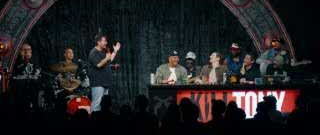
KILL TONY #711 - episode notes

Andrew Schulz and Deric Poston join a night with Ari Matti opening, William Montgomery closing, and Joel Jimenez returning to the drums. A chef’s outfit, a hammock and an unused puzzle table all become material.

Discoveries and details

1. 04:39 - Andrew and Deric arrive together. Tony calls this Andrew’s first return since Madison Square Garden; that is the introduction’s recollection, not a complete appearance count. The specials and release dates mentioned here are episode-time promos.

2. 20:06 - Jovan Afzali is a line cook, and the panel notices he has arrived in chef’s pants. He explains that he wore them to an interview, complete with Crocs. He says he staged at a new restaurant the previous day and starts that week, rather than already having worked a long stretch there. Dress for the job you want becomes the punchline. His imaginary girlfriend, canoe and internship are explicitly fictional.

3. 22:24 - Jovan says he likes going dancing, rather than claiming to be a professional dancer. A request for Indian trap music leads to a short demonstration at 23:00. His joke about doing that for 45 minutes is not the length of the performance captured here.

4. 29:52 - Sammy Blumenthal calls this her second appearance and explains the difference between recording in December and seeing an episode released in January. Tony wanted the recording date; she was explaining the wait. This is her recollection, not an independently audited appearance ordinal or universal release schedule.

5. 33:11 - Sammy reveals the real name of her dog, Topher, after the fictional name in her minute. She says she wanted a tattoo of him before he died so she could show it to him. The dog is alive in her account; the panel’s response is to wonder whether he knows what he is looking at. The later private relationship interview is not used here as verified biography or a health statistic.

6. 49:11 - Will Hunsinger describes aerospace work and earlier jobs involving jet engines. He asks not to disclose the current employer’s details. He also distinguishes training in jiu-jitsu from being a fighter, and describes guitar as a hobby. He does not perform a guitar piece in this episode.

7. 58:45 - Joel Jimenez is welcomed back as a visiting drummer, bringing the older band dynamic into the room with Jetski Jessie Johnson. The later explanation is that Michael Gonzalez is watching from an upper balcony. He returns to play the show out at 2:15:33, so the replacement jokes are not a firing or announcement of a permanent band change.

8. 1:01:42 - Bryant Smith’s trip across the street becomes its own bit. An initial claim about running gets narrowed to lightly jogging to keep up with Dusty’s fast walk. Tony explicitly says people are not required to sprint. At 1:04:23, a short yard-karate demonstration gets slow romantic backing music, prompting a request for a more suitable soundtrack. This is a comic demonstration, not exercise advice.

9. 1:10:01 - Jetski finds leave her on read in the discussion of a text-message breakup. The room’s reaction turns it into another showcase for her timing. The surrounding private relationship allegations and medical claims are not accepted as facts here.

10. 1:20:14 - Cam Patterson narrows the Canada conversation to the two places he has visited, Vancouver and Edmonton. That explains why his personal map of the country is much smaller than the panel’s question. His answer places this particular story in Vancouver; the surrounding roasts do not establish anyone’s identity or an actual crime.

11. 1:24:45 - Matt Gonzalez says he is a mechanical designer who makes desks. The panel singles out his pickleball premise and suggests expanding the idea of people inventing another sport once the existing one gets competitive. That is joke-development feedback, not a verified history of who plays particular sports.

12. 1:25:41 - Matt says a baseball spectator recognized him by calling him hammock. The sleeping arrangement is inside, in its own room, and chosen by him; it is not a shared hammock with his grandfather. Net loss, swingers, low-hanging fruit and full swing become a relay of puns. Redban’s Secret Show invitation at 1:31:51 is a future spot, not another completed set in this recording.

13. 1:32:24 - Tony connects Michael, Matt and the next bucket pull, Peter Gonzalez, by surname. It is a running name coincidence, not a claim that the three are related. Michael is the drummer already introduced, rather than a third stand-up performer named Gonzalez.

14. 1:34:27 - Andrew encourages Peter’s energy even while acknowledging that the jokes are still developing. He points out the crowd laughing when Peter moved casually past a missed joke. The advice returns at 1:42:30: talk about yourself and what you are going through. Tony’s specific edit is to retire the Alamo joke. The paper-sales roleplay at 1:37:01 gives Peter a second, improvised challenge.

15. 1:45:34 - Tyler describes taking a phone call warning that Dave Portnoy was coming to the pizzeria where he works. He explicitly says he did not make that pizza. His quoted 7.4 rating is his recollection, not a rating verified here. The later negative-review readout also ends with an important question: are they looking at the right Romeo’s? Do not treat those read-aloud complaints as established facts about his employer. The overall page rating is corrected aloud too, from the initial reading to 4.3 from 99 reviews; it is not a verified current rating.

16. 1:56:00 - Vinnie explains the unfinished ending: he knew he was near the minute, debated whether to begin another joke, and then rushed to fit it in. It is a useful performance detail about choosing an ending, rather than proof of an exact measured duration or a lack of material. The short attempted continuation is indexed below.

17. 2:09:02 - William corrects the Cleveland venue: Tony says Hilarities, while William says the Funny Bone, formerly an Improv. Later he describes buying a dedicated puzzle table for Christmas and then stopping the hobby. The table remains unused behind a door in his account. The rowing discussion ends in an I ain’t ever going to stop callback, not a completed Atlantic crossing or a fitness recommendation.

18. Across the complete stored automatic captions, “I love it” has 5 text matches and “absolutely incredible” has 4. These count all voices and opening/advertising material, not Tony alone. They are literal automatic-text matches, not independently checked spoken totals; censored omissions can interrupt a match.

Sets & timestamps
04:39 - Panel introduction: Andrew Schulz and Deric Poston.
06:42 - Ari Matti introduction; first spoken set line 06:56, material begins 07:01.
18:08 - Jovan Afzali introduction; set begins 18:22. Jovan/Jovin pronunciation varies in the captions.
28:21 - Sammy Blumenthal introduction; set begins 28:31.
47:21 - Will Hunsinger introduction; set begins 47:32.
1:00:08 - Bryant Smith introduction; set begins 1:00:16. Bryan/Brian/Bryant forms vary in the captions.
1:14:21 - Cam Patterson introduction; first spoken set line 1:14:30, material begins 1:14:34.
1:21:44 - Matt Gonzalez introduction; set begins 1:21:53.
1:32:48 - Peter Gonzalez introduction; set begins 1:32:58.
1:42:58 - Tyler introduction; set begins 1:43:14. Surname captions vary Langlo/Langloy/Langoy; no identity merge is assumed.
1:53:25 - Vinnie introduction; set begins 1:53:41. Surname captions vary Roucci/Rouchi/Rouchy.
2:02:37 - William Montgomery introduction; set begins 2:02:53.

Bonus performances & navigation
23:00-23:09 - Jovan’s short requested dance.
24:49-24:55 - Jovan’s short requested character impression, not another minute.
36:17-47:06 - Sammy’s extended private interview, navigation only rather than another stand-up set.
43:29-43:44 - Recorded soundboard clip and replay, not a new live performance.
58:45 - Joel Jimenez welcomed for the visiting drum sit-in.
1:04:23-1:04:38 - Bryant’s short yard-karate demonstration with band backing.
1:23:00-1:23:57 - Matt’s requested ending continues into a short follow-up, not a new full minute.
1:37:01-1:37:15 - Peter’s first paper-sales attempt under the spotlight.
1:37:20-1:37:54 - Peter’s second paper-sales roleplay with the panel.
1:46:28-1:46:42 - Tyler’s requested turn and reaction, not an extra set.
1:54:39-1:55:06 - Vinnie’s attempted continuation of the interrupted ending, not another full minute.
2:13:24 - William’s final rowing callback.
2:14:50-2:15:17 - Episode artwork presentation and reaction.
2:15:33 - Michael returns for the band play-out.

Which interview turned into the best unexpected bit: the chef’s outfit, the hammock, or the puzzle table?
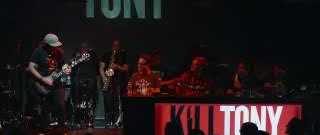
KILL TONY #724 - episode notes

A throwback night at Vulcan Gas Company, with Joe DeRosa and Ari Matti on the panel. David Lucas opens, Hans Kim closes, and the interviews repeatedly turn into little demonstrations of how material can develop onstage.

Discoveries and details

1. 02:15 - The venue matters to the opening conversation: Tony frames this as a return to Vulcan rather than a normal Mothership night. Joe recalls doing his first Austin Kill Tony there, while Ari says he never performed at Vulcan. Those are their on-show recollections, not a freshly audited appearance history.

2. 17:48 - Taylor's driverless-car observations give the panel something specific to discuss. The passenger looks as if an imaginary friend is driving; the car without anyone inside becomes personless rather than merely driverless. At 19:02, Joe says these observations worked better for him than the opening attempts to shock. It is practical feedback about this set, not a numerical laugh comparison.

3. 33:24 - Aaron West describes Beef Squeaks, his videos in which he writes and performs multiple characters. The interview supplies a useful explanation for the exaggerated persona he brings to the microphone. He describes his stand-up history as mostly off over roughly ten years, later saying this is a return after seven or eight years; that should not become ten continuous years of performing.

4. 34:12 - Joe's note to Aaron is specific: keep the zaniness but weave the mugging more organically into the material. He singles out the soup joke as funny. The advice concerns the connection between character and jokes, rather than simply asking him to stop playing a character.

5. 35:35 - Aaron says nearly every wall of his small apartment is covered in paintings, especially creepy old portraits. The panel turns the description into the image of a house full of portraits with cut-out eyes. That is a comic visual, not an accusation of actual spying or an estimate of the collection's value.

6. 40:56 - Cynthia Brazil says she currently performs about six minutes on the Ding Dong Show, compared with longer ten- or fifteen-minute sets previously. That is her own account of a different show's format, not an independently timed Kill Tony set. She also describes the mixture of stand-up and other acts there.

7. 44:07 - Cynthia's acting background leads to an improvised scene: Ari plays a secret agent, and the interview becomes a fictional interrogation. The premise involves saving the world and demanding a song, but the captured exchange does not contain a full musical performance. It is a short scene, not evidence of an actual threat or a real intelligence role.

8. 56:01 - The panel tries pitching Mushroom Matt as a comic-book character, then Joe immediately reverses course and says he would skip it. The reversal is the comic beat. The interview's separate claims about substances and wildlife are not verified medical or ecological facts, and no animal-catching instructions are reproduced here.

9. 59:42 - Nick explains that he used to write parking tickets; he was not parking other people's cars. His anecdote about wanting someone to say they were proud of him immediately gets Joe's attention: make that a joke. It is an example of interview material being identified as potential stage material, not a verified parking-enforcement policy.

10. 1:00:15 - The panel praises Nick's calm pacing. He says he had nearly tripped on the way up because he was nervous, which makes the contrast between his internal nerves and the outward delivery part of the conversation. It is his recollection of a near-trip, not an actual fall shown in these notes.

11. 1:23:04 - Ryan describes touring and session guitar work before trying stand-up. The panel gets him a guitar, and a real additional performance starts at 1:24:03. Around 1:25:08 the band joins behind him. His claimed past credits remain his own account; the jam itself is the onstage event.

12. 1:39:50 - Joe proposes a shorter route through JP Hinsdale's opening premise. Tony then asks JP to try the revision in the room, even though the audience already knows where it is going. The retry runs around 1:40:28-1:40:47. It is an unusually direct editing demonstration, not another complete minute.

13. 1:48:40 - Tony distinguishes using open mics to work on technique, volume and pacing from letting every open-mic response make the final decision about a joke. It is his stated creative advice, not an empirical finding about every comic or audience. At 1:50:16, Joy Hinchcliffe comes onstage to hug JP during a playful new-mom ceremony. No legal adoption or changed family record is implied.

14. 2:01:03 - The closing handoff explains the lineup: William is absent, Ari is already on the panel, and David opened, so Hans Kim gets the closer's introduction. The line about William writing only twenty seconds a week is a joke, not a productivity statistic. Later, Hans's planned party game Catan gets misheard as Chris Kattan - a name-based detour, not another guest appearance.

15. Phrase watch - The native full-source rules find four automatic-text matches for “I love it” and one for “absolutely incredible.” These include all voices and opening/advertising material, not just Tony. Caption omissions or censorship can hide spoken phrases, so these are text matches rather than independently audio-verified spoken totals.

Performer and panel navigation
Times distinguish introductions from first captured set lines. Names follow the episode locally; no canonical aliases or appearance histories have been changed.

04:04 Joe DeRosa / Ari Matti - panel introduction
06:55 David Lucas - introduction; set from 07:10
16:49 Taylor Neely - introduction; set from 17:07
29:35 Aaron West - first call; repeat introduction at 30:07; set from 30:15
37:54 Cynthia Brazil - introduction; set from 38:11
48:29 Mushroom Matt - first call; repeat introduction at 48:56; set from 49:03
57:15 Nick James - introduction; set from 57:30
1:19:20 Ryan Igler - introduction; set from 1:19:35; automatic captions vary on surname spelling
1:27:15 Uncle Laser - introduction; set from 1:27:42
1:36:53 JP Hinsdale - introduction; set from 1:37:14
1:52:38 Zack Black - introduction; set from 1:52:53; Zach/Zack variants remain episode-local
2:01:37 Hans Kim - introduction; set from 2:01:52

Additional performances and onstage bonuses
08:34-16:17 David's post-set roast exchange and interview
44:07-44:56 Cynthia and Ari's improvised secret-agent scene; no full song captured
1:05:02-1:17:51 Tony's extended reading from Nick's phone, with panel reactions; private text details are not repeated in these notes
1:18:54 Nick's attempted phone call reaches an unavailable message; no answered conversation
1:24:03-1:25:41 Ryan's additional guitar performance, including the band joining
1:40:28-1:40:47 JP retries the edited opening joke
1:45:38-1:46:03 JP's additional requested bit; private explicit content is not reproduced
1:50:16-1:51:17 Joy's cameo, hug and short stage exchange; she returns to her seat afterward
1:58:34-1:59:18 Zack's brief shirt-reveal exchange; this is navigation, not a medical assessment

Source note: These notes follow the complete stored automatic captions, not independent listening. Fictional premises, private allegations, medical claims and future invitations are not verified biography, advice or completed bookings. Explicit material involving minors is excluded from discoveries, quote selections and video cards. Source, rights, identity and canonical history records remain unchanged.
Dave Smith | This Past Weekend #632

Source-based caption notes. Political arguments, memories, estimates and forecasts remain attributed. This review does not verify the episode’s news, medical, legal, financial or criminal claims. Private children, victims and relatives are not expanded.

1. 1:52:19 - A first road room, not a first sellout. Dave places his stand-up start in late 2006 and his first road gig around 2008, about two years later. He recalls Jay Oakerson bringing him to Mark Ridley’s Comedy Castle and a 350-seat room that was papered. Capacity and a full crowd are not proof he sold 350 tickets. His earlier biggest audiences were roughly 70 to 100, by his recollection.

2. 54:47 - Anger can get in the way of comedy. After a recorded Tim Dillon segment, Dave says the material makes him furious before he can think of the funny response. He is describing his own creative reaction, rather than establishing the allegations being discussed or ranking comedians objectively.

3. 1:14:51 - He explicitly limits the expert label. Dave describes himself as a comedian who has read about these subjects, says it is fair to challenge him, and leaves listeners a choice about listening. That qualification matters throughout a conversation containing many confident political assertions.

4. 17:33 - The question changes from the operation to what follows. Dave distinguishes an immediate result from its aftermath and later separates hoping something works out from celebrating it as certain. This is his argument about uncertainty, not a verified military assessment or a prediction that Venezuela must follow another country’s history.

5. 28:23 - A phrase gets unpacked before the argument continues. Theo asks what “paper tiger” means; the discussion reduces it to an appearance of strength that may be a bluff. Dave then questions using weakness and danger interchangeably in rhetoric. The explanation is not proof that any named country fits the label.

6. 49:40 - Earlier support is not a promise of permanent agreement. Dave recalls expecting that people pleased by his election endorsement would dislike later criticism. His request to explain what changed between public positions develops that same accountability theme. The episode does not establish the speculative explanations he offers for other people’s conduct.

7. 1:20:32 - The format can reveal a different side of a candidate. Dave remembers the personal, less conventionally political part of Theo’s earlier interview. His argument is about what a long conversation makes possible; audience-size claims and election effects are not measured here. Future interview suggestions are not bookings.

8. 2:01:55 - Supporting independent reporting does not mean vouching for every video. Dave questions how a viral daycare video represents a location and later explicitly says he is not vouching for its creator. Theo distinguishes information already available from how it is presented. Neither the alleged fraud nor the counterexample is independently investigated in this review.

9. 2:04:04 - The individual-versus-group distinction is explicit. Dave separates criticism of a state or lobby from criticism of Jewish people and rejects judging individuals by group membership. That caveat must remain visible alongside the episode’s much broader arguments. Demographic claims and collective accusations are not accepted as statistics or facts.

10. 2:54:08 - An interview is not blanket agreement, and preparation has limits. In the discussion of controversial guests, Theo admits he sometimes knows only a few things about a person before talking; Dave rejects treating agreement on one point as endorsement of everything said. The surrounding praise, disagreements and claims are his views, not this review’s endorsement of the guest or their ideology.

11. 2:44:08 - They notice the downer loop. Theo says he dislikes getting stuck there. Dave remains pessimistic in the short run while discussing hope, voice and opportunity. A later recorded Jimmy Carr clip is expressly treated as a hopeful thought about AI, not an achieved scientific result or a guaranteed productivity increase. Private medical experiences are not turned into clinical facts.

12. 3:07:51 - The audience relationship closes the episode. Dave likes going through surprising events together with listeners, and Theo values being able to call with a difficult question. The closing mood is curiosity and hope, without resolving or verifying the news arguments. A dinner mention is a future plan, not a completed appearance.

Full episode navigation
0:00 - Returning guest introduction
0:24 - Recorded opening music
0:34 - Greeting and later plans
0:39 - Family banter; private children omitted
4:08 - Love and responsibility
7:30 - Everyday behavior as a role model
8:10 - Personal vaping recollections
10:04 - Venezuela headlines and questions
13:26 - On-screen drug-route lookup
14:10 - Earlier report about an announcement
15:01 - Timing corrected; explanations uncertain
17:33 - Immediate result versus aftermath
19:47 - Hope versus certainty
21:14 - Testing stated rationales
22:12 - Motives framed as a best guess
22:48 - War argument; victim detail not expanded
25:15 - Acorns sponsor
26:45 - Mercy sponsor; fictional AI court
27:54 - Conversation resumes
28:23 - What is a paper tiger?
29:47 - Recorded geopolitical commentary
31:35 - Looking back a year
34:16 - Debate memories
37:27 - Labels, sarcasm and self-description
38:39 - Recorded political speech
43:20 - First-year assessment as opinion
44:28 - File-release criticism
45:22 - Photo and redaction discussion
49:16 - Confusing presentation
49:40 - Support and later criticism
53:11 - Asking what changed
53:30 - Recorded Tim Dillon and interview clips
54:47 - Anger and finding the joke
57:04 - AG1 sponsor
58:30 - BetterHelp sponsor
59:40 - Declassification allegations
1:00:38 - A denial included in the article
1:05:15 - Constructive communication hopes
1:09:56 - Media influence as Dave sees it
1:11:09 - Recorded CBS clip
1:11:52 - Hosts react to the clip
1:14:49 - Comedian and expertise qualification
1:16:28 - Recorded CBS clip continues
1:18:07 - Debate memory and quick clip retrieval
1:20:32 - Personal conversation and candidates
1:21:15 - Future interviews are possibilities
1:28:27 - Nashville Comedy Festival recalled
1:33:36 - Butler footage and questions
1:34:42 - Flag versus camera movement
1:36:41 - Unanswered security questions
1:40:05 - Currency bill is a proposal
1:45:12 - Recorded reporter exchange
1:46:19 - Name-tag and costume jokes
1:52:19 - First road gig and a papered room
1:53:00 - First large-room feeling
1:54:06 - Libya, not Iran, corrected
1:54:47 - Recorded clip; graphic details omitted
1:57:23 - Comedians’ unexpected access
2:01:55 - Skepticism about a viral video
2:04:04 - Individuals distinguished from groups
2:05:01 - Recorded social-platform speech
2:07:25 - A letter is read and interpreted
2:09:27 - Unknown longer-term consequences
2:12:53 - Exhaustion and forecasting limits
2:17:15 - Recorded inauguration speech
2:20:33 - Underdog perception could be wrong
2:22:01 - Another presidential run is a joke
2:23:06 - Respectful disagreement with a friend
2:27:31 - Celebration footage has uncertain context
2:29:00 - Ken Burns conversation recalled
2:35:14 - Independent reporting, not blanket vouching
2:37:12 - Old information and new presentation
2:39:36 - Teenage work story; private children omitted
2:41:10 - Film corrected to Total Recall
2:44:08 - Noticing the downer loop
2:44:42 - Technology as a hope, not a result
2:46:15 - Beauty and tragedy coexist
2:46:40 - Recorded Jimmy Carr clip
2:47:53 - A hopeful thought, not a guarantee
2:52:13 - Controversial guest; views and disagreements
2:54:08 - Talking is not blanket endorsement
2:54:16 - Host preparation limits acknowledged
3:02:06 - Political speech and a recorded clip
3:04:50 - Recorded clip continues
3:07:23 - Thanks and hope for the year
3:07:51 - Going through events with the audience
3:08:13 - Calling with a difficult question
3:08:21 - Dinner as a plan; final signoff
3:08:31 - Recorded outro music
Robert F. Kennedy Jr. | This Past Weekend #639

Source-based notes from automatic captions. Disputed medical, legal and political claims remain attributed. No treatment efficacy, current entitlement, audited saving or allegation of guilt is independently established. Private patient and meeting details are not expanded.

1. 0:45 - Permission comes before the recovery account. Theo asks whether he can mention how they know each other, and Kennedy agrees before reporting forty-three years in recovery. It is his personal account, not an audited treatment outcome or a guarantee for others. Private meeting participants and locations are omitted.

2. 9:30 - The bill has a delayed vote, not a demonstrated final defeat. The on-show account says a pesticide-labeling proposal was taken off notice while the reason and possible return remained unclear. Kennedy recalls doing three trials as part of a legal team; recalled awards are not final post-appeal settlements, personal earnings or independent clinical findings.

3. 14:04 - The alternative depends on affordability. Kennedy describes seeing laser-weeding equipment, but says cost must work for smaller farms and they are not there yet. That keeps a possible transition distinct from a solution already available to everyone. Guessed prices and output are not adopted as verified specifications.

4. 18:05 - Faster document access still needs privacy work. Kennedy describes a future AI-assisted request process, then says names require redaction, mistakes must be avoided and the system is still being worked out. This is not a launch receipt, a guarantee that every document will be public or current legal advice.

5. 21:46 - A failed hypothesis is still a publishable result in his argument. Kennedy connects replication with publication incentives and argues that results which do not support expectations should also be published. A proposed budget share is not proof every study has been repeated, and sweeping fraud allegations do not establish that every scientist or paper is corrupt.

6. 30:26 - Open review is different from unrestricted raw data. Kennedy proposes publishing criticism alongside papers, but acknowledges that data can be expensive or inaccessible. Ten reviewers is a hypothetical example, not an actual study count. The account does not establish that the proposed system is already operating.

7. 40:06 - The staffing account includes an admission about targeting. Kennedy says more targeted cuts could have been better and some newer workers might have been kept. Earlier he describes both buyouts and layoffs; later he says the bureaucracy is needed and contains gifted, idealistic people. Neither all-voluntary departures nor universal employee corruption follows.

8. 46:09 - A process timeline is not medical proof. Kennedy says guideline work he expected to take a month took about eleven months. Separately, an on-show lookup describes preliminary small-study symptom improvement, which is narrower than a cure. No dietary treatment, diagnosis, medication change or private patient detail is provided here.

9. 53:46 - Theo separates faster notice from greater approval. He asks whether the authorization proposal means more coverage or simply an earlier answer. Kennedy says the aim is to know before leaving the doctor. A timing promise is not a coverage guarantee, new entitlement or verified service already available to everyone.

10. 55:23 - The price display is a mock-up, not a live patient quote. Kennedy describes a comparison he saw and a future release. Sample prices are not current comparable out-of-pocket bills. He immediately says no after suggesting Trumparency: the name is a joke, not a confirmed platform. Projected competition is not realized savings.

11. 1:04:59 - The addiction discussion seeks accountability across a whole journey. Kennedy describes interagency pilots in eight locales intended to connect crisis support, treatment, housing and employment with one responsible person. Eight places is source-reported scope, not eight successful recoveries or proven efficacy. Private family medical histories are not expanded.

12. 1:09:29 - The closing file question gets no secret answer. Kennedy says nobody slipped him a revelation about family assassinations. He mentions concerns about living people without these notes identifying them or verifying document handling. His final nutrition message remains attributed advice, not an independently established cure, before thanks and recorded music.

Navigation and bonus moments (source timestamps; sponsors and recorded material labeled):
0:00 - Spotify announcement and introduction
0:45 - Permission to discuss recovery
1:00 - Source forty-three-year account
1:17 - Past meeting changes; private details omitted
1:37 - Service and connection
3:05 - Tennessee and Kid Rock banter
3:24 - Amputation joke corrected to childhood account
3:46 - Skiing recollection; ranks not verified
4:59 - Governor meeting recalled
5:26 - SNAP and dye-policy claims; no legal guidance
7:06 - Glowing-cereal joke
7:19 - Fluoride claims; no clinical acceptance
8:40 - Bill text; enactment not verified
9:24 - Pesticide-labeling proposal
9:54 - Objections and delayed vote
11:12 - Source litigation recollections
12:12 - Study/official allegations, not adjudication
13:39 - Pesticide transition question
14:04 - Laser affordability condition
15:35 - Equipment shown; guesses not specifications
16:20 - Farming-economic claims
17:13 - Inside-government question
18:05 - Future document access and privacy
19:00 - Buyouts and layoffs both described
20:22 - Grant pause and review
21:08 - Claimed consolidation, not audited totals
21:46 - Replication and incentives
22:30 - Publishing a negative result
23:28 - Historical-research allegations
24:40 - Proposed replication budget
25:58 - MoonPay sponsor read
27:01 - Ethos sponsor read
28:21 - Journal criticism; allegations remain attributed
30:26 - Open-journal and review proposal
30:57 - Raw-data limits
32:08 - Team recollection; experts on both sides
33:14 - Acknowledging bias
33:37 - Fraud allegations; no group guilt finding
34:45 - Secondhand payments; patient details omitted
36:26 - AI and projected savings, not audited outcomes
37:03 - Medicare/Medicaid distinction in the account
39:08 - DOGE and qualified assessment
40:06 - Targeted cuts could have been better
40:52 - Health comparisons; statistics not accepted here
42:45 - Autism/youth claims; no causal inference
43:53 - Spending claims, not audited here
44:19 - Individual and system responsibility
45:43 - Guideline changes discussed
45:57 - Vapes-in-the-pyramid joke
46:09 - Source document-development timeline
48:03 - Treatment claims; no medical guidance
49:14 - Lookup uses preliminary improvement wording
50:02 - Prison-diet claims; effect sizes unverified
50:55 - Hypothetical rehab-payment proposal
52:12 - Portable-records proposal and scenario
53:17 - Authorization plan and proposed timing
54:03 - Earlier answer versus greater coverage
54:25 - Hospital transparency claims; no legal guarantee
55:01 - Car-price analogy
55:23 - Hospital display described as a mock-up
55:59 - Gas-price comparison and bathroom banter
56:22 - Imaging-price question
56:47 - Future release and enforcement promises
57:23 - Local examples, not verified quotes
57:48 - Billing anecdotes and hotel joke
58:18 - Trumparency explicitly a joke
58:45 - Opaque wordplay
59:02 - Tecovas sponsor read
1:00:11 - Morgan and Morgan paid advertisement
1:01:32 - Price-transparency advocacy referenced
1:01:49 - Culture and necessary bureaucracy
1:02:43 - Self-assessment and oil-tanker metaphor
1:03:24 - Addiction-policy focus
1:04:03 - Family medical anecdote; details omitted
1:04:59 - Interagency continuity goal
1:05:40 - Source eight-locale pilots, not outcomes
1:06:40 - Personal trust and political endorsements
1:07:21 - Senators named; current roles not verified
1:07:51 - Partisanship and family relationships
1:08:43 - Cancer hypothetical, not a diagnosis
1:08:58 - Uncle’s history; records not verified
1:09:29 - No secret assassination answer
1:09:41 - File release and living-person privacy
1:10:21 - Family-member roles; titles not verified
1:10:51 - Secret-napkin hypothetical denied
1:11:09 - Thanks and resilience
1:11:30 - Closing advice stays attributed, not a cure
1:12:08 - Recorded outro music

Fiona Cauley | This Past Weekend #634

Source-based caption notes. Memories and ideas remain attributed. Clinical, legal and news claims are not verified; private family and victim details are omitted.

1. 5:54 - Fiona describes about five years in comedy and a second Kill Tony Netflix appearance, after Madison Square Garden. These are her recollections, not an audited filmography.

2. 13:40 - Fallon gives her grandparents a familiar sign that she is a comedian and her mother something to share. Kill Tony means a different audience in her account. This is not a ratings comparison.

3. 8:05 - The joking has check-ins. Theo asks if he is joking too much, Fiona says she likes it, and she offers the same boundary in return. He later checks the health topic. This differs from unsolicited comments.

4. 23:16 - Her terminology preference is personal. Fiona says it varies person by person and prefers disabled or disability for herself. She does not speak for everyone.

5. 40:51 - Capable came before stand-up. Fiona describes reenacting her own experiences. Not wanting every joke to sound like a wheelchair joke sits beside another point: she experiences the world from her own vantage. This is her creative approach.

6. 1:39:30 - The TEDx talk was delivered but not yet released. Fiona found speaking without comedy’s laugh feedback unfamiliar and stressful. That silence does not establish a failed comedy set, and she did not say the talk was already publicly available.

7. 1:42:47 - A request for a local Ryman guest spot leads further. Fiona says Nikki Glaser replied, put her on both shows and took her on the road. She credits Nikki with an extra ticket for Matt. This is a touring recollection, not a new booking.

8. 1:32:30 - Matt shares her profession as well as her marriage. Fiona describes him featuring and a weekend with her headlining Friday and Saturday and him on Sunday. Later she rejects the assumption that he is simply her caregiver. These dates are not a current ticket schedule.

9. 1:29:49 - The Zanies proposal uses a mistaken destination. A call about an important visitor makes Fiona think she may meet Nikki Glaser; it is Matt’s marquee proposal. The wedding venue was booked before the formal engagement, qualifying the idea of a wholly unanticipated event.

10. 1:48:11 - Her success includes who can attend. Disabled audience members matter to Fiona; a room where everyone brings their own chair is a hope, not an already-achieved event. Her accounts of stairs describe her experiences, not a complete current venue audit.

11. 1:50:52 - She can ask when she needs assistance, yet learning to ask was difficult. Fiona’s perspective emphasizes adult agency. It is not a universal emergency rule or an instruction to withhold help from someone in danger.

12. 2:09:25 - The Los Angeles invitation is conditional on timing. Fiona is getting to the invitation when Theo thinks she has not asked him. Before and After specials and Saving You a Seat merchandise also remain ideas, not completed releases.

Full episode navigation
0:00 - Comedian and Ramping Up introduction
0:33 - House and imagined sofa counter
1:28 - Health topic introduced with permission
2:22 - Family discussion; private medical details omitted
3:29 - Mobility and cane recollections
4:35 - Fashion canes and sword-cane jokes
5:12 - Earlier shared show and Netflix poster
5:54 - Second Kill Tony Netflix appearance as recalled
6:33 - About five years in comedy
6:43 - Nashville work and platform change
7:35 - First Kill Tony experience
8:05 - Mutual check-in about joking
8:18 - How the show works as described
9:07 - Pressure of the audience beyond the room
10:12 - Backstage access as she remembers it
10:40 - Heidi reference and banter
11:54 - Theo’s unaired late-night set recollection
12:34 - Fallon compared with a roasting format
13:40 - Foundation mention and family recognition
14:36 - Assumptions from a divisive platform
15:10 - Different signs of success
15:47 - Motivation and remembered criticism
16:37 - Barbie discussion; not clinical evidence
18:29 - Ethnic and diagnostic jokes; no accepted prevalence data
20:12 - Pizza Hut rumor story and correction
22:18 - Being sent wheelchair dolls
23:16 - Personal terminology preference
23:54 - Parking aside
24:04 - Rocket Money sponsor
25:21 - Liquid IV sponsor
26:41 - Question about everyday experiences
27:03 - Theo’s parade-dog story; jokes remain jokes
28:47 - Animal-behavior lookup; not verified here
29:28 - Drink and Kool-Aid Man banter
30:18 - Personal early-health recollection
31:17 - Seeking answers; family details not expanded
34:14 - Diagnosis recollection; no treatment guidance
35:16 - Understanding a life change
36:17 - Past difficult emotions as she describes them
36:51 - Her reflection on mourning and perspective
38:16 - Hope and changing beliefs
39:18 - Theo reflects on distraction
40:17 - Another topic-comfort check
40:51 - Capable before stand-up
41:49 - Transport-access experiences
42:24 - Past Stone Cold Sober show explained
42:50 - Ride story begins; allegations remain attributed
45:53 - Explicitly not a threat to shoot
47:04 - Fear in the ride recollection
47:46 - Qualification repeated
48:07 - Navigation-audio digression
49:20 - Group text asking for help
49:59 - Arrival at the venue
50:44 - Getting herself and the chair out
51:16 - Later events the same night
52:05 - The show and her own assessment
53:30 - Offer of a ride and another stop
55:16 - Party host introduces himself as Michael
56:43 - Michael Strahan guess; not the reveal
57:09 - Theo’s former roommate digression
58:16 - Party and food recollection
58:46 - Ride home
59:05 - Yelawolf reveal and thanks
59:29 - Theo’s recollection of the musician
1:00:06 - Childhood neighborhood story; allegations not verified
1:02:32 - Different experiences of pets
1:03:06 - Golden-retriever wordplay
1:03:57 - Enjoyment of the conversation
1:04:43 - Valor Recovery sponsor
1:06:18 - News segment begins; not independent reporting
1:06:36 - Renee Good clip discussed; victim images excluded
1:07:55 - Trauma speculation; no diagnosis accepted
1:08:49 - Responses to the clip; not tactical or legal guidance
1:09:54 - Limits of what can be inferred
1:11:10 - Weapons-policy lookup; not verified legal advice
1:11:42 - Fear about public expression
1:12:28 - Uncertainty about events before the clip
1:12:46 - Online reporting and trust
1:13:23 - Immigration-policy claims; no accepted metrics
1:14:30 - Recruitment lookup; requirements not verified
1:15:28 - Recruiting poster discussion
1:16:11 - Josh Duhamel comparison and jokes
1:17:43 - Poster interpretation
1:19:27 - Umpire joke
1:19:37 - Slipping-on-ice clip; identity and authenticity uncertain
1:20:16 - AI-imitation jokes
1:20:38 - Personal treatment discussion; no clinical advice
1:21:48 - Medical hopes remain hopes
1:22:37 - Past prognosis recollection; no prediction adopted
1:23:08 - Treatment account and limited long-term data
1:23:53 - Different conditions; comparison not clinical evidence
1:24:19 - Hawking allegations and jokes; not accepted facts
1:25:01 - Muffy dog recollection
1:26:22 - Future outlook and relationship questions
1:27:27 - Disclosure and dating as she remembers it
1:28:08 - Matt and the relationship
1:29:07 - Both comedians; meeting at an open mic
1:29:49 - Zanies marquee proposal
1:30:04 - Venue booked before engagement
1:30:41 - Important-visitor call
1:31:11 - Mistaken expectation of meeting Nikki Glaser
1:31:33 - Proposal response
1:32:01 - Wedding afterparty at the club
1:32:30 - Touring together and headlining arrangement
1:33:08 - Before and After special ideas; not completed work
1:34:10 - Sympathy and imagined assumptions
1:35:09 - Intentions versus impact
1:35:37 - Unsolicited messages; private senders not identified
1:36:29 - Voice, work and articulation
1:38:06 - Connection and having a voice
1:39:30 - TEDx delivered but not yet released
1:40:09 - Marriage and expectations
1:40:40 - Alabama and Roll Tide banter
1:41:39 - Nikki Glaser discussion
1:42:18 - Recorded awards-host satire; not actual editing awards
1:42:47 - Message leads to Ryman spots and touring
1:43:35 - Extra ticket for Matt
1:43:54 - Recorded Leonardo DiCaprio roast joke
1:44:25 - Appearance speculation; not verified biography
1:45:25 - Misconceptions about speech
1:45:53 - Past bar story; private allegations not verified
1:47:52 - Outcome in her account
1:48:11 - Disabled audience members and success
1:48:37 - Disability-rights inspiration and lookup
1:50:11 - Matt is her husband, not simply a caregiver
1:50:52 - Asking for help and adult agency
1:52:15 - Day-walker banter
1:53:16 - Support groups she has not attended
1:54:08 - Gratitude and news transition
1:54:26 - Iran discussion; contemporary figures not verified
1:56:06 - Imagined technology outage
1:56:43 - Reported protest claims; no casualty metrics adopted
1:58:15 - Communication and having a voice
1:58:57 - Dependence on platforms as their argument
1:59:30 - Political posts read; not current policy verification
2:00:19 - Everyday people and protest
2:00:57 - Earlier Iran footage shown; provenance not established
2:01:47 - Access and freedom
2:02:31 - Cost of making spaces accessible
2:03:33 - New York travel and restaurant access
2:04:18 - Side-room elevator distinguished from main room
2:04:30 - Josh Blue as an inspiration before her comedy career
2:05:15 - Past curb incident
2:05:46 - Druski recorded megachurch satire
2:06:36 - Imagined stage cables and puppeteering
2:07:23 - Ramping Up plug; schedule at the recording
2:07:48 - Derek Stroop mentioned, not a current guest
2:08:17 - Saving You a Seat merchandise idea
2:08:24 - Recorded tour dates; day corrected and uncertain
2:08:44 - First Denver visit and South venue
2:09:25 - Conditional Los Angeles invitation
2:09:56 - Matt Taylor acknowledged in the background
2:10:30 - Recorded outro music
Kill Tony #722 - Brian Simpson + Yannis Pappas
A poker-table invitation, an old clean joke and a plant-naming game take this one in very different directions.

1. 19:26 - Justin turns a straightforward leftovers question into another bit. Tony asks him to stick with the easy question so the interview can develop. The useful lesson is about answering in the moment; the surrounding food-storage claims are not safety guidance.
2. 20:41 - Tony introduces Redban as his leftovers expert, then Redban flatly says he hates leftovers. The joke’s setup and the person’s answer head in opposite directions.
3. 26:14 - Henry’s dating-profile-height material follows Justin’s similar premise. The stage tape-measure game announces 5 feet 3½ inches; the promised audience tequila round required 5 feet 3, so the hosts say the rule was not met. That is the onstage announced result, not an independent body measurement or a completed audience giveaway.
4. 29:34 - Henry clarifies that his snack-delivery job moves goods from a warehouse to stores. It is not a friend sending him shopping, as the earlier joke suggested. No unnamed employer is guessed.
5. 38:50 - Jessa’s dog-sitting work becomes literal wordplay: if she is a sitter, is she also a dog stander or walker? The joke does not establish mistreatment of animals.
6. 41:39 - Jessa makes jewelry, but at 43:21 she says the necklace she is wearing is another local artist’s work. She also explicitly corrects “Nichols” to “Knuckles” during the interview.
7. 54:49 - Michael says his old joke book is not filled; it sits as a memento to keep him going. It is a reminder from an earlier appearance, not proof that he has written no other material.
8. 1:00:55 - Matt’s requested singing demonstration starts too high and becomes a short, unsuccessful attempt. It is a separate musical bonus, not another stand-up set. His Carnegie Hall story is his account, not an independently checked performance credit.
9. 1:12:31 - Doug contrasts recording YouTube videos with live stand-up: he can reject a recorded opening, but in a room the audience already heard it. Just before that, the discussion turns to becoming more comfortable remembering jokes he likes.
10. 1:16:31 - Philip says his parents call his comedy a “program,” which fits neatly beside his app-and-website design work. Those are his anecdotes, not independently verified client contracts.
11. 1:30:54 - Asked for an old clean joke, Donna performs an additional donkey-wordplay story. Her account distinguishes roughly five years doing comedy, a long hiatus and a return; it should not be flattened into an uninterrupted career since 2006. The Secret Show mention afterward is an invitation, not a completed gig.
12. 1:35:06 - Kelly’s picture-led minute gets strong feedback for its presentation. She says she tried the picture once before, later says this is her fourth stand-up performance, and clarifies that not all her jokes require the picture. These are her source accounts, not audited lifetime counts. The family resemblance roasts do not establish anyone’s parentage or ethnicity.
13. 1:51:01 - The horns turn William’s plant list into a game, playing sadly at uncertain answers and loudly for confident ones. At 1:48:07, his peace lily’s age also gets a joke: he thinks in months because he feeds it in monthly installments. These are performance moments, not plant-care instructions.

Phrase metrics: “I love it” has 10 automatic-text matches and “absolutely incredible” has 4 across all voices in the full stored captions. These code-owned literal counts are not Tony-specific spoken totals or independently audio-verified counts. Censored or missing text can hide spoken phrases.

Sets & timestamps
06:19 - David Jolly
12:34 - Justin (surname Platt/Plattz varies in captions)
25:02 - Henry Cruz
35:09 - Jessa Knuckles (explicitly corrects the surname)
46:10 - Michael Ridley
47:42 - Michael resumes the interrupted same set, not a separate full minute
55:19 - Matt (surname Siri/Suri varies in captions)
1:04:34 - Doug Polk, invited performance rather than a bucket pull (Poke/Pulk in captions)
1:14:10 - Philip Abraham
1:21:27 - Philip retells requested earlier material during the interview, not a new full-minute set
1:24:02 - Donna Lee
1:30:54 - Donna performs the requested additional old clean joke
1:33:39 - Kelly Lusk (brief opening reset at 1:33:54 is part of the same set)
1:45:00 - William Montgomery (surname completes at 1:45:10)

Bonus performances & moments
03:43 - Brian Simpson and Yannis Pappas introduced as the panel.
27:12 - Henry removes his shoes for the tape-measure segment; announced result follows at 27:33.
45:16 - Jessa receives the big joke book; mic-stand reset follows at 45:34.
57:28 - Matt’s requested onstage body reveal, distinct from stand-up and not a clinical verification.
1:00:33 - Matt is invited to sing; attempted demonstration starts at 1:00:55 and ends without a further section.
1:03:02 - The panel votes on Matt’s joke-book size.
1:03:24 - Cam is announced absent; the explanation about filming is a source announcement, not verified filmography.
1:13:30 - Doug receives a big joke book. The poker wager is the hosts’ anecdote; their own account says they cannot reliably retell all its details, so no amounts or world rankings are accepted as audited stats.
1:32:34 - Donna gets the Secret Show invitation, followed by a big joke book.
1:38:34 - The audience revives the “trash can” chant after Redban’s question.
1:44:02 - Kelly receives and catches the big joke book while holding the picture.
1:47:09 - William’s plant discussion begins; horns later supply the reactions.
1:52:44 - Ryan’s episode portrait is shown.
1:53:37 - Chris’s Casey Rocket basketball artwork is discussed. Casey appears in the art, not as a live performer here.
1:54:17 - Short espresso-martini vocal outro after the sign-off.

Timestamps follow this upload’s stored automatic captions. Private clinical/crime claims, family roasts, future promotions and incomplete career recollections are not independently verified facts. Which worked better for you: Doug’s live-room comparison or the band scoring William’s plant guesses?
Kill Tony #732 - episode notes

Ali Siddiq and Kim Congdon join a show that contrasts strong stage personas with the pressure of making a minute work. A one-car website becomes a running callback, and Uncle Laser handles the closing spot.

1. 4:13 - The opening money-sign effect gets its own little progression: Ali asks for it again, the fireworks are noticed, and Kim asks whether hers can stop halfway. It is a production gag, rather than proof of anyone's actual earnings.
2. 7:06 - Tony praises how Sir Winston Pickles's dark clown persona plays on camera. The character keeps working during the interview, rather than disappearing after the prepared minute. His six years of standup and ten years as a clown are his on-source estimates; the violent premises are character material, not verified acts.
3. 18:06 - Jenny Anne has given one Mustang its own sale website and gallery. That explains why the car keeps returning during the interview: the opening minute is also an unusually elaborate pitch for one car. No actual sale or accepted bid is shown.
4. 26:21 - Jimmy Clifford's video-editing job gives Tony a technical roast: his jokes would make it easy to record room tone. It is a joke about the quiet response, not a measured sound level. The work he describes is editing online content; a criminal accusation from the panel is explicitly rejected.
5. 34:07 - Liv Taylor starts answering a question about open mics by describing the walk through Austin. Tony redirects her to what happens once she reaches the mic. The distinction is a small interview lesson: the interesting setting and the actual question are not always the same thing.
6. 36:16 - Liv says she would like to be featuring in about two years, while recognising that she is still building the material now. It is a target rather than a confirmed booking. She leaves with a big joke book after Tony calls hers the strongest bucket-pull set so far; that ranking is his judgement.
7. 56:12 - Benny G's interview ends with Tony noticing that he is smiling and loose compared with the shaking entrance. The change in stage comfort is the useful performance detail here. The private family, clinical and criminal allegations discussed in between are not independently established records.
8. 57:24 - Ty's Happy Gilmore comparison turns into a sequence of Sandler titles: Big Daddy, Little Nicky and Uncut Gems. Tony then describes his appearance as a prop he has with him all the time. The connection is about writing personal material, not a film credit or a literal identity.
9. 1:08:42 - As Ben is leaving, Ali spots his shoes and treats them as the sign of a pro. Ben turns that into a fresh Air Force creasing story. The prepared minute has ended, but a small observation keeps the exchange going without a separately introduced second full set.
10. 1:12:47 - Asked whether the Butcher name describes his job, Dave says he is a chef. The clarification gives the panel a new wordplay route: butchering jokes. He also explains that he has tried standup a couple of times over about six months, so the earlier first-time wording is not used as proof of a lifetime debut.
11. 1:16:08 - Rob White explains that he tends to tell longer stories and finds the one-minute format difficult. Tony's reply is that even an hour-long special has laughs in the first minute. The writing lesson is to make the opening work, rather than treating a long story as exempt from early laughs.
12. 1:20:37 - The tattoo discussion becomes an iPad stage bit: Redban turns the screen around while the audience reacts. An earlier suggestion that it would be added on screen is immediately rejected by Tony, so these notes do not promise an inserted graphic. The claims about past career damage are Rob's account, not independently verified history.
13. 1:26:12 - Just Greg says beatboxing is his main skill and that he makes YouTube videos about it. The panel then goes back to the bad-news premise and suggests making the message clearer and more direct. The fictional bad news is a writing example, not an actual medical diagnosis or report of harm.
14. 1:43:31 - Dimmitri King's technically-ten-years answer gets clarified immediately: two years performing, then an eight-year break. Later he says that he tried new material because the older jokes felt old. Those are his estimates and creative choices, not ten uninterrupted years of performing or an audited archive total.
15. 1:58:05 - Mason says his cat is called Clover but that he usually calls her Stinky. Ali turns the two names into a little imagined conversation. The simple pet detail gives the interview a compact callback without relying on the surrounding private health or family stories.
16. 2:03:50 - After Uncle Laser closes, Tony separates a funny character from developed punchlines. He praises the work of keeping the original voice while making the minute funnier throughout. It is a specific assessment of the performance, rather than acceptance of the interview's private criminal or sexual stories as facts.

Phrase watch: the native full-source automatic-text scan finds 7 matches for "I love it" and 7 for "absolutely incredible" across all voices. These are caption-text matches, not Tony-only or independently audio-verified spoken totals. Censored or missing text can hide speech.

Sets & timestamps
3:22 - Ali Siddiq and Kim Congdon - guest panel introductions; caption spellings of Ali's name vary.
5:41 - Sir Winston Pickles - invited opening standup; minute begins around 5:56. The host explicitly says he is neither a regular nor a Golden Ticket winner at this point in the source.
11:48 - Jenny Anne - first bucket pull; minute begins around 11:58.
22:33 - Jimmy Clifford - bucket pull; minute begins around 22:43.
29:48 - Liv Taylor - bucket pull; minute begins around 29:59.
40:43 - Benny G - bucket pull; minute begins around 40:53. He calls it his first attempt, which remains his source account.
56:39 - Ty - bucket pull; minute begins around 56:50. Marian/Marion variants appear in the captions, so first name is retained.
1:03:54 - Ben - invited standup; minute begins around 1:04:04. Bankis/Bankas/Bankus vary in the source, so no surname identity merge is imposed.
1:09:48 - Dave the Butcher - bucket pull; minute begins around 1:09:57.
1:14:27 - Rob White - bucket pull; minute begins around 1:14:36.
1:22:39 - Just Greg - bucket pull; minute begins around 1:22:48.
1:29:29 - Dr. Rabbit - bucket pull; minute begins around 1:29:43. She mentions a few earlier standup nights; the initial this-is-it answer is not proof this is her first ever attempt or an independently checked academic credential.
1:41:57 - Dimmitri King - bucket pull; minute begins around 1:42:06.
1:50:31 - Mason Bird - final bucket pull; minute begins around 1:50:39.
2:01:15 - Uncle Laser - invited closing standup; minute begins around 2:01:35.

Bonus performances & moments
4:13-4:36 - Money-sign, lights and fireworks gags during the panel introductions.
18:06-18:56 - The panel discusses Jenny's single-car website and gallery; no sale takes place.
35:11-36:02 - The heaven-audio/soundboard parody during Liv's interview. It is a staged sound-effect bit, not actual communication with a deceased person.
44:17-44:35 and 46:43-46:52 - The God/devil character voices during Benny's interview, clearly separate from any independently established religious claim.
1:08:42-1:09:04 - Ben's shoe-creasing banter following the minute; not a separately introduced extra set.
1:12:24-1:12:33 - A brief panel knock-knock riff during Dave's interview; not actual immigration enforcement.
1:16:22-1:16:35 - Rob's requested additional best-joke attempt, a short interview demonstration. Its denialist premise is not accepted as history. A further request follows around 1:16:40, but no separate completed second joke follows it.
1:20:37-1:20:46 - Redban turns the iPad toward the room during the tattoo discussion.
1:23:44-1:23:58 - Just Greg's brief Donald Duck impressions inside his original set.
1:32:43-1:33:13 - The requested professor/student roleplay during Dr. Rabbit's interview; a brief exchange rather than a completed lecture or another standup set.
1:36:02-1:36:15 - The money-sign/Mustang callback during Dr. Rabbit's interview.
1:49:42-1:50:06 - Dimmitri's joke-book toss/miscatches; a later correction explicitly says Dr. Rabbit caught her book.
1:53:12-1:53:23 - Mason's requested squat demonstration; no measured fitness result is established.
2:09:10-2:09:30 - Uncle Laser asks to shake Ali's hand during the closing interview.
2:10:23-2:10:33 - Closing artwork reveal, including James McCann with ice cream. James is the subject of the drawing, not another actual onstage performer here.

All times are approximate source-caption positions; introductions are distinguished from minute starts. There are 14 actual standup performers in this upload, plus the two panel guests. William Montgomery does not perform; Uncle Laser closes. The explanations offered for other absent regulars are source remarks, not new clinical, employment or film-credit records. Rob's short requested joke demonstration is separate from his original minute, while the other interview bits are not additional full sets. No full song follows. Private medical, sexual, family, crime, employment, legal and financial claims are not treated as verified records. Explicit sexualised comments about children are excluded from the selected evidence, audience notes and narration. Uncertain names remain episode-local, with no profile or history edits.

Which writing point stood out: committing to a character, making the first minute work, or building a clear callback from one small detail?
Kill Tony #742 - episode notes

Sam Tripoli and Tim Butterly join a show that turns an opening microphone problem into a running joke, then circles back to a shared airport story at the finish.

1. 2:14 - The opening audio problem is identified as mic one not being on when Tony arrived. At 4:08, Tim pretends the problem is happening again, then admits he is kidding. That second silence is the callback, rather than another confirmed failure.
2. 6:25 - Martin Phillips treats Adam and Eve apple juice as a biblical warning: he is not falling for that one. It is a quick name-based reversal inside the opening minute.
3. 19:59 - Stevie's long explanation of working in racing finally becomes a simple job description: he does merchandise for race-car drivers. He describes setting up shirts and a canopy at about two or three race events a month. That schedule is his report, not an audited work or income total.
4. 25:04 - Annie's stairs joke takes two turns: a date shushes her after a fall, then she anticipates the audience focusing on the two-story house. At 28:03, her story about a golfer falling backwards brings the shush back around.
5. 30:58 - Annie says she did the Mothership open mic the previous week, got called back, and performed again before this show. She gives 20 minutes as her longest set so far, and Redban offers a future Secret Show spot. These are her episode-time account and an invitation, not proof of a later completed booking.
6. 35:02 - Rhys says his three-week trip was meant to include comedy and the Mothership, but accidentally overlapped the Grand Prix. The scheduling surprise adds context to his excitement at being pulled from the bucket. This is his travel account, not a checked race calendar or price comparison.
7. 48:14 - Danny Yang reveals that he is in Austin as a screenwriter for the film festival, and says he has two scripts in. That gives the interview a creative-work connection beyond his standup; it does not establish produced films or independently verified festival selections.
8. 52:36 - Heidi's duct-tape fix gives Tony another production callback: he jokingly calls the show brought to you by duct tape. The actual sponsor follows, so duct tape is a joke rather than a new sponsorship claim.
9. 1:10:34 - Sarah Klein explains birding as identifying species and keeping a list. A few minutes later she describes her poetry as contemporary, free verse and confessional. The hobbies and writing interests give the interview detail without needing to turn its private clinical discussion into facts.
10. 1:21:17 - The fly problem from earlier episodes becomes a merchandise callback when Tony introduces a Kill Tony fly swatter and credits the merch team. It is an on-show product announcement, not a current inventory or sales report.
11. 1:27:24 - Joe explains JFC as Jokes for Comics, describing the shows he has run in Austin. Tony immediately repurposes the initials as Just Fried Chicken. The abbreviation gives both the work explanation and the food joke a quick connection.
12. 1:40:07 - Ram B imagines DMX as an AI assistant that cannot answer because it would make him a snitch. It is a character premise, not an actual AI product or recording.
13. 1:44:44 - Ram B's voice becomes the interview's payoff. His first requested intro comes out as a performance; Tony asks him to use his normal speaking voice, then likes the second read. The feedback is about using the quality already present rather than putting on an extra voice.
14. 1:49:07 - Tony gives Alex a specific distinction: crisp, confident delivery and strong energy, with material that still needs work. The interview also brings back the earlier Verizon-eyebrow comparison and turns his game-development background into a Mario-jump soundboard bit.
15. 2:00:04 - Ari discusses testing writing on stage: something that feels clever on paper can fail in performance, so sometimes he has to let it go. The request to keep going on the earlier bit is explicitly not now; there is no separate additional set at that point.
16. 8:02 and 2:02:47 - Martin's account of changing airport gates gets its other half when Ari tells his version near the close. Tony explicitly points out the structure: they started with Martin and are finishing with Ari. The shared story bookends the episode without needing a verified airline-policy or travel-time claim.

Phrase watch: the native full-source automatic-text scan finds 28 matches for "I love it" and 6 for "absolutely incredible" across all voices. These are caption-text matches, not Tony-only or independently audio-verified spoken totals. Censored or missing text can hide speech.

Sets & timestamps
3:15 - Sam Tripoli and Tim Butterly - guest panel introductions.
5:50 - Martin Phillips - opening standup; minute begins around6:02.
13:51 - Stevie - first bucket pull; minute begins around13:59.
24:36 - Annie - bucket pull; minute begins around24:46.
31:40 - Rhys - bucket pull; minute begins around31:51. He explicitly spells his first name R-H-Y-S and corrects the pronunciation to Reese.
40:52 - Danny Yang - bucket pull; minute begins around41:01.
53:10 - David Wayne - bucket pull; minute begins around53:20.
59:52 - KJ - bucket pull; minute begins around1:00:04.
1:06:16 - Sarah Klein - bucket pull; minute begins around1:06:26.
1:24:55 - Joe - bucket pull; minute begins around1:25:01. His surname varies in the captions, so first name is used.
1:34:17 - Jay Maguire - bucket pull; minute begins around1:34:25.
1:39:03 - Ram B - bucket pull; minute begins around1:39:15. Caption variants also include Rambi and Randy; no identity merge is implied.
1:45:36 - Alex - final bucket pull; minute begins around1:45:46. His surname is unclear in the captions.
1:56:05 - Ari - closing standup; minute begins around1:56:31. The source introduces him as the Estonian assassin without a clear surname.

Bonus performances & moments
38:01 - Laura joins Rhys on stage during the interview; this is a guest entrance, not a standup set or actual marriage proposal.
39:23-39:39 - Rhys's shoey stage bit. This records the moment rather than recommending alcohol use or claiming it defines every Australian.
40:10 - The paired joke-book toss for Rhys and Laura.
49:55-50:07 - Danny's brief Elvis karaoke line; no full song follows. Gangnam Style is mentioned afterwards rather than performed as a separate song.
52:36 - Heidi's duct-tape production fix.
1:14:35 - Sarah's on-stage kiss with an unnamed audience volunteer.
1:21:17 - The fly-swatter merchandise reveal.
1:36:45-1:38:11 - The breathalyzer interlude during Jay's interview. The attempt is inconclusive in the source discussion; the spoken zero is not an independently valid blood-alcohol measurement or proof of sobriety.
1:42:56-1:43:09 - The brief Candyman musical riff during Ram B's interview.
1:44:44-1:45:10 - Ram B's two requested intro reads, with the second using his normal voice.
1:49:22-1:49:44 - Alex's Mario-jump soundboard bit.
1:51:07 and1:51:49 - Alex's audience-kiss segment; the volunteer's name is unclear, so it is not assigned an identity here.
1:54:09-1:54:56 - Alex's requested martial-arts demonstration. His belt and training history are self-reports, not independently checked qualifications.
2:07:00 - The closing panel drawing reveal, followed by Chris Rogers's Elaine portrait around2:07:09. Elaine is the drawing's subject, not a new performer on this episode.

Times are approximate source-caption positions, with introductions separate from minute starts. William Montgomery does not perform; the host announces his absence before introducing Ari. Several surnames are unclear in the new source, so shorter supported names are retained rather than matched to existing identities. No additional full standup sets occur in the available source. Future Secret Show invitations remain invitations, and jokes or private medical, sexual and crime claims are not presented as verified history.

Which callback worked best for you: the microphone, Annie's shush, or the airport bookend?
Kill Tony #703 - Fluffy gets a crash course in the bucket, gives some sharp performance notes, and ends up discovering where the merch went. A few things to catch:

1. 5:03 - Tony introduces Gabriel Iglesias as a first-time panel guest. That is the episode’s introduction, not an independently checked lifetime count. The room gives him a full welcome before Jack Shaw opens the show.

2. 9:42 - Jack’s Muay Thai pronunciation becomes its own little exchange. The joke keeps shifting toward “moo” and cows; it isn’t a demonstration of martial-arts technique or a new nickname being entered into anyone’s biography.

3. 17:23 - Tim says he started comedy in 2010, then estimates twelve years. The panel points out that the arithmetic is closer to fifteen, followed by the clock-versus-calendar correction. Later Tim says he had only one prior appearance, correcting the host’s memory of several. These are source recollections, not verified archive totals.

4. 43:21 - Trev explicitly says the courtroom-porn-actor story was a joke. His actual interview answer about work is high-tech security. He also clarifies that the OneWheel is an electric board, not a pedal unicycle, and that he lives in San Antonio rather than Austin. The corrections matter more than the panel’s first guesses.

5. 54:58 - Gabriel singles out how Cam handles the room: make callbacks to what has just happened, acknowledge the energy in his own voice, then segue into prepared material. It’s a useful description of the transition between reacting and doing the set.

6. 57:26 - A separate note comes when Cam makes a face toward the panel. “Play it forward” is the fix - give the audience the expression too. The people in the seats need the same visual information as the guests beside him.

7. 1:02:59 - Eddie’s dog is Whiteclaw because it has one white claw - and because Eddie says he was drinking that at the time. The name gets both a visual explanation and a personal backstory without needing the surrounding roasts to become facts.

8. 1:03:31 - Gabriel asks what Eddie’s opening would sound like in a longer set. Eddie gets a new introduction and actually demonstrates it at 1:04:24. This is an additional opening bit, not a full fifteen-minute set. Gabriel later says he just needed room to get comfortable.

9. 1:11:34 - A Bakersfield memory explains the difference between arriving onstage and looking ready: Gabriel recalls having to climb onto a high box, then immediately act confident and cool. That is his recollection, not a measured stage specification.

10. 1:25:47 - Yale Reams’ ending lines up with the kitten timer so neatly that the panel calls the meow the punchline. Gabriel later praises how comfortable and polished Yale seemed right from the start. The timer provides punctuation; it isn’t a live cat joining the show.

11. 1:41:56 - It is Sandy’s birthday. When Thursday’s possible Secret Show spot comes up, he already has a Palm Springs show planned. The discussion moves to another Thursday or his next Austin visit. The invitation doesn’t establish a completed same-week Secret Show appearance.

12. 1:58:07 - Tony gives Rob Edwards an unusually concrete note: move the microphone closer and use the bass and power already in his voice. The aim is to make sure the whole room hears the material, not to change what the jokes are about.

13. 2:09:50 - Ari remembers watching Gabriel from the second balcony in Estonia, then remembers the boxes of merchandise left behind. The conversation grows into a mock inventory crisis, while Gabriel explains that shipping things onward can cost more. The million-dollar figures are exaggerations, not an audited merchandise loss or evidence an employee was actually fired.

Phrase check: “I love it” has 9 automatic-text matches and “absolutely incredible” also has 9, across all voices in the stored captions. These aren’t Tony-only or independently audio-verified spoken totals; censored omissions can hide spoken phrases.

Sets & timestamps
7:51 - Jack Shaw - opening set
15:36 - Tim Hanlin / Handlin (caption variants)
26:43 - Jason Vest - reset introduction after early start
41:56 - Trev - introduced by one name
53:15 - Cam Patterson
1:00:03 - Eddie Lursa / Lura (caption variants)
1:04:24 - Eddie’s additional longer-set opening demonstration
1:09:16 - Michael Scott
1:24:29 - Yale Reams - surname confirmed during interview
1:37:06 - Sandy
1:50:23 - Rob Edwards
2:02:46 - Ari Matti - closing set

Bonus performances & moments
5:03 - Gabriel Iglesias introduced; host describes this as his first panel appearance
9:42 - Jack’s Muay Thai pronunciation exchange
11:21 - Jack and Gabriel’s hug
15:10 - Heidi transition
23:01 - Tim’s medium-sized joke book matches the outfit gag
26:14 - Jason’s initial introduction before the timer reset
26:43 - Jason’s reset introduction
28:40 - Jason’s brief Vigo / Ghostbusters II impression
31:48 - Gabriel and Jason’s adult sock/foot prop bit
40:54 - Jason’s big joke book
49:46 - Trev’s big-book gift; host corrects accidentally calling him Jason
57:26 - Cam redirects his facial bit from panel to audience
58:00 - Cam’s brief voice-impression attempt
58:48 - Cam’s brief Chowder-character impression
59:53 - Heidi transition
1:04:24 - Eddie reintroduced for the additional opening demonstration
1:14:20 - Michael’s short customer-support voice bit
1:15:52 - Michael’s brief dance attempt
1:25:47 - Kitten-timer reaction after Yale’s punchline
1:33:08 - Yale’s short adult mime with musical accompaniment
1:34:27 - Horn section’s extended response and jam
1:36:38 - Yale’s Secret Show invitation and big book
1:38:56 - Sandy reacts to Gabriel standing nearby
1:41:31 - Gabriel’s brief Gavin Newsom impression
1:41:56 - Sandy announces his birthday
1:42:41 - Sandy reacts to Gabriel’s birthday handoff
1:43:11 - Sandy’s brief Penguin impression
1:49:36 - Sandy’s big-book gift, left-hand greeting and repeated catches
2:01:23 - Rob’s scheduling exchange - Thursday unavailable, Wednesday only tentative
2:05:38 - Closing interview’s salute/gesture gag - comedy bit, not identity or clinical evidence
2:09:29 - Ari’s brief Texas-accent bit
2:09:50 - Ari recalls attending Gabriel’s Estonia show
2:13:21 - Ryan J. Ebelt drawing acknowledged (caption spelling varies)
2:13:26 - Chris Rogers’ Cam Patterson drawing shown

Michael describes his fighting background as amateur and explicitly says he never went pro. His self-reported record is not treated as a verified sports stat here. Uncertain caption spellings remain qualified locally.

Which note would help a comic most: Cam’s callbacks, Eddie’s opening, or Rob’s microphone placement?
Sen. Bernie Sanders | This Past Weekend #635

Source-based notes from automatic captions. Political views, recollections, estimates and hypothetical proposals remain attributed. No current policy, medical, legal, financial, criminal or war-casualty figures are independently verified here.

1. 2:42 - Time is part of the format. Bernie contrasts being asked to answer a complicated television question in seconds with a podcast’s room to talk. The seven-second example is his description of the experience, not a measured average. The closing returns to the same idea: a serious discussion can matter even when the participants disagree.

2. 5:50 - The nurses discussion is framed around staffing, not just pay. Bernie describes the requested patient-to-nurse ratios as a way to make the work possible, while Theo also raises health benefits. This records how they frame the dispute; compensation figures and current contract claims are not independently verified here.

3. 13:01 - The campaign-money critique explicitly includes both parties. Bernie distinguishes an argument about ideas and disagreement from an argument settled by enormous advertising budgets. He also acknowledges the appeal of office, publicity and power. None of that establishes that every individual politician has committed a crime.

4. 18:31 - Business income and concentrated power are separate parts of his argument. Bernie praises starting a business and doing well, then questions extreme concentrations of wealth and influence. Theo adds the counterpoint that successful companies create work. Keeping that exchange matters more than turning it into an impression that neither speaker recognizes any value in enterprise.

5. 19:15 - His tour account has a specific scope. Bernie says he has visited twenty-four states and thinks the tour has included thirty-five events, with large crowds. Those are his reported figures at the recording, not a separately audited attendance or lifetime-rally total. He uses the travel as context for the concerns he says he hears.

6. 35:26 - A ten-vote win is a memory, not a newly announced race. Discussing Burlington, Bernie recalls narrowly defeating an incumbent. But when Theo asks about a new party today, the answer moves to practical obstacles and then to his present priority of changing the Democratic Party. This is not a new-party launch announcement.

7. 40:07 - The job-loss discussion begins with uncertainty and returns to it. Bernie quotes technology leaders’ predictions, but says nobody knows the precise timing or outcome. After Theo raises comparisons with earlier technology anxieties, Bernie again says they do not know and calls the concerns his fears. The quoted predictions are not demonstrated future employment figures.

8. 49:09 - A shorter workweek is conditional. Bernie imagines productivity gains allowing people to work less, and Theo adds that employers would have to share the benefits. The twenty-versus-forty-hour example is hypothetical, not an existing program, legal entitlement or reported trial. They also ask who would control any proposed basic income rather than identifying an actual payment scheme.

9. 52:49 - He says the disagreement is why he went. In the West Virginia story, Bernie describes deliberately visiting a strongly pro-Trump county to listen. He acknowledges differences from Vermont while describing common concerns in the room. The vote shares and crowd estimates remain his account, not a new election-data analysis or a claim that everyone there agreed.

10. 54:54 - A short clip is not the whole record. In the Minnesota discussion, both speakers qualify what they know; Bernie says he has not studied the issue, and Theo says he does not know whether everything in the reporting is factual. These limitations matter. The exchange does not establish anyone’s guilt, validate an ethnic generalization, or make all discussed programs the same case.

11. 1:14:06 - The word gets corrected in the conversation. Theo initially describes positive aspects of authoritarian energy. Bernie objects, Theo clarifies that he means decisiveness, and both distinguish bold decisions from disregarding the Constitution and law. Quoting only the initial wording would omit the correction that immediately follows.

12. 1:16:20 - There is no inside-file revelation at the end. Asked whether his position supplies information the public lacks, Bernie says he hears speculation and does not want to engage in it. He calls for information to be released; he does not identify a secret finding or prove a named person’s guilt. That boundary is the answer, rather than evidence of undisclosed knowledge.

Full episode navigation
0:00 - Returning guest introduction
0:34 - Historic hotel and Leonard Cohen
0:56 - Youth choir recommendation; not a live guest
1:44 - Basketball aside
2:04 - Nurses picket-line discussion
2:42 - Why longer conversations matter
3:11 - Nurses and patient-care concerns
3:46 - Staffing pressure as described
4:48 - Hospital executive pay claims; figures not verified
5:50 - Requested staffing ratios explained
6:16 - Health benefits raised
6:38 - AI and robotics in care; claims attributed
7:31 - Healthcare spending discussion; no accepted metrics
8:27 - Goals and complexity of healthcare systems
9:03 - Coverage proposal and estimates
10:18 - Why change is difficult
11:03 - Acknowledging imperfect systems
12:33 - Campaign finance argument
13:01 - Criticism explicitly includes both parties
13:28 - Debate and disagreement
13:55 - Super PAC discussion
14:42 - Citizens United as described; not legal advice
15:30 - Theo’s frustration with party politics
16:17 - Office perks acknowledged
16:37 - Living standards and inequality claims
17:59 - Theo’s response on concentrated wealth
18:31 - Business success distinguished from power
19:15 - Tour scope as Bernie reports it
19:58 - Theo raises job creation
21:13 - Fraud discussion and identity qualification
22:43 - Hope and the possibility of change
23:24 - Yes and no; perspective made explicit
23:35 - New York organizing example
25:12 - Inauguration memory and different chair stories
25:59 - Lincoln explicitly paraphrased
27:04 - PrizePicks sponsor
28:07 - MoonPay sponsor; no financial advice from these notes
29:06 - How to remain hopeful
29:28 - Historical analogies
31:24 - A shared vision as his argument
31:37 - Burlington influence and mayoral advice
32:07 - Party establishment and factions
33:04 - Independent status as described
34:02 - Question about a new party
34:42 - Long-considered question and age joke
35:26 - Burlington race and ten-vote recollection
36:10 - Obstacles to starting a party
36:38 - Present priority stated
37:06 - Basic income and who controls it
37:38 - Small-d democracy distinction
38:11 - Growing concern about AI
38:28 - Data-center impacts discussed; claims not verified
39:03 - Investment and motives as his argument
40:07 - Jobs, purpose and uncertain timing
40:23 - Secondhand technology-leader forecasts
41:17 - Unknown basic-income amount and provider
41:45 - Possible benefits and purpose questions
42:26 - Robotics examples and jokes
42:50 - Amazon estimate explicitly uncertain
42:57 - Transition planning question
43:38 - Proposed data-center moratorium; not enacted here
44:04 - Broader AI concerns and film analogy
45:08 - Hinton meeting recalled; predictions attributed
46:21 - Companionship and long-term questions
47:06 - Whether loss of control would be noticed
47:33 - Robot-war hypothetical; not a no-harm claim
48:55 - Possible benefits and worker participation
49:31 - Who technology should benefit
49:47 - Request for knowledgeable guests and differing views
50:02 - Earlier technology anxieties and uncertainty
50:40 - Synthetic imitation concern; no clip verified
51:04 - One leader versus broader organization
51:41 - Not a savior; collective effort
52:49 - West Virginia visit to hear disagreement
53:39 - Differences and shared concerns
54:43 - Parties and trust
54:54 - Explicit limits on knowledge of Minnesota claims
56:04 - Short clips and the full picture
57:00 - Broader fraud argument; no audited figures
58:16 - Paramount Plus UFC sponsor
59:12 - Shopify sponsor
1:00:28 - BetterHelp sponsor
1:01:35 - Foreign-policy discussion begins
1:02:26 - Gaza argument; casualty and legal claims not verified here
1:05:01 - Funding and campaign influence as his argument
1:06:11 - Saudi Arabia discussion; allegations attributed
1:08:19 - Europe and Greenland comments
1:09:13 - Figurative rather than literal war qualification
1:09:38 - Final questions
1:09:42 - Immigration enforcement discussion
1:10:21 - Border-security position as stated
1:11:00 - Population estimates; no accepted count
1:11:27 - Proposed citizenship path; not an existing entitlement
1:12:03 - Enforcement concerns and political interpretation
1:13:50 - Effect of phone video on public reaction
1:14:06 - Authoritarianism wording challenged
1:14:24 - Correction to decisiveness
1:14:38 - Nurses and hardship-fund mention
1:15:14 - Question about Epstein files
1:15:26 - Hard to say; we do not know
1:16:20 - No undisclosed knowledge supplied
1:16:29 - Refusing speculation
1:16:41 - Closing thanks
1:16:49 - Serious discussion without requiring agreement
1:17:09 - Recorded outro music
Kill Tony #693 - Jeff Dye + Rick Glassman

A Golden Ticket goes to a member of the production team, a fake father arrives wearing a mustache, and a basketball challenge becomes a scheduling argument. Here are the moments worth revisiting.

1. 10:57 - Ari changes the subject to an actual Twinkie. After an adult-themed minute, he says he tried the snack cake for the first time the day before. Jeff needs a moment to realize the conversation has really moved to a pastry. The food and political exaggerations that follow are jokes, not health or regulatory facts.
2. 14:36 - Carlos's gift starts a leatherwork connection. Tony recalls the belt buckle Carlos gave him and says he wore it at the Brady roast. Carlos clarifies that he has a separate buckle maker. When Maverick comes out later, he says hearing that exchange prompted him to mention his own leather belts and wallets. Carlos commissioning a buckle and Maverick making leather goods are distinct accounts.
3. 26:24 - Maverick's Oklahoma move is temporary in his account. He says he is spending the end of the year with family before a planned Austin fire academy the following year. He is in the process of joining, rather than already established as a firefighter. His eight years of comedy and earlier screen credits are self-reported, not independently audited career records.
4. 29:57 - The regular bucket format pauses for a guest set. Adrienne Iapalucci drops in for an extended standup appearance while Tony promotes The Dark Queen. The announced midnight release is part of the recording's promotion, not a fresh check of a streaming catalogue. Her political and medical premises are comedy, not verified news or health statistics.
5. 40:44 - Rock's guitar becomes a separate bonus performance. After saying he has played for 24 years, he takes the electric guitar for a short demonstration before Tony stops it. That is an actual musical turn after his standup, not another minute or a clinical test. His experience figure remains his own account.
6. 51:09 - The basketball challenge never becomes a played game in these captions. Cam and Rick discuss money, an indoor court, travel and podcast timing. Cam's claim of a national school ranking is immediately followed by "I'm lying." The proposed stakes are not a verified wager, result or payout.
7. 1:00:22 - Ben's father reunion is an impersonation. Rick reappears with a mustache and reprises the earlier reassurance line, "it's not your fault." The hug is part of the staged scene, not Ben's real father arriving. The prop keeps returning as Rick changes the shape of the interview.
8. 1:07:47 - Eric's repair story gives Rick another Maverick connection. Eric describes working on F-18 components and clarifies the lab-rat nickname. Rick links that aviation subject to the earlier performer named Maverick. Eric describes avionics repair, not flying the aircraft; the association is a joke rather than a new credential.
9. 1:14:34 - Aya's interests broaden the interview. She talks about poetry, art and making bread. When Tony later frames comedy as rebellion, she says she is being herself and still cares about her parents. Her answer corrects the idea that her work must amount to rejecting her family.
10. 1:20:37 - Aya receives the actual Golden Ticket of the episode. Tony announces the award, repeats it before she leaves, and confirms it again at the close. Redban's Thursday invitation is a separate future opportunity. Later Golden Ticket calls during David Joseph Peter Sullivan's interview are jokes, not a second award.
11. 1:28:08 - Rick corrects the collectible-card roast. David jokes about a valuable Pokemon card, and Rick says his actual hobby is Magic: The Gathering. The specific correction gives David more to work with. It is Rick's hobby statement, not an independently verified collection or asset valuation.
12. 1:29:55 - A roast reference needs an explanation. Rick mixes Sister Mary Clarence with Clarence Thomas, then has to explain the reference while the others keep talking. The stumbling explanation becomes part of the exchange. The character, real person and performer are not being introduced as the same person.
13. 1:53:43 - William brings back the dating-app premise immediately. His first line borrows the redheaded-app idea from the preceding set before moving into his own material. That app remains a comic premise; the claimed user count in the earlier joke is not a real product statistic.
14. 1:55:29 - The ghost story becomes a storytelling argument. William describes a slight shirt movement and an unexpected smart-speaker response. Jeff and Rick question how a subtle incident can sound frightening when retold. Suggested explanations remain guesses, and the mustache/spirit-channeling idea is a bit rather than proof of supernatural activity. Tony even acknowledges that one of his own pitches did not land.

Phrase watch: "I love it" has 11 literal matching events in the automatic captions; "Absolutely incredible" has 2. These counts cover all voices and opening material in the full stored source. They are not Tony-only totals or independently audio-verified spoken counts. Censored and missing words can interrupt matches.

Sets & timestamps
04:04 - Rick Glassman and Jeff Dye join the panel; Jeff's name finishes around 04:10.
07:02 - Ari Matti opens (first spoken set at 07:15).
12:56 - Carlos Lopez (first spoken set at 13:14).
21:22 - Maverick McWilliams (first spoken set at 21:29).
29:57 - Adrienne Iapalucci, guest standup set (first words at 30:07; caption spelling varies).
33:49 - Rock Turner (first spoken set at 33:56).
44:35 - Cam Patterson (first spoken set at 44:44).
54:11 - Ben (first spoken set at 54:22; surname captions vary among Kaba, Kosiba and Kashiba).
1:02:45 - Eric Lopez (first spoken set at 1:02:53).
1:10:35 - Aya, introduced from the production team (first spoken set at 1:10:53; captions vary between a / ya).
1:22:16 - David Lucas returns (first spoken set at 1:22:32).
1:31:52 - Mi Love (first spoken set at 1:32:01; caption spelling varies).
1:39:26 - David Joseph Peter Sullivan (first spoken set at 1:39:42).
1:53:30 - William Montgomery closes (first spoken set at 1:53:43).

Bonus performances & other stage moments
34:41-34:47 - Rock's brief sung quotation inside his original minute; not an additional full song.
38:18-38:24 - Rock's short physical demonstration during the interview; no medical interpretation is established.
40:44-41:11 - Rock's electric-guitar demonstration and Tony's stop.
51:09-53:49 - Cam and Rick's basketball challenge and scheduling exchange. No completed game or result follows in the stored captions.
1:00:22-1:02:14 - Rick's mustached pretend-father entrance, hug and prop follow-up during Ben's interview.
1:15:21-1:16:18 - Aya turns a question toward Rick; the glasses and mustache detour takes over briefly.
1:20:37-1:21:22 - Aya's Golden Ticket presentation and future Thursday invitation.
1:24:08-1:31:33 - David Lucas's extended roast exchange with the panel, separate from his initial set.
1:26:49-1:26:51 - The brief water-spill moment called out during the roast.
1:29:55-1:31:00 - Rick's Sister Mary Clarence / Clarence Thomas explanation within that roast exchange.
1:55:29-2:01:23 - William's ghost-story discussion and the panel's proposed spirit bit; not a confirmed paranormal event.
2:01:27-2:03:19 - Closing promotions and thanks, including confirmation of Aya's award.

All 2892 available stored caption cues were read in order. Timestamps are approximate caption times. There are thirteen standup performers, including Adrienne's guest set, plus two panel guests. The future arena shows are closing promotions; this episode opens at the Mothership. Inconsistent names remain qualified, and private family, medical, financial or criminal allegations are not treated as verified biographies.

Which callback worked best for you: the mustache father, the leatherwork connection or the real Twinkie?
Kill Tony #698 - Sam Tallent + Ari Shaffir

A signed bill ends up inside a lemon, Kam immediately borrows the magic setup for a joke, and the closing minute earns Ari Matti a future opening invitation. Here are the moments worth a second look.

1. 09:22 - William marks an anniversary. He calls this his six-year anniversary as a regular, then spends his opening interview on family Christmas plans and an unexpectedly specific gaming obsession. That anniversary is his own description at the recording, rather than an independently checked career date.
2. 15:42 - William's big goal is video-game camouflage. His Call of Duty zombies progress returns when Tony asks what he is passionate about. The opal camouflage is something he wants to unlock, not an achievement the episode establishes he has already earned.
3. 21:34 - Erica separates improv from standup. Her initial ten-year answer becomes seven years of standup after she explains she included improv. Tony likes the Peyton Manning opener, and the interview briefly turns into an improvised exchange of football terminology. Those career figures remain her account.
4. 32:45 - Lee's comedy story includes a long break. He describes video and livestream production work, having owned a comedy club, and returning after what he estimates was a ten- or twelve-year hiatus. The panel notices his positive attitude. His private health and hardship stories are not independently verified medical or criminal-history findings.
5. 46:49 - Wes says he has signed up about 35 times. He describes this as his first selection and talks about splitting time between Austin and Toronto. That is his estimate, not a count from our signup records or a verified lifetime debut.
6. 47:04 - Wes upgrades from a quick illustration to a full magic trick. A borrowed purse, a signed $100 bill and a lemon become the props. The suggestion that Sam should check his left pocket is a deliberate fake-out; the payoff arrives when the signed bill is revealed inside the lemon around 50:15.
7. 1:06:31 - JP leaves with future offers. Michael Gonzalez agrees to be a gym buddy, and Redban invites JP to the Secret Show on Thursday. These are offers made onstage, not evidence of a later workout or booking. The scale segment is a stage readout, not a medical assessment or a useful verified health metric.
8. 1:07:52 - Kam makes the earlier magic matter again. He asks for a purse and declares himself a magician before steering back to his minute. Tony immediately connects the joke to how quickly the audience offered bags to Wes. The callback works because the room has just watched that setup unfold.
9. 1:21:11 - Peter clarifies what retired means. His description of his wife's work changes from retired chef to someone who chooses part-time expedition-chef jobs. The exchange is a correction to his own account, rather than an independently verified employment profile.
10. 1:24:15 - Leno repeats a mismatch with a new scale. House music in a studio apartment leads to yacht rock on a canoe. The second line uses the same bigger-name, smaller-setting structure without needing a new story. These are premises, not verified property or boat-ownership facts.
11. 1:29:34 - Eric has changed his schedule to make more room for comedy. He says he repairs phones part-time and spends more of his free time working on standup. The panel praises his progress since the earlier June appearance he recalls; the caption source does not establish a complete appearance count.
12. 1:30:34 - Eric becomes a falconer by suggestion. Tony asks him to hold out his arm, but Redban's bird sound arrives too early. Tony turns the mistiming into a new punchline: the bird supposedly landed before the arm was ready. No actual falcon appears in this bit.
13. 1:45:58 - Karina's thank-you tags follow her into the interview. Tony questions how often she uses them; she keeps answering with the same phrase, and the panel plays along. His imaginary hourly total is an exaggeration, not a measured count.
14. 1:47:42 - Big Mike becomes an episode nickname. Karina says that is Michael's gym name, but Tony narrates Michael denying it, and she explains that she warned him about the joke beforehand. The show adopts the bit; that does not verify a gym registration or change anyone's profile name.
15. 2:01:29 - Ari Shaffir turns praise into an invitation. After Ari Matti's closing set, Shaffir asks him to open in San Antonio in February. Matti accepts. It is a future opportunity offered here, not proof that the later performance has already happened.

Phrase watch: "I love it" has 10 literal matching events in the automatic captions; "Absolutely incredible" has 2. Both counts cover all voices and opening material in the full stored source. They are not Tony-only totals or independently audio-verified spoken counts. Censored or missing words can interrupt text matches.

Sets & timestamps
03:37 - Sam Tallent and Ari Shaffir join the panel; Ari's name finishes around 03:49.
08:00 - William Montgomery opens (first spoken set at 08:14).
19:20 - Erica Kuharski (first spoken set at 19:32; caption spelling varies).
29:40 - Layman Merl Huber, who says he goes by Lee (first spoken set at 30:09; full-name captions vary).
43:55 - Wes Barker (first spoken set at 44:27).
53:14 - JP Hinsdale (first spoken set at 53:22).
1:07:31 - Kam Patterson (first spoken set at 1:07:40).
1:14:46 - Peter Grant (first spoken set at 1:15:01).
1:23:08 - Leno Rodriguez (first spoken set at 1:23:18).
1:27:46 - Eric Gallegos (first spoken set at 1:27:57; surname captions vary).
1:35:34 - Judah Z (first spoken set at 1:35:43).
1:44:36 - Karina (first spoken set at 1:44:48; captions vary around Karina Ali / Karin Aaliyah).
1:53:49 - Ari Matti closes (first spoken set at 1:54:05).

Bonus performances & other stage moments
27:02-27:30 - Erica's brief sock-removal gag, separate from her standup minute.
42:24-42:31 - Lee's jokebook send-off; not a claim of a medical recovery.
47:04-51:03 - Wes's extended borrowed-purse and signed-bill magic demonstration.
1:02:24-1:05:25 - JP's extended scale segment; host readouts and estimates remain unverified stage claims.
1:11:10-1:12:27 - Kam and the band exchange hat and sight-check jokes; short interjections, not extra standup sets.
1:25:40-1:26:43 - Leno's scale segment; no independently verified health metric.
1:30:34-1:31:03 - Eric's falconer pose and Redban's early sound effect, with later callbacks in the interview.
1:50:44-1:50:50 - Michael's response to the nickname and the calls to remove his shirt.
1:52:20-1:52:27 - Josh briefly appears at the stage edge; no additional set.
2:01:29-2:01:36 - Ari Shaffir's opening invitation and Ari Matti's acceptance.
2:02:13-2:03:48 - Closing panel thanks, show promotions and artwork reveal, followed by band thanks.

All 2867 available stored caption cues were read in order. Timestamps follow automatic captions and may be approximate. There are twelve standup performers and two panel guests here. The opening arena announcement is a promotion; the live episode opens at the Mothership. Names with inconsistent captions remain qualified, and jokes or unverified private allegations have not been treated as biographical facts.

Which landed better for you: Wes's lemon reveal or Kam bringing the purse setup straight back?
KILL TONY #704 - H-E-B arena, day one

Harland Williams, Joe Rogan and Adam Ray as Joe Biden join the night before New Year’s Eve. The show moves from a wrong-name introduction to a surprise award, with several very different routes onto the stage.

Discoveries and details

1. 07:11 - The presidential entrance is Adam Ray’s Biden character, not an actual appearance by Joe Biden. The backstage camera reveals Adam explicitly after his later roast. Drew Nickens is introduced as the bear, while Marcus King joins the band. Those roles are distinct from individual stand-up sets.

2. 13:41 - The Biden character spells Temu to explain the outfit, then an Arnold Palmer reference turns into a discussion of the drink versus the golfer, followed by Ice-T versus iced tea. The Fruit by the Foot gift keeps the character’s snacks in play. None of this establishes a real politician’s shopping or retirement routine.

3. 23:31 - Bill Rhodes says he graduated nearby at Leander High School, making the arena a hometown moment in his account. His later joke-book prop bit is separately indexed below. The teaching and firing story remains his account, not a verified employment or criminal record; its joke statistics are not real school-shooting totals.

4. 29:04 - Ric Diez’s attempt to start a family group chat gets the answer that one already exists. Later, Harland offers to send a John Deere letter during the corn-maze riff. The pun connects the setting to a familiar letter phrase. The intro’s contest history is a host recollection, not permission to change award records.

5. 38:07 - The comic introduced as Thomas says he is Jacob. The production explanation comes at 38:59: two names were pulled, and the comics were sent out in the wrong order. The mistake is not proof that Thomas and Jacob are aliases. Jacob calls this his first attempt; Tony’s advice is to get experience before making an arena the starting point.

6. 51:18 - Lo’s hesitation sounds like a book title, Yo, and the panel keeps returning to the imaginary title. He clarifies that he has read a romance novel to improve his banter and that it was not called Yo. The introductory second-appearance and first-arena descriptions are source recollections, not audited lifetime ordinals. Private childhood and clinical material is not accepted as fact here.

7. 1:05:27 - Fiona is introduced for her first arena in the host’s account. Her invitation to the next arena show is a future opportunity, not a completed appearance or proof of the predicted attendance. Her wheelchair, injury and other health discussions are not treated as clinical measurements or product claims.

8. 1:20:30 - Chulie Joy recalls appearing in a marijuana-driving PSA, with a grill that had no tank as the visual premise. The claimed first government-funded status is not independently established. His rose jacket becomes a flower-gang and pollination riff, not a claim of actual gang membership.

9. 1:30:36 - Harland brings Deepo back and gives him novelty glasses for a visual gag. The announced cure is a joke with a prop, not a medical result or advice. Deepo gets to keep the glasses. Harland later explains that he originally brought them in case he needed to read a speech, then found a use for them earlier.

10. 1:37:48 - Andrew explains that the shark-tracker bracelet came from his mother. The other bracelet came from a former girlfriend, so the gifts should not be combined. His show ticket and necklace are also Christmas gifts in his account. The panel’s distance-to-the-ocean joke is not geography or proof the bracelet detects nearby sharks.

11. 1:43:10 - Dice describes the absurd economy of a Spirit flight: a tiny ticket price, huge bag charges and folding-chair first class. This is a routine, not a verified fare, an airline review or an actual account of the violence imagined later in the bit.

12. 1:52:27 - Luke follows Dice and gets a strong crowd reaction. Joe’s feedback is specific: the mic stand, eye contact, staying in the pocket and committed delivery. These are observations about stagecraft, not an endorsement of the violent premise. Luke’s later puppy question gets an explicit no; the roasts do not establish animal abuse. He receives a big joke book, not a Golden Ticket.

13. 2:03:32 - Ari’s disc-golf conversation becomes biscuit golf for Redban. The difference between a hobby and a food pun carries the exchange. The immigration, firearm and private-message material is not used as legal guidance, clinical evidence or verified personal history. The Biden character’s mock conversation with Rogan is not a real presidential podcast appearance.

14. 2:11:04 - Carly describes working around comedy at a venue, then doing comedy photography before trying stand-up. Three years around comedy does not mean three years performing; she estimates only a handful of sets. At 2:13:46 she sings an excerpt of Crazy with the band. It is an actual musical bonus, not an extra stand-up minute. The private medical and body discussions are not practical instructions or health metrics.

15. 2:19:43 - Adam’s Biden character gets a prepared roast. Its targets include performers and the panel, but being named in the jokes does not give each person a separate set. He stays in character on the walk off until the backstage camera catches the change.

16. 2:25:41 - Harland is announced as the 2024 Guest of the Year, with previous winner Adam Ray presenting. Harland responds with an extended acceptance speech and a Count impression. The preceding tribute includes older clips; those are not new live performances tonight. His rubber-snake story about Dimitri is a prop recollection, not a real tapeworm or independently checked history of another podcast episode.

17. 2:33:50 - William turns fortune cookies into joke cards and tosses the props aside. The fortunes are punchlines, not predictions, cultural history or verified claims about public figures. He later does a short sideways-roll demonstration. The Ninja Warrior ambition is not a booked appearance or a win, and his return to talking about Call of Duty makes the gaming resolution part of the joke.

18. The complete automatic captions contain 8 “I love it” matches and 1 “absolutely incredible” match across all voices, including advertising. These are literal automatic-text counts, not Tony-only or independently checked spoken totals. Censored omissions can interrupt matches.

Sets & timestamps
05:55 - Panel: Harland Williams.
07:11 - Panel: Adam Ray as Joe Biden.
08:28 - Panel: Joe Rogan.
10:40 - Cam Patterson introduction; set begins 10:57.
17:11 - Bill Rhodes introduction; greeting 17:25, material 17:29.
28:12 - Ric Diez introduction; set begins 28:30. Captions spell Rick Diaz.
37:00 - Thomas E. Miller is announced, but Jacob is onstage; set begins 37:18. Name correction 38:07, wrong-order explanation 38:59. Jacob’s surname varies Akan/Atlan in captions; no identity merge is assumed.
46:32 - Lo introduction; set begins 46:44. Caption surname forms Kogre/Hogre vary.
53:12 - Deepo Sahota introduction; set begins 53:32. Captions vary Deepo/Deepak/Deop; these notes retain the uncertainty.
1:05:27 - Fiona Cauley introduction; set begins 1:06:10. Captions vary Colie/Collie/Cauley.
1:15:36 - Chulie Joy introduction; set begins 1:15:48. Captions also use Chully/Julie.
1:21:39 - Hans Kim introduction; set begins 1:21:51.
1:33:52 - Andrew Champion introduction; set begins 1:34:07.
1:41:53 - Andrew Dice Clay introduction; first spoken line 1:42:43.
1:50:51 - Luke Stam introduction; set begins 1:51:04.
2:00:08 - Ari Matti introduction; greeting 2:00:28, material 2:00:31.
2:09:33 - Carly Rose introduction; set begins 2:09:47.
2:19:43 - Adam Ray’s prepared Biden-character roast; begins 2:19:51.
2:33:20 - William Montgomery introduction; set begins 2:33:50.

Bonus performances & navigation
02:20 - Marcus King introduced with the band.
09:50 - Drew Nickens introduced as the bear, not an individual stand-up minute.
24:33-24:39 - Bill’s short joke-book prop bit.
1:01:16-1:02:02 - Deepo and the Biden character’s staring-contest bit.
1:09:05-1:09:17 - Fiona and the Biden character’s short physical gag.
1:10:40-1:11:27 - The panel’s microphone-prop bit, not a new set.
1:30:36-1:33:34 - Deepo returns for Harland’s novelty-glasses gag, not another minute or a medical cure.
2:13:46-2:14:36 - Carly sings Crazy with the band; no lyrics reproduced here.
2:22:36-2:22:50 - Backstage camera reveals Adam leaving the Biden character.
2:23:31-2:25:36 - Harland tribute montage of earlier material.
2:25:41 - Guest of the Year announcement and presentation.
2:26:27-2:29:38 - Harland’s acceptance speech and Count impression.
2:30:09-2:31:39 - Harland explains the glasses and tells the Dimitri prop story.
2:40:53-2:41:18 - William’s short sideways-roll demonstration.
2:43:12-2:43:30 - William’s requested short character voice.
2:45:10-2:45:36 - Chris Rogers and Ryan J. Ebelt artwork presentation.

Which running bit stuck with you: the book called Yo, the shark bracelet, or Harland’s comedy props?
Tony Bonfiglio | This Past Weekend #637

Source-based notes from automatic captions. Recollections, estimates and plans remain attributed. This is not a firefighting guide, medical assessment, legal finding or verified casualty record. Private victims and family details are not expanded.

1. 3:22 - Twenty-one years, not just the twenty in the introduction. Tony corrects the number and later recalls fifteen years at Ladder 34. These are his career recollections, not an independently checked employment record. His account moves from a brief college attempt and factory work to a neighbor who brought an application to the kitchen table.

2. 16:19 - A neighbor, rather than a family recruitment plan, supplies the application. Tony remembers being told the job could provide a home and food, even without making him rich. Printing work and a long wait follow. His exam scores, applicant totals and disputed test experience remain recollections, not official recruitment statistics or a finding about anyone’s motives.

3. 27:59 - Engine 84 becomes an accidental tour of 84th Street. Tony describes driving there with his wife, finding no matching firehouse, and finally learning the company number was not the street address. His actual destination was much farther uptown. The mix-up also follows his surprise at a ladder assignment despite his discomfort with heights.

4. 32:20 - A twelve-by watch is not a twelve-hour watch. Theo asks, and Tony explains midnight to three. His early major-fire story then separates the breathing mask from the extinguisher can: the can lacked pressure. The supervisor’s later response is the memorable turn - forgiveness followed by a good-job remark, rather than the punishment Tony expected.

5. 54:47 - After a tragic call, the support is personal. Tony remembers the crew talking together in the office and his family meeting him with hugs and tears. This is his account of what helped him carry difficult memories, not a clinical treatment claim. Graphic victim details and private household allegations are not repeated here.

6. 1:15:42 - The first meal earns praise and a correction. Tony says his mother made the food he initially brought in. The men enjoyed it, but wanted the next meal cooked in the firehouse. Chopping, cooking and gathering around the same table were part of the camaraderie, rather than simply receiving a prepared dinner.

7. 1:25:37 - Civilian help becomes one of his strongest memories of September 11. He recalls a stranger sharing water and women setting up a makeshift sandwich table. Their cooperation moves him emotionally. An announcement about trapped firefighters later gives the group a mission; he does not claim that he personally located or rescued that crew.

8. 1:43:39 - Heavy machinery changes the mood after hours of manual work. Tony describes a bucket brigade and then the cheering that greeted arriving ironworkers. He remembers it as a beginning and a renewed chance to help, not an instant completion of the recovery effort. The bucket total and clock times are estimates in a retrospective account.

9. 1:48:00 - A friend’s transfer has another meaning in hindsight. Tony remembers being upset that Jerry was leaving for a rescue company. In the accompanying fire story, Jerry comes after him while he is disoriented, and the engine crew’s water also helps the situation. Tony says he never thanked Jerry before the transfer. This is not a claim that one person alone resolved the emergency.

10. 1:54:42 - The framed magazine joke is not the published headline. Tony recalls making a cover about firefighter injuries. Back at the firehouse, the men altered a framed copy into a joke about faking injuries and added captions. Treating the parody as the actual magazine report would reverse the distinction in his story.

11. 2:02:13 - The book carries the kitchen into the memoir. Tony describes Tales from the Tiller as stories with recipes, including Clam Sauce Casino learned from a coworker. He did not claim to invent that dish. The recording says the book came out the previous September; that relative statement is not independently confirmed publication metadata.

12. 2:04:52 - The book was a family effort. Tony credits his son and wife with helping and a brother-in-law with proofreading. The correction-count and mouse-injury banter are jokes, not audited totals or medical facts. More Tales from the Tiller remains a possible next project, while he says he is still trying to get this book out.

Full episode navigation
0:00 - Merch announcement
0:25 - Retired FDNY guest introduction
1:09 - Heat and work conditions; recollection, not safety advice
1:55 - Name and childhood neighborhood
2:48 - Long Island rock-club memories
3:22 - Service corrected to twenty-one years
3:51 - Brief college attempt and meat-factory work
5:32 - Cleanup crew and old work routines
10:46 - Theo’s kindergarten break story
12:37 - Plastics factory after the meat job
13:26 - Theo’s mailroom story; not Tony’s job
14:19 - New Orleans firehouse memory
14:57 - Factory interview recollection
16:19 - Printing union and neighbor’s application
17:19 - Written and physical tests; self-reported figures
19:33 - Disputed ledge-walk score
21:48 - Long wait and unexpected hiring turn
22:17 - On-screen lawsuit discussion; not independent legal review
23:38 - Wife brings hiring letter
24:19 - Meeting his wife; private childhood images omitted
25:12 - Graduation and six-week training recollection
25:25 - Unexpected truck assignment
26:29 - Engine and ladder roles as he remembers them
27:59 - Engine number mistaken for street address
29:10 - PrizePicks sponsor
30:35 - Ladder-company roles and dispatch
31:21 - Early calls and the can-man assignment
32:20 - First overnight watch
32:44 - Three-hour watch clarified
33:41 - First major-fire approach
35:46 - Entering the dark hallway
36:39 - Displayed hallway image explicitly generic
38:38 - Unpressurized extinguisher recollection
39:48 - Engine crew arrives with water
40:50 - Searching the apartment
42:27 - Returning to apologize
43:02 - Supervisor’s encouragement
43:34 - Continuing in the job
44:24 - How the podcast invitation happened
45:12 - Difficult call and lasting grief; graphic details omitted
50:15 - Another difficult rescue recollection
54:47 - Team discussion and family support
55:33 - Repeated vacant-building calls; private minor omitted
58:59 - Looking back with regret
59:37 - Responsibility despite frustration
1:00:07 - Neighborhood recollections; allegations not verified
1:01:44 - BlueChew sponsor
1:03:06 - BetterHelp sponsor
1:04:11 - Theo’s hotel-alarm story; not evacuation advice
1:05:58 - Apartment fire and unexpected discovery
1:08:45 - Supervisor and police notification in the account
1:10:06 - Joey Diaz reference; hearsay remains attributed
1:11:04 - Food-recommendation anecdote
1:12:07 - Coworkers and changing technology
1:12:59 - Drones and camera commentary
1:13:46 - Brotherhood and fifteen years at Ladder 34
1:14:44 - End-of-probation celebrations
1:15:42 - Mother prepares his first firehouse meal
1:16:03 - Why cooking together mattered
1:16:36 - Shared meals and expenses as remembered
1:16:54 - Equipment changes and tradition
1:18:48 - September 11 recollection begins
1:18:58 - Coming home from a prior tour
1:19:38 - Learning of the attacks
1:20:51 - Returning to the firehouse
1:21:50 - Traveling with coworkers
1:22:53 - Initial hope of transporting survivors
1:23:32 - Displayed rubble image described as later
1:24:04 - Searching and unanswered calls
1:25:37 - Water and sandwiches from civilians
1:26:33 - Reported trapped firefighters give a mission
1:27:39 - Fall and lack of radios
1:28:08 - Searching nearby spaces
1:29:03 - Encountering a colleague; private trauma not expanded
1:30:03 - Continuing work near Building 7
1:30:40 - Chief orders the group away
1:31:25 - Reporter encounter
1:32:43 - Returning to the vehicle
1:33:33 - Firehouse break and call home
1:33:45 - Building 7 collapse recalled after leaving the area
1:34:00 - Witness scope and uncertainty, not engineering proof
1:35:07 - Loss and returning to the site
1:35:30 - Pharmacy clerk offers supplies
1:36:03 - Photo explicitly described as weeks later
1:36:26 - Health discussion; lookup figures not adopted
1:37:25 - Bobby Maguire and boxing reference
1:39:10 - Battle of the Badges discussion
1:39:50 - Fundraising and donation intention, not a receipt
1:41:44 - Paper records and digital changes
1:42:45 - Family phone call remembered
1:43:39 - Bucket brigade
1:44:07 - Ironworkers arrive with heavy machinery
1:44:47 - Remembering a lost friend
1:45:37 - Friend’s move to a rescue company
1:48:00 - Disorientation and help from coworkers
1:49:46 - Magazine-cover story begins
1:50:20 - Temporary engine assignment and fire response
1:52:15 - Injury-related banter; no medical conclusion
1:54:42 - Magazine cover and altered framed parody
1:56:07 - Medical lookup; figures unverified here
1:57:15 - Invitation to return, not a confirmed booking
1:57:54 - Future questions and a secondhand incident
1:58:46 - Explicitly did not respond to Happy Land
1:59:23 - Stair-climbing recollection
1:59:57 - Thanks and possible return
2:00:17 - Wife’s work clarified as office organization
2:01:18 - Family life outside the job
2:02:10 - Tales from the Tiller introduced
2:02:23 - Stories and recipes
2:02:56 - Clam Sauce Casino learned from a coworker
2:03:16 - Clam-guy clip introduced
2:03:52 - Recorded clam-guy clip; not a live guest
2:04:12 - Dinner interrupted by an alarm
2:04:52 - Family helps put the book together
2:05:27 - A second book remains conditional
2:05:47 - Closing thanks
2:06:11 - Chelsea Hotel setting
2:06:42 - Final appreciation
2:07:10 - Recorded outro music
Kill Tony #707 - James starts as the only panel guest, the show goes turbo, and Ari ends up helping from the panel. There is a lot more here than the running bucket count:

1. 4:41 - Tony’s antiquing habit becomes James’ “Antique Roast Show” pitch. The throne count also gets corrected from a guess of eight to Tony’s own claim of three. It’s a recurring bit, not an announced TV commission or an audited collection.

2. 9:24 - Martin Phillips says he doesn’t own the cats that visit his patio. Then come the water and the bed he leaves out. Later Jenna’s cat gets jokingly connected to Martin’s porch - a callback to the opening interview, not evidence the pets know each other.

3. 11:20 - The grip tester becomes an actual onstage activity, complete with a failed reset and start-button confusion. The announced readouts are 57.8 and 58.4 for Martin, followed by a 111 readout during James’ turn. These are source readouts with no independently checked units, not medical or fitness assessments. The racial grip-strength claim in the surrounding banter is not a supported statistic.

4. 27:14 - Jenna’s Bad Art Show is an art-history comedy podcast. James says he was invited but never got the follow-up; the proposed crossover is still in the future. His dislike of postwar art and Tony’s couch callback give the invitation its own comic detour.

5. 38:09 - Mike Poe is asked to demonstrate his cornbread-festival hosting voice. He adores cornbread, isn’t fond of corn, but loves bread. After the mock welcome, he says he didn’t get this year’s gig. That makes this a demonstration on Kill Tony, not footage from the festival.

6. 1:12:04 - The Billy Baxter’s search becomes its own bit. A supposed review reading turns into a description suspiciously tailored to James’ earlier story, and then Tony explains the “Billy Bass” search typo. The personal additions are comedy, not a reliable restaurant review.

7. 1:15:59 - Matt Rivas promises a stupid sandwich, then describes Spam, cheese, toast and mustard. The panel’s response: that sounds remarkably sane. The joke is the mismatch between the build-up and the sandwich, not a nutrition claim.

8. 1:39:55 - David Jenkins’ “I have grandchildren” sweater is a thrifted find. It doesn’t establish that he has grandchildren. The clothes discussion brings Tony right back to antiquing and shopping in person instead of online.

9. 1:41:15 - Turbo mode is an actual format change: names are pre-pulled, minute sets keep coming, and the slot chime replaces the usual pace. Some performers still get a brief exchange. When the little joke books run out, Matt Rivera receives souvenir water; the running “reusable” defense becomes another gag.

10. 2:06:08 - Ari Matti comes out while another bucket pull is being found. He isn’t the final closer: after his set, Tony asks him to sit beside James at 2:10:23. The episode gains another panel voice midway through its long finishing stretch.

11. 2:13:51 - Ari dislikes landing and then needing an airport train; Tony likes the extra train ride. It’s a small, clean difference in taste that produces a conversational bit without needing the claimed flight mileage to be exact.

12. 2:34:18 - Jeff Scott performs after an audience invitation. Much later Tony announces that Jeff’s name has now been drawn from the bucket. There isn’t a second Jeff set in the available source - the later moment is an acknowledgment of the coincidence.

13. 2:42:38 - Mario Zapata gets the standing ovation the room has been waiting for. At 2:44:50, Tony explicitly says Mario got them out of there, and the round ends. The host calls the episode record-setting, but the running ordinals change; this comment doesn’t turn those guesses into an independently verified lifetime record.

Phrase check: “I love it” has 11 automatic-text matches and “absolutely incredible” has 4, across all voices in the stored captions. These are not Tony-only or independently audio-verified spoken totals; missing caption text can hide spoken phrases.

Sets & timestamps
7:43 - Martin Phillips
16:08 - Cojack Kareem
25:38 - Jenna Sparrow
34:09 - Mike Poe
49:46 - Aya (introduced as Ya in captions)
58:52 - Gary Gia (caption name uncertain)
1:06:55 - Matt Rivas
1:17:05 - Shiva Ari
1:24:00 - Anthony Ruan
1:35:39 - David Jenkins
1:41:38 - Wes Bullins
1:43:28 - Matthew Jordan
1:45:17 - Ann / An Sharp (caption variants)
1:47:07 - Drew Nickens - inserted set while a bucket pull is found
1:49:23 - Matt Rivera - distinct from Matt Rivas above
1:53:08 - Sean Stewart
1:54:57 - Adam Lucky
1:58:57 - Luke Nukem
2:01:20 - Bruce Dor / Tor (caption variants)
2:06:08 - Ari Matti - inserted regular set, then panel guest
2:10:59 - Zach Myers
2:16:16 - Brandon Ferris - audience invitation, short attempt
2:17:32 - Dubs General
2:18:43 - Eric Bell
2:21:24 - Aaron Spaller (caption variants)
2:23:00 - Ashley Palmer
2:29:55 - Owen Gallivan
2:31:33 - Nate Mueller - short attempt and restart
2:34:18 - Jeff Scott - audience invitation
2:36:13 - Marvin Izzy
2:38:17 - Caesar Leon
2:40:06 - Matt Pitti / Pit (caption variants)
2:41:18 - Mario Zapata

Bonus performances & moments
2:35 - Marcus King acknowledged - his earlier performance precedes the available set captions
3:53 - James McCann introduced as the initial solo panel guest
11:20 - Grip tester brought out for Martin; source readouts are not clinical measurements
11:50 - First announced grip-device readout
11:56 - Requested second attempt with a reset/start-button delay
13:05 - Second announced readout
13:11 - James tries the grip device
15:26 - Heidi transition; James’ spilled beer becomes a callback
27:14 - Jenna and James discuss a future art-podcast crossover
38:09 - Mike’s requested cornbread-festival hosting demonstration
53:07 - Aya’s okra-pizza birthday anecdote
1:12:04 - Mock Yelp-review reading and embellishment
1:41:15 - Turbo bucket-pull mode announced
1:47:07 - Drew’s inserted set
1:51:37 - Matt Rivera’s souvenir water bottle gift
1:58:17 - James stands; Tony jokes he expected Heidi
1:58:46 - Heidi transition
2:00:12 - Luke is offered a cigarette butt - a source gift gag, not an endorsement
2:10:22 - Ari invited to sit beside James on the panel
2:16:16 - Brandon called from the audience
2:31:15 - Redban invites Owen to the Secret Show; turbo mode continues
2:32:26 - Nate asked to restart without the venue introduction
2:34:18 - Jeff Scott called from the audience
2:36:00 - VIP acknowledgment of Jeff Lauff (caption spelling), not a stand-up set
2:38:01 - Jeff Scott’s name is later drawn - acknowledgment only, no second set
2:42:38 - Mario’s standing ovation
2:44:50 - Tony ends the round after Mario
2:45:40 - Ryan J. Ebelt drawing acknowledged (caption spelling varies)
2:45:44 - Chris Rogers’ drawing shown

Names with uncertain caption spellings are retained locally here. William does not perform a set in this source. Luke’s proposed poem is not performed, and Nate’s restart is not an additional full minute.

Which recurring bit worked best: antiquing, cornbread, or the increasingly unusual parting gifts?
Kill Tony #735 - Triple H talks creative freedom, Carrot Top explains why a prop needs more than glue, and a phone-company coincidence keeps finding new punchlines.

1. Sean discusses customer support, then the very next bucket pull, Mike Holder, says he has worked in sales for the same company. Tony turns the coincidence into an AT&T theme that resurfaces with Spencer, Aaron and Doc. Those are onstage accounts and callbacks, not verified company personnel records. (15:19, 25:00, 44:46, 1:08:31, 1:26:41)
2. Carrot Top adapts to that running theme with a phone-case prop. He explains that it used to be a Trump-tweet joke but now works better as a generic premise. We get the prop and a short explanation of how he updates its setup. (30:35, 30:42)
3. Tony reduces the prop-making process to gluing two objects together. Carrot pushes back: they have to make sense. Tony invents a cigarette-pack/thermometer combination, and Carrot answers with his over-or-under toilet-paper gag. The argument becomes a live demonstration of the difference between a random combination and a premise. (54:57, 55:18, 56:04)
4. Uncle Laser asks Triple H to choose between the DX faction and solo work. Triple H separates the answers: heel work was where he wanted to be, while DX was the especially wild, fun period. He describes creative latitude arriving after initial resistance. This is his recollection in the interview. (59:59, 1:00:12)
5. Ronaldo builds his scooter bit from a passing rider's wave, through a Jeep-style club greeting, to the contrast between Hell's Angels and Charlie's Angels. Much later, William's story about greeting fellow redheads brings that scooter wave back into the conversation. (1:02:00, 1:40:16)
6. Cameron mentions an NDA when the interview gets into his manufacturing work. Tony stops that line of questioning. Later, a completely different personal question gets the callback that he needs an NDA for that too. The joke carries a detail from one interview topic into the next. (1:18:39, 1:20:01)
7. Doc describes a comedy room he built for rehearsing by himself and imagining how favorite comedians would deliver his jokes. A suggestion about crowd sound effects and mannequins gets a surprise answer: he says he actually has mannequins. His live-streaming idea is still a future plan here. (1:29:56, 1:30:31, 1:30:58)
8. Jim Telly performs both a Tony impression and a Shannon Sharpe impression. The Tony version starts with the familiar Redban exchange before Jim compares the voice to a cartoon banana. A requested Mike Tyson impression is declined, so it is not a third completed impression. (1:33:53, 1:34:48, 1:35:28)
9. Carrot's closing run contrasts an old mug joke with a topical playbook prop. He notices the old Ellen name on the mug and talks about changing it, then says he made the newer prop in Tony's dressing room. The supposed prenup is a prop joke, not an actual legal document. (1:46:17, 1:47:02, 1:47:36)
10. Matt Rivera says he produces stand-up shows every single day. That is his description of his workload, not an independently audited schedule. Redban later offers him a Secret Show spot; the invitation is not a completed later performance. (34:05, 40:35)
11. Sean says his three-month break was for new jokes and preparation. Follow-up questions reveal that he also performed in Vegas and at the Vulcan, so this was not a claim that he stopped performing altogether. (14:57, 15:08)
12. Phrase watch: “I love it” has 7 automatic-text matches across all voices in the stored captions. This is a text-match count, not a verified Tony-only spoken total; censored captions can miss words.

Sets & timestamps
02:43 - Triple H and Carrot Top, panel introduction
06:10 - Ike
13:34 - Sean Stewart
23:32 - Mike Holder
31:32 - Matt Rivera
40:56 - Spencer
51:21 - Uncle Laser
1:01:12 - Ronaldo
1:06:31 - Aaron Silverstein
1:12:48 - Cameron Mai
1:22:13 - Doc
1:31:27 - Jim Telly
1:36:48 - William Montgomery

Bonus performances & onstage moments
04:13 - The panel reacts to the water from Triple H's entrance
10:36 - Carrot Top's Cowboys helmet prop
19:13 - Carrot Top's beer-can/stud-finder novelty prop
30:35 - Carrot Top's phone-case prop
38:22 - Carrot Top's Disney towel prop
54:24 - Carrot Top's tape-measure purse prop
56:04 - Carrot Top's over-or-under toilet-paper gag
1:12:00 - Carrot Top's Pee-wee Herman doll prop
1:29:09 - Carrot Top's airplane prop bit
1:33:53 - Jim's Tony impression
1:34:48 - Jim's Shannon Sharpe impression
1:39:36 - Carrot Top offers William a hug
1:41:12 - Carrot Top's feeding-disguise prop
1:41:50 - Carrot Top's carpet-roller gag
1:43:36 - Carrot Top's recognition-frame gag
1:44:21 - Carrot Top's Rubik's Cube novelty prop
1:45:35 - Carrot Top's mug prop
1:47:02 - Carrot Top's playbook/prenup prop
1:48:18 - Carrot Top's reversed-sole boot prop

Ronaldo also receives a future Secret Show invitation. Doc corrects the initial first-appearance introduction to his second appearance; that is an onstage correction, not a separately audited lifetime count. Some surnames vary in the captions, so Ike, Spencer, Ronaldo and Doc use their supported shorter names. The closing novelty props and proposed wrestling match are comedy, not functioning safety devices, legal claims or an actual match announcement.

Which worked better for you: the running AT&T theme or Carrot Top explaining the thought behind the props?
KILL TONY #708 - episode notes

H. Foley and Kevin Ryan join a night of career changes, two married comics getting pulled, and Colin Sledge earning a Golden Ticket. Enrique Chacon opens and William Montgomery closes.

Discoveries and details

1. 04:29 - Foley and Kevin describe filming Route 66 from Chicago to Los Angeles: nine cities and nine shows in roughly ten days, in their account. The new-feeling panel chat prompts a Graham Norton comparison that keeps returning. This is their tour recollection, not an audited itinerary or current ticket offer.

2. 11:55 - Enrique’s onion-ring answer connects back to his earlier joke about not sharing appetizers. It is a callback, rather than proof that the food joke is literal biography. His legal-status and medical exchanges are not treated here as verified facts or advice.

3. 12:21 - Enrique says opening an Airbnb cabin made him less of the entrepreneur he imagined and more of a housekeeper and handyman. Changing sheets becomes the practical punchline. The acreage, distance and rating are his account, not an audited property record or booking recommendation.

4. 18:07 - Brooke explains creative advertising as posters, billboards and trailers. Asked for a note to Disney’s leadership, she answers less notes: too many people with their hands in a project can make it less organic. The Mickey Mouse voices that follow are impressions, not an executive joining the show or Brooke making casting decisions.

5. 20:49 - Brooke’s account of her family’s gingerbread bakery sends Foley toward an imaginary gingerbread mansion and even Airbnb rentals, connecting back to Enrique’s cabin. The celebrity-client description is her account, not a verified customer list. The town is Solvang; she says she is Finnish rather than Danish.

6. 33:04 - Phoenix’s fourteen years on stages include dance and drag, so they should not become fourteen years of stand-up. A short dance follows at 36:05, and the big joke book is presented afterward. The claimed championships and earnings are not verified rankings or salary figures.

7. 37:44 - The next announced pull is Brooke’s husband, Adam Mitchell, after she has already called herself the funnier one. The host describes the draw as random; that is not a statistical test. At 40:43, Adam corrects the timeline: roughly two years of stand-up for Brooke, about one for him. They did not both start at the same time.

8. 42:11 - Asked what else he talks about, Adam delivers a short gas-station bit. It is extra material in the interview, not a second full minute. Its Mexico premise is not a verified energy-market fact. The later classroom story makes copying someone’s work backfire when both students get the answers wrong.

9. 49:39 - Javier works in tech and wants more voiceover work. Tony supplies an introduction, and Javier gives a short sample at 50:46. The jokes about Disney hiring him or replacing Redban do not announce a job or a staffing change.

10. 54:26 - Heidi joins an improvised mock date. The panel resets the scene several times, but books and Javier’s audio studio keep returning to his answers. It becomes a callback to his voiceover interests, not a real date, a recording booking or evidence of the criminal scenarios in the roasts. Heidi’s language total is a host remark, not a verified skill count.

11. 1:02:23 - The panel praises Uncle Lazer’s momentum and later compares his energy to a throwback pro wrestler. His introduction says neither regular nor Golden Ticket winner in this episode; that framing does not authorize rewriting his history. Private health and third-party allegations are not used as facts or video discoveries.

12. 1:12:06 - Colin’s initial three-years answer gets context: he stopped comedy for eight years and returned roughly six months earlier. He says he kept writing through the break. These are his recollections, not a continuous eleven-year career or an audited material total.

13. 1:16:28 - Colin, who says he teaches piano, gets a turn at John Dees’s keyboard. A sound-setting interruption affects the start; after he plays, he gets a request for something not memorized. The sustain pedal becomes another exchange. These are musical bonuses, not stand-up minutes, and the jokes do not establish his teaching credentials one way or the other.

14. 1:18:38 - Colin gets invitations to the Secret Show, the coming open mic for the talent booker, and a Wednesday guest spot. Those are future opportunities, not completed performances in this upload. At 1:19:56, Tony actually announces a Golden Ticket for him.

15. 1:22:38 - Gus Horn describes moving from nuclear engineering toward full-time comedy. He clarifies that the plants were decommissioned, not operating reactors. He was born in Washington, DC, then raised in Brazil after moving as a baby. His more-than-twenty-countries claim is not an audited tour count. His short Portuguese joke happens here, but the captions omit its wording, so these notes do not invent a translation. The power-plant drug story is explicitly office rumor, not verified workplace history.

16. 1:30:18 - The panel discovers John has Fiona’s laugh sampled on his keyboard. They ask for replays and suggest a remix, without performing a completed remix. Its return in William’s interview makes it a production callback, not another Fiona stand-up appearance.

17. 1:32:20 - Jasper the Disappointing Mime brings the persona promised by the name, then speaks. A substantial caption gap precedes the first spoken line, so text alone cannot document each silent gesture. The band’s own silent music-playing gag follows. The host’s first-mime recollection is not a verified lifetime first; later criminal-history and self-harm roasts are not facts about Jasper.

18. 1:47:29 - Seth’s firmware-update claim turns into a confusing technology exchange. Redban says he does not know what Seth means; Seth finally says he is messing with him. This is not evidence of a phone intrusion or update. His airline role is baggage, not pilot, and his first comedy anniversary is still upcoming in his account.

19. 1:53:24 - William locates the rowing machine at a gym, not his apartment. A broken car-volume control frustrates his Blues Traveler listening; his timed photo by the Initech building adds an Office Space connection. The food complaint is explicitly retracted: he says he is kidding, calls it good food and says he simply did not want any. It is not a verified poisoning incident. His rowing and health claims are not audited fitness statistics.

20. The complete automatic captions contain 23 “I love it” matches and 9 “absolutely incredible” matches across all voices, including any opening or advertising material. These are literal automatic-text matches, not Tony-only or independently verified spoken totals. Censored omissions can interrupt matches.

Sets & timestamps
03:12 - Panel introduction: Kevin Ryan and H. Foley.
06:14 - Enrique Chacon introduction; set begins 06:26.
14:57 - Brooke introduction; set begins 15:06. Surname captions vary Redell/Reddell; no identity merge is assumed.
25:01 - Phoenix Provocator introduction; set begins 25:15.
38:06 - Adam Mitchell introduction; set begins 38:15.
47:39 - Javier Ramirez introduction; set begins 47:48.
1:00:29 - Uncle Lazer introduction; set begins 1:00:46. Captions spell the stage name laser.
1:08:25 - Colin Sledge introduction; first thanks at 1:08:34, material begins 1:08:37.
1:20:51 - Gus Horn introduction; set begins 1:21:00.
1:32:20 - Jasper the Disappointing Mime introduction; first captured spoken line at 1:33:18, followed by the spoken premise at 1:33:24. Earlier nonverbal material is not fully represented in the captions.
1:40:38 - Seth Tilly introduction; greeting at 1:40:49, material begins 1:40:53.
1:50:16 - William Montgomery introduction; set begins 1:50:35.

Bonus performances & navigation
19:09-19:47 - Panel’s short Mickey Mouse impressions and reactions.
36:05-36:35 - Phoenix’s short dance with music.
42:11-42:42 - Adam’s requested additional gas-station bit, not a new minute.
50:46-50:54 - Javier’s show-introduction voiceover demo.
54:26-55:44 - First mock-date scene with Heidi.
55:54-56:55 - Second mock-date reset and reactions.
57:05-58:02 - Final mock-date attempt and books callback.
1:16:28-1:17:16 - Colin’s keyboard setup and first short musical attempt.
1:17:21-1:17:38 - Colin’s second short piano passage and reaction.
1:17:51-1:18:00 - Sustain-pedal exchange after the playing.
1:24:29-1:24:38 - Gus’s requested Portuguese joke; wording absent from the captions.
1:30:18-1:30:55 - Fiona laugh sample on John’s keyboard and replays.
1:36:36-1:36:56 - Band’s mimed music-playing gag after Jasper.
1:58:56-1:59:01 - Closing laugh-sample callback, not a new live set.
2:00:05-2:00:18 - Chris Rogers’s episode artwork presentation and reaction.

Which bonus moment stood out most: Phoenix’s dance, Javier’s intro voice, or Colin’s piano turn?
Kill Tony #699 - Luis J. Gomez and Joe List join a night where a restaurant's review replies become the running joke. One bucket pull nearly turns into its own show.

1. Ike Gazarian's interview becomes a review-reading marathon. Tony finds the same defensive hookah reply more than once, Ike admits he copy-pastes it, and "you can't smoke ashes" becomes the payoff. Tony even pitches a business-owner review-reading spin-off. Those are reviews read on this recording, not a current rating check.

2. The blank joke book gets its own callback. After Ike receives a big book, Tony explains that the empty pages are for writing jokes; Joe asks whether Ike expected Yelp reviews inside. Later, Tony threatens to bring Ike back and read more reviews if the show needs rescuing. No second Ike set actually happens.

3. Matt Banwart says the recording falls on his nine-year comedy anniversary: four years in Iowa, about four in Chicago, then a year in Austin. He also claims a 4.3 sprint before immediately retracting it and saying he has never timed his 40. The anniversary is his account; the sprint is emphatically not a measured stat.

4. Matt's unusual collecting niche is Hakeem Butler rookie cards. He turns their affordability into the reason he can be the player's biggest fan. It is a wonderfully specific hobby answer, rather than another vague "I just do comedy."

5. Ali Musa describes the work behind his set: getting onstage almost every night, with an estimated 8-12 stage appearances per week, plus occasional trips back to Arizona to headline bars. That's Ali's estimate in the interview, not an audited booking total. Redban invites him to the Secret Show; that is an invitation, not proof of a later performance.

6. Anthony Walton remembers asking Tony how to start comedy at Dallas Hyena's. The answer: go do an open mic. Tony repeats the advice here, while Luis jokes that it also sounds like a polite way to end a conversation. The practical answer and the panel's cynical translation land side by side.

7. Anthony's metal-vocal demonstration gives the band a brief change of pace. Soon afterward, Tony returns to the night's most dependable escape hatch: find Ike and read more Yelp reviews. The restaurant interview has become a recurring format inside the episode.

8. Toddy Tindle works the door at Poor Choices, the very bar where the bucket hopefuls wait. On his night off, he winds up back there signing up, then on this stage. Tony also gives a concrete stage note: bring the microphone closer. The interview earns a medium joke book, explicitly between the usual little and big options.

9. Toddy Tindle is followed by Tommy Tickles, and Tony cannot let that name pairing go. Tommy says this is his first stand-up performance and his fifth signup for the show. Those are his own answers, not a complete archive audit. His stage name is presented as an alias; the coincidence does not establish any relationship between the two comics.

10. Tony starts Tommy's interview by imagining a truck full of miscellaneous objects, then returns to the cup-holder question much later. Tommy finally supplies the concrete details: broken tools, receipts and a hydraulic connection. The callback works because the answer is more specific than the original guess.

11. A-Bomb brings the review-reading theme back through his dog-training business. Tony finds no Yelp reviews, A-Bomb directs him toward other platforms, and Tony starts reading Google reviews instead. The alleged wallet-theft line is immediately disclosed as Tony's invention, not an accusation or an actual customer review.

12. Jenny Rodriguez's update is more precise than "new job": she says she was already installing tires at Costco and now sometimes supervises. She also corrects "boyfriend" to "fiance." The promotion and engagement are her updates in this interview, not independently checked employment or relationship records.

13. Cam Patterson and William Montgomery are explicitly off for the holiday recording, so Ari Matti closes. Tony praises Ari's habit of taking notes and rearranging jokes even while hanging out. Ari also gets the "you can't smoke ashes" callback explained because he missed the earlier exchange. Luis's proposed all-time guest-appearance record is still introduced with "double confirm" - it is not treated here as a verified record.

14. Phrase watch: "I love it" has 15 automatic-text matches and "absolutely incredible" has 8 in the full stored captions, counting all voices. These are literal caption matches, not Tony-only or independently audio-verified spoken counts; censored omissions can hide spoken phrases.

Sets & timestamps
07:00 - Drew Nickens
12:28 - Ike Gazarian
26:57 - Matt Banwart
36:06 - Jeffrey Lee
41:15 - Jeffrey Lee's requested reprise attempt (not a second full minute)
43:49 - Ali Musa
49:57 - Anthony Walton
55:33 - Davy Jackson
1:09:50 - Toddy Tindle (Todd in the interview)
1:25:30 - Tommy Tickles
1:39:22 - A-Bomb / Abomination AJ
1:51:03 - Jenny Rodriguez
1:57:03 - Ari Matti, closing set

Bonus performances & moments
01:50 - Band introductions; Max Frost's earlier pre-show music is acknowledged at 02:38, with no full pre-show start established here
03:56 - Luis J. Gomez and Joe List join the panel
08:46 - Drew discusses pacing; Tony's enunciation and pacing advice follows at 10:11
16:14 - Tony starts reading Ike's business reviews
18:06 - Ike acknowledges copying and pasting the reply
21:11 - Tony proposes the business-review spin-off
22:28 - Another reading of the recurring hookah reply
24:38 - Ike's big joke book and the Yelp-review callback
35:43 - Matt's joke-book catch
38:01 - Joe's missing-punchline comeback to Jeffrey
40:50 - Tony requests Jeffrey's earlier joke; the reprise begins at 41:15
45:56 - D Madness is welcomed back; the earlier departure was noted at 37:44
49:40 - Ali's Secret Show invitation
54:28 - Anthony's metal-vocal demonstration with the band
55:05 - Tony threatens another Ike review-reading round
1:01:09 - "Review the tape" turns into the hookah callback during Davy's interview
1:03:49 - Redban's soundboard sequence during Davy's interview (adult material)
1:05:01 - Redban's requested victory sound
1:13:40 - Joe explains his lost-contract punchline
1:17:17 - Joe's reptile-wordplay comeback
1:21:25 - Redban's second fart sound is invited
1:23:25 - Redban's dry-mouth sound effect
1:23:53 - Toddy's microphone-position advice; medium joke book follows at 1:24:03
1:24:52 - Tony notices the Toddy Tindle / Tommy Tickles name pairing
1:33:25 - Tony voices the guinea-hen wake-up gag
1:35:32 - The truck cup-holder question returns
1:36:12 - Tommy asks to roast Tony; the roast begins at 1:36:24
1:37:01 - Tommy's "Right turn, Clyde" movie demonstration
1:44:02 - Joe's "four different women" callback to A-Bomb's dog count
1:48:30 - The review-reading format returns with A-Bomb's business
1:49:36 - Tony explicitly retracts the invented wallet-theft review line
1:50:28 - A-Bomb explains the Abomination AJ alias
1:55:42 - Cam and William's night off is announced
1:59:45 - Ari hears the earlier hookah callback explained
2:01:11 - Tony describes Ari's notebook and editing habits
2:02:12 - The panel's hat-and-marker exchange
2:04:10 - Chris Rogers' Grinch/Santa episode artwork is shown
2:04:26 - Ryan's panel drawing is acknowledged
2:05:11 - Indiana road-show tease, an announcement rather than a completed performance

Which was the stronger callback: the hookah replies, the name pairing, or the truck cup holder?
Free Magic | This Past Weekend #631

Source-based notes on a solo Christmas episode with recorded calls and music. Memories, jokes, advice and plans stay attributed. Medical explanations, fictional challenges and private caller accounts are not verified facts or instructions.

1. 50:27 - The title arrives as a feeling, not a trick. Looking back at the lit Christmas tree, Theo says it was not really about the gifts: there was free magic in the anticipation. This returns to the childhood scene from the opening rather than introducing a magician as a guest.

2. 4:11 - Music supplies the setting for the memory. Theo introduces Christmas Miracle by One Man Quartet and connects it with sneaking toward the tree at night. At the close he credits three recorded pieces: that song, Ready for Christmas by Zoro, and We Wish You a Merry Christmas by Timothy Infinite. These are source-attributed music credits, not live performances on the podcast.

3. 6:53 - The hug joke contains a contradiction. Sometimes he wants space; sometimes he wants contact, but says he will not ask. Loitering near someone’s arms becomes the absurd substitute. It is a comic self-portrait, not a rule about what other people should welcome.

4. 17:26 - No burr October is not a training program. A Phoenix caller explains that nobody is trying to achieve it: the premise is that the weather does the work. The wordplay belongs to the caller’s account, not a verified local temperature record or an organized campaign.

5. 20:08 - A different caller supplies Every Day of May. His escalating push-up totals are his own recollection, not independently counted exercise or a recommendation for viewers. Theo’s later 76-hard description is expressly a trucker joke. The earlier bodily-function challenges and their supposed medical causes should also remain jokes, not charity information.

6. 28:35 - Too many candles on one altar becomes the relationship metaphor. Theo hears a caller assigning one partner responsibility for many improvements, then recognizes his own tendency to expect too many roles from a girlfriend. His response is personal interpretation, not a clinical diagnosis; the caller’s private partner history is not expanded here.

7. 30:23 - He also criticizes his own reasons for staying. Theo recalls confusing love with not wanting to be alone and later recognizes jealousy in his behavior. This is retrospective self-critique, not praise for controlling a partner. The knife-in-the-flowers line is a metaphor, not an actual threat being reported.

8. 38:36 - The proposal question finally comes back to the other person. After a recorded clip and an absurd ring-in-an-animal fantasy, Theo asks what would make the moment meaningful to the person being asked. The fantasy is not a set of animal-feeding or hunting instructions, and the clip does not establish the couple’s full relationship.

9. 41:30 - Rushing toward later can obscure what is nearby. Responding to a caller worried about growing up too quickly, Theo notices his own habit of trying to get through one thing to reach the next. Tripping over beautiful things while looking far away is the image that sharpens the point. His subsequent meditation remarks are not a treatment guarantee.

10. 52:38 - New solo features are light plans. Theo wants more recurring elements and more calls about extraordinary experiences. Recalled earlier survival stories do not become independently verified medical statistics. A best-of episode is mentioned as a plan, while a possible week off remains uncertain.

11. 56:17 - The last call changes the emotional direction. A caller describes a Christmas return after years away and sends support to people spending the holiday apart. Theo’s earlier solitary candle becomes a light for someone else’s joy. His gratitude includes families doing most of the hands-on parenting, with his own single-parent wording immediately corrected.

12. Phrase watch - “Be good to yourselves” has 3 automatic-text matches across all voices in the complete stored source. The code-owned literal count includes a match crossing adjacent timed cues at the signoff; censored gaps are barriers. This is not a host-only or independently audio-verified spoken total. The other optional counts, 5 “Onward” and 2 “Praise god,” remain available privately rather than filling more video cards.

Full episode navigation
0:01 - Christmas greeting and ghost jokes
1:27 - The holiday spirit and music
2:17 - Hugs, space and not asking
3:53 - Turning to music and calls
4:11 - Christmas Miracle introduced; recorded music
5:12 - Sneaking toward the Christmas tree remembered
8:14 - Anticipation and possibility
10:42 - Music as a route back to a memory
11:01 - Ready for Christmas; recorded music
11:40 - Music reactions and comic fantasy, not biology
14:58 - Challenge-call setup; fictional causes distinguished
16:58 - Phoenix caller: no burr October
17:54 - Theo responds; heat exaggerations
18:55 - Carol parody, not a historical account
20:00 - Caller: Every Day of May
21:32 - 76-hard description is a joke
21:49 - Resolution jokes and reaction
22:25 - Acorns sponsor
23:46 - Paramount UFC sponsor
24:47 - Returning to the calls
24:53 - Cincinnati caller and bodily-function joke
26:26 - Next call
26:33 - Relationship call; private details omitted
28:35 - Putting too much on one partner
29:30 - Theo reflects on his own expectations
30:23 - Being alone, love and retrospective self-critique
31:25 - Trevan responds; wordplay follows
32:02 - Returning to the caller’s question
32:40 - Jealousy and examining oneself
33:11 - The solitary candle metaphor
33:51 - Closing response and hat toss
34:16 - Caller asks about proposing
34:34 - Charm and meaning, with uncertainty
35:34 - Recorded proposal clip, not a live guest
35:53 - Reaction to the clip
37:06 - Earlier Shane Gillis story recalled, not an appearance
37:46 - Creativity and an absurd proposal fantasy
38:36 - What would matter to the other person?
39:03 - Midland caller: feeling rushed
39:54 - Theo recognizes his own rushing
40:26 - Control and planning as he sees them
41:20 - Looking ahead while missing what is nearby
41:58 - The caller’s words replayed
42:22 - Personal meditation advice, not a clinical guarantee
42:55 - Morgan and Morgan sponsor
44:02 - Rage-room caller; private partner details omitted
45:10 - Comic response, not relationship safety guidance
46:27 - Broken-glass exaggeration and wordplay
46:55 - Childhood recollection; private sexual details omitted
48:32 - Putting effort into special moments
48:56 - Bringing the magic; performer-name wordplay
49:23 - Christmas as an exception
49:44 - Returning to the childhood tree
50:27 - Free magic, beyond the gifts
51:18 - Forgiveness and personal faith
52:32 - Thanks and light plans for solo features
52:58 - Earlier extraordinary stories recalled, not verified statistics
53:44 - Seeking future calls, not a completed lineup
54:15 - Holiday speculation, not an announced ban
54:39 - Trevan’s Christmas greeting
54:48 - Production-team thanks; private family details omitted
55:32 - Best-of plan and possible break left uncertain
56:17 - Final caller and a holiday return
58:04 - Gratitude and the candle callback
58:43 - People spending the holiday apart
59:33 - Family support; wording corrected
1:00:08 - A candle for somebody else
1:00:41 - Homecoming-video reactions
1:01:14 - Chicago homecoming memory; airline uncertain
1:01:45 - All three recorded music pieces credited
1:01:59 - We Wish You a Merry Christmas introduced
1:02:22 - Recorded outro music and holiday banter
1:03:22 - Final greeting and signoff
Kill Tony #737 - Colt has a yo-yo, JJ gets a cube and a Golden Ticket, and Stephen’s interview turns into a drum-off with Ian Bagg and Brian Holtzman watching.

1. Colt mentions joining a yo-yo team, then produces the skill onstage. The band supplies the music and the interview becomes a full demonstration. Ian’s reaction shifts to “I’m a fan now.” (10:27, 11:10)
2. The desk gets a behind-the-scenes explanation. Colt helps assemble it, and the crew cites an hour and 18 minutes as the setup record. Tony describes lights and monitors built into it. That time is the crew’s claim, not an independently timed build in this episode. (11:49, 12:04)
3. Sarah receives very specific feedback: working the beats, using her hands and keeping the microphone close. After the interview ends, Tony remembers the horse impression and calls her back for it. She actually delivers it. (28:24, 31:36)
4. JJ’s glasses routine keeps working after the minute. When his coffee-shop job comes up, the panel immediately applies the glasses-on/glasses-off format to that job too. The visual premise survives the transition into an interview. (32:47, 34:34)
5. JJ says he can solve a Rubik’s Cube, and the show happens to have one backstage. He solves it live. The timer is announced as 1:19 at the finish; that is the onstage readout, not an independently verified speed record. (36:08, 37:41)
6. Later, Tony presents JJ with a Golden Ticket, and Redban adds a Thursday Secret Show invitation. The award happens here; the later show is still an invitation. (40:33, 40:56)
7. Fern says he left ironwork for high-rise window washing because the schedule lets him get to open mics. After discussing his limited longer-set opportunities, Redban offers an eight-minute Secret Show spot. Fern also explains that his first names are Jason Alexander, producing a name mix-up with the preceding JJ Alexander. (47:12, 49:15, 49:47)
8. Stephen starts in a Forrest Gump character, then says he has regular material he likes. Tony stops and reintroduces him for a fresh minute without the impression. This is an actual second performance, not just advice for next time. (53:30)
9. The next surprise is percussion. Stephen plays a drum solo against Michael Gonzalez, and the host announces Michael as the audience’s winner. Stephen’s reply is that Michael was warmed up. He later performs a short joke he says he wrote that morning and receives a future pre-show invitation. (1:04:50, 1:06:09, 1:07:31, 1:08:54)
10. William is explicitly absent. Timmy closes by doing a parody built around supposedly reading William’s jokes, then keeps the character going through the interview. The fictional announcements and allegations in that bit are part of the performance. His jacket also makes a trip over to Michael at the drums. (1:55:23, 1:56:40, 2:00:07)
11. Holtzman has a physical solution to the closing plugs: laminated, two-sided cards with his social handles. Tony is fascinated that Brian prints and brings the cards instead of just passing along the names. (2:05:12)
12. Phrase watch: “I love it” has 17 automatic-text matches across all voices in the stored captions. This is a text-match count, not a verified Tony-only spoken total; censored captions can miss words.

Sets & timestamps
03:17 - Ian Bagg and Brian Holtzman, panel introduction
06:43 - Colt
14:04 - Mike
24:20 - Sarah
32:31 - JJ Alexander
42:55 - Fern
50:48 - Stephen, initially introduced with Forrest Gump in the name
53:30 - Stephen, restarted minute without the impression
1:08:54 - Stephen, requested additional short joke
1:10:41 - Tommy Tickles
1:18:35 - Jeremiah Bishop
1:29:17 - Hell’s Bells
1:36:04 - JP Hinsdale
1:46:57 - Isaac Butterfield
1:56:40 - Timmy No Breaks, filling the closing spot

Bonus performances & onstage moments
10:27 - Colt’s yo-yo demonstration with the band
13:02 - Colt’s soap gift from Holtzman
31:36 - Sarah’s horse sound
36:08 - JJ’s Rubik’s Cube challenge starts
37:41 - Cube completion and announced timer
40:33 - JJ’s Golden Ticket presentation
1:04:50 - Stephen’s drum-off solo introduction
1:06:09 - Michael Gonzalez’s drum-off solo introduction
1:07:03 - Audience vote on the drum-off
1:12:39 - The band reacts during Tommy’s interview
1:35:35 - Hell’s Bells attempts the joke-book catch
1:43:32 - JP’s onstage scale reading
2:00:07 - Michael receives Timmy’s oversized jacket

Fern and JJ receive future Secret Show invitations. Stephen’s invitation is to return for a pre-show song or two. William does not perform in this upload.

Some surnames vary in the captions, so Colt, Mike, Sarah and Stephen use their supported first names. Fern identifies himself separately from JJ. Timestamps follow this upload’s introductions, restarted sets and actual additional material.

Which surprise wins the night for you: the yo-yo, the cube, or the drum-off?
Chris Hemsworth | This Past Weekend #640

Source-based notes from automatic captions. Memories, estimates and plans remain attributed. Family-health stories are not clinical evidence; private child and patient details are not expanded. Fictional roles remain distinct from actors.

1. 3:57 - The backpacking story is about a period he missed. Chris says he began soap-opera work at eighteen and went straight into his career. He looks back with curiosity at friends who traveled before they were recognizable, rather than claiming he took the same post-school trip himself. Their generalizations about Australians remain banter, not population statistics.

2. 7:57 - Press travel can be observational rather than immersive. Chris describes seeing countries mainly from a hotel room, with recognition changing where he can go. Ten countries is an example, not an audited itinerary. Near the close he says he has been away for three weeks and is looking forward to home; his children are not on that trip with him.

3. 9:46 - His mother puts the industry story in perspective. Chris recalls taking film-work frustrations to his mother, a high-school teacher. In her comparison, students become the audience and the principal becomes the producer. It connects different kinds of responsibility without claiming every profession is identical or that celebrity removes ordinary difficulties.

4. 16:34 - The Middle Passage opens a conversation about changing goals. Chris brings up James Hollis and says he has not reached a finite conclusion about what comes next. Theo answers with a baseball analogy: he wants a safe base, while the interesting action happens between bases. These are ways of describing uncertainty, not diagnoses or a completed career decision.

5. 28:59 - Two seasons and a separate documentary mean different experiences. Chris describes being a guinea pig for extreme demonstrations in the first Limitless season, then having more agency in the second. He distinguishes an individual documentary with his father. Two seasons plus that project is the source count; the stunts are not home exercises or accepted proof of longevity benefits.

6. 31:50 - The father documentary changes the goal from a silver bullet to connection. Chris emphasizes conversations he might not otherwise have had and giving his father agency. Later he corrects a question about a premiere: he means A Road Trip to Remember, not Crime 101. This family-health account is not a cure, a measured treatment outcome or a prediction about Chris’s health.

7. 38:37 - Birthday cake becomes the comic test of perfection. Chris says extreme restriction was not when he felt happiest, and they imagine smuggling carrots into a party. He explicitly says the later examples are not his top tips for living longer. The exchange concerns their attitudes to enjoyment, without recommending smoking, alcohol or a diet.

8. 58:31 - The heist film is also a character story. Chris describes himself as a fictional jewelry thief, Mark Ruffalo as a detective and Halle Berry as an insurance broker. He explains the appeal of moral ambiguity while repeatedly separating understanding a background from justifying crime. These are roles, not real allegations about the actors or heist instructions.

9. 1:14:48 - Time becomes a different gift. Theo recalls asking his mother what she might want; Chris recalls offering gifts while his mother wanted time. Her request to schedule fifteen minutes with him is half joking and half serious in his account. The point is attention, not a measured relationship score or proof of neglect.

10. 1:19:25 - Reflection is easier for him in motion. Chris prefers physical activity to traditional seated meditation and recalls surfing since about age ten. He clarifies that the displayed surfing image comes from a man-made wave pool in Abu Dhabi. Theo’s recent Pipeline visit and Chris’s earlier visit are separate memories; their proposed e-bike outing remains a future idea.

11. 1:22:20 - A weekly show can make stepping away feel risky. Theo says they sometimes record two podcasts a week and that preparing the next one makes switching off difficult. Chris compares it with stepping off a train once it has momentum. They are discussing room for new experiences, without announcing retirement or a cancelled schedule.

12. 1:26:52 - His parenting answer starts with his own behavior. Chris says instructions about phones and language mean little unless he models them. He acknowledges the financial advantages behind the outdoor experiences he can now offer, so gratitude cannot simply be taught by recreating his childhood. Private school and child details are omitted. His closing co-star story returns to attention: he sometimes gets so captivated watching a scene partner that he forgets he needs to contribute.

Navigation and bonus moments (source timestamps; sponsors and recorded material labeled):
0:00 - Spotify announcement; Chris introduced
0:43 - Australian travel banter
3:07 - Childhood recollections; private locations omitted
3:57 - Work at eighteen and missed backpacking
4:54 - Theo’s past trip; seven-country fight joke
6:36 - Changing goals, not retirement
7:57 - Observational press travel
9:46 - Teacher-mother analogy
12:01 - Microphone and reverb adjustment
12:17 - Appearance banter
13:19 - Wolf Creek and hitchhiking jokes
13:40 - Hitchhiker recollection; nothing happened
14:46 - Secondhand Ruffalo detour anecdote
15:26 - Schoolies and toolies banter
16:34 - The Middle Passage
19:46 - No finite conclusion
22:07 - Baseball analogy for uncertainty
24:11 - Childhood curiosity about mortality
25:02 - Kevin James referenced as an earlier guest
25:48 - Watts discussion and falling in love
26:44 - PrizePicks sponsor read
27:24 - MoonPay sponsor read
28:35 - Limitless introduced
28:59 - Two seasons and a separate documentary
29:37 - More agency in season two
30:30 - A Road Trip to Remember
30:43 - Source genetic-risk account; not a clinical prediction
31:50 - Connection rather than a silver bullet
33:06 - Recovery-community reflection; participants unnamed
33:46 - Blue-zones lookup; statistics not independently accepted
34:58 - Man’s Search for Meaning
35:48 - Purpose beyond formal employment
38:37 - Perfection, birthday cake and carrots
39:51 - Explicitly not longevity tips
40:21 - Family closeness and privacy
41:44 - Family-health update; private details omitted
43:40 - Father’s career description corrected
45:18 - Presidency joke, not a poll
45:48 - Social-media restrictions; no current legal guidance
46:47 - Joking passcodes, not real credentials
47:05 - Youth-media statistics; association is not causation
48:26 - Spain and wife-name wordplay
49:22 - Remembering life before smartphones
50:06 - Theo’s subjective TikTok experience
50:28 - Curiosity versus conviction in a feed
51:49 - Graphic-content/ad anecdote; footage not reproduced
52:58 - Online accountability discussion
53:48 - Algorithm-control article discussed
54:42 - Nick describes educational feed preferences
55:45 - CarShield sponsor read
57:09 - Liquid IV sponsor read
58:31 - Crime 101 discussion begins
59:33 - Fictional roles and character paths
1:01:15 - Background is not criminal justification
1:02:57 - Questions rather than spoon-fed answers
1:04:28 - Bond, Heat and Collateral references
1:04:58 - Wildlife dart hypothetical; no instructions
1:05:47 - Recorded kangaroo-and-dog clip; comparisons are jokes
1:06:57 - Theo’s roughly two-week Australia visit
1:07:21 - Chris Lilley and remembered comedy characters
1:08:57 - Reactions to comedy described as varied
1:10:28 - Premiere corrected to the documentary
1:11:36 - Changing family roles and agency
1:13:06 - Feelings and fears; no clinical protocol
1:14:48 - Time rather than material gifts
1:16:02 - Foster’s banter
1:16:18 - Recorded past Sean and Marley cooking clip
1:17:47 - Hot-beer incident; no imitation advice
1:18:12 - Hospitality and a gift; private home not identified
1:19:25 - Movement and surfing as reflection
1:20:18 - Displayed wave pool clarified as man-made
1:20:27 - Separate Pipeline visits
1:22:20 - Sometimes two podcasts a week
1:23:44 - Momentum and stepping away
1:25:03 - Three weeks away and returning home
1:25:31 - Fictional comedy callbacks; sensitive dialogue omitted
1:26:52 - Parenting by example
1:27:38 - Australia return and paparazzi privacy
1:28:30 - Privilege, gratitude and presence
1:29:55 - Education discussion; school/child details omitted
1:31:02 - Pandemic home-teaching recollection
1:31:48 - Homeschooling lookup; pre-pandemic comparison clarified
1:33:45 - Teaching and human connection
1:34:28 - AI possibilities retain a human role
1:35:11 - Stay in the garden metaphor
1:35:20 - Film plug; release remains source-qualified
1:36:02 - Theo’s film announcement; no release verification
1:36:25 - Halle Berry, Cate Blanchett and scene-partner attention
1:36:53 - Barry Keoghan’s screen energy, not real crime
1:37:31 - Crosby Fitzgerald and future television credit
1:37:56 - Thanks and a possible e-bike outing
1:38:29 - Recorded outro music
KILL TONY #718 - episode notes

James McCann and Kim Congdon join the panel. David Jolly opens, William Montgomery closes, and Alex Tarune's interview grows into two later returns to the stage. Those returns are interviews, not three separate stand-up sets.

Discoveries and details

1. 04:04 - James's American-tour discussion quickly becomes a joke about introducing a performer and explaining where to get tickets. Later, Chad's description of a clear website triggers another detour into how complicated James's ticket address sounds. The automatic captions are inconsistent on the address, so these notes do not invent a working link.

2. 12:21 - Tony warns James about greeting everyone offstage, but the conversation turns it into an actual handshake demonstration with David. The same impulse is revisited after Joseph, when James explains that it is a lonely city. It is a running panel interaction, not an additional stand-up set.

3. 15:27 - Joseph's hand is covered in notes, but the panel struggles to find a complete joke in what he delivers. At 18:47, the panel identifies the issue as setups without finished jokes. Joseph's Mary character becomes more animated when he gets annoyed with the panel, giving them a brief glimpse of a stronger character voice. The aliases are part of the act, not separate guests.

4. 27:33 - Isaac Kain Brown says he sells Yu-Gi-Oh cards online. The niche work detail immediately pulls James into the discussion. It is Isaac's account of his work, not verified sales volume, profit or investment advice. His private anxieties and the panel's teasing are not diagnoses.

5. 30:09 - Isaac openly says he does not know what to do with his hands onstage. The panel tries putting them behind his back, using the stand and holding the microphone. The little demonstration makes a delivery question visible rather than leaving it as a vague instruction to be confident.

6. 36:30 - Chado says he has been working at least five nights a week. Tony hears improvement compared with his earlier appearance, which Chad dates to September 11, 2023. Those are the performer's recollection and the host's assessment, not an audited appearance date or a measured practice-to-results relationship.

7. 38:44 - Chad describes a psychological thriller told from a female killer's point of view. The panel questions why simply walking away is presented as a happy ending; Chad explains the viewpoint behind it. This is a discussion of fiction, not a real crime or a clinical explanation of the character's behavior. His higher-education description also gets an obvious wordplay response from the panel.

8. 52:44 - Zack Hollis gets a concrete closing note: pick favorite jokes, commit to them and slow down instead of rushing through everything. The advice is about making the short slot work. It does not turn the set's fictional threats or shock premises into real actions or verified allegations.

9. 56:36 - Tommy Tickles takes up the invitation to roast Tony. It is a requested extra sequence after his original minute, with further one-liners surfacing during the interview. His pretend book titles and pet-cemetery sales pitch are comic premises. He explicitly says he does not kill pets, so the earlier jokes should not become a real animal-cruelty claim.

10. 1:01:14 - Tommy says his wife is bottle-feeding nineteen baby goats and sheep at the time of the recording. That is a source-qualified household count, not an independently audited animal inventory or a veterinary instruction. At 1:02:42, he explains that he practices stand-up in front of the animals; a goat called Clown Face ate half his notes. The suggested ranch reality show is an idea, not an existing series.

11. 1:15:40 - Asked about Mario, Kai chooses Waluigi and compares the character with Tony. The gaming conversation becomes another interview callback. The later sausage-pronunciation exchange runs into a full Waluigi sentence, tying the earlier reference back in. The captions vary between Kai Yuda and Kansai Yasuda; these notes retain the source uncertainty without creating a global alias.

12. 1:21:50 - Alex says he stopped wearing socks while trying different things before finally getting drawn from the bucket. James jokes that the result proves the system works. That is a superstition played for laughs, not evidence that clothing can influence random selection. Alex's roughly twenty-month sign-up estimate remains his own recollection.

13. 1:29:15 - Alex's proposed pizza giveaway prompts a practical follow-up: Tony asks where and when it would happen. The discussion is not proof of a current offer or fulfilled promotion, and these notes do not direct anyone to claim a free pizza. The same interview's private medical, family and sexual stories are not treated as verified biography or useful stats.

14. 1:44:02 - Cameron Frisk's interview turns back toward Alex, first through conversation about him and later by calling him back to the stage. On the actual return at 1:53:19, Alex confirms that he makes animated cartoons. He says he has made four and is working on a fifth; a work in progress should not become five completed episodes. His censored title and handle are not reconstructed here.

15. 2:00:20 - Alex shows a broken shoe. Audience shoe offers do not resolve it: one pair is rejected. Tony then promises a new size-ten pair and an automatic minute the next week. Those are future promises, not shoes delivered during this episode, a completed later appearance or a Golden Ticket. The host's combined-interview record claim is also not an audited all-time record.

16. 2:02:14 - Lisa Jane Spencer's Australian accent opens a new panel exchange with James. She later supplies the ending she says she left out of her original joke. Alex returns again at 2:06:55 for a comic introduction to Lisa; the pizza-date and dog conversation are stage banter, not proof of an actual date or relationship.

17. 2:17:16 - William and James swap headwear, and the room reacts to the visual change. They swap back before the final tour plugs. William is the actual closing stand-up performer; the later hat exchange is a separate onstage bonus, not another minute. Claims about infections or altered personalities around the clothing are jokes.

18. Phrase watch - The native full-source rules find nine automatic-text matches for “I love it” and seven for “absolutely incredible.” These include all voices and opening/advertising material, not only Tony. Captions can omit or censor speech, so these are text matches rather than independently audio-verified spoken totals.

Performer and panel navigation
Times distinguish introductions from first captured set lines. Names follow local speech or caption forms, with uncertainty retained and no canonical spelling/history edits.

03:30 James McCann / 03:33 Kim Congdon - panel introductions
06:46 David Jolly - introduction; set from 06:52
13:02 Joseph Paul Alampy - introduction; captured set from 13:13; Mary character begins around 13:38
25:33 Isaac Kain Brown - introduction; set from 25:45; Kane/Kain variants in captions
34:51 Chado - introduction; set from 35:02; also addressed as Chad
46:40 Zack Hollis - introduction; set from 46:49
53:15 Tommy Tickles - introduction; set from 53:26
1:08:41 Kai Yuda - introduction; set from 1:08:52; full-name captions vary
1:19:25 Alex Tarune - introduction; set from 1:19:32; surname captions vary
1:41:13 Cameron Frisk - introduction; set from 1:41:21
1:48:42 Alex O'Brien - introduction; set from 1:48:50
2:02:06 Lisa Jane Spencer - introduction; set from 2:02:14
2:11:48 William Montgomery - introduction; set from 2:11:58

Additional onstage performances and bonuses
12:21-12:30 David/James handshake demonstration
18:07 Joseph's wig reveal during the interview
20:50-21:11 Joseph briefly re-enters his character voice
21:36-21:50 Joseph's requested additional joke attempt, not a second full minute
30:20-30:52 Isaac and the panel experiment with hand and microphone positions
56:36-57:47 Tommy's requested roast sequence; further roast lines around 58:38 and 1:03:23
1:06:08-1:06:25 Tommy's joke-book signing; he already had the book
1:17:11-1:18:51 Kai's pronunciation exchange, ending with the Waluigi sentence
1:53:19 Alex's second entrance; additional interview and discussion of his cartoons, not another stand-up set
2:00:20-2:01:13 Broken-shoe discussion and rejected audience offers; new shoes and next-week minute promised around 2:01:22
2:04:33-2:04:48 Lisa supplies the omitted ending after the panel asks
2:06:55-2:11:05 Alex's third entrance and joint exchange with Lisa; no new full minute
2:17:16-2:17:42 William/James headwear swap; swap back around 2:18:37-2:18:42

Source note: All stored automatic captions were personally read; this is not independent listening. Stage fiction, private allegations, medical claims and future invitations are not verified biography, advice or completed bookings. Explicit material involving minors is excluded from selected contexts, discoveries and cards. Source, rights, identity, canonical history and award records remain unchanged.
Kill Tony #726 - Ari Shaffir + Mark Normand

1. 24:52 - The real Tony joins his double at the desk. The closing credit at 2:05:45 explicitly identifies the impersonator as Adam Ray. The closet/clone explanation is comic fiction, not an actual kidnapping or clone.
2. 31:28 - Francisco gets matching questions from the two Tonys, compliments between them, and a string of “no doubt about it” responses at 32:31. Mirroring becomes the interview’s joke.
3. 29:37 - Francisco corrects the suggestion that he has appeared multiple times: he says one prior visit, about two years earlier. This is his source account, not an independently verified archive total.
4. 37:14 - Mike names Amazon as a previous employer. An aquarium guess turns into an Amazon-river-and-fish joke; it does not establish aquarium employment.
5. 40:09 - The hosts notice that their yes/no questions are leading nowhere and try another question. It is an explicit look at getting an interview moving.
6. 51:58 - Candace’s “DMV” means D.C.–Maryland–Virginia. The hosts use the motor-vehicle-office meaning instead. At 54:08, her debt-consolidation work becomes “till debt do you part.”
7. 55:42 - Candace distinguishes her earlier show’s book from the copy she wants for this appearance. The replacement becomes a small interview payoff.
8. 1:13:07 - Aldo’s musical attempt is not a successful guitar solo. The band starts, he chants along, and the guitar goes out at 1:13:45. The later exchange acknowledges the band was carrying the playing.
9. 1:20:11 - Ari Matti sums up the desk arrangement: two Tonys, two Aris and one Mark. Matti is the performing comic; Ari Shaffir is on the guest panel.
10. 1:46:04 - Luke says a minute is harder for him than three minutes because his jokes have long setups. A request for his best joke does not produce another stand-up set.
11. 1:48:11 - Neil says he changed his planned material after hearing the room’s opening references. His later royalties explanation concerns a comedy album, not hosting a radio show.
12. 1:59:11 - William says he started a diner-table puzzle Friday and finished Sunday, then describes the burger, pickles, apple pie and straws in the picture. This is his recollection, not a measured speed record.
13. 2:06:34 - The two-Tony premise gets a closing callback: a proposed host-of-the-year award has two nominees, both “me.” It is an award joke, not a real competition result.

Phrase metric: “I love it” has 8 literal automatic-caption matches across all voices, including two matches in one cue. Code-owned full-source text count, not Tony’s personal spoken total or independent audio verification. Censored/missing text can hide spoken phrases.

Stand-up introductions / first available set starts:
09:59 - Charlie Mack
17:01 - Fuzzy
27:55 - Francisco (surname unclear in captions)
34:46 - Mike (surname varies in captions)
47:46 - Candace August (caption spelling varies)
56:23 - Karen Jones
1:10:26 - Aldo Caldo
1:16:45 - Ari Matti
1:22:32 - Benjamin (surname unclear in captions)
1:40:51 - Luke Lawrence
1:46:40 - Neil Rubenstein
1:56:55 - William Montgomery

Guest / host and actual additional moments:
06:41 - Ari Shaffir and Mark Normand introduced as panel guests; Adam Ray is already hosting in character as Tony.
24:52 - Tony joins his double.
34:16 - A joke book comes back from the audience.
55:51 - Candace receives the requested episode book.
1:03:52 - Karen performs the requested short extra bit, not a verified full additional minute.
1:05:27 - Ari Shaffir’s onstage visual reveal/gag, separate from stand-up material.
1:07:30 - Karen catches the book.
1:12:38 - Guitar requested for Aldo; delivery follows.
1:13:07 - Band-backed musical attempt begins; vocal chant at 1:13:27, guitar problem noted at 1:13:45. Not a completed guitar solo.
1:52:45 - Dr. Drew joins for conversation, not a stand-up set. Neil says the host is taking liberties with his story; the suggested backstage session is explicitly a joke, not a documented consultation.
2:02:24 - William comments on both hosts laughing together.
2:05:45 - Adam Ray explicitly credited for the Tony character.

Timestamps follow stored automatic captions. Uncertain names remain qualified. Anecdotes, private clinical/crime claims, character premises and future promotions are not verified biography/history. No extra Luke set, real clone, completed therapy session or successful Aldo guitar solo is claimed.
Stephen Wilson Jr. | This Past Weekend #630

Source-based caption notes. Career memories, interpretations and plans remain attributed. Family medical details, private children and unsupported clinical or legal figures are not expanded. Song titles and performance navigation are included without lyric excerpts.

1. 1:44 - The nomination feels like a win without becoming an award victory. Stephen describes being nominated for new artist of the year as a huge moment, then names Zach Top as the winner. The opening Red Clay Strays guess is corrected. He describes country as part of his culture and listening background, alongside classic rock, rather than a category that excludes his other influences.

2. 26:30 - A family conversation becomes a relay race. Theo asks what it means to receive the effort of earlier generations; Stephen imagines the baton as the sum of that work. It is a metaphor and an open question about responsibility, not a requirement that a child copy a parent’s career.

3. 43:22 - The giant phone was keeping a favorite song close. Stephen remembers his father recording the first Bluebird Cafe performance of I’m a Song, then replaying it. Favorite ever corrects Stephen’s initial assumption that it meant only his father’s favorite of his songs. The song was already written before the final request to keep writing; it was not a brand-new commission after the loss.

4. 1:09:19 - The former job was pet-food R&D. Stephen corrects Purdue to MTSU and explains that his work for Mars was in pet food, not a candy laboratory. He recalls launching a dental-chew product from start to finish. The colleague stories do not mean he ate cat food himself: he explicitly says he did not. Product availability and ingredient claims are not independently checked here.

5. 1:14:20 - The science background becomes a writing method. He recalls four years making Son of Dad, with two or three spent observing and documenting his experience. The lab coat is metaphorical; the source-based creation timeline is not a clinical experiment or proof that music treats grief.

6. 1:15:53 - A song idea becomes a hypothesis, and the room responds. Stephen compares trying material in small rooms with getting feedback much sooner than in some laboratory work. He also notices the danger of wanting a preferred result so badly that it changes the experiment. This is his creative analogy, not an objective test declaring a song true or false.

7. 1:24:21 - His story makes room for somebody else’s. Theo describes hearing his own memories rather than only following a fixed plot. Stephen says letting other people become the star of a song is the goal. The related childhood listening story explains that intention without needing to reproduce private family experiences or lyrics.

8. 52:40 - At twenty-five, a porch conversation changes the pedestal. Stephen remembers seeing his father as another human doing his best, while the father-son relationship also becomes a friendship. The discussion acknowledges that parents can have failed responsibilities; humanizing someone is not a claim that harm did not matter or a universal psychological stage.

9. 37:32 - The cover was in his life before Deadwood. Stephen recalls playing Stand by Me at home for about a year before the loss, then attending a songwriter festival scheduled two weeks afterward. The organizer did not require him to perform. He had been a published writer for perhaps two years and still struggled to see himself as the artist his father heard. These are approximate source recollections, not a newly researched discography.

10. 1:55:25 - A headline does not finish the investigation. During the article about social-platform research, Stephen asks for the actual paper, participant context and who conducted it. The numbers twenty and two hundred thousand are hypothetical examples, not the study’s sample sizes. The allegations, the company’s response and on-screen legal or health figures are not accepted as findings here.

11. 2:12:42 - Science does not jump straight to the current stage. Stephen includes waiting tables and bartending while seeking a publishing deal, then writing for other people before this performing chapter. His hope is that seeing a life change helps people imagine more than one identity, rather than promising a particular career outcome. A future evolution presentation is mentioned because the question was not answered in this conversation.

12. 2:17:50 - Two live performances close the visit. Gary is introduced first; after its ending, conversation and tuning lead into a second grief-themed song. Both full sections, including the break between them and final thanks, are mapped below. Earlier references and recorded rock videos are not additional live guests. The two-performances count describes this stored episode, not a lifetime performance total.

Full episode navigation
0:00 - Guest introduction
0:22 - Recorded opening music
0:38 - Greeting and mutual appreciation
1:09 - Nomination, not an award win
2:10 - Country culture and listening influences
4:40 - Dreams, choices and responsibility
7:39 - Biblical story and on-screen lookup
10:24 - Writing, church and learning
15:23 - Belief, theatrics and scientific background
17:24 - Shared connection with Leap of Faith
17:56 - The revival experience does not happen as hoped
21:15 - Shared humor changes the feeling of the memory
23:09 - Observation and storytelling
23:36 - PrizePicks sponsor
24:42 - MoonPay sponsor
25:50 - Returning to inherited dreams
26:30 - The generational relay metaphor
33:22 - The request to write a good song
35:21 - The conversation as a creative catalyst
36:12 - Songs and the people who find them
37:32 - Stand by Me and the Deadwood festival memory
39:22 - Writer versus artist self-image
43:22 - I’m a Song at the Bluebird Cafe remembered
45:14 - An already-written song and encouragement to continue
46:53 - Learning guitar; tablature acknowledged
52:10 - Humanizing a parent
52:40 - The porch conversation at twenty-five
55:47 - Question deferred for a break
55:54 - Shopify sponsor
57:05 - Valor Recovery sponsor
58:43 - Return from the break and sweater change
1:06:38 - Authenticating music through personal experience
1:09:19 - MTSU and Mars pet-food R&D clarified
1:12:41 - A dental-chew launch recalled
1:14:20 - Four years making Son of Dad, as recalled
1:15:53 - Song ideas, tests and immediate feedback
1:19:14 - Leaving room for the listener’s own story
1:24:21 - Letting other people become the star
1:26:33 - Becoming the instrument
1:37:16 - Solitude and the work between events
1:41:45 - Exhibition versus competitive fights
1:45:56 - Nirvana discussed; recorded video
1:46:40 - Soundgarden and guitar influences
1:47:46 - Recorded rock music; live songs promised later
1:48:10 - Hearing the words and the story
1:48:44 - A future book remains a goal
1:49:03 - Research news and bias question
1:50:30 - UFC Performance Institute visit, not fight attendance
1:50:59 - Training with Jenkins and Griffin’s tour
1:54:14 - Article allegations and a company response
1:55:25 - Wanting to see the actual research
2:01:46 - A father’s example in actions
2:02:57 - Love shown rather than announced
2:07:47 - Light changes understanding, not the woods
2:12:42 - Science, service work, publishing and performing
2:14:07 - Evolution explicitly remains unanswered
2:14:23 - The quietness insight; not a therapy substitute
2:17:50 - Invitation to perform
2:17:58 - Gary introduced live
2:18:10 - Gary: music and count-in
2:18:18 - Gary: vocal section begins
2:22:29 - First performance ends; reaction follows
2:24:42 - Second live song requested
2:24:48 - Tuning before the second performance
2:24:53 - Second performance: music begins
2:25:07 - Second performance: vocal section begins
2:29:18 - Second performance ends
2:29:19 - Thanks and sound check
2:29:29 - Trevan’s reaction
2:30:08 - Final guest signoff
2:30:14 - Recorded outro music
Tucker Carlson | This Past Weekend #628

Source-based notes. Memories, working preferences and opinions stay attributed. Political, criminal, medical and promotional assertions are not independently verified; private family, victim and sexual details are omitted.

1. 5:31 - A return visit, by Tucker’s own count. He calls the earlier Theo conversation his first and only other appearance and recalls the Bellagio in Las Vegas. This makes the present conversation his second in his account, not an audited lifetime archive total.

2. 11:48 - Brand enthusiasm is separated from business management. Tucker says he helped with the name, design and flavors, while his college roommate runs the business. The episode does not independently verify sales, ownership or promotional health claims.

3. 14:05 - A chart compliment opens a discussion of avoiding compliments. Tucker says his office has a no-compliments rule to resist the effect of constant praise. The chart positions floated in the conversation are not independently established here; later he says he has not checked the charts.

4. 29:00 - Theo finds a smaller scale for purpose. Family, friends and doing something nice for someone else counter his broader worries. Tucker then connects meaningful service with people physically present in everyday life. These are personal values, not a clinical prescription.

5. 40:18 - The flexibility story comes from a remembered conversation. Tucker credits James Carville with a distinction between strength and adaptability; Theo answers with a sailing metaphor. This is a reported memory, not an authenticated Carville quotation or an evolution lesson.

6. 49:56 - The uncertainty correction is essential. Theo stops a discussion of named allegations to say they do not know for sure, and Tucker agrees. Nothing in this review turns those allegations into verified criminal facts.

7. 1:07:44 - Theo asks for a plain-language clarification. He interrupts to ask what being primaried means. The question briefly slows the political discussion down rather than pretending the terminology is obvious.

8. 1:12:40 - A personal acquaintance does not supply every answer. Asked about a political retirement decision, Tucker says he does not know and has not talked to her about it. His later interpretation remains an interpretation, not a first-hand explanation.

9. 1:36:40 - A principle meets an on-air counterexample. Tucker praises Theo for putting self-critique before judgment. Later, when Tucker says he does not want to be judgmental, Theo points out that he already has been. Tucker acknowledges the trap of self-righteousness.

10. 1:49:41 - The payment example is hypothetical. Asked whether he would accept undisclosed money to subtly shift his message, Theo says no and states he would not take payment for a guest appearance. That is his stated policy, not an audit of all past bookings or proof of an actual offer.

11. 2:05:59 - A government and an individual friend are distinguished. Theo says disagreement with what a government does does not mean a different view of his friends. Later he explicitly rejects blaming a whole race or ethnicity. This does not verify surrounding political claims.

12. 1:26:07 - The conversation repeatedly asks how to avoid remaining stuck in a bleak conclusion. Tucker describes hope in creativity and new forms of expression. That is his outlook, not a guarantee about the future or acceptance that the suspicions discussed are true.

Episode navigation - brief singing and recorded clips are distinguished from guest appearances or full performances:
0:00 - Opening merch and prior American-made micro-episode mention
0:35 - Tucker Carlson introduced as returning guest
1:07 - Recorded intro music
1:15 - Prior interview and brand-origin recollection
2:50 - Personal roommate anecdote; private details omitted
5:31 - Prior visit recalled as first and only other appearance
10:24 - Location corrected to Louisiana / New Orleans
11:48 - Brand creative role versus business manager
13:08 - Earlier guitar-song recollection
13:46 - Brief sung Brown Eyed Girl exchange; no lyrics reproduced
14:05 - Charts and no-compliments office rule
14:51 - Earlier ratings anecdote; not verified zero audience
15:32 - Nomination corrected; not a confirmed award win
15:56 - Political and religious discussion; claims unverified
26:01 - Guest explicitly rejects ethnic-group explanation
26:23 - Guest limits specific election claims
28:00 - Purpose and uncertainty
29:00 - Family, friends and service close to home
30:46 - PrizePicks sponsor segment
31:52 - MoonPay sponsor segment
33:00 - American Giant sponsor segment
34:12 - Return to personal philosophy
38:31 - Private employee anecdote; identifying details omitted
40:18 - Carville recollection and flexibility metaphor
41:42 - Acknowledging different perspectives
44:18 - Recorded political clip; identification/translation not independently checked
47:25 - Speaking with uncertainty and reflecting on history
49:56 - Explicit correction: they do not know for sure
50:50 - Bathroom break announced
50:59 - Return from break
52:36 - Guest explicitly says he does not know the culprit
53:27 - John Rich’s separate podcast visit recalled
54:43 - Humility and admitting error
58:05 - Personal compromise reflection
1:00:34 - Personal admission and shame reflection
1:01:59 - Acorns sponsor segment
1:03:23 - BlueChew sponsor segment
1:04:38 - Morgan & Morgan paid advertisement
1:05:43 - Leadership and candidate-information app proposed, not built
1:07:44 - What does being primaried mean?
1:09:00 - Sincerity qualified by possibility of being wrong
1:09:43 - Future Qatar travel / investment intention, not completed purchase
1:11:57 - Private meeting question; answer unknown
1:12:40 - Retirement reasoning unknown; not discussed directly
1:16:06 - Theo asks how the guest knows
1:18:22 - Recorded Bari Weiss clip; not a studio guest appearance
1:24:52 - How do things get better?
1:25:09 - Chart claims corrected/qualified; no verified rank
1:25:51 - Brief sung Tears in Heaven callback
1:26:07 - Hope and creativity beyond a bleak outlook
1:27:13 - Recorded TikTok-related political clip
1:30:13 - Shoe-brand assumption corrected; grounding claim unverified
1:36:29 - Self-critique before judging others
1:37:19 - Media change and limits of predicting the future
1:38:21 - Guest says he does not want chaos
1:39:07 - Fictional drone-battle riff; not an actual event or forecast
1:43:06 - Guest pleads ignorance about a technology question
1:43:46 - Perplexity advertiser disclosure
1:43:56 - Theo says AI-payment claim is not yet known to be true
1:46:22 - Article readout; not independent contract verification
1:48:04 - Disclosure versus undisclosed messaging
1:49:15 - Theo challenges the guest about being judgmental
1:49:41 - Hypothetical paid-messaging question
1:50:01 - Theo’s stated policy on payment and guest appearances
1:50:19 - Qatar podcast invitation considered; not a completed episode
1:51:31 - Comic anatomy and unit guesses; not medical or drug guidance
1:52:14 - Unit guess corrected; no metric claim
1:56:07 - Mario breaking the fourth wall metaphor
1:59:00 - Guest acknowledges difficulty calming down
2:00:24 - Church-strike article readout; figures not verified here
2:01:02 - Pope question; guest says he does not keep track
2:01:15 - Broad-brush qualification about religious communities
2:02:14 - Guest acknowledges lack of theological expertise
2:03:48 - Recorded Mike Evans clip; not a studio guest appearance
2:04:53 - Explicit brand-promotion callback
2:05:21 - Pope statement readout
2:05:59 - Government criticism distinguished from individual friends
2:08:58 - Theo rejects blaming an entire race or ethnicity
2:12:36 - Brief sung Tears in Heaven callback
2:13:08 - Brief sung imitation in guitar-story callback
2:14:03 - Brief sung Son of a Preacher Man fragment; not a full performance
2:14:19 - Music-history guesses; not verified lifetime discography
2:15:27 - Judah / Judith Smith confusion in a readout; no identity merge
2:16:03 - Question about alleged threats; claims unverified
2:17:49 - Guest distinguishes claimed data from unknown meaning
2:20:44 - Guest says he cannot assess the claims / is not the FBI
2:22:06 - Roommate-story callback; private details omitted
2:22:46 - Time check and investigation discussion
2:24:50 - Theo asks whether posts could have been guesses
2:28:00 - Theo distinguishes curiosity from agreement with every claim
2:29:16 - Guest says he is not vouching for every claim
2:30:14 - Wall-clock time check; not exact published runtime
2:30:21 - Future travel plans
2:31:20 - Private-call and language riff; identities/details omitted
2:33:59 - Fictional pay-per-view language auction; no actual fundraiser
2:35:51 - Genealogy premise immediately corrected
2:36:22 - Closing question about avoiding a negative spiral
2:37:55 - Thanks and concluding exchange
2:38:32 - Final brief sung Tears in Heaven callback
2:38:52 - Promotional joke; not a health-effect claim
2:38:58 - Final thanks and future party invitation
2:39:07 - Signoff
2:39:11 - Recorded outro music
Select another podcast above or generate videos in the admin panel.